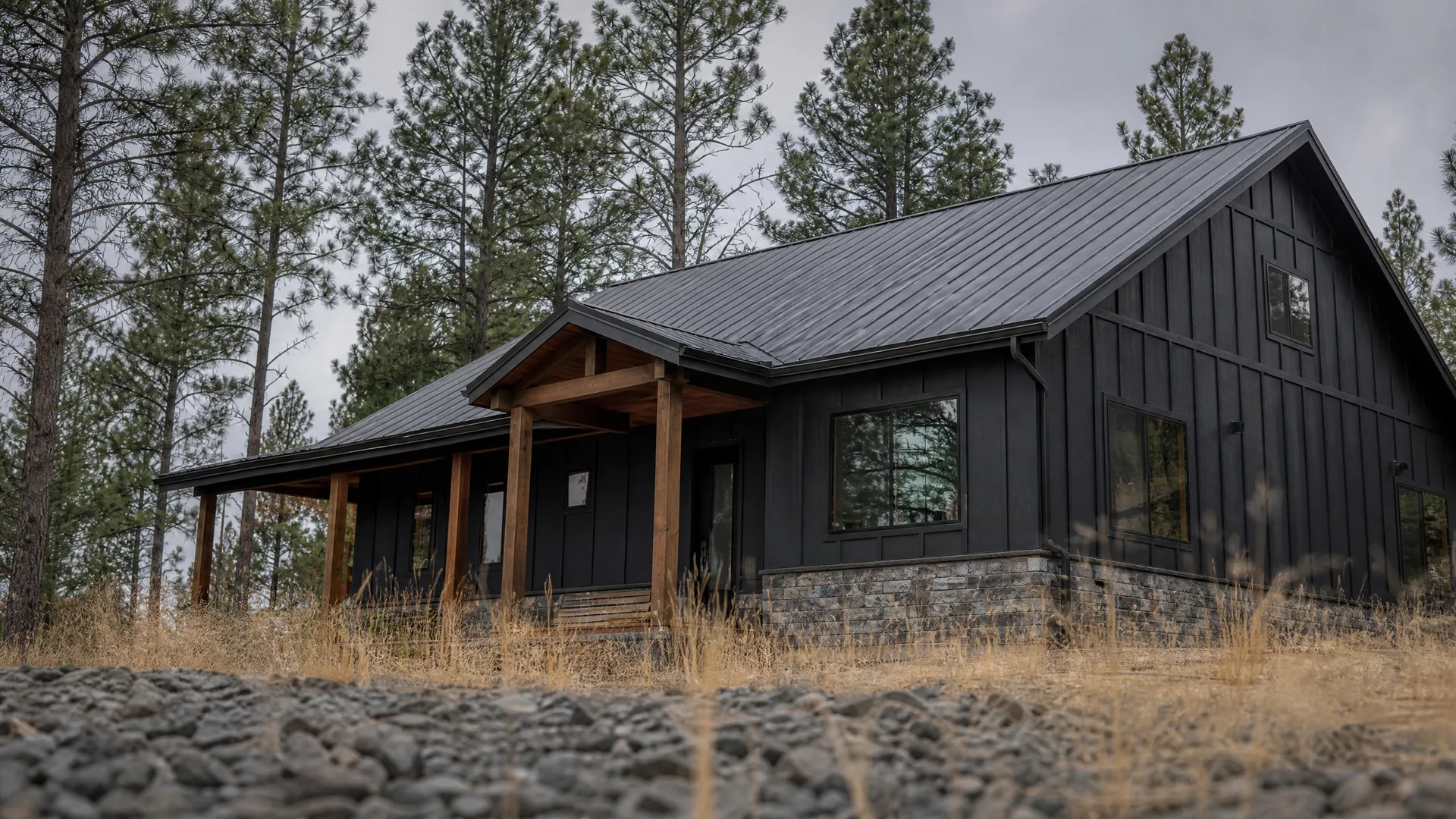



A black board-and-batten house with a metal roof, wooden porch posts and a stone foundation, surrounded by dry grass, gravel and tall pine trees under an overcast sky.

Furnace Repair in Bozeman, MT

Tell us about the job

Takes about a minute. No obligation.

RepairFurnace or heatingGallatin County, MT
Step 1 of 2

What ZIP code is the job in?

A furnace in Gallatin County runs from September through June. That's ten months of the year it's expected to work, not just a few cold weeks. Winter storms hit this county 124 times between 2015 and 2024, and each one means the furnace is running longer and harder to keep up. That kind of stretch wears down an igniter or a blower motor sooner than it would somewhere milder. When something's acting up, it's usually not bad luck. It's a part that's been working this whole time finally giving out.

10 months
September through June, your furnace is on duty
13°F
the average winter night it heats against
55%
of homes here heat with gas, so most furnaces here burn gas
124 winter storms
in ten years, the nights a failure hurts most
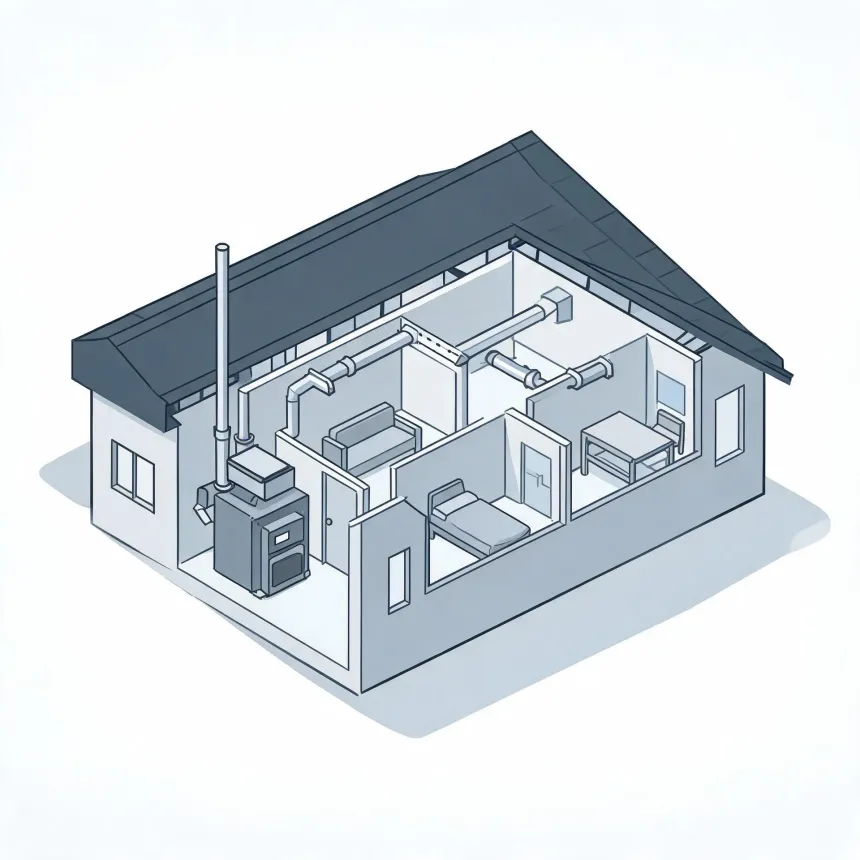
Isometric cutaway illustration of a single-story house showing interior rooms with furniture, overhead ducting, a flue pipe, and a furnace unit against an interior wall.
Your furnace works hardest from October through April.

NOAA nClimDiv, 1991–2020 normals

Gas ran $7.77 per million Btu in Montana homes last year.

A furnace that's short-cycling or running long because of a bad part burns through that gas every day it's left alone.

Gas bought by a furnace running wrong is gas you won't get back

Heat runs September through June
Winter nights average 13°F
124 winter storms from 2015 to 2024
Storms here don't skip your furnaceGallatin County saw 229 severe weather events between 2015 and 2024, including 77 windstorms and 28 hail events.

September is when furnaces here go back to work after sitting most of the summer. That first cold snap is also when a weak part tends to show itself. A furnace runs ten months a year in this county, but it's idle the other two, and anything that drifted out of adjustment over the summer gets found the moment the system has to run for real. An igniter that was already cracked, a blower motor with a worn bearing, a flame sensor coated with residue, none of it shows up while the furnace is off. It shows up in the first week it has to carry the house. Getting a furnace looked at in August, before the county starts heating in September, catches that problem before the hard months make it worse.

Find what's really wearing out before it leaves you without heat

A furnace that runs this many months a year doesn't fail out of nowhere. Something wore down to the point it finally showed up. Getting it looked at now means finding the part that's actually causing it, so the repair holds instead of coming back in a month.

Find a contractor
A gas furnace with attached ductwork, gas piping, and condensate lines installed in a concrete-block basement.

How much life is left in this one

Half the homes in this county were built in 1998 or later, and the other half before that. A furnace that came with a newer build has probably got years of normal wear on it, not decades. Mobile homes make up 5.4% of the housing stock here, and those furnaces carry their own install requirements, so if that's your situation it's worth knowing which setup you have. Either way, the house's age is a starting point, not an answer. The furnace itself might be original to the build or it might have been swapped out already. If you know which, you know a lot more about what's wearing out and why.

What you can check yourself

Check the thermostat first. Make sure it's set to heat and the set point is actually above room temperature, and swap the batteries if it uses them. Go to the furnace and look at the door panel. Most furnaces won't fire if the access panel isn't seated and latched right, since a safety switch reads whether it's closed. Check the air filter next. A filter clogged with dust chokes airflow and can shut the furnace down on a limit switch before it ever gets warm. Last, check the breaker box and any switch that looks like a light switch near the furnace or at the top of the basement stairs. That switch cuts power to the unit and it's easy to bump without noticing.

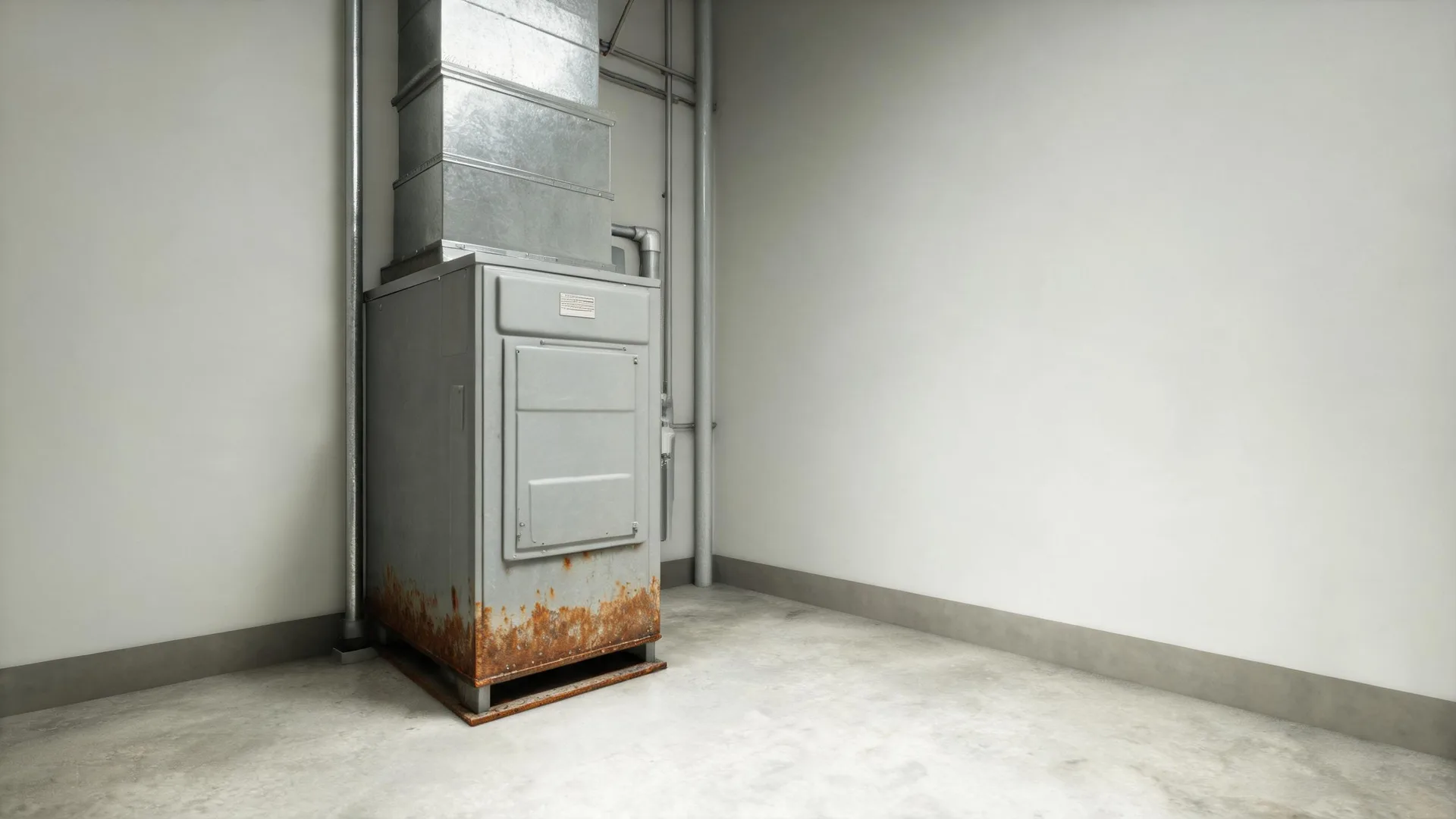
What tells you to stop and call someone

A gas smell means stop checking anything and get out, then call the gas utility from outside the house. Any sound like banging, screeching or rattling that wasn't there before means a part has failed or come loose inside, and running it longer can turn a repair into a bigger one. Soot around the furnace or a yellow, flickering flame instead of a steady blue one both mean the burner isn't working right, and that's not something to keep running while you wait. Short cycling, where the furnace fires, shuts off, and fires again every few minutes, almost always points to a part that needs a trained eye, not a filter change.

An unfinished basement featuring exposed ceiling joists, a metal HVAC unit with round ductwork, a hanging light bulb, and scattered boxes and debris along the left wall.

A new furnace would cut about $100 a year off heating for a typical Gallatin County home.

  • A new high-efficiency furnace$410 a year
  • An older furnace$510 a year

Estimates for a typical Gallatin County home, compared with an older unit built to the previous federal minimum, from EIA household energy data, Montana fuel prices and NOAA climate normals. Your home will differ.

Repair makes sense when one part has failed and the heat exchanger is sound.

Replacement makes sense when the heat exchanger is cracked or the furnace keeps needing parts.

A diagnostic visit starts before any panel comes off. The tech asks what the furnace is doing, when it started, and whether anything changed right before it did. Then they watch it run through a full cycle, from the call for heat to the burners lighting to the blower kicking in, because a lot of problems only show up at one specific point in that sequence. They'll check the flame itself, the pressure in the gas line, and the temperature rise across the heat exchanger. They'll pull the panel and look at the igniter or pilot assembly, test the flame sensor, and listen to the blower motor and inducer for anything that sounds like a bearing going. Only once they know which part is actually failing do they talk repair, because guessing at parts means paying twice.