

Repair or replace a gas furnace in Bozeman, MT

Skip searching for a furnace pro and answer a few questions instead.

Start one form

Should I repair my furnace or just replace it?

Your furnace is giving you trouble again and you're staring down two different costs: a repair bill now, or a new furnace that handles everything for years. Winters in Gallatin County are hard, and a furnace that quits in January isn't a risk you want to sit with. You want a straight way to decide, not a sales pitch toward the more expensive option.

Repair it if the furnace is young and the fix is minor. Replace it if it's old or the repairs keep coming.

A furnace usually lasts 15 to 20 years. If yours is within that range and the problem is something like an igniter or a blower motor, a repair makes sense. If it's past that age, or you've already paid for more than one repair in the last year or two, the next failure is only a matter of time, and that time may land on a cold night. Gallatin County winters don't give a furnace much of a break, so one that's near the end of its life tends to show it through rising repair visits rather than one clean breakdown. A contractor who looks at the unit in person can tell you which side of that line yours falls on.

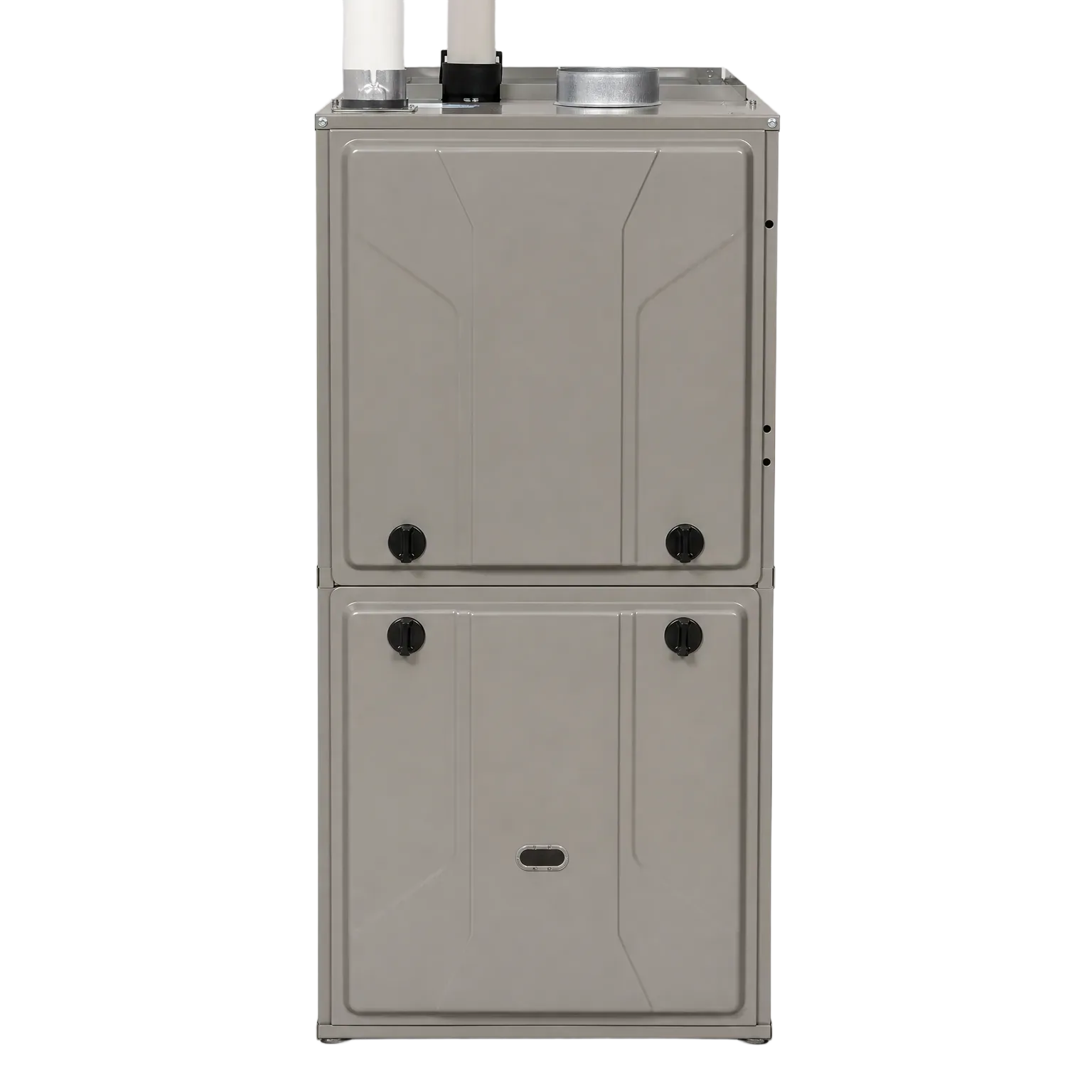
A gray high-efficiency furnace with white PVC venting pipes stands on blocks in a basement next to sheet-metal ductwork, with exposed wood framing on the left and a concrete wall and floor.

The furnace that's still worth fixing

A furnace like this one, properly installed with matched ductwork and venting, is usually still a repair job. A new igniter, a cracked flame sensor, or a failed inducer motor costs far less than a replacement, and a furnace this age with one problem will likely run fine once it's fixed.


An older gas furnace with two white PVC vent pipes stands on a concrete basement floor beside galvanized sheet-metal ductwork, flexible conduit, and piping along a wall.

The furnace that's past it

An older cabinet like this one, with a flexible gas line and an aging exhaust setup, is a different story. When the heat exchanger cracks or the blower motor gives out on a furnace this old, you're paying to fix one problem while the next one is already forming.

Repair It or Replace It

Repair

  • A cracked heat exchanger means the furnace has to be replaced, no matter how new the rest of it is.
  • If the furnace is still under warranty, parts may cost nothing and labor is the only expense to weigh.
  • A furnace that's broken down twice this winter is telling you something different than one that's needed a single fix in ten years.
  • Once a furnace is past the age most of its kind reach before failing, a repair just delays the same decision.
  • Ignition problems, a bad blower motor, or a clogged vent are often fixed in one visit and don't point to the whole unit failing.
  • If parts for that model are getting hard to find, a tech may spend more time sourcing them than fixing them.

Replace

  • A new furnace carries a warranty on top of what the manufacturer already backs the equipment with, so the next several winters are covered.
  • Gas furnaces today burn less fuel for the same heat, which matters across a Gallatin County winter that runs months long.
  • If the blower, the heat exchanger, and the control board are all aging at once, replacing them separately would add up past what one new unit costs.
  • A furnace sized and installed wrong at some point can run short cycles or uneven heat for years until it's replaced correctly.
  • Once a furnace needs a second major repair within a year or two, the money spent on both starts to rival a new install.
  • A new unit means no mid-January morning spent waiting to see if last winter's fix holds.
A beige high-efficiency furnace stands on a concrete basement floor beside sheet-metal ductwork, with white PVC vent pipes, flexible conduit and copper and steel piping running up a concrete wall to an electrical box.

Running the way it should

This is a furnace doing its job: tight connections at the shutoff valve, sealed flue pipe, ductwork that matches. A furnace set up like this holds its efficiency for years and gives a contractor a clean system to work on when something does go wrong.

An older gas furnace with a louvered front panel stands on a concrete basement floor beside large sheet-metal ductwork, a metal flue pipe, copper piping and wood framing.

Worn down and neglected

Dust built up around the base, an aging flue pipe, copper lines that have seen better days. None of that means the furnace is done, but it's the kind of setup where a repair call can turn into a longer conversation about what else is worth fixing.

Is your furnace actually telling you something right now?

Short cycling, a burner flame that's yellow instead of blue, a smell of gas when it kicks on, or a thud before it lights. Maybe it's run three times today and the house still feels cold at 6 a.m. Maybe the pilot or igniter won't hold and you've reset it twice this week. Dust around the vents, a furnace closet that smells faintly of exhaust, or a carbon monoxide alarm that's gone off once and you talked yourself out of it. None of that is normal, and none of it fixes itself. A furnace that's struggling in November is the one that quits outright in January, on a night when Gallatin County drops well below freezing and your house has nowhere else to turn for heat.

A smiling woman with long dark hair in a gray sweater sits at a white stone counter with a glass of white wine, with a kitchen, fireplace and sofa visible behind her.
A smiling woman with dark hair in a cream sweater sits at a marble table with a glass of red wine, with a lit lamp, sofa, fireplace and kitchen counter behind her.
A woman in a cream sweater laughs while seated at a marble countertop with a glass of red wine, with a dimly lit living room and sofa behind her.
A woman in a beige turtleneck sweater with her hair up sits laughing and looking to the side at a white marble table with a glass of red wine, in a dimly lit interior with a lamp and seating area behind her.

No calling every shop in Gallatin County

A licensed installer who works in Gallatin County gets your project.

Sending the form costs nothing.

What a furnace's age actually tells you

Most gas furnaces are built to last somewhere around fifteen to twenty years, and a lot of that lifespan gets used up faster in a place where the furnace runs hard from October through April. An older furnace loses efficiency slowly at first, then drops off as the heat exchanger and burners wear. If yours is in that range and needs a repair that costs real money, the furnace is spending more on gas each winter than a new one would, and that gap only grows the longer you wait.

Why a mismatched furnace runs you ragged

A furnace sized wrong for the house short cycles, which means it starts and stops more than it should instead of running a steady, longer cycle. That wears the igniter and the inducer motor faster and leaves rooms farther from the furnace colder than the rest. A contractor sizing a replacement works from the house itself, the ductwork and the square footage, not just the number stamped on the old unit. Getting that sizing right is most of what makes a new furnace actually perform the way it's rated to.

A smiling middle-aged man in a dark green sweater sits at a candlelit table with wine glasses and a plate of greens in a dimly lit interior.
A woman in a dark knit turtleneck sweater reclines on a couch under a cream knit blanket, looking down at an open book, with a lit table lamp and framed pictures behind her.

Keep running it as is

Keep paying to fix it, and a January night in Gallatin County can still end with no heat while you wait on a part and a tank of propane for the space heater.

A beige sheet-metal furnace with a louvered upper panel stands on a concrete basement floor, connected to galvanized ductwork, white PVC vent pipes, and a metal gas line with an electrical box.
Before you get your furnace installation
A gray high-efficiency furnace with white PVC vent pipes stands in an unfinished basement beside sheet-metal ductwork, gas piping, and insulated stud walls on a concrete floor.
After you get your furnace installation
  1. A contractor checks the heat exchanger, gas valve, and inducer motor.

  2. They test the igniter, flame sensor, and control board.

  3. A cracked heat exchanger or failed board usually means replacement.

  4. A worn igniter or sensor usually means a straightforward repair.

A gray high-efficiency furnace with white PVC vent pipes stands beside galvanized sheet-metal ductwork in a basement with a concrete floor, with a wooden staircase and railing at left.
A furnace like this fires up, the flame holds steady, and the air coming through the plenum is warm within minutes.
An older gas furnace with louvered panels sits on a concrete pad in a basement, connected to sheet-metal ductwork and PVC and metal pipes, with a water heater and wooden stair framing in the background.
A furnace like this is stalling at the gas valve or the inducer motor, and every restart buys less time before the next one.
Gray wood-clad gable end of a building with a thick layer of snow on its roof, backed by snow-covered conifer trees under an overcast sky with falling snowflakes.

Overnight lows in Gallatin County average 13°F across December, January and February, according to NOAA climate data. That's the stretch where your furnace isn't cycling on and off anymore. It's running long stretches just to hold the house at temperature, and if it's been limping along on a weak igniter or a failing inducer motor, this is when that shows up as no heat at 2 a.m. instead of a minor annoyance. A furnace that's sized and running right shouldn't struggle with a night like that. One that's been putting off a repair usually picks the coldest night to quit.

NOAA nClimDiv 1991-2020

A cracked heat exchanger or a failed control board means replacement. A worn igniter, flame sensor, or inducer motor usually means a repair that gets the furnace through the rest of winter and beyond. That's the whole decision. Once you know which one you're facing, the next step is getting someone qualified to look at the actual furnace in front of you, not a general estimate. A contractor working in Gallatin County sees this same furnace, this same venting, this same cold, every winter, and knows within a few minutes of testing the gas valve and inducer motor which side of that line you're on. You'll hear from one contractor, licensed to work in Montana, not a handful of companies competing for your callback. No explaining the thud before ignition three separate times to three separate strangers. Whether this furnace gets a new igniter or gets replaced outright, you'll know it from someone who already understands what a Bozeman winter asks of it.

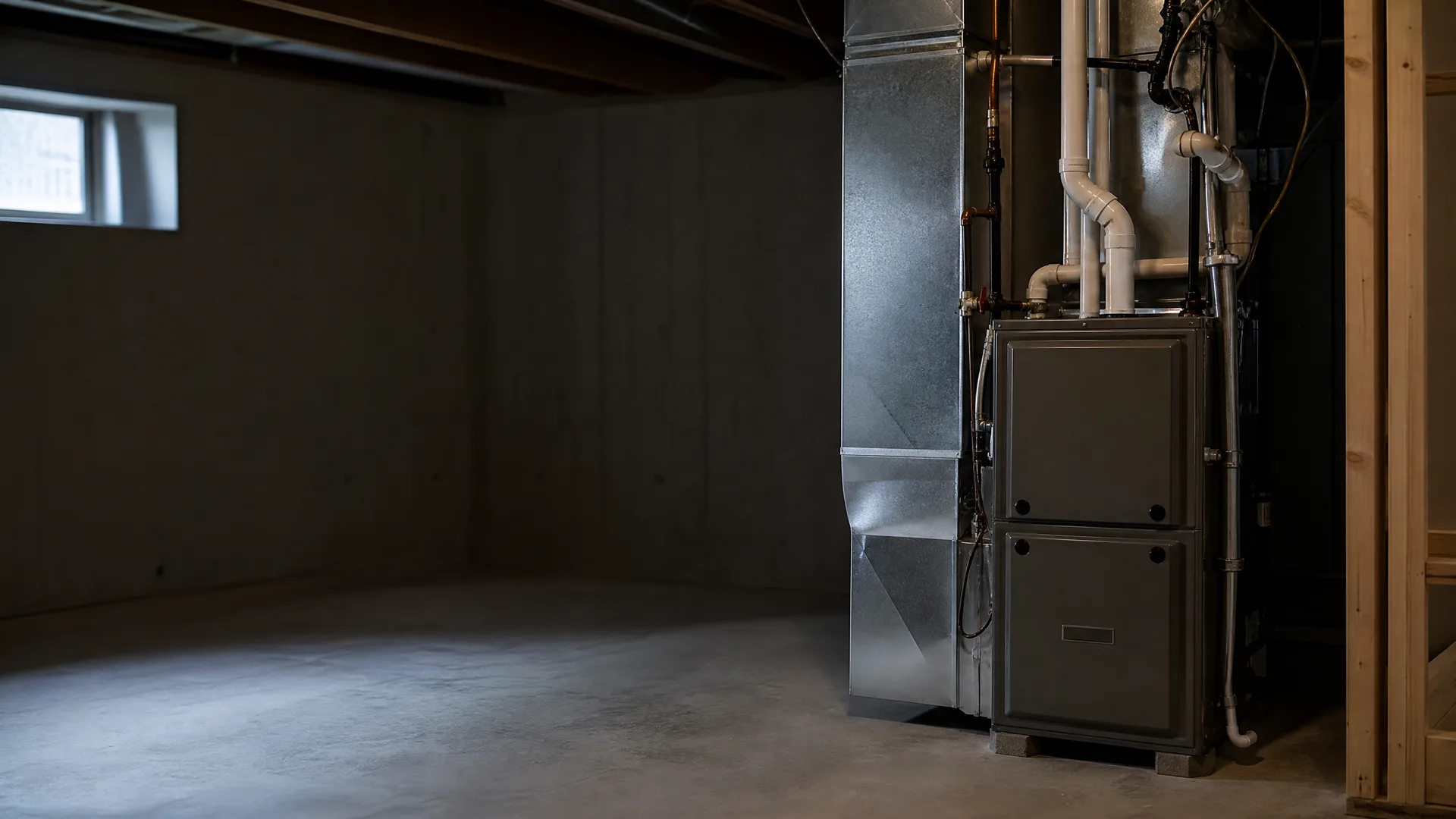
An unfinished basement with bare concrete walls and floor, a small window at upper left, exposed joists overhead, and a furnace with sheet-metal ductwork and pipes along the right side.

No phone calls to make

Your request goes to one pro, not a list of companies.

New system or replacementFurnace or heatingGallatin County, MT
Step 1 of 2

What ZIP code is the job in?