
Heat pump vs furnace in Park County, Montana

Get a Local Quote

Match with a pro in Park County

A person in a blue shirt reaches up to press a button on a white wall-mounted thermostat on a gray wall, with a tool bag in the foreground and a living and dining room visible through a doorway.

Tell us about the job

Takes about a minute. No obligation.

New system or replacementPark County, MT
Step 1 of 3

What kind of equipment?

Which costs less to run in Park County?

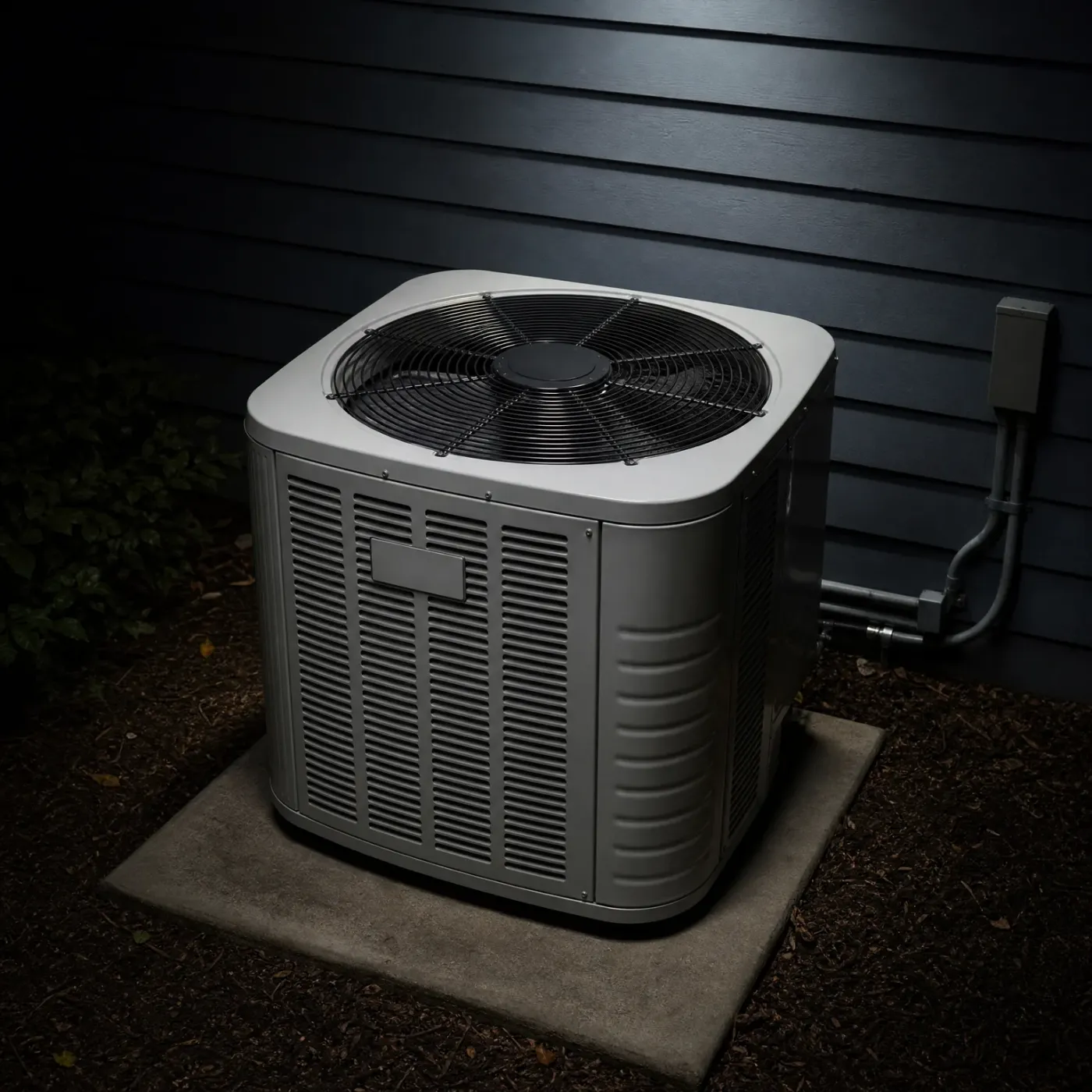
A gray outdoor condensing unit with a top-mounted fan grille sits on a concrete pad beside a dark horizontal-lap sided wall, with conduit, a disconnect box, and refrigerant lines running to the wall at night.

Heat pump

To heat your home here$1.69per 100,000 Btu

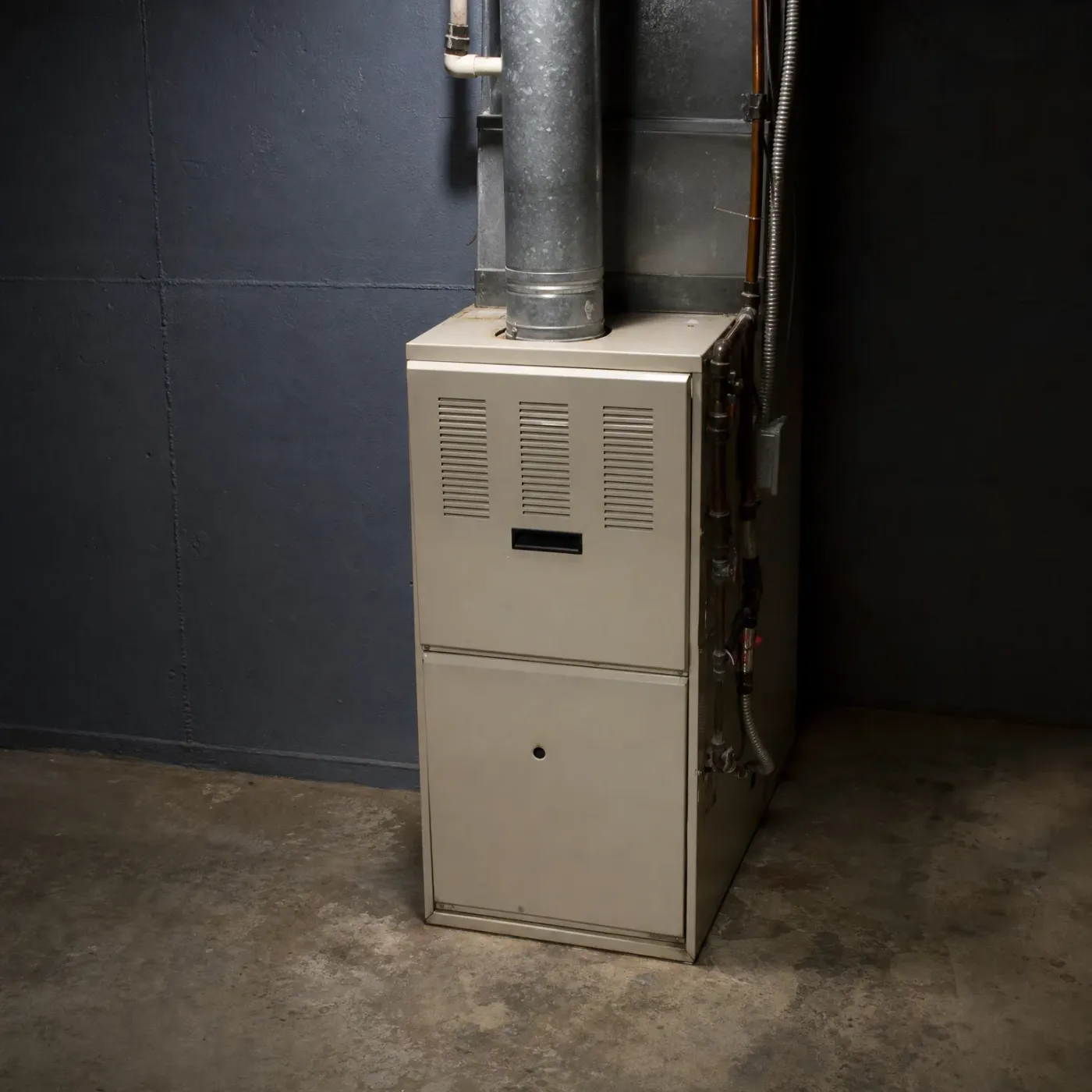
A beige gas furnace with louvered upper panel stands against a dark gray concrete block wall on a concrete floor, with metal flue ducts and flexible conduit running up from its top.

Furnace

To heat your home here$0.97per 100,000 Btu

At Montana's gas and electricity prices, a gas furnace makes the same heat as a heat pump for at least 42% less.

Btu stands for British thermal unit, the standard measure of heat energy.

Where does a heat pump shine?

  • Steady, even comfort

    A heat pump runs long and low instead of blasting on and off. Rooms hold an even temperature all day.

    A living room with a lit wood stove, dark blue-grey fireplace surround and built-in shelving, a grey armchair with a herringbone throw and open book, a lit table lamp on a small wooden side table, a basket of logs, and a curly-coated tan dog sleeping on a cream rug.
  • No gas line, nothing burning in the house

    There's no gas line to the unit and no flame anywhere in it. Carbon monoxide isn't part of the picture.

    Kitchen with blue-grey shaker cabinets, a grey speckled stone island holding a stainless kettle on a black induction cooktop, a bowl of green apples, glass pendant lights, a stainless refrigerator, and a seating area visible through a doorway.
  • Heats and cools in one system

    A heat pump runs the same way all year. It pulls heat into the house in winter and pushes it out in summer.

    A cream sofa with navy and light blue cushions and a blue fringed throw sits beneath a white sash window overlooking a green garden, with a dark built-in bookshelf at left, a potted plant in a woven basket at right, and a wooden coffee table holding a vase of white flowers, books, and a mug.

Where does a furnace shine?

  • Strong, steady heat in hard cold

    Park County nights average 13°F in December, January and February. A furnace burns gas to make heat, so it keeps putting out the same hot air on the coldest night as it does on a mild one.

    A two-story gray clapboard house with lit windows and a covered porch at dusk, surrounded by deep snow, with a shoveled paver walkway leading to the steps and a lit lamp post at right.
  • Proven, simple, easy to get serviced

    The design is simple and well understood. That keeps service calls short.

    A gloved hand holds a white pleated air filter in front of a furnace, next to shelves holding wicker baskets, a metal bucket, and a mug.
  • Pairs with any central AC

    A furnace's blower and ducts carry cooled air too. Adding central AC uses the same system.

    A long rectangular floor vent set into a wood floor beside white linen curtains at a window, with a blue side table, woven rug, wicker basket, wooden bench with striped cushion, and a vase of white hydrangeas on a dark table.

What the cold here does to a heat pump

Winter nights in Park County average 13°F. That number sits below both marks that matter for a heat pump. Below 40°F, a standard heat pump puts out less heat than its rating says. Below about 35°F, it typically needs backup heat to make up the difference. At 13°F average, you are well past both marks on an ordinary night, not just on the occasional cold snap.

About 170 nights a year here fall at or below freezing. That is under half the year, but it is not a handful of nights you can shrug off. On most of those 170 nights, a standard heat pump is running below its rated output and likely leaning on backup heat to keep the house warm. Only about 12 nights a year drop to 0°F or below, so the very coldest nights are rare, but the ordinary cold night, the kind that shows up 170 times a year, is already enough to put a standard heat pump into its weak range.

A cold-climate heat pump is built for this. To earn the ENERGY STAR Cold Climate label, it has to keep making real heat at 5°F, not just sip along on backup power. Field tests of these units in occupied homes back this up: backup heat covered only a small share of the load between 0°F and 35°F, and running on backup heat alone was rare even down near 0°F. So the cold itself does not rule out a heat pump here. It rules out a standard one and points you toward a cold-climate model if you want electric heat to carry the house.
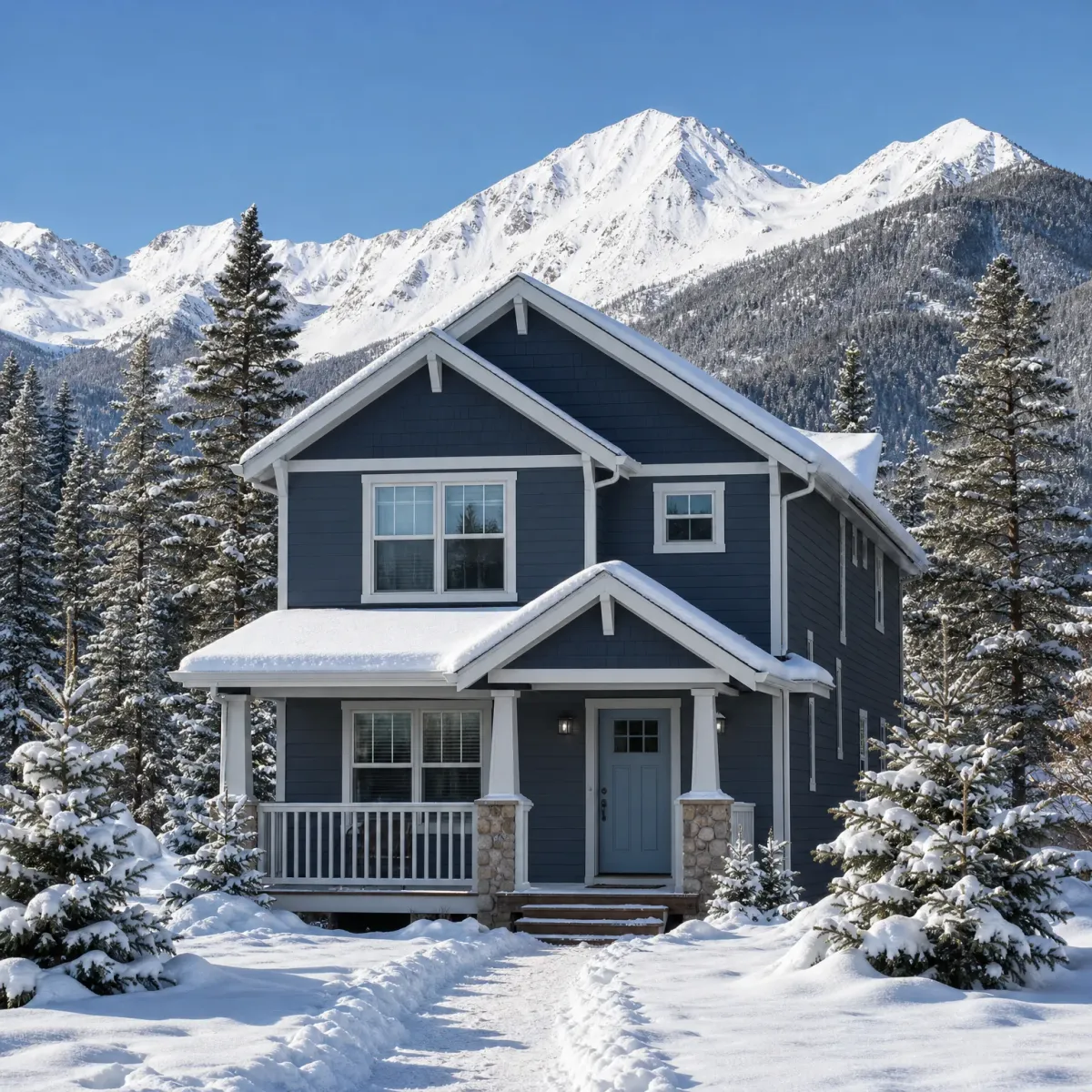
A two-story dark blue house with white trim, a covered porch with stone-based columns, and a light blue front door, surrounded by snow-covered conifers with snowy mountains behind under a clear blue sky.

What it costs to run, and what to weigh against that

A gas furnace is cheaper to run here. At Montana's average fuel prices, a furnace makes the same heat for $0.97 per 100,000 Btu against $1.69 for a heat pump. That gap holds for every month the heat runs, and in Park County that is all twelve.

Your house already gives you a clue. Utility gas heats 44.1% of homes here, more than two in five, so if yours is one of them, a furnace is a straightforward continuation of what the house already has. Propane heats another 18.5%, about one in five, and that fuel runs more expensive than utility gas, so for a propane house the math favors a furnace by an even wider margin. Electricity already heats 27.2% of homes here, so an electric heat pump is not a strange choice in this county either, just a more expensive one to run than gas at today's prices.

Set against that, a heat pump gives you air conditioning in the same system, which matters less here than almost anywhere, since Park County has no real cooling season to speak of. If the furnace you already have needs pairing with central air someday, that pairing works with any furnace. The case for a furnace here is the running cost plus the cold. The case for a heat pump is a cold-climate model, electric house, and comfort features like steady output that a furnace does not offer. For most houses in this county, the furnace is the cheaper and simpler answer.

Sources: NOAA nClimDiv · NOAA 1991–2020 seasonal normals · PNNL Building America guide · PNNL-37127 field study · ENERGY STAR product criteria · EIA SEDS 2024 · 10 CFR 430.32 · Census ACS 2020–2024

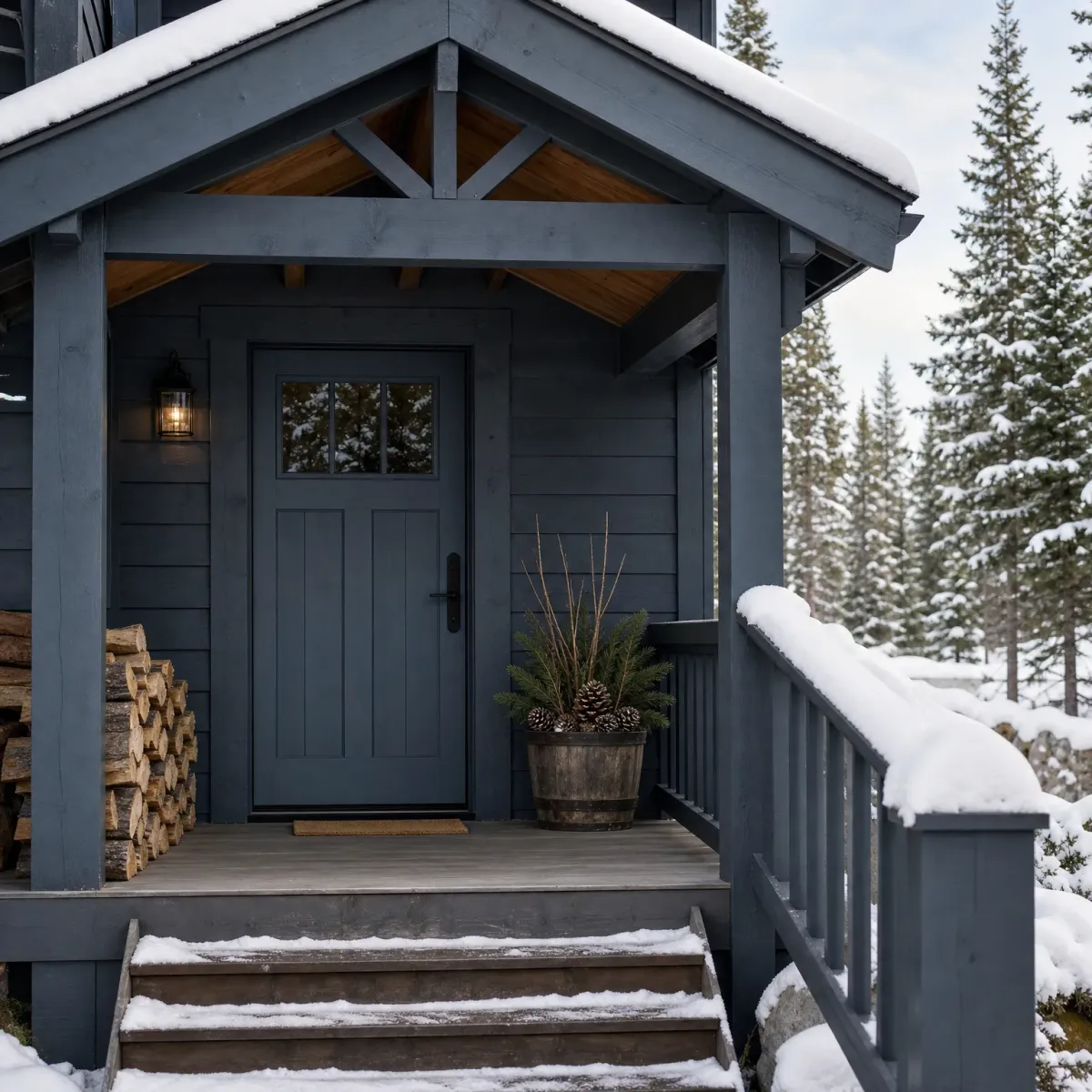
Covered entry porch of a dark blue-gray wood-clad house with a gabled roof, stacked firewood, a lantern wall light, a barrel planter of evergreen branches and pinecones, and snow-covered wooden steps and railing, with snowy conifers behind.

Common questions about heat pumps and furnaces

  • Can a heat pump heat a house through a Montana winter?

    It can, but not on its own in Park County. Below 40°F a standard heat pump puts out less than its rated heat, and the average overnight low here across December, January and February is 13°F. On the roughly 170 nights a year at or below freezing, it needs backup heat to keep up.

  • Do I need backup heat with a heat pump here?

    Yes. A standard heat pump often needs backup once it drops below about 35°F outside, and every night here that falls to freezing or below is already past that mark. About 12 nights a year here reach 0°F or colder, which is well past it.

  • Can I keep my furnace and add a heat pump?

    Yes, and here that often makes sense. The furnace carries the house on the coldest nights, when the heat pump's output falls short of its rating, and the heat pump can run the rest of the time. Pairing the two is a standard setup, not a workaround.

  • Is a heat pump cheaper to run than a furnace in Park County?

    No, a furnace costs less to run here. A heat pump runs $1.69 per 100,000 Btu of heat at Montana's electricity prices, against $0.97 for a gas furnace at Montana's gas prices. That gap is at the heat pump's federal minimum efficiency and doesn't count what backup heat adds on the coldest nights.