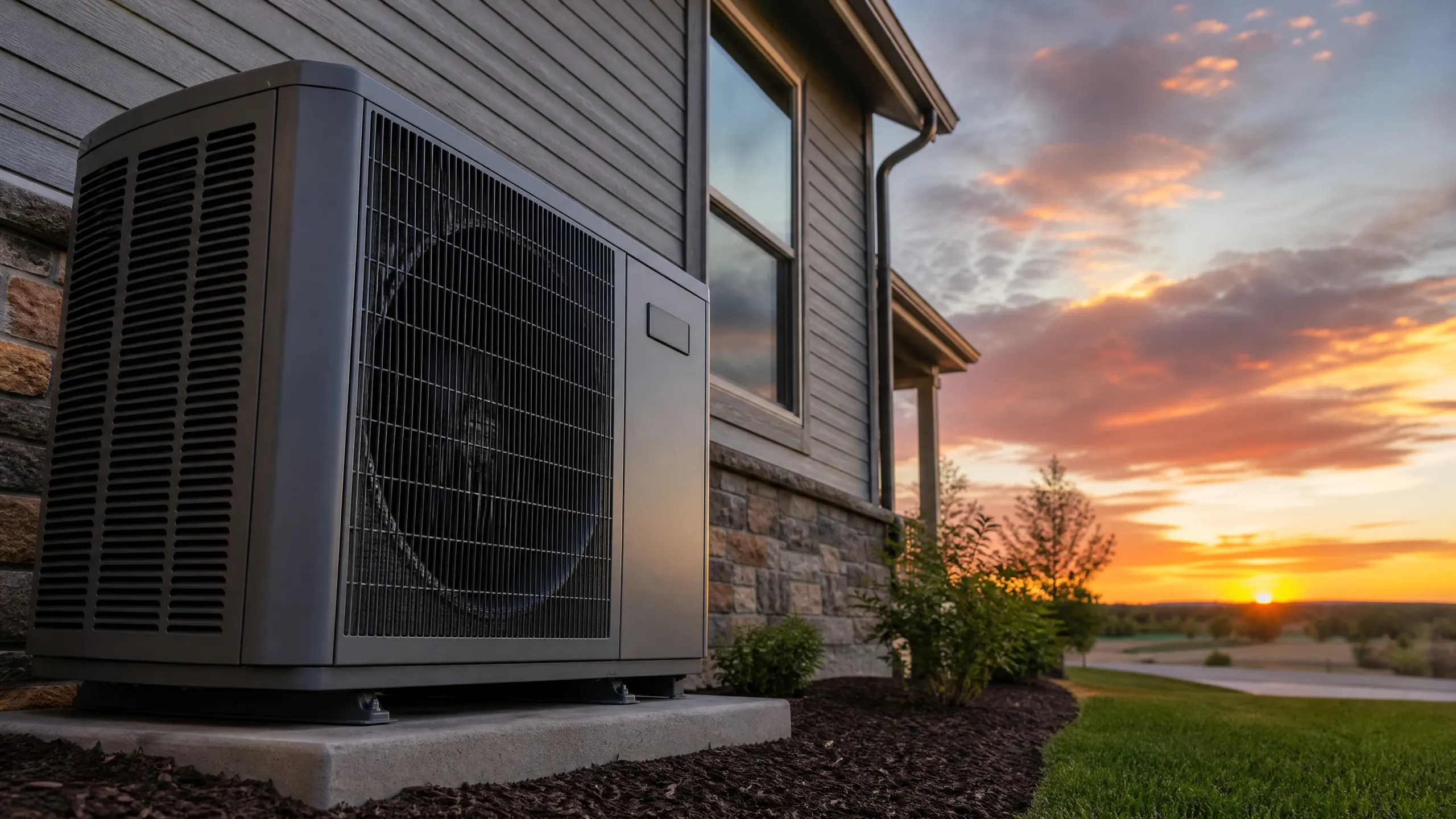






An outdoor air conditioning condenser unit mounted on a concrete pad next to a residential house at sunset.

Heat Pump Repair in Livingston, MT

Tell us about the job

Takes about a minute. No obligation.

RepairHeat PumpPark County, MT
Step 1 of 2

What ZIP code is the job in?

Park County saw 310 severe weather events between 2015 and 2024. Winter storms account for most of that, with 175 recorded, and damaging wind hit the county 120 times over the same stretch. Hail is less frequent but it happens, with 15 events logged in that window. An outdoor heat pump unit sits outside through all of it, exposed to wind-driven debris and hail that can bend fins or crack the fan housing. A unit can keep running after that kind of hit and still be losing efficiency or heading toward a bigger failure. If a storm has come through recently, it's worth having the outdoor unit looked at even if the system seems fine.

13°F
the average winter night it heats against
73°F
the average summer afternoon it cools against
Isometric cutaway illustration of a house showing attic ductwork, an indoor air handler, furnished rooms, and an outdoor condenser unit connected by lines along the exterior wall.

Park County logged 175 winter storms and 120 damaging wind events between 2015 and 2024.

A heat pump that runs through that kind of weather year after year is already working harder than most systems ever have to, so a repair call here should start with a real diagnosis, not a guess.

Power here is cheap, but a heat pump running on a bad part still wastes it every month

Power here costs 13.51 cents per kilowatt-hour
Climate zone 6B
120 damaging wind events from 2015 to 2024

Half the homes in Park County were built in 1980 or later. If yours is one of them, the heat pump giving you trouble might not be as old as it feels after a hard winter. Newer systems are usually worth repairing rather than replacing, since most of their working life is still ahead of them. A compressor or control board failure doesn't mean the unit is done, it means one part needs attention. Worth knowing before anyone starts talking about replacement.

After a storm, get the outdoor unit checked

If a storm has come through recently, get the outdoor unit checked before you decide the system is fine. A bent fin or cracked housing won't always stop it from running, but it can mean the unit is already losing ground.

Find a contractor
A man seen from behind in a dark long-sleeve shirt, olive work pants and brown boots climbs porch steps toward a gray front door, carrying a waxed canvas tool bag with tools in its outer pockets, beside a potted shrub.
A gray air-source heat pump mounted on a concrete pad next to a house with gray vinyl siding, surrounded by gravel and flanked by green shrubs and white hydrangea flowers.

A failed part isn't the same thing as a worn out system

Age matters more than how the system has been running lately. A heat pump that's a few years in and suddenly acting up is usually one failed part away from being fine again. A compressor nearing the end of its life behaves differently: it struggles to start, trips its overload, and the trouble keeps coming back even after a repair. A tech can check the compressor's windings and how hard it's pulling to start, and that tells you more than any guess based on symptoms alone. The outdoor unit takes the brunt of the weather, so it's usually the coil, the fan motor or the reversing valve wearing out first, long before the compressor itself gives out. Replacing one of those is a repair. Replacing the compressor on an old, tired system is where the math starts to shift toward a new unit instead.

A struggling heat pump rarely fixes itself by running longer

A compressor that's low on charge or starting hard will keep drawing on itself every cycle. Run it long enough in that state and the compressor windings can overheat, or the bearings wear past the point of a simple fix. What starts as a repair job turns into a compressor replacement if nobody shuts the system down and looks at it.
A frozen coil needs a diagnosis, not more run time

If airflow is restricted or the refrigerant charge is off, the outdoor coil can ice over. Letting the system keep cycling pushes liquid refrigerant back toward the compressor instead of vapor, and a compressor isn't built to handle liquid. Shutting the unit off and calling for service protects the one part that's expensive to replace.

Short cycling is one of the clearest signs something's wrong. If the system kicks on, runs a few minutes, then shuts off before the house feels any different, a sensor or a refrigerant problem is making it think the job's done when it isn't. Warm air blowing in heating mode, or air that never quite gets cold in summer, points at the reversing valve. That's the part that switches the system between heating and cooling, and when it sticks, the unit keeps running but stops doing what you asked it to. Ice on the outdoor coil that doesn't clear on its own is another one worth paying attention to, especially outside of actual winter weather. None of these mean the whole system is finished. They mean a specific part needs a look before it takes something bigger down with it.

A real diagnosis means someone actually checks the unit instead of swapping the first part that comes to mind. That starts outside, at the outdoor unit, since that's the part exposed to wind and hail all year. A tech can check the fins, the fan housing, the refrigerant charge and the compressor itself, and tell you which one is actually behind the problem you're seeing. Guessing costs more in the long run if the wrong part gets replaced and the real issue is still sitting there. Given what this system goes through here, it's worth having someone look at the whole unit while they're out, not just the symptom that made you call.