
Heat pump vs furnace in Ravalli County, Montana

Quote Both Systems

Serving Ravalli County homes

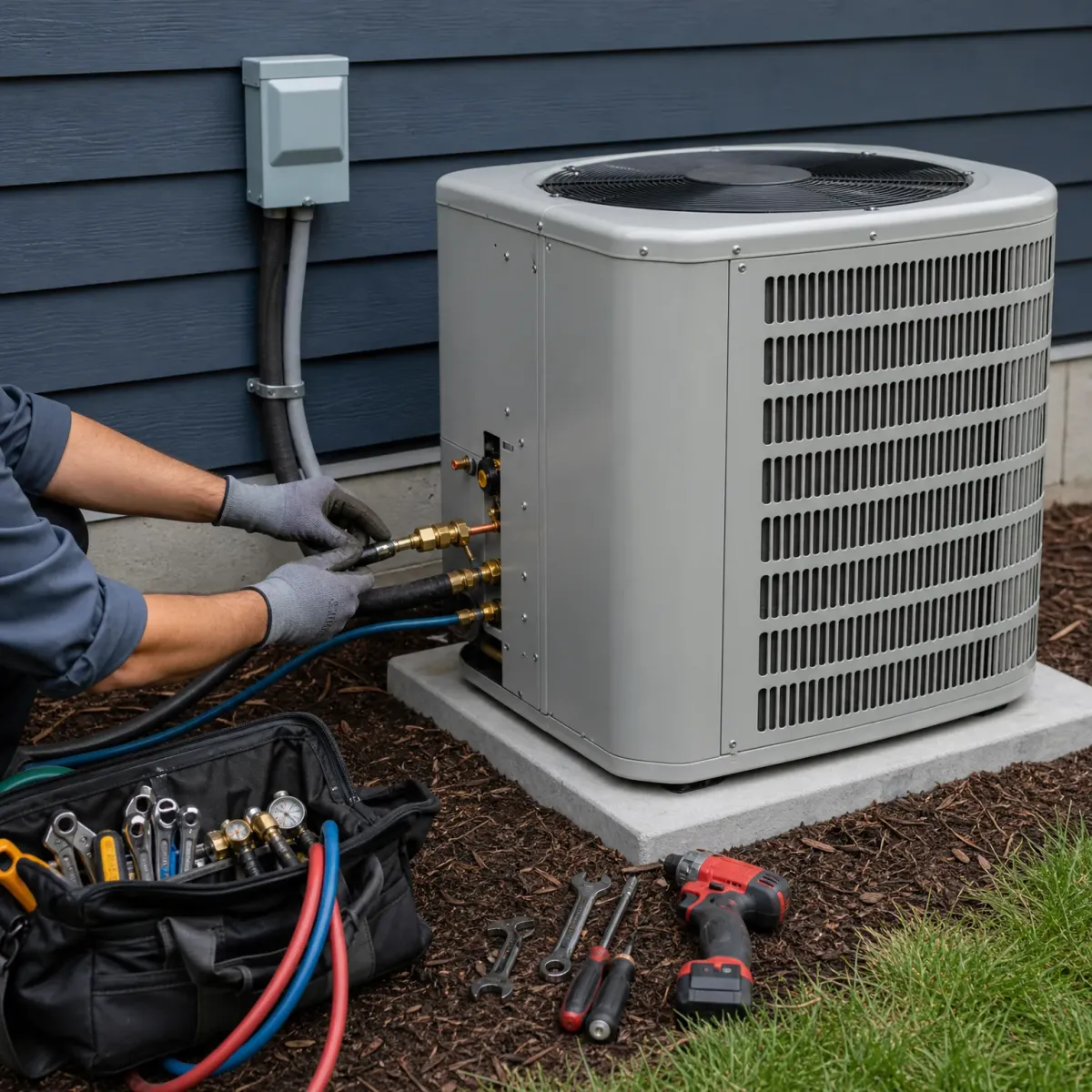
A gloved worker connects refrigerant lines to the service valves of an outdoor air conditioning condenser on a concrete pad beside a dark-sided house, with a tool bag, wrenches, screwdrivers, a gauge set and a cordless drill on the mulch in the foreground.

Tell us about the job

Takes about a minute. No obligation.

New system or replacementRavalli County, MT
Step 1 of 3

What kind of equipment?

Which costs less to run in Ravalli County?

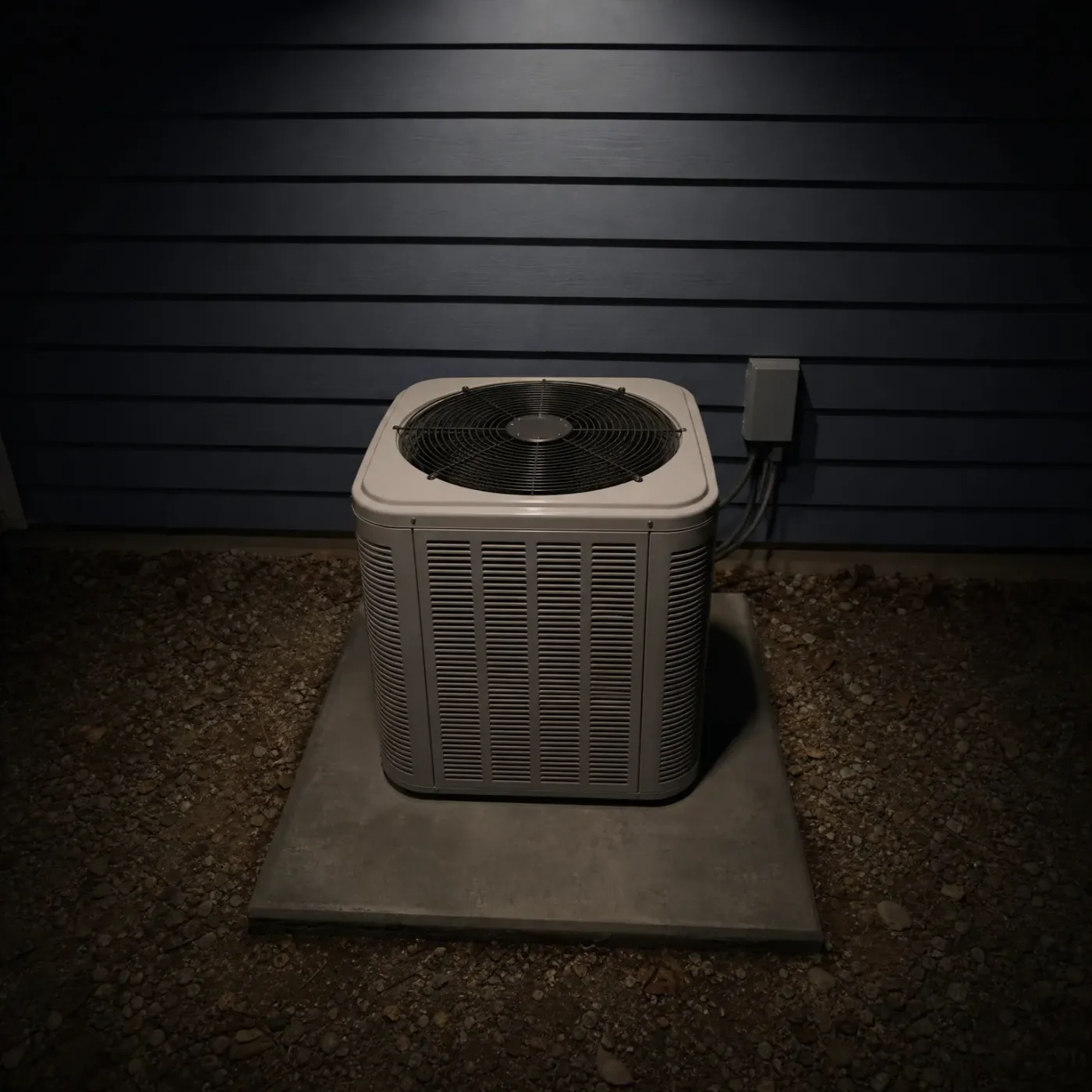
An outdoor air conditioning condenser unit on a concrete pad surrounded by gravel, against dark horizontal lap siding with a wall-mounted disconnect box and conduit, lit from above at night.

Heat pump

To heat your home here$1.69per 100,000 Btu

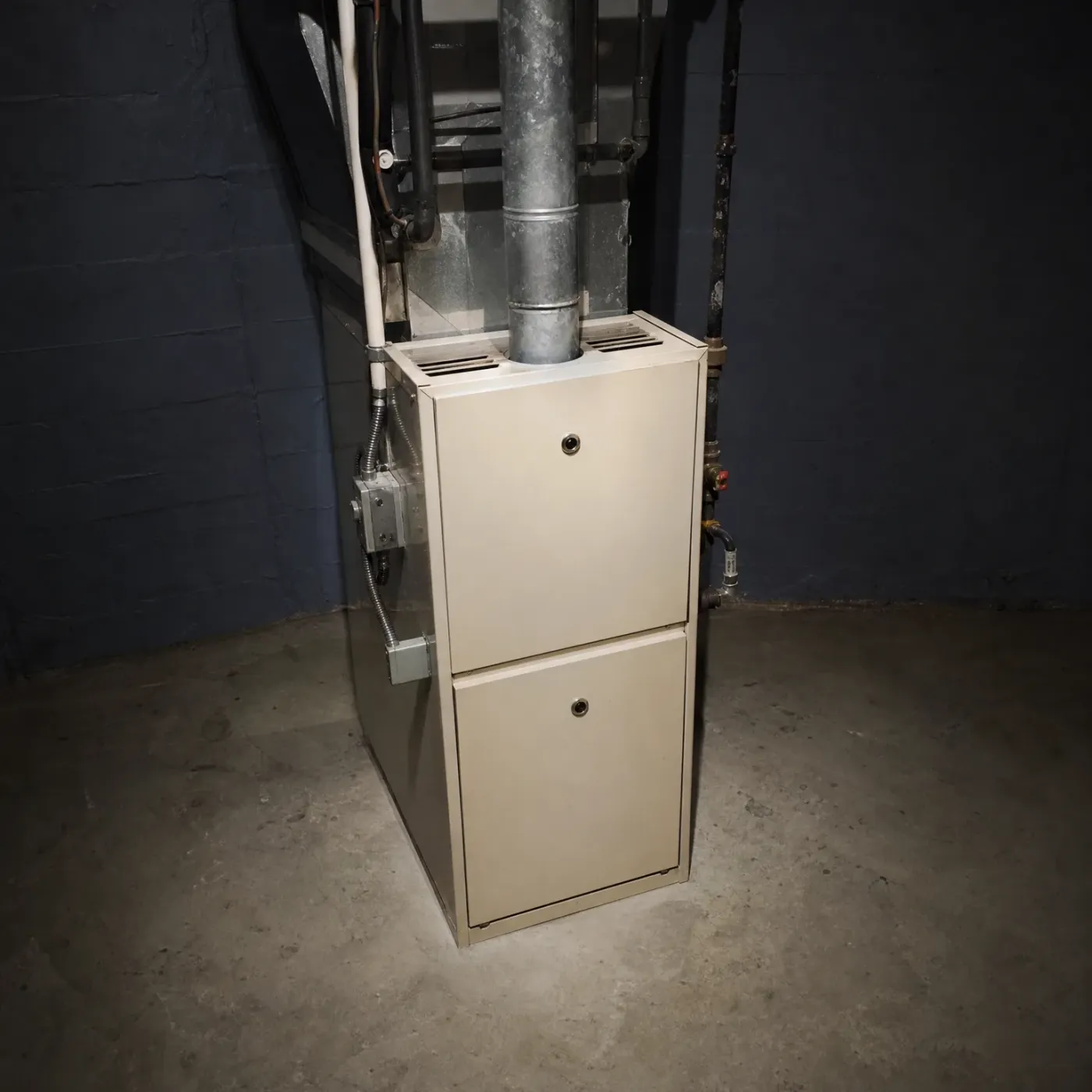
A beige residential furnace with two access panels stands on a concrete basement floor against a dark painted block wall, with a metal flue pipe and other pipes running up behind it.

Furnace

To heat your home here$0.97per 100,000 Btu

At Montana's gas and electricity prices, a gas furnace makes the same heat as a heat pump for at least 42% less.

Btu stands for British thermal unit, the standard measure of heat energy.

Where does a heat pump shine?

  • No gas line, nothing burning in the house

    There's no gas line to the unit and no flame anywhere in it. Carbon monoxide isn't part of the picture.

    A kitchen island with a white stone countertop holding a black cooktop and a stainless steel kettle, with navy cabinets, a white farmhouse sink with a brass faucet, a bowl of lemons, potted greenery, and gray upholstered stools in the foreground.
  • Steady, even comfort

    Instead of short bursts of heat, it keeps a gentle, steady output going. The house stays at one comfortable temperature.

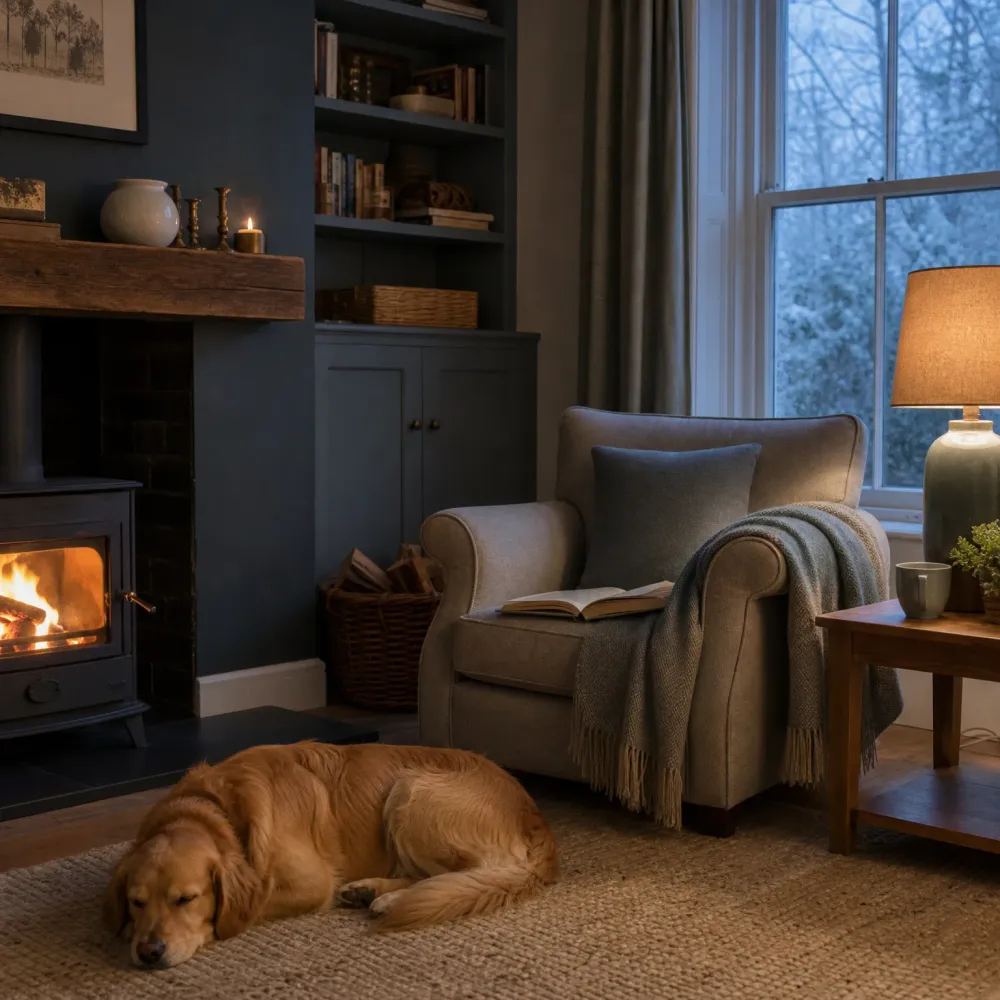
    A golden retriever sleeps on a woven rug in a dimly lit living room with a lit wood stove, an armchair with a throw and open book, a table lamp, bookshelves and a window.
  • Heats and cools in one system

    One machine handles the heat in winter and the cooling in summer. There's no second system to buy or keep up.

    A living room with blue-grey walls, a cream sofa with blue and patterned cushions and a grey fringed throw, a large window showing a green garden, a table lamp on a round wooden side table, built-in shelving, and a wooden coffee table with a bowl, books and a vase of white flowers.

Where does a furnace shine?

  • Strong, steady heat in hard cold

    Winter nights here average 16°F, and a furnace puts out the same hot air no matter how cold it gets outside. You won't notice it working any harder in January than it does in December.

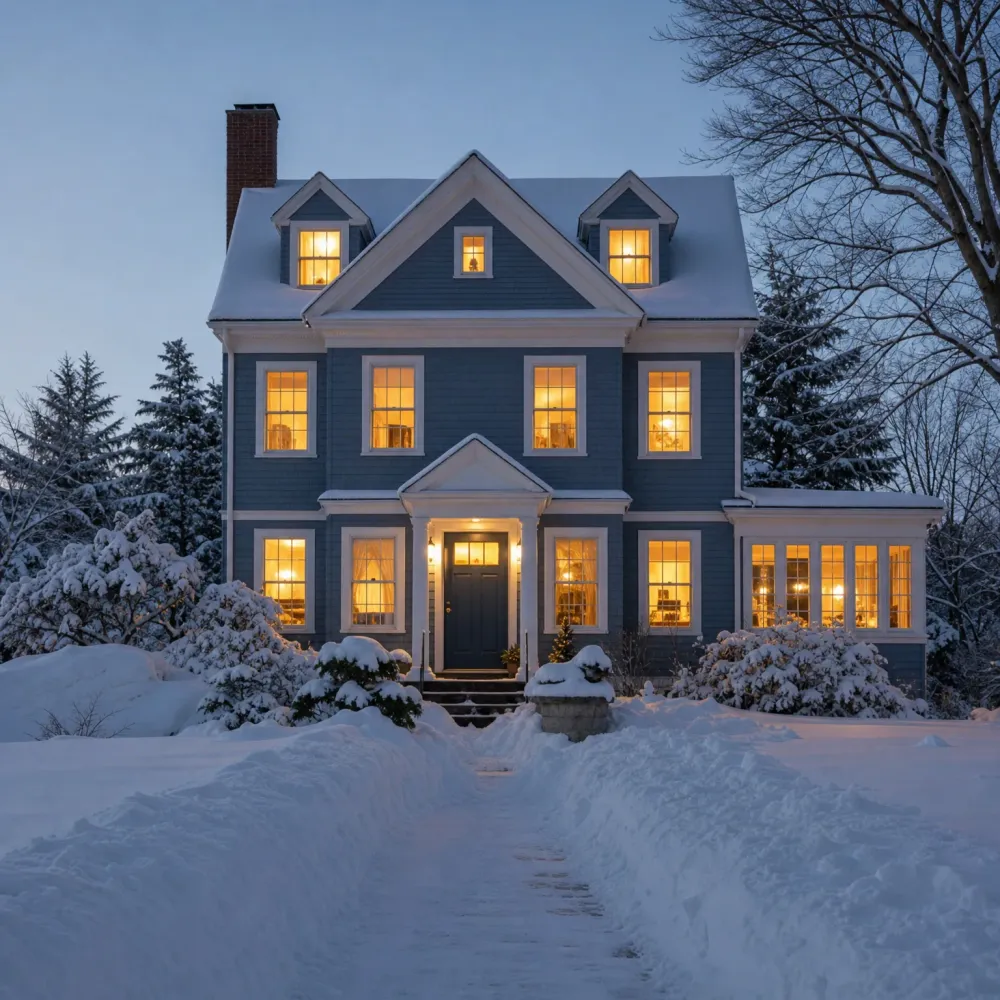
    A two-story blue shingled house with white trim, dormer windows and a brick chimney, its windows glowing warm yellow at dusk, surrounded by deep snow with a shoveled path leading to the front steps and snow-covered shrubs and evergreens on either side.
  • Fast, strong heat on demand

    The air coming from the vents feels genuinely hot. That's welcome on a freezing morning.

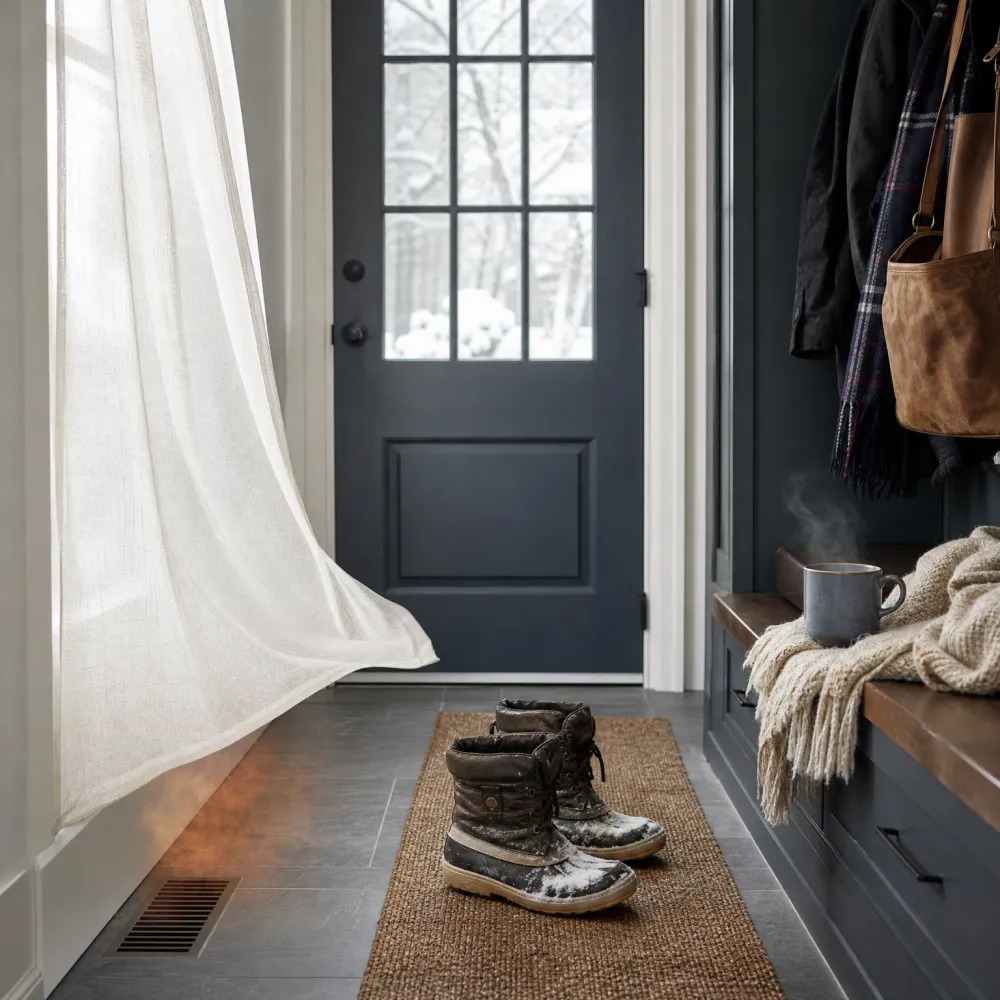
    Entryway with a dark paneled door with glass panes showing snow outside, snow-dusted boots on a woven jute runner, a floor air vent at left beneath a sheer white curtain, and a wooden bench with a knit throw and steaming mug beside hanging coats and a tan bag.
  • Proven, simple, easy to get serviced

    Gas furnaces have heated homes for generations. Almost every HVAC tech knows them inside and out.

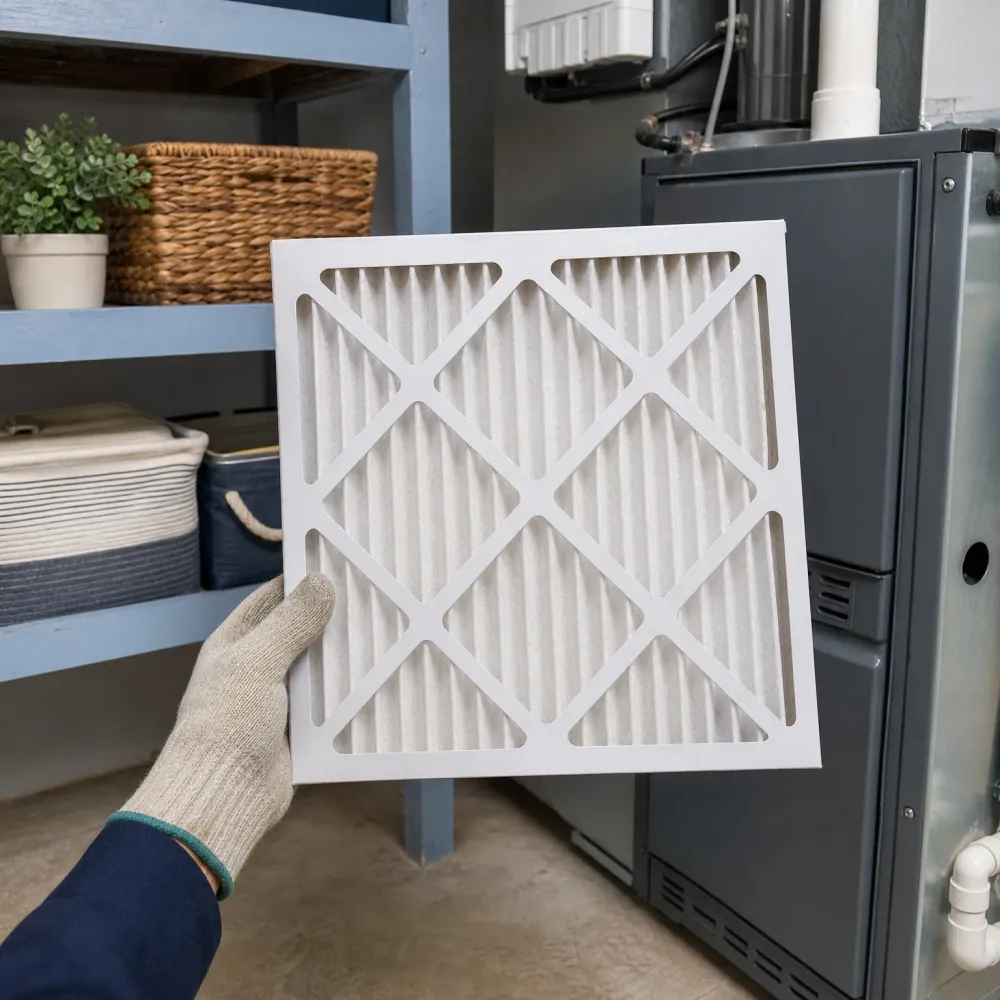
    A gloved hand holds a white pleated air filter in front of a gray furnace, with shelving holding a potted plant and storage baskets at left.

What winter here does to a heat pump

Your winter low here averages 16°F, and the heat runs eleven months a year, August through June. That's the question for a heat pump in this county: not whether it works, but what it's doing on the nights that matter most.

A standard heat pump starts losing ground below 40°F. It puts out less than its rating, and by the time you're in the teens it's only putting out a fraction of it. Below about 35°F it typically leans on a backup heat source to make up the difference. Here, both of those marks sit above your average winter low, not below it. About 170 nights a year drop to freezing or under, and every one of those nights is already past both marks.

That doesn't mean the heat pump is struggling all winter. Only about 7 nights a year reach 0°F or below, a small slice of the 170 nights at or below freezing. Cold-climate heat pumps, the ones built and certified to hold their output at 5°F, are designed around exactly this kind of winter, and field testing on prototype cold-climate units found that backup heat carried only a small share of the load between 0°F and 35°F, and running on backup alone was rare even above 0°F. A standard heat pump built to the federal minimum doesn't come with that certification, and that's the gap that matters in this county. If you're looking at a heat pump here, ask whether it carries the ENERGY STAR Cold Climate listing. That's the difference between a machine that's rated for your 16°F average and one that's just rated for a milder state.
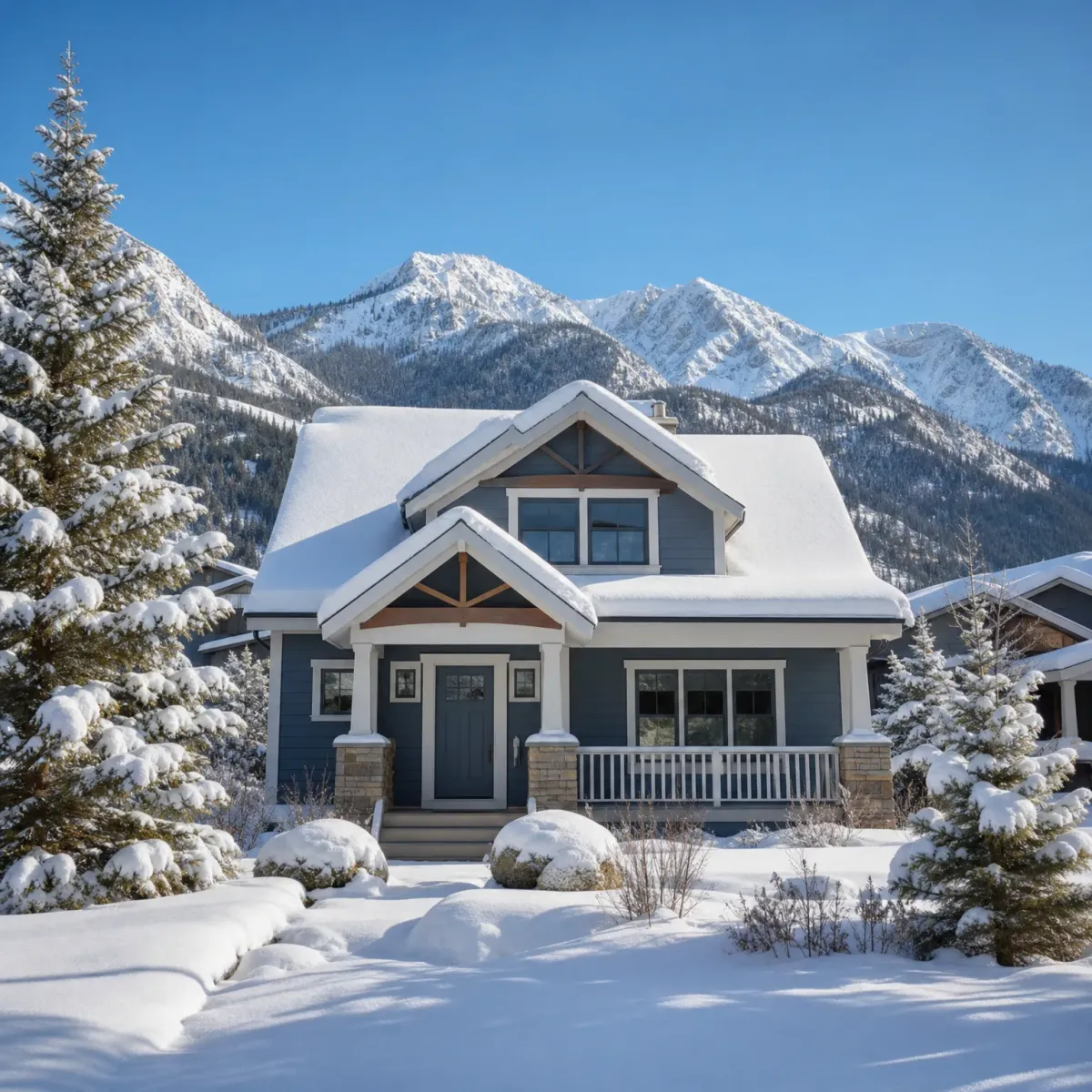
A blue-sided house with white trim, a covered porch and stone-clad columns, its roof covered in deep snow, flanked by snow-laden evergreen trees with snow-covered mountains and clear blue sky behind.

What that means for cost and for the furnace question

Run the two side by side on Montana's own fuel prices and the furnace wins on cost. A gas furnace makes the same heat here for $0.97 per 100,000 Btu against $1.69 for a heat pump, and that heat pump figure already assumes nothing goes to backup heat. Add in the nights below 35°F when a standard heat pump does lean on backup, and the real gap for that machine is likely wider than $1.69 suggests.

A furnace also has nothing to prove in the other month of the year. Heating runs eleven months here; the furnace does its one job for those eleven and sits idle the rest. A heat pump's case has always been that it runs the air conditioning too, but there's essentially no cooling season in this county to put that to use. That card on the page, heats and cools in one system, doesn't carry much weight here.

None of this tells you what's cheapest to install, or what's already in your walls. About 41% of homes in this county heat with utility gas, 21% with electricity, and 21% with propane, so there's no single setup to assume is already in place. If gas line and venting for a furnace are already there, that favors the furnace further. If a heat pump is the one on the table, the honest question to ask a contractor is not whether it will heat your home, but whether it's a cold-climate model, and what it's rated to deliver at 5°F, not just at 47°F.

Sources: NOAA nClimDiv · NOAA 1991–2020 seasonal normals · PNNL Building America guide · PNNL-37127 field study · ENERGY STAR product criteria · EIA SEDS 2024 · 10 CFR 430.32 · Census ACS 2020–2024

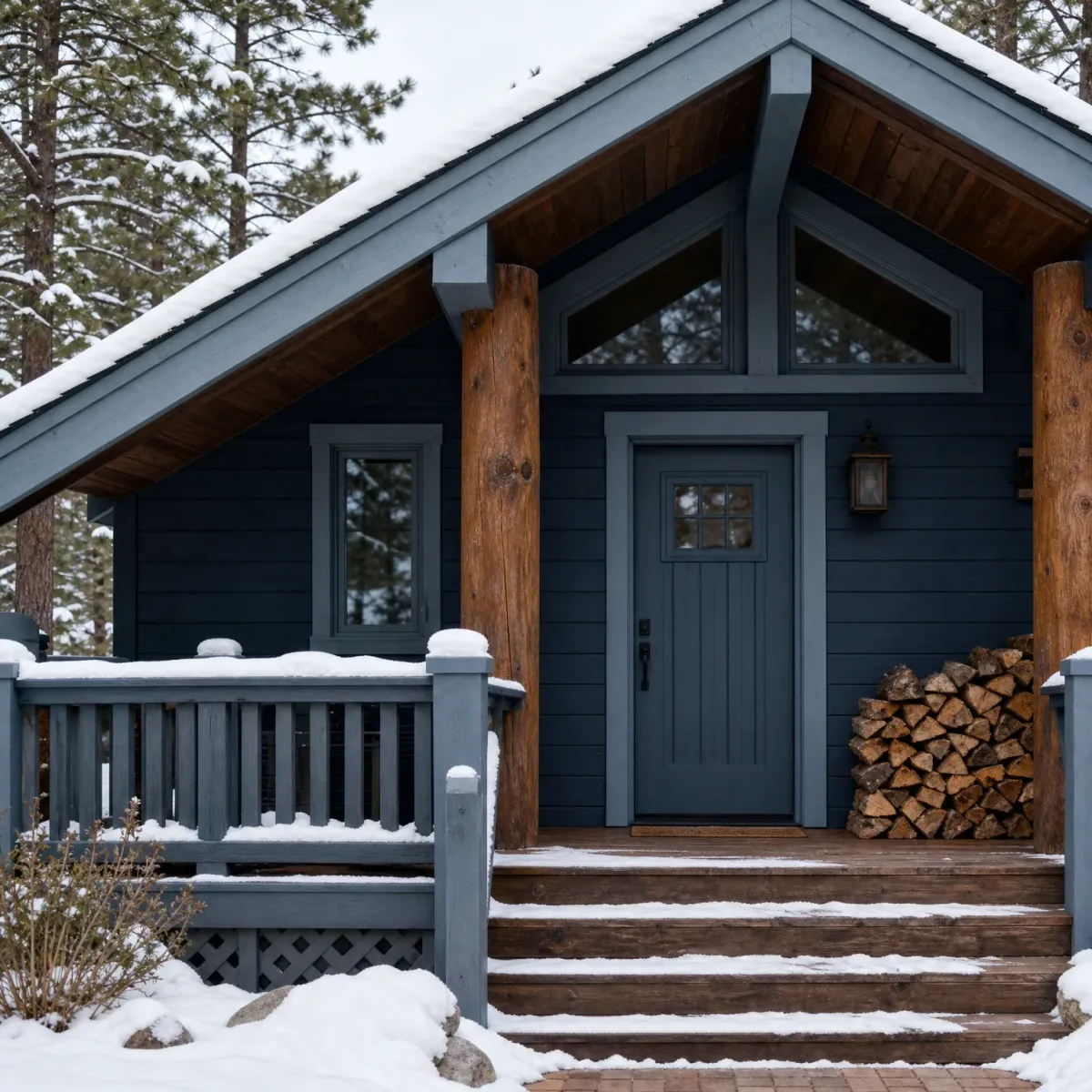
A dark blue-gray cabin entrance with wooden posts, a gabled porch, stacked firewood, a railed deck and wooden steps, all covered with snow, with conifer trees behind.

Common questions about heat pumps and furnaces

  • Can a heat pump heat a house through a Montana winter?

    Yes, but a standard heat pump needs help doing it. Below 40°F it puts out less heat than its rating, and nights here average 16°F in December, January and February, with about 170 nights a year at or below freezing. A cold-climate model built to the ENERGY STAR spec holds most of its capacity and still makes more heat than electricity put into it even at 5°F, but a basic unit will fall behind on the coldest nights.

  • Do I need backup heat with a heat pump here?

    Most likely, yes. A standard heat pump's efficiency drops below about 35°F and its output falls below its rating below 40°F, and both marks sit above the average winter night here of 16°F. Field tests of cold-climate heat pumps found backup heat only carried a small share of the load between 0°F and 35°F, and running on backup alone was rare above 0°F, so how much you need depends on whether the unit is a cold-climate model or a standard one.

  • Can I keep my furnace and add a heat pump?

    Yes, that pairing is common and it suits this climate. The furnace covers the roughly 170 nights a year here that drop to freezing or below, including the 7 or so that reach 0°F, while the heat pump handles the milder stretches the other 165 nights a year sit above freezing. Either machine can run as the backup for the other, so the furnace doesn't have to sit idle waiting for the coldest nights.

  • Is a heat pump cheaper to run than a furnace in Ravalli County?

    No. A gas furnace runs $0.97 per 100,000 Btu here against $1.69 for a heat pump, so the furnace costs less to make the same heat. That heat pump figure is its rating with no electricity added for backup heat, and on the roughly 170 nights a year here that drop to freezing or below, a standard heat pump leans on that backup more, which would push its real cost higher still.