Eleven months of runtime
Furnaces in Ravalli County run from August through June. That leaves one month where the burner and blower sit idle, and the rest of the year they're cycling on and off to keep up with Hamilton's cold.
Takes about a minute. No obligation.
Furnaces in Ravalli County run from August through June. That leaves one month where the burner and blower sit idle, and the rest of the year they're cycling on and off to keep up with Hamilton's cold.
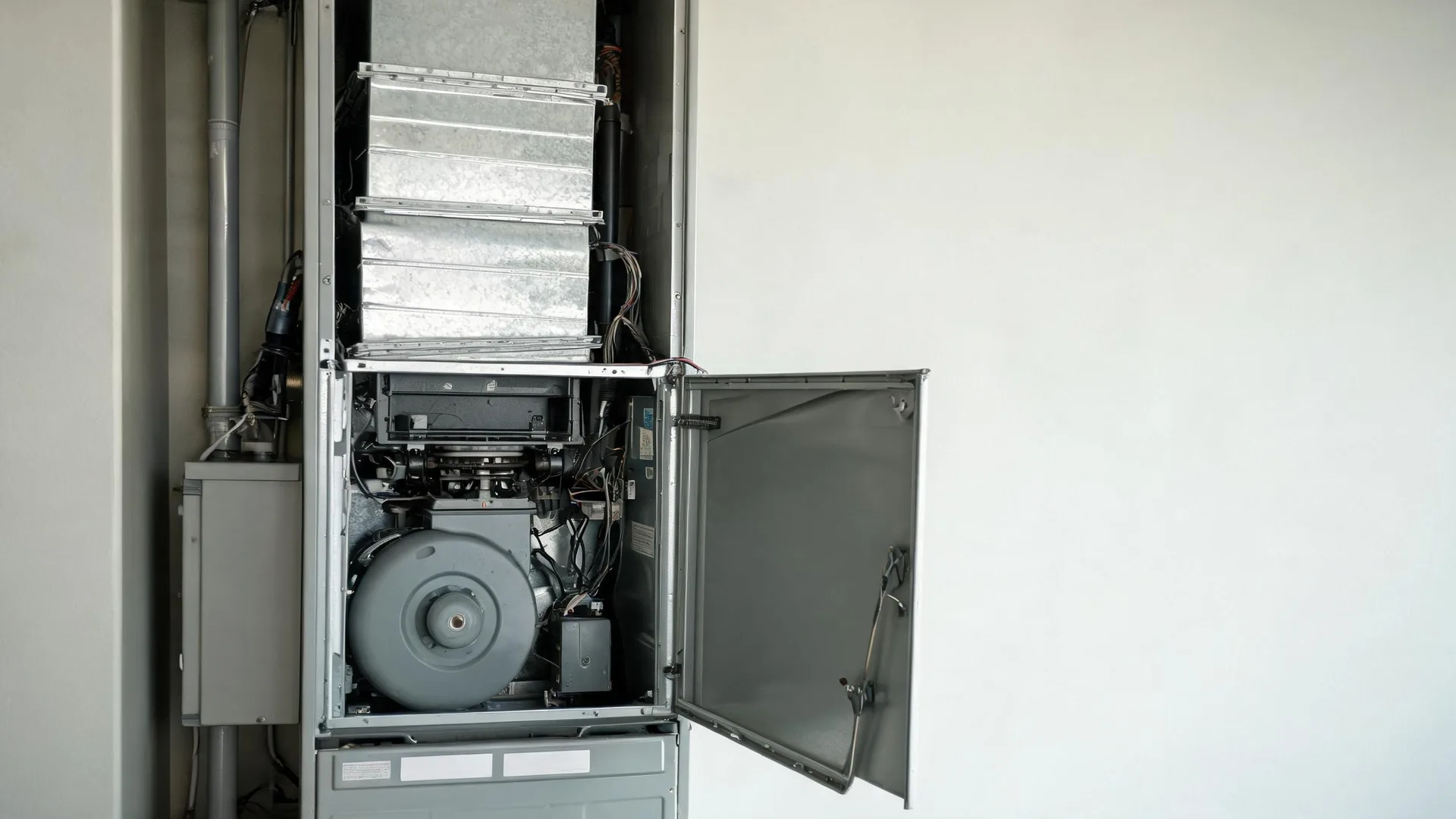
A furnace that runs almost year round wears through igniters, blower motors and limit switches faster than one that only runs a few months. Whatever's acting up in your furnace now, have it diagnosed properly so the actual cause gets fixed, not just the symptom.
NOAA nClimDiv, 1991–2020 normals
Furnaces in Hamilton start up again in August, while the house still remembers July.
A burner that sat quiet for one month gets asked to run hard right away, and a weak igniter or switch often fails in that first stretch.
Natural gas in Montana ran $7.77 per million Btu in 2024, and that's the fuel your furnace burns to make heat. A furnace that's short cycling, running a cracked heat exchanger, or working against a dirty blower wheel has to burn more gas to put out the same warmth. Here that waste doesn't show up for a few weeks and then let up. The furnace keeps running most of the year, so a problem that wastes gas keeps costing you on nearly every bill until it's fixed. Getting it looked at now, while it's still a repair, is worth more here than it would be somewhere the furnace barely runs at all.
Your furnace in Ravalli County only gets one slow month. The rest of the year it's working, which is exactly why small problems don't stay small. Get it looked at and fixed properly now.
Find a contractor
If your furnace came in when the house was built, and that was 1991 or later, it likely still has years of working life in it. That's a reason to fix what's wrong now rather than put money toward a new system. Ask whoever comes out to diagnose the actual problem, the igniter, the switch, the blower motor, whatever it turns out to be, and repair that part. A furnace that age has no reason to be replaced over one failed component.
A cracked heat exchanger gets worse under heat and cold cycling, not better. A blower wheel caked with dust pulls less air every week it runs loose. None of these problems hold still while you wait, because the furnace keeps firing and the same stress keeps acting on the same weak point.
A furnace with a failing part often keeps heating the house right up until it stops completely, usually on the coldest night it has to work hardest. The limit switch trips, the igniter finally cracks, the inducer motor seizes. Whatever is straining now is the thing most likely to quit.
Estimates for a typical Ravalli County home, compared with an older unit built to the previous federal minimum, from EIA household energy data, Montana fuel prices and NOAA climate normals. Your home will differ.
Repair makes sense when one part has failed and the heat exchanger is sound.
Replacement makes sense when the heat exchanger is cracked or the furnace keeps needing parts.
A cracked heat exchanger is the one failure worth treating differently. It puts combustion gas where it doesn't belong, and there's no patching it, so that's a straightforward call to replace the furnace. Almost everything else that fails, an igniter, a limit switch, a flame sensor, a blower motor, is a normal wear part on any furnace and swapping it out doesn't put the rest of the system in question. What matters more than any single part is whether the failure is isolated. One worn part gets fixed and the furnace goes back to work. If the tech finds two or three other things going wrong at the same time, that pattern is worth paying attention to, separate from whatever brought you to call in the first place.