July is the month to get it looked at
Heat in Hamilton homes starts up again in August and runs through most of the year. A heat pump that sat idle through July is about to take on its heaviest stretch of work with no break.
Takes about a minute. No obligation.
Heat in Hamilton homes starts up again in August and runs through most of the year. A heat pump that sat idle through July is about to take on its heaviest stretch of work with no break.
A part that was already struggling tends to give out once the system is running every day instead of sitting off. Catching it in August, right when the load hits, is easier than catching it in the middle of a cold stretch.

Winter here brings about 75 storms a decade and overnight lows near 16°F. That is normal for this part of Montana.
A heat pump in Hamilton fails for the same reasons it would anywhere. A weak capacitor, a low charge, a worn contactor.




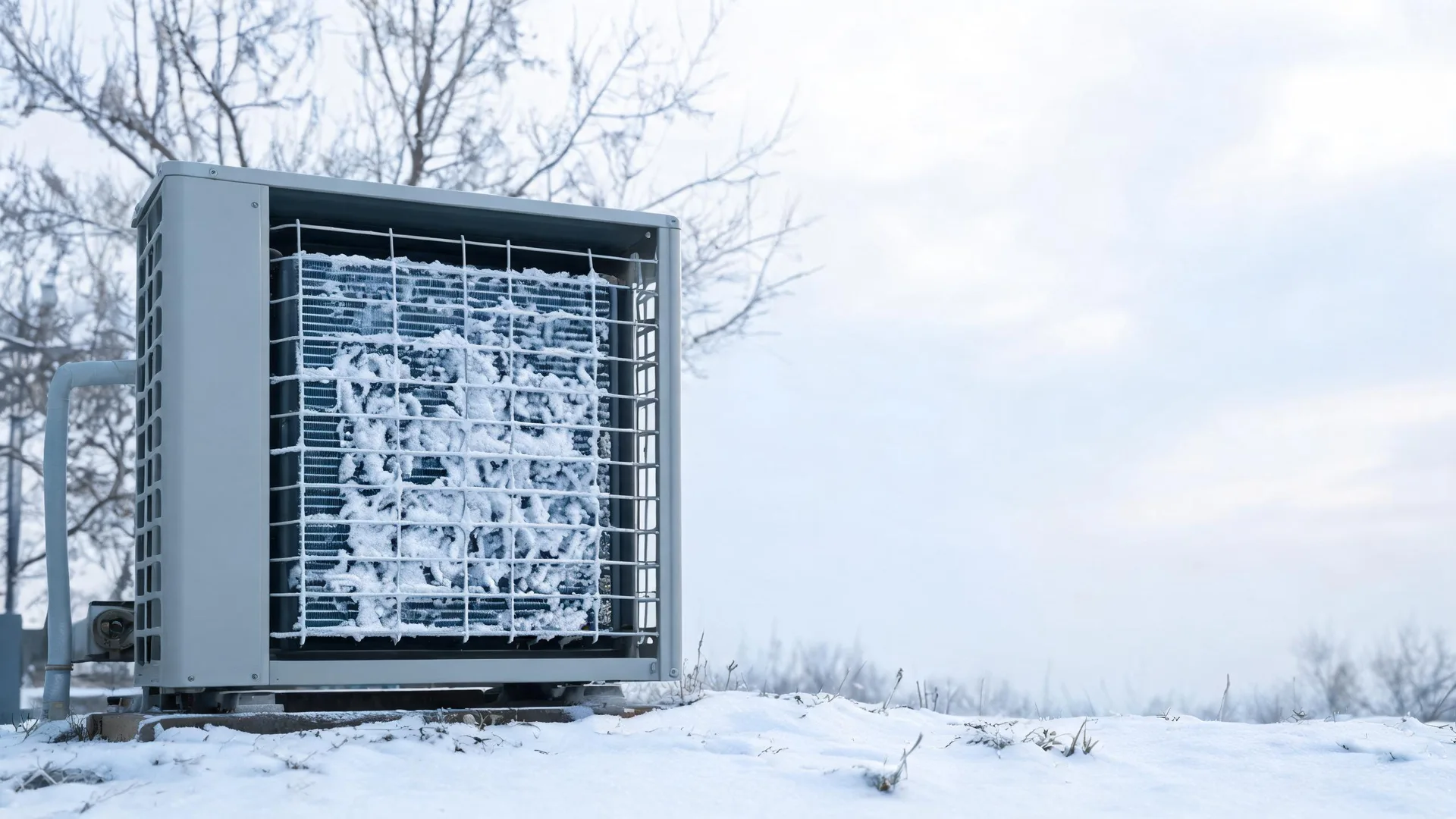
A diagnostic visit starts with the tech asking what you've noticed. Short cycling, warm air that isn't warm enough, ice on the outdoor unit, a system that won't switch over from cooling to heat. That tells them where to look first. They'll check refrigerant charge and pressures, test the capacitor and contactor, and look at the reversing valve, since a stuck valve is one of the more common reasons a heat pump blows cold air when it should be heating. They'll also check the outdoor coil for ice and see whether the defrost cycle is kicking in like it should. Electrical connections get checked too, since a loose wire can mimic a bad part and send you chasing the wrong fix. By the end you should know what's actually wrong, not just that something is.
If your heat pump came with the house, it's probably not old enough to be the problem on its own. Get the actual part that's failing fixed instead of pricing a new system.
Find a contractorBefore anyone comes out, go outside and look at the outdoor unit. Check that air is actually moving through it, nothing stacked against the sides, no leaves packed into the coil. If it's covered in ice or frost beyond a thin layer, that's worth noting but don't chip at it or hose it off. Inside, check your thermostat is set to heat and not accidentally sitting in cooling or fan-only mode, and swap the air filter if it's dirty, since a clogged filter chokes airflow and can bring on a lot of the symptoms that look like a bigger problem. Walk around to your vents and feel whether air is coming out, and whether it feels off. Warm air that doesn't feel warm enough is still worth mentioning to the tech, not something to dismiss. Check your breaker panel for a tripped breaker before assuming the unit itself has failed. None of this tells you what's broken. It just means the tech starts from what you already ruled out instead of starting from zero.
A capacitor loses its charge over years of starting the compressor and fan motors. A contactor's contacts pit and burn from the arc every time it closes. These parts have a working life, and when they reach the end of it, they fail regardless of how well the system was installed or maintained.
A furnace or straight air conditioner doesn't have one. It's what switches the system between heating and cooling, and when its coil or slide sticks, the system can get stuck in one mode or blow air that's the wrong temperature. It fails less often than a capacitor or contactor, but when it does, it mimics other problems, which is why a tech rules out the simpler parts first.
A heat pump that's losing a little performance doesn't fix itself by staying on. If the charge is low, the compressor keeps trying to pump refrigerant that isn't there in the right amount, and it runs hotter than it should every cycle. That wears on the compressor itself, and the compressor is harder to replace than almost anything else in the system. A reversing valve that's starting to stick gets worse the same way. Each time it almost catches, it arcs a little more, until it stops catching at all. Ice on the outdoor coil follows the same pattern. A thin layer melts off in the normal defrost cycle, but once it builds up, it blocks airflow across the coil, the system works harder to move heat through it, and the ice tends to build faster from there. None of these get better by leaving the system running and hoping. They get worse at whatever pace that part is already failing at, and some of them take other parts down with them.
A tech can usually tell you fast whether a part is worth fixing. A capacitor, a contactor, a defrost control board, these are inexpensive on their own and replacing one is the obvious call every time. The harder question comes up around the compressor. If the compressor itself has failed, that's the single most expensive part in the system, and on an older unit the cost of replacing it can get close to what a new system runs. That's the point where it's worth asking the tech plainly what's actually failed and letting that answer drive the decision, not the other way around. A system that's thrown several unrelated failures in a short stretch is telling you something different than a system that's had one part wear out on schedule. One is bad luck. The other is a pattern.