Get matched with a pro who works on furnaces in Cascade County.
Winters in Cascade County are hard, and that's the question behind this one. A heat pump has to work against that cold, and on the coldest nights most of them lean on backup heat to keep up. Gas doesn't have that problem. That's part of why most homes around Great Falls heat with gas, and it's worth knowing before you decide what to put in.
Power here runs at a typical price, which changes the math too. A heat pump moving heat instead of burning fuel can cost less to run in mild weather, but Great Falls doesn't get much mild weather in the winter. What looks good on paper for a milder climate doesn't always hold up here.
None of that makes the choice obvious, because it depends on your house. What your ductwork can handle, what your electrical panel can support, whether your gas line is already sized for a bigger furnace or a dual-fuel setup, these are things worth checking before you commit either way.
That's the part a contractor who's worked on homes in this area can walk you through, looking at what you actually have rather than what's true in general. You could spend your own time calling around, explaining your situation to each one, and comparing quotes that don't line up because nobody's working from the same numbers. Or you can skip that and get matched with a contractor suited to your situation, who'll reach out and go through it with you directly.
The rest of this page lays out how heat pumps and gas furnaces actually compare for a place like this, the real differences in how they perform through a Great Falls winter and a hot, dry summer. Read through that first. When you're ready to talk to someone about your own house, that's what the button below is for.
For a Great Falls winter, gas heat is the safer bet, and most homes here already have it. A furnace burns gas to make heat, so it doesn't lose capacity as the temperature drops. A heat pump moves heat from the outside air, and once that air gets cold enough, there's less heat out there to move. Below freezing it has to work harder, and on the coldest nights it needs backup heat, usually electric resistance, to keep the house warm. That backup is the expensive part to run. If your house already has gas line and a furnace, staying with gas means the coldest stretch of winter here doesn't put the heating system in a position where it needs help to keep up. A heat pump still has a place here for cooling and shoulder season heating, but on its own, for a Cascade County winter, gas carries the load better.
Gas keeps its output no matter how far the temperature drops outside.
A heat pump's capacity falls as the air gets colder, right when you need it most.
How Each System Actually Heats
A furnace lights its burners, heats a metal heat exchanger, and a blower pushes that warm air through your ducts.
A heat pump runs a refrigerant loop that pulls heat out of the outside air and carries it inside, the same cycle an air conditioner runs in reverse.
Below a certain outdoor temperature, usually somewhere in the 20s or 30s, a heat pump switches on backup electric resistance heat to make up the difference.
That backup heat draws a lot more power than the compressor alone, which shows up on the electric bill during the coldest stretches.
A furnace's ignition sequence, pilot or electronic, runs the same way whether it's 30 degrees outside or 30 below.
Some heat pumps are built with cold-climate compressors that hold more of their capacity in low temperatures, but even those still lean on backup heat on the hardest nights.
A furnace works by combustion. Gas burns at the burners, that heat passes into a metal heat exchanger, and a blower pulls air across it and pushes it through your ducts. The flame doesn't care what it's like outside. Whether the gas valve opens on a mild October morning or a January night at 20 below, the sequence runs the same and the output stays the same.
A heat pump works differently. It runs a refrigerant loop that pulls heat out of the outside air, even cold air still holds some, and carries it inside. It's the same cycle your air conditioner uses, just running backward. That works fine down to a point. Below a certain outdoor temperature, usually somewhere in the 20s or 30s, there isn't enough heat left in the air for the compressor to keep up on its own, so the system switches on backup electric resistance heat to close the gap.
That backup heat isn't free. It draws a lot more power than the compressor alone, and on the coldest stretches of a Cascade County winter, that's when it runs the most. Some heat pumps now come with cold-climate compressors built to hold more of their capacity at low temperatures. Even those still fall back on resistance heat once it gets cold enough. A furnace never has that problem. It just keeps burning gas at the same rate no matter how far the temperature drops.
A local pro for your furnace installation
Describe the project once instead of to every installer.
A local installer who puts in furnaces gets your project.
It costs nothing to send, and you don't have to hire anyone.
Why does your furnace room feel cold during a cold snap
On a hard Cascade County night, stand near your furnace room and you'll likely hear the burners cycle on more often, not less. That's normal when it's below zero outside. What's not normal is a furnace that runs almost constantly and still leaves rooms cool, or a pilot light that won't stay lit. Check your vent pipe outside too. If you see heavy frost buildup or it's blocked by snow, the furnace can't draw air properly, and that affects how safely it burns gas. A furnace that's struggling to keep up or showing signs of a cracked heat exchanger, a rotten egg smell, soot near the unit, isn't just a comfort problem. It's worth having looked at before the next cold stretch.
A furnace running the way it should
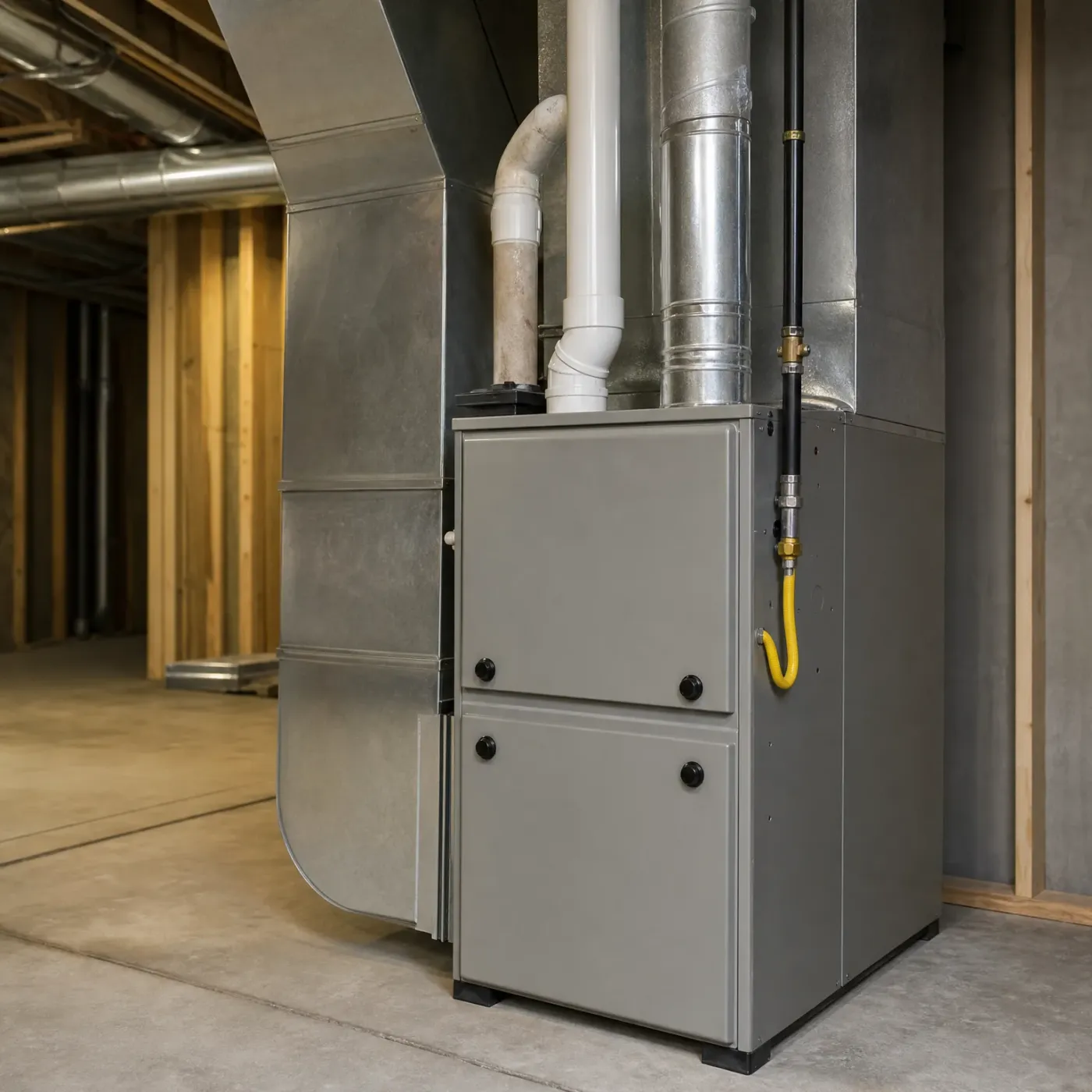
This is a two-stage gas furnace, PVC flue pipes venting it, and a sheet-metal plenum carrying warm air up into the ducts. The yellow line is the gas supply. On a cold night it fires, the blower comes on, and the house warms up without the furnace fighting the outside air to do it.
An older furnace carrying more of the load
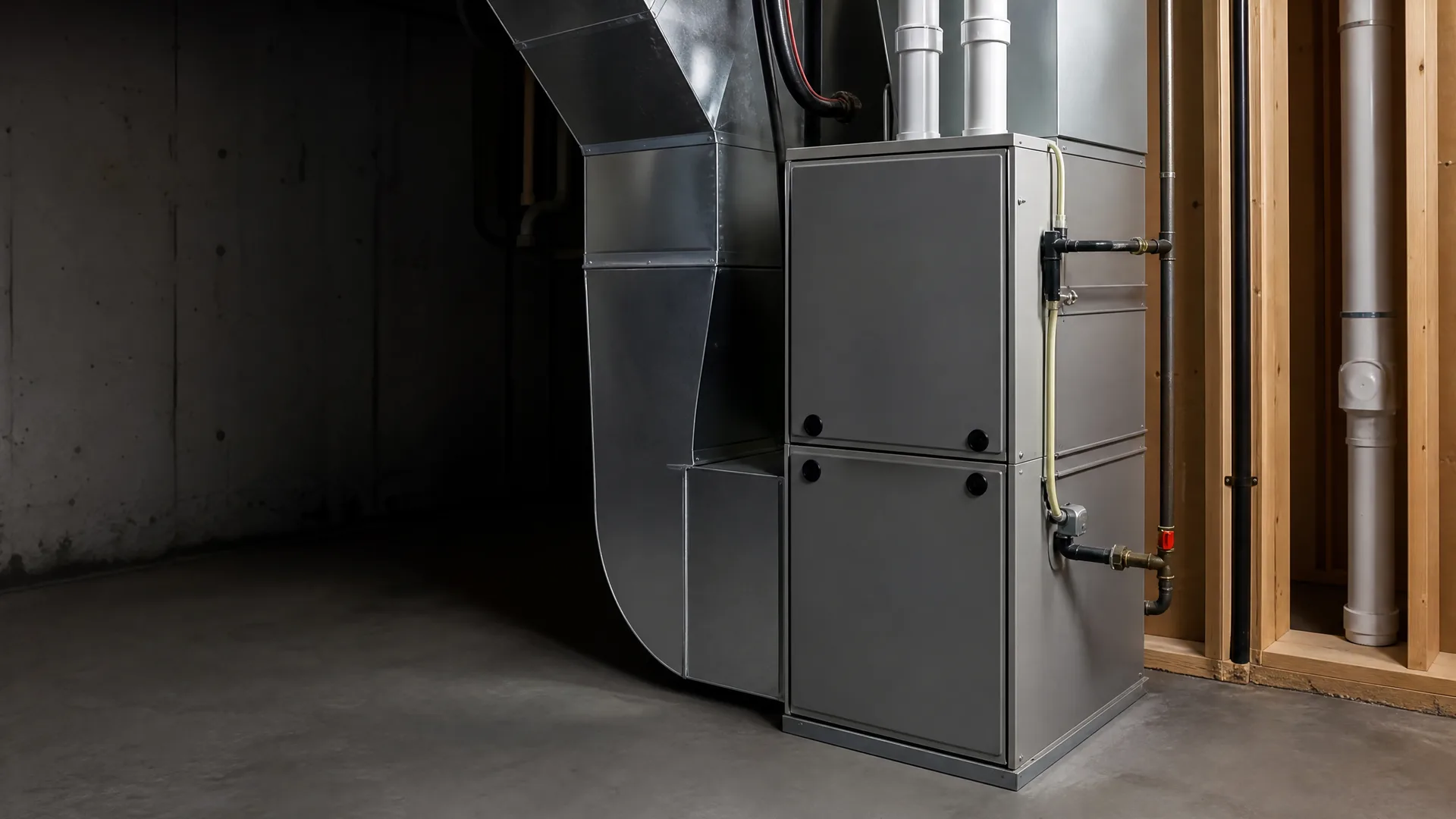
This furnace has louvered vents instead of a sealed cabinet, and the ductwork and gas line show their age. Next to it stands the water heater, drawing on the same gas line. In a Cascade County winter, a furnace like this one is still burning gas for every degree of heat, same as a newer unit, but it has fewer years left to do it.
Winter nights average 16°F
A night in the teens is a normal Tuesday here, not a cold snap. That's the average, so your furnace is built to run through nights colder than that without losing output. A heat pump sized for mild climates would be straining long before it got there.
NOAA nClimDiv 1991-2020
What a cold snap costs a heat pump
A heat pump is rated for how much heat it can move at a given outside temperature, and that rating drops as the air gets colder. Manufacturers publish a capacity number at 47 degrees and another at 17 degrees, and the second one is always lower. Below that, most units need backup heat, usually electric resistance strips, to make up the difference. Those strips use a lot more power than the compressor does on its own. A furnace has no such curve. It burns the same gas and makes the same heat whether it's 20 degrees outside or 20 below.
Where a dual fuel setup fits
Some homes run a heat pump alongside a gas furnace, switching to gas once the outside temperature drops below a set point. That setup can make sense where winters are mild enough that the heat pump carries most of the season on its own. Cascade County isn't that climate. With nights in the teens or lower common through the winter, the furnace would end up doing most of the work anyway, and the heat pump's summer cooling becomes the main reason to add one. If straight gas heat already covers your winter, that's one piece of equipment less to install, wire and maintain.
What should your heat run on in Cascade County
Winter nights average 16°F
Winter nights average 16°F here, cold enough that a heat pump's output drops right when the house needs it most.
Heat runs September through June
Heat runs September through June, about ten months a year. That long a stretch favors a system that doesn't lose capacity as it gets colder.
72.4% of homes heat with gas
72.4% of homes in Cascade County heat with gas already, and most furnace installs here are built around that same setup.
NOAA nClimDiv 1991-2020 · ACS 2020-2024
Gas heat is the right call in Cascade County
A furnace burns gas and makes the same heat whether it's 30 degrees outside or 20 below. That's what a winter here asks for, and that's why the gas furnace already in your house is doing the right job for this climate. A heat pump would lose ground on the nights you need heat the most.
If you're weighing a furnace replacement or want a second opinion on the one you have, finding someone to call it is its own chore: searching for contractors who know gas furnaces, explaining your setup on the phone to a few of them, waiting on quotes and trying to compare them against each other. Answer a few questions about your house and you'll be matched with a contractor who installs gas furnaces in Cascade County, and they'll reach out to you directly.