





Illuminated stone-and-timber mountain homes line a quiet street at dusk, with evergreen trees and a mountain range in the background.

Heat Pump Repair in Stanford, MT

Tell us about the job

Takes about a minute. No obligation.

RepairHeat PumpJudith Basin County, MT
Step 1 of 2

What ZIP code is the job in?

Heat here runs from September through June, about ten months of the year. August is the one month a heat pump sits idle, and that's when a weak part stays quiet instead of failing outright. Once the system kicks on for the season, it has to carry real load right away, and that's when a worn contactor or a low charge finally shows itself. If your heat pump is struggling in these first weeks, it's not because Stanford is hard on the equipment. It's more likely something that was already marginal and just got tested for the first time since spring.

10 months
September through June, your system heats
14°F
the average winter night it heats against
75°F
the average summer afternoon it cools against
Isometric line illustration of a cutaway single-story house showing interior rooms, ceiling ductwork connected to an indoor air handler, and refrigerant lines running to an outdoor condenser unit on a pad.

A diagnostic visit starts with gauges and a meter, not guesswork.

Refrigerant pressure and electrical readings point to the failing part before any cover comes off.

Judith Basin County weather is normal for Montana. Heat pump trouble here is still a parts problem.

100 severe weather events from 2015 to 2024
18% of homes statewide lost power a day or more in 2024
50 damaging wind events from 2015 to 2024

Montana homes paid 12.66 cents per kilowatthour for electricity in 2024. That's below the national average, so running a heat pump here isn't what's driving up a bill. When a heat pump in Stanford is costing more to run than it should, the cause is almost always the equipment itself, not the rate. A low charge makes the compressor work harder for the same heat. A failing contactor can cause short cycling, which burns power without finishing the job. Either one shows up on a bill before it shows up as a breakdown, so a sudden jump is worth a call even if the system is still running.

An older system may be near the end of its life

Half the homes in Judith Basin County were built in 1967 or earlier. A heat pump that came with a house that old is closer to the end of its life than the start. Before paying for a major repair, it's worth asking how much life is actually left in the unit.

Find a contractor
A gray heat pump outdoor unit mounted on a concrete pad next to the stone-accented exterior wall of a house.

Ask what the repair buys you

If the repair being quoted is a major one, ask the contractor straight out how many years it should buy you. A compressor or a coil are big jobs on any heat pump, and on one that old they're worth weighing against a full replacement before you commit. A straight answer on remaining life is worth asking for even if the repair is small.

Check the thermostat and power first

Make sure the thermostat is set to heat and the setpoint is actually above room temperature. Check the breaker for both the indoor air handler and the outdoor unit. A tripped breaker or a thermostat bumped into the wrong mode gets mistaken for a real failure more often than people expect.
Look at the outdoor unit before you call

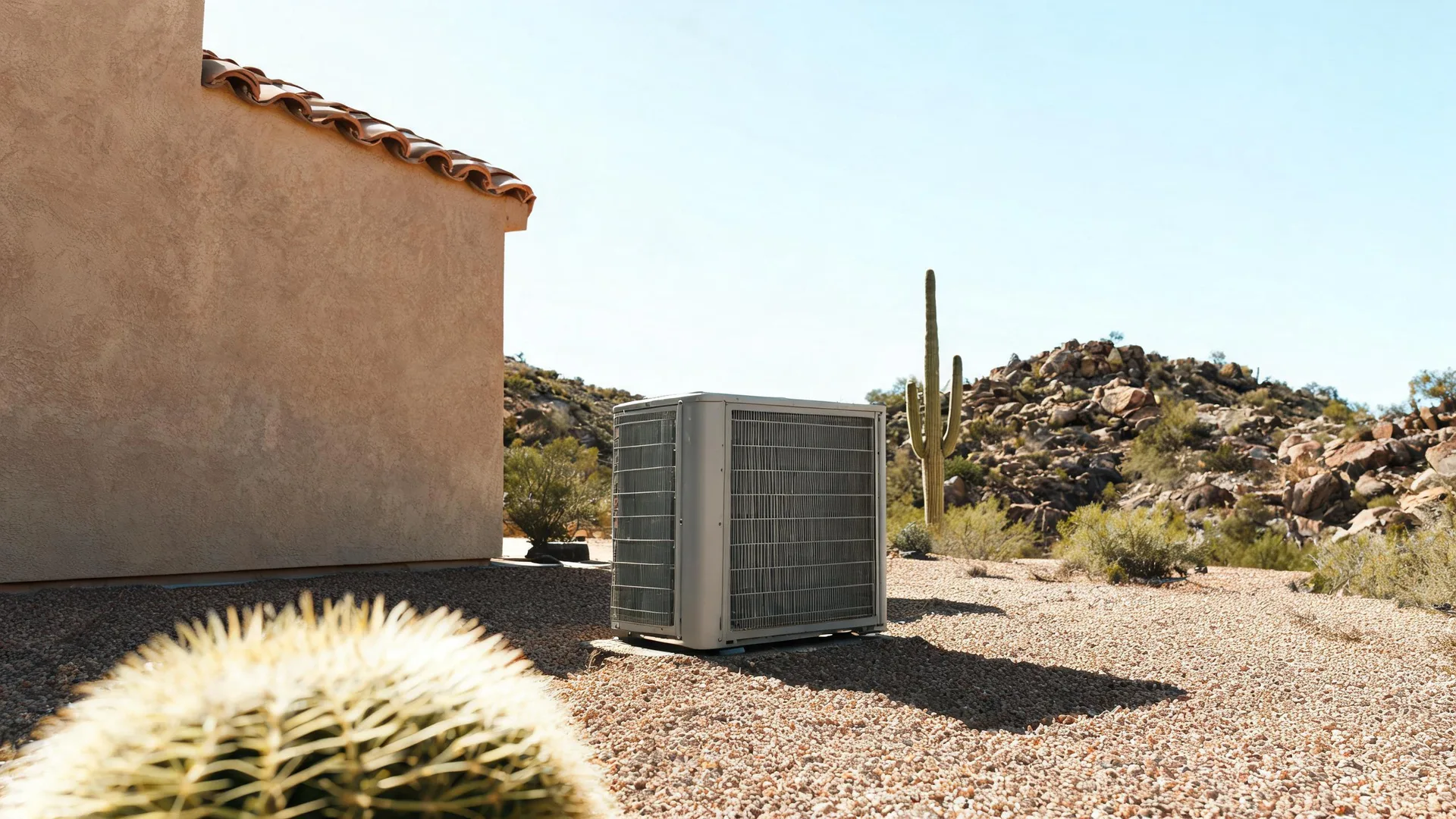
Walk outside and look at the unit itself. Ice built up across the coil, leaves or debris packed against the sides, or a fan that isn't spinning all point to something specific. Clearing debris away from the cabinet is safe to do yourself. If the coil is iced over or the fan isn't moving, that's a part failing, not something to force or chip away at.

A heat pump that's struggling gives you signs before it quits outright. Warm air that doesn't feel warm is the most common one. It's running, the air is moving, but it's not holding the room at setpoint, which usually points to a low charge or a compressor that's losing capacity. Short cycling is another one worth paying attention to, where the system kicks on, runs a few minutes, and shuts off before it's finished the job. That pattern wears out a contactor fast and makes the problem worse each time it happens. Hear a clicking at startup that doesn't resolve into a steady run, or a hum with no fan movement, and that's an electrical component failing, not something to wait out. A unit that runs constantly without ever satisfying the thermostat is working against a problem it can't fix on its own, and the longer it runs that way, the harder it is on the compressor.

A repair is worth doing when it fixes one part and leaves the rest of the system alone. A contactor, a capacitor, a fan motor, these are contained jobs. They don't tell you anything bad about the compressor or the coil. Replacement starts to make sense when the broken part is the expensive one, or when the unit keeps coming back for a different repair every season. A heat pump that needs a contractor out again and again is telling you something about where it's headed, even if each individual fix was small on its own. The other thing worth asking is whether the refrigerant in the unit is still being made. A system built for an older refrigerant can still be repaired, but parts and refrigerant both get harder to find and cost more over time, and that changes what a repair is actually worth.