





Illuminated timber-and-stone mountain cabins along a curved road at twilight, with lit trees and mountain peaks in the background.

Heat Pump Repair in Sidney, MT

Tell us about the job

Takes about a minute. No obligation.

RepairHeat PumpRichland County, MT
Step 1 of 2

What ZIP code is the job in?

A heat pump here takes a beating that has nothing to do with temperature. Richland County logged 91 damaging wind events and 53 hail events between 2015 and 2024. The outdoor unit sits right in the path of both. Hail dents the fins and the cabinet. Wind drives dust and grit into the coil where it has no business being. None of that stops the unit from running, but it does make the compressor and fan motor push against a coil that can't shed heat the way it should. That kind of wear builds up quietly, so when a heat pump here starts acting up, it's worth finding the actual cause instead of just resetting it and hoping.

9 months
September through May, your system heats
2 months
July through August, it cools
6°F
the average winter night it heats against
82°F
the average summer afternoon it cools against
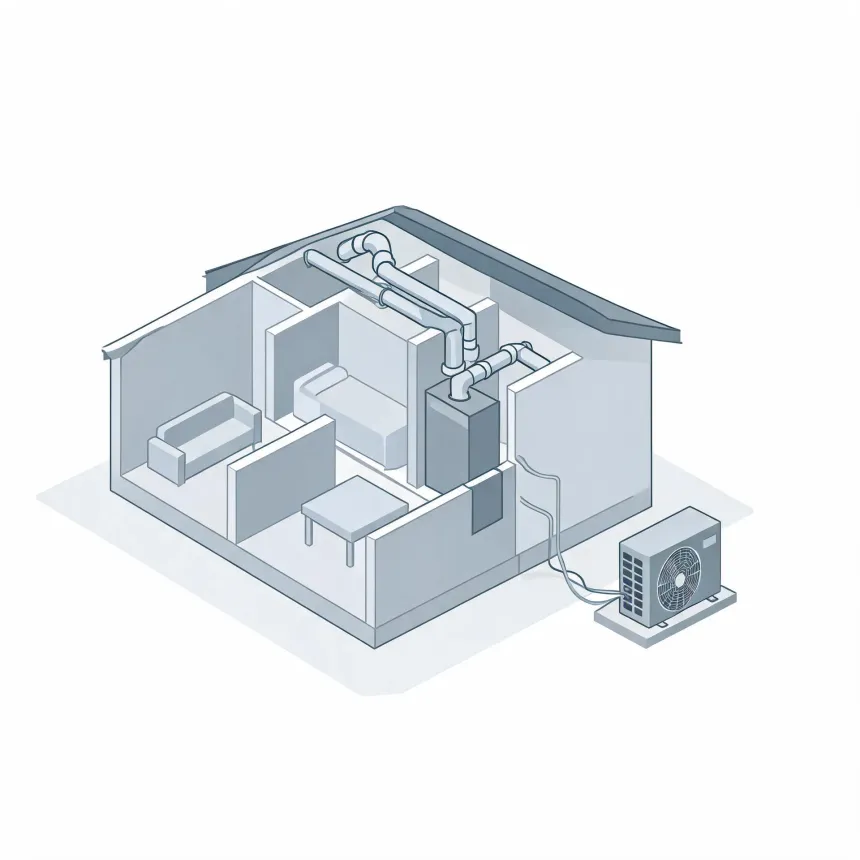
Isometric line illustration of a cutaway house showing interior rooms with furniture, ceiling ductwork connected to an indoor air handler, and a line running outside to an outdoor condenser unit.
Your system heats September through May and cools July through August.

NOAA nClimDiv, 1991–2020 normals

The outdoor coil fights dirt and bent fins all year, and a dirty or blocked coil is one of the most common reasons a heat pump stops keeping up.

A tech checking a failed unit starts at that coil, not the compressor, because most no-cool or no-heat calls trace back there.

Power here runs 12.03 cents a kilowatt-hour, and a struggling heat pump burns it anyway

Power here costs 12.03 cents per kilowatt-hour
91 damaging wind events from 2015 to 2024
53 hail events from 2015 to 2024
Why It Breaks Right When You Need It MostHeat runs here from September through May, and most failures show up the week the load does.

A heat pump that's icing up or short cycling doesn't use less power because it's struggling. It runs longer trying to hit the same temperature, and that extra runtime shows up on the bill before it shows up as a full breakdown. Waiting usually doesn't save anything, since the unit keeps drawing power the whole time it's working harder than it should. A tech can check the coil, the refrigerant charge and the compressor in one visit and say which one is behind it. The sooner that happens, the fewer months you spend paying to run a machine that isn't doing its job.

Have the Cause Found, Not Just the Symptom Reset

A dented coil or a grit-packed cabinet does not fix itself, and running the unit this way just adds wear on top of wear. A proper diagnosis finds which part took the damage, the coil, the fan motor, the compressor, so whoever fixes it fixes the right thing the first time.

Find a contractor
A gray heat pump condenser unit mounted on a concrete pad against the gray lap-siding exterior wall of a house.

What the Machine Tells You Before It Quits

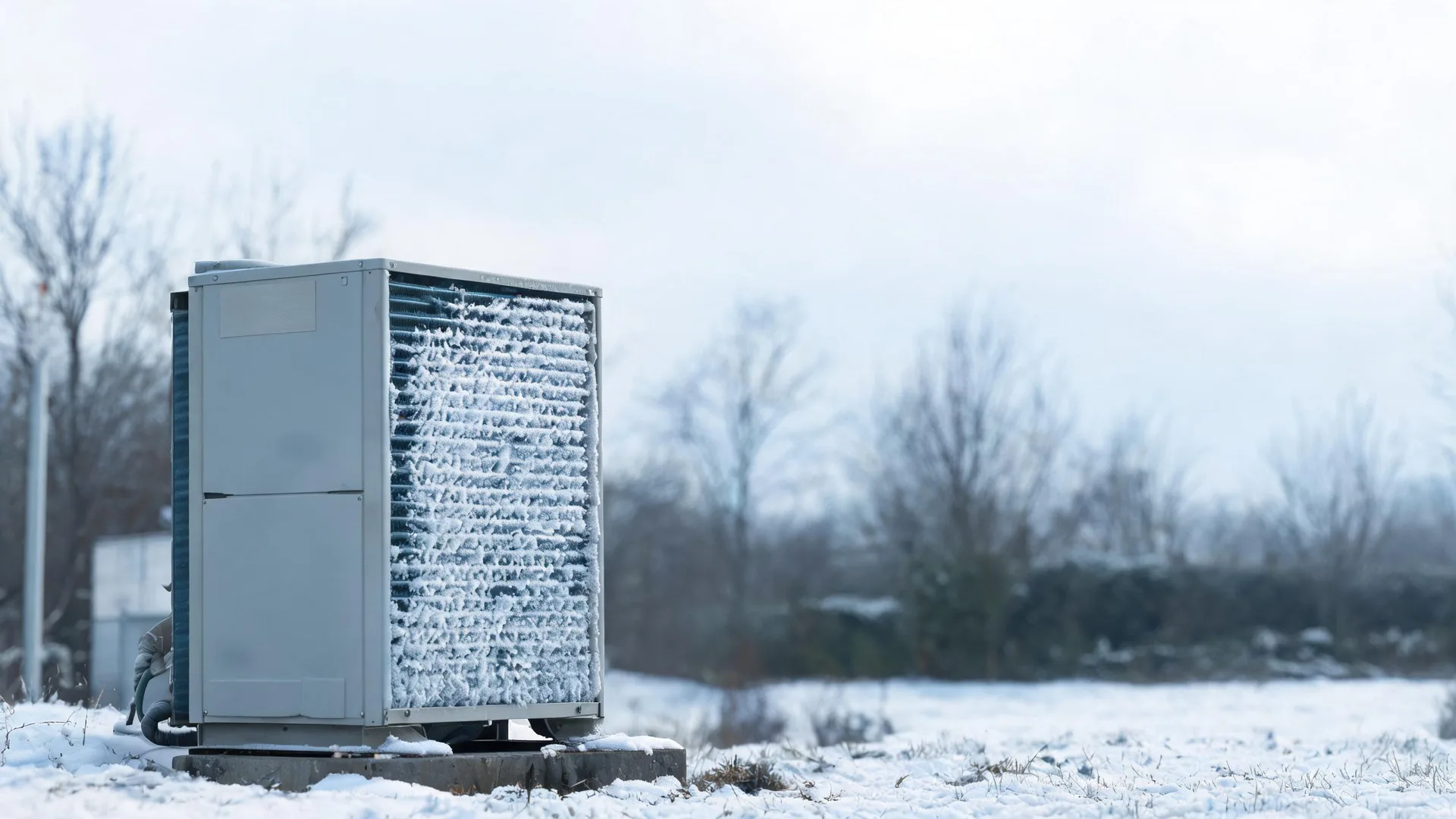
A heat pump doesn't fail all at once. It gives notice first. Air coming out the vents that's cooler than it should be when you're heating, or warmer than it should be when you're cooling, usually means the system is running but losing the fight. Short cycling, where it kicks on and off in quick bursts instead of settling into a steady run, puts strain on the compressor every time it restarts. Ice on the outdoor unit when it should be clear is another one. A little frost that clears during the defrost cycle is normal. A coil caked in ice is not. Listen for it too. A low hum that used to be quiet, a clicking at startup that wasn't there before, a fan that rattles instead of spinning smooth. None of these mean the system is done. They mean something inside it, the reversing valve, the defrost control, a motor bearing, is working harder than it should to do the same job. Catching it at the noise or the weak airflow stage is a lot cheaper than catching it when the compressor gives out.

What You Can Check Yourself

Look at the outdoor unit first. If snow or debris is packed against the cabinet, clear a space around it so air can move through. Check the air filter and swap it if it is gray or clogged. Walk through the house and feel the vents. If one room is cold and the rest are fine, that is a duct or airflow problem, not the heat pump itself. Check the thermostat batteries and make sure it is set to heat, not fan only. None of this takes tools or know-how beyond what is already in the house.
What to Leave Alone

Do not chip at ice on the coil or pry anything off the outdoor unit. The coil fins bend if you look at them wrong, and a bent fin is worse than the ice was. Do not pop the electrical panel on the unit or reset it more than once. A breaker that trips again after a reset is telling you something is actually wrong, and flipping it back on repeatedly just invites a harder failure. If the system is making a new noise or blowing air at the wrong temperature after you have done the simple checks, that is where a homeowner's job ends and a tech's begins.

Running a heat pump through a problem doesn't give it a chance to rest and recover, because there's no recovery built into how these systems work. A coil losing its fight to release heat makes the compressor work harder every single cycle, and a compressor that works harder runs hotter than it was built to. Heat is what kills compressors. A refrigerant leak behaves the same way. A system low on charge doesn't just run weaker, it runs the compressor on less lubricant than it needs, since the oil travels through the system mixed in with the refrigerant. Keep that up long enough and you're not looking at a refrigerant top-off anymore, you're looking at a compressor replacement. Small problems in a heat pump don't stay small because the machine doesn't know how to protect itself from them. It just keeps trying to hit the temperature on the thermostat, pushing the same worn part the same way, until that part is the thing that fails.

A tech weighing repair against replacement is really asking one question: is the compressor still good. The compressor is the part that can't be swapped out on its own without the cost rivaling a new system, so if it's sound, most other repairs are worth doing. A bad fan motor, a failed capacitor, a leaking coil, those get fixed and the unit goes back to work. If the compressor itself is grounded out or failing, that changes the math, because you'd be putting a new compressor into an old system built around aging parts. Age matters less than people think on its own. What matters is how many of the big parts have already been replaced and how the system has been running the last year or two. A unit that's needed a tech out for the same kind of failure twice is telling you something a single repair bill doesn't capture.