A paved road bordered by gravel and a weathered split-rail log fence curves past dark-sided cabins with metal roofs among tall conifer trees.

Heat Pump Repair in Roundup, MT

Tell us about the job

Takes about a minute. No obligation.

RepairHeat PumpMusselshell County, MT
Step 1 of 2

What ZIP code is the job in?

August is when weak units fail

Heat here switches over to the pump in September, and August is when a struggling system gets found out. A heat pump that's been coasting through a mild month suddenly has to work for real, and anything marginal in it shows up fast.


Get it looked at before the switch

A heat pump with a problem in August will have the same problem in September, just harder to live with. Having it checked before the season turns means a repair gets done on your schedule instead of on a cold morning.

9 months
September through May, your system heats
2 months
July through August, it cools
15°F
the average winter night it heats against
82°F
the average summer afternoon it cools against
Isometric cutaway illustration of a single-story house showing interior rooms, ceiling ductwork connected to an air handler, and an outdoor condenser unit linked by a line set.
Your system heats September through May and cools July through August.

NOAA nClimDiv, 1991–2020 normals

Check the outdoor unit before you call anyone. Clear leaves, grass or ice away from it so air can move freely on all sides.

Check the filter too. A clogged filter makes the whole system strain, and it's something you can fix yourself.

Roundup isn't hard on a heat pump. Most calls here are a normal fix.

Half the homes here were built by 1975
44 damaging wind events from 2015 to 2024
60 hail events from 2015 to 2024
Roundup isn't hard on a heat pumpMost calls here are a normal fix, the kind any heat pump needs sooner or later.

Winter nights here average 15°F, which is well within what a heat pump is built to handle. Roundup gets its share of wind, hail and winter storms, but none of that is what typically takes down a heat pump. What usually causes a breakdown is wear on a part that's been running for years. A failing capacitor. A low refrigerant charge. A reversing valve stuck in one position. Those happen in mild counties and harsh ones alike. If your heat pump has quit or is struggling, the cause is almost always something a tech has seen many times before, not something particular to this place.

Get it looked at early

Problems tend to show up in the first weeks of the season, when the load hits a part that was already weak.

Find a contractor
A white mini-split heat pump outdoor unit mounted on a concrete pad beside a gray-sided house, surrounded by gravel and green shrubs.

What actually happens when someone comes out

A tech starts outside, at the unit itself, looking for ice where there shouldn't be any and listening to how it runs before touching anything. Gauges go on next to check refrigerant pressure, since a system low on charge will short cycle or stop heating altogether. Indoors, they'll check airflow at the vents and look over the electrical components, the capacitor and contactor especially, because those wear out from simple on-off cycling over the years. If the system can't decide between heating and cooling, or blows cold when it should blow warm, the reversing valve gets tested, since that's the part that switches it between modes. A good diagnostic ends with the tech telling you what's actually wrong, not a guess, and what it takes to fix it.

A small problem doesn't stay small

A heat pump low on charge will keep running, but the compressor works harder to move heat with less refrigerant doing the job. Run it like that and the compressor takes the damage, when the real fix was finding the leak and adding charge.

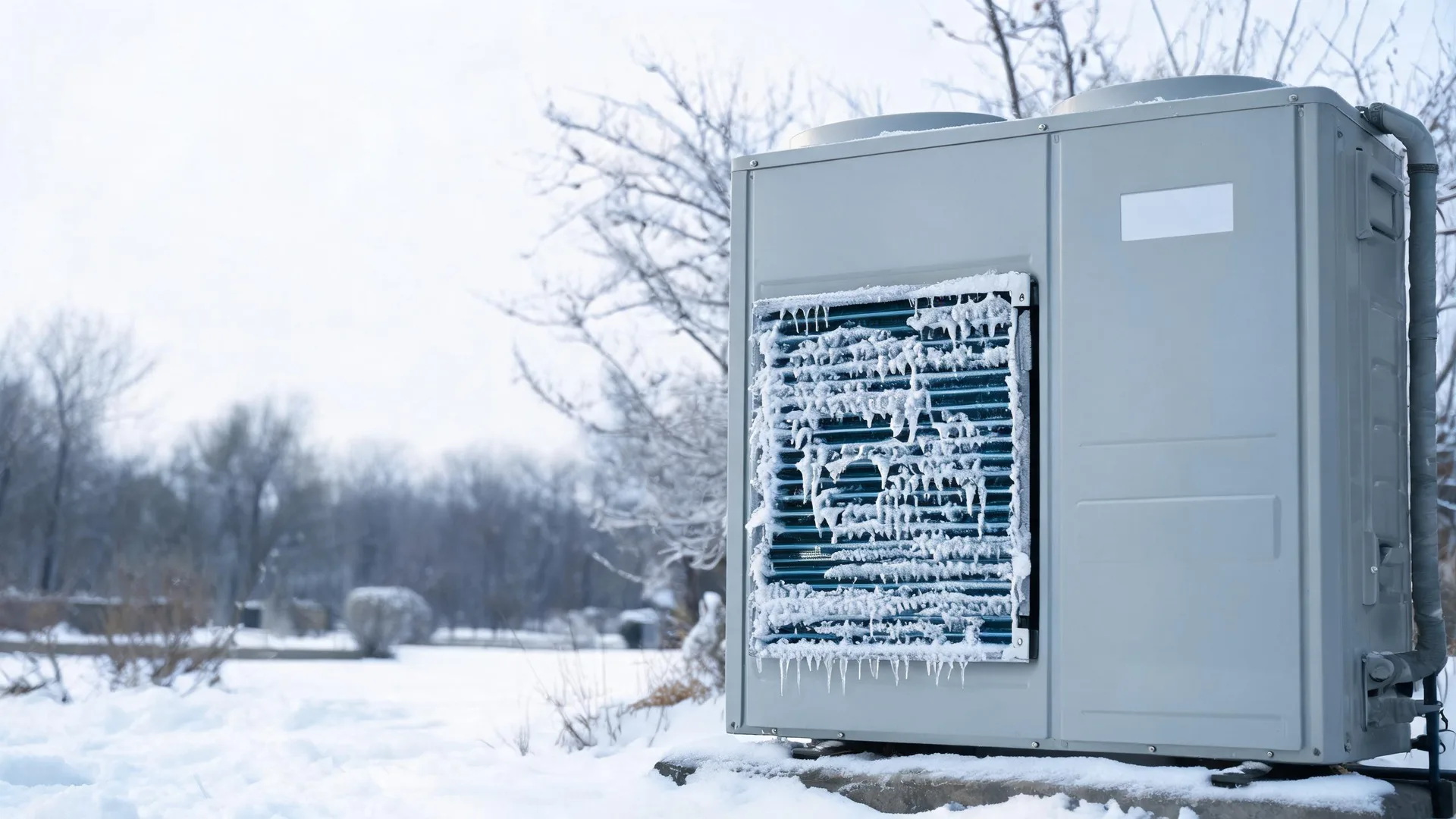
Ice is a sign, not the problem itself

A heat pump icing over on the outdoor coil is usually trying to tell you something, maybe a stuck defrost control, maybe a fan that's not pulling air across it. Keep running it and the ice just builds, blocking more airflow each cycle until the system can't move enough heat to keep up.

A heat pump in trouble gives itself away in how it runs, not just whether it runs. Listen for it cycling on and off more than it used to, short bursts instead of steady runs. Feel the air at the vents. If it's blowing but not warm, or warm but weaker than it should be, something's not moving heat the way it's supposed to. Watch the outdoor unit too. Frost that doesn't clear on its own during the defrost cycle means that process isn't working right. And pay attention to sound, a hum with no fan movement, a clicking that doesn't resolve into the unit starting up, a rattle that wasn't there before. Any one of these on its own might be nothing. Together, or getting worse week to week, they're the system telling you a part is already failing.

A heat pump fails one part at a time, and the part matters more than the age of the system. A capacitor or a contactor wears out from ordinary cycling, on and off, season after season, and either one is a quick, straightforward swap. A compressor is different. It either moves refrigerant or it doesn't, and when it starts going it usually gives some warning first, weaker heat, longer run times, ice that won't clear no matter what you try. So the real question isn't how long the unit has been out there. It's what's actually wrong with it. A system still running on its original compressor, with a bad fan motor or a failing control board, is almost always worth fixing. A system where the compressor itself is the problem is a harder call, since that part carries the rest of the unit and costs the most to replace. Ask the tech what part is actually failing before deciding anything, not just what it costs to get it running again today.