






Illuminated timber-and-stone mountain cabins along a curved road at twilight, with lit trees and mountain peaks in the background.

Heat Pump Repair in Missoula, MT

Tell us about the job

Takes about a minute. No obligation.

RepairHeat PumpMissoula County, MT
Step 1 of 2

What ZIP code is the job in?

Missoula County saw 254 severe weather events between 2015 and 2024, and winter storms with heavy snow or ice made up most of that count. Damaging wind came through dozens of times in that stretch, and hail hit more than once a year on average. Your heat pump's outdoor unit sits right in the path of all of it. Hail dents the fins and bends them shut, and wind-blown branches or gravel do the same kind of damage, often without stopping the unit from running. If it's been through a storm, have it looked at even if it still blows air.

10 months
September through June, your system heats
17°F
the average winter night it heats against
74°F
the average summer afternoon it cools against
Isometric line illustration of a cutaway house showing interior rooms with furniture, ceiling ductwork connected to an indoor air handler, and a line running outside to an outdoor condenser unit.

Heat here starts up in September, right after the system has sat idle since spring.

A weak part usually waits for that first real cold snap in September to fail.

Half the homes in Missoula County were built in 1985 or later, so a lot of heat pumps here still have years of work left in them.

Half the homes here were built by 1985
69 damaging wind events from 2015 to 2024
21 hail events from 2015 to 2024

After a storm, get the outdoor unit checked, even if it's still running

If your outdoor unit has been sitting through hail or wind since the last storm, a quick check now can catch bent fins or loose parts before they turn into a bigger repair.

Find a contractor
A man in a cap, dark work shirt and brown trousers walks up stone steps toward a dark blue panelled door, carrying a canvas tool bag filled with hand tools, beside a potted shrub.
A gray heat pump condenser unit mounted on a concrete pad against the gray lap-siding exterior wall of a house.

Running it longer doesn't give a failing part time to recover

A heat pump that's struggling doesn't fail cleanly. It fails a little more each hour it keeps running. A refrigerant leak gets worse under load, and a compressor forced to work with the wrong charge runs hotter than it should, which shortens its life instead of just making it work harder today. A weak start capacitor makes the compressor pull extra current every time it tries to start, and that extra strain is what finally kills it. A reversing valve that's starting to stick wears its seals a little more each cycle, until it stops switching at all. None of these get better by giving them more time. Shut it off if something sounds wrong or the air isn't right, and let a tech find the one part behind it before it takes another part down with it.

The unit blows, but the air isn't warm or cool enough

A heat pump that runs constantly and still leaves the house a few degrees off is telling you something is wrong. It might be low refrigerant, a failing compressor, or a reversing valve that isn't switching the way it should. The fix depends on which one it is, so this is worth a diagnosis rather than a guess.
It's making a sound it didn't used to make

Clicking at startup is normal. A grinding, squealing, or banging sound is not. That kind of noise usually means a motor bearing is wearing out or a part has come loose inside the cabinet. Running it longer while you wait only gives the worn part more time to damage whatever is next to it.

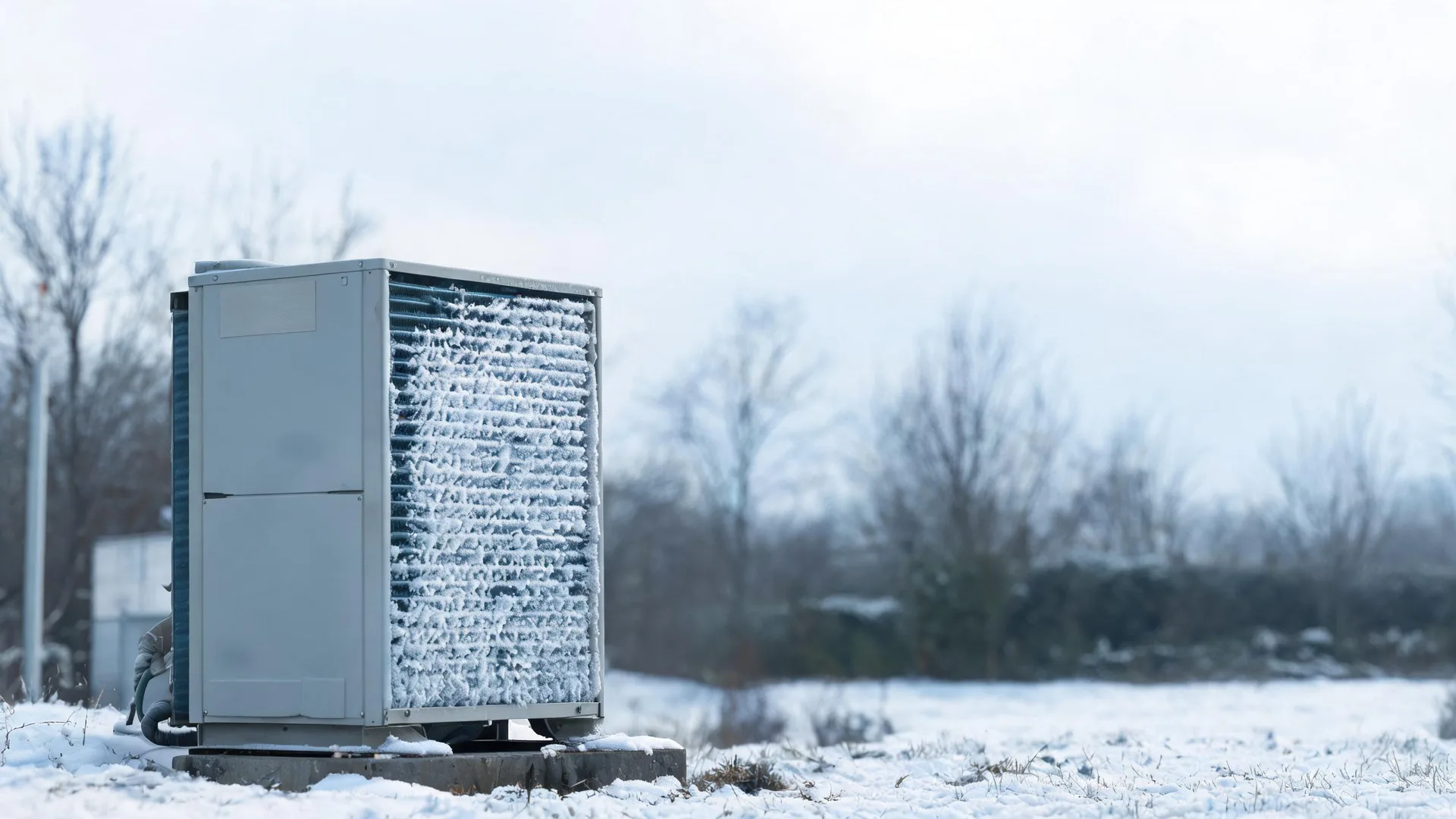
Before you call anyone, look at the outdoor unit itself. Clear away leaves, grass clippings or snow piled against the cabinet, since those fins need open air on both sides to move heat at all. Check the air filter inside the house too. A filter clogged with dust chokes the airflow and can make the whole system struggle in a way that looks like a bigger problem than it is. If the thermostat display is dim or blank, try fresh batteries before anything else. Walk outside and see whether the fan is actually spinning. If it isn't turning and you hear a faint hum from the cabinet, shut the system off instead of cycling it on and off, that hum means the motor is trying to start against something and running it that way wears on the compressor. Whatever you find, tell the tech when they arrive. It points them straight at the problem instead of starting from scratch.

A diagnostic call starts outside at the unit itself, not with a clipboard. The tech hooks gauges to the service ports and checks refrigerant pressure first, because that number says whether the charge is right, low, or overfull, and each of those points somewhere different. Capacitors get tested under load rather than just looked at. A capacitor can read fine sitting still and still fail the moment the compressor tries to start. The reversing valve gets checked both ways, heating and cooling, since a valve that works in one direction and sticks in the other is a common reason a heat pump blows the wrong temperature air. Inside the cabinet, they pull the panel and look at the wiring and contactors for scorch marks or pitting. Those marks mean a connection has been arcing. None of this takes guesswork once the gauges and meter are on it, and a proper diagnosis should point to one part, not a list of maybes.