





Illuminated timber-and-stone mountain cabins along a curved road at twilight, with lit trees and mountain peaks in the background.

Heat Pump Repair in Libby, MT

Tell us about the job

Takes about a minute. No obligation.

RepairHeat PumpLincoln County, MT
Step 1 of 2

What ZIP code is the job in?

Winter around Libby means long stretches below freezing, with overnight lows averaging 19°F through December, January and February. That's real cold for a heat pump to work against, but it's not unusual cold. Heat pumps are built to run in conditions like this. Most failures here come down to the same causes you'd find anywhere, a failing defrost board, a low refrigerant charge, a reversing valve stuck in one position. The county gets its share of heavy snow and ice too, so a frozen or blocked outdoor unit is worth ruling out first. Beyond that, treat it like any repair. Find out what's actually wrong before you decide what to do about it.

10 months
September through June, your system heats
19°F
the average winter night it heats against
74°F
the average summer afternoon it cools against
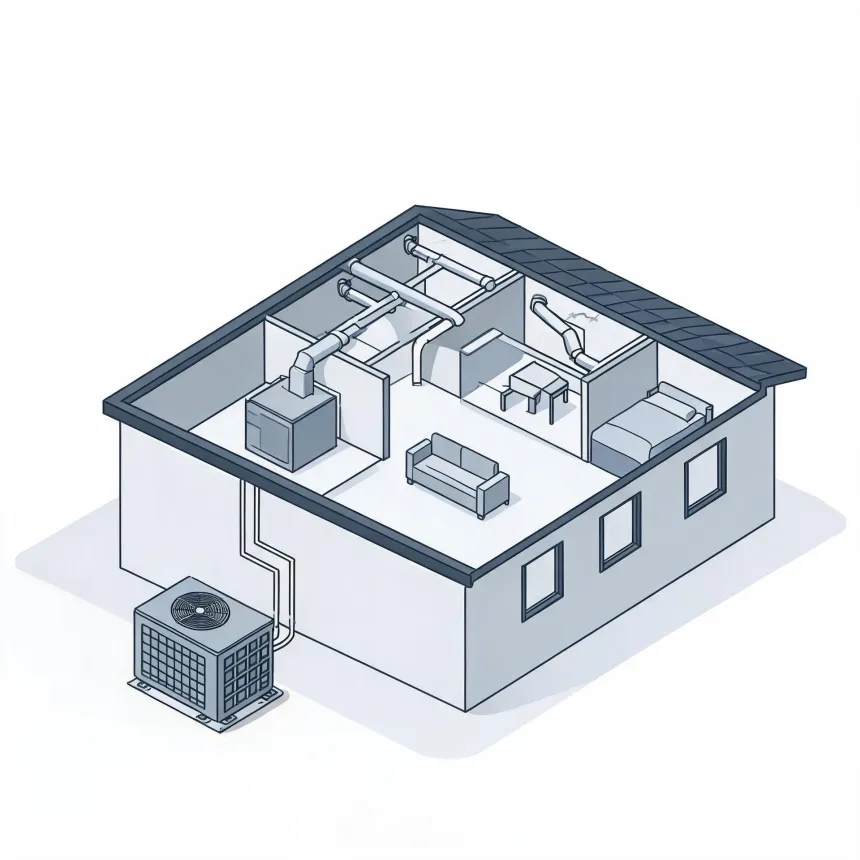
Isometric line illustration of a cutaway single-story house showing interior rooms with ducted air distribution, an indoor air handler, furniture, and an outdoor condenser unit connected by lines outside the wall.

A heat pump low on refrigerant forces the compressor to run harder than it should.

Keep it running that way and the compressor is what fails next, not the refrigerant line.

A heat pump here fails for the same reasons it fails anywhere else

Power costs 12.66 cents a kWh statewide
Climate zone 6B
Heat runs September through June

Half the homes in Lincoln County were built in 1982 or earlier, and half in 1982 or later, so the age of the house doesn't point to one cause over another. A heat pump in an older place fails the same way one in a newer place does, from a worn contactor, a failed capacitor, a control board that's given out. Mobile homes make up 15 percent of the housing here, which has more to do with where the outdoor unit sits and how exposed the lines are than with what actually breaks inside it. Whoever looks at it needs to find the part that failed, not guess based on the house around it.

Get the usual fix

Nothing about this area is especially hard on it. It's most likely the usual problem with the usual fix.

Find a contractor
A man in a dark long-sleeve shirt and tan work pants, seen from behind, carries a worn canvas tool bag up concrete steps toward a dark blue front door.
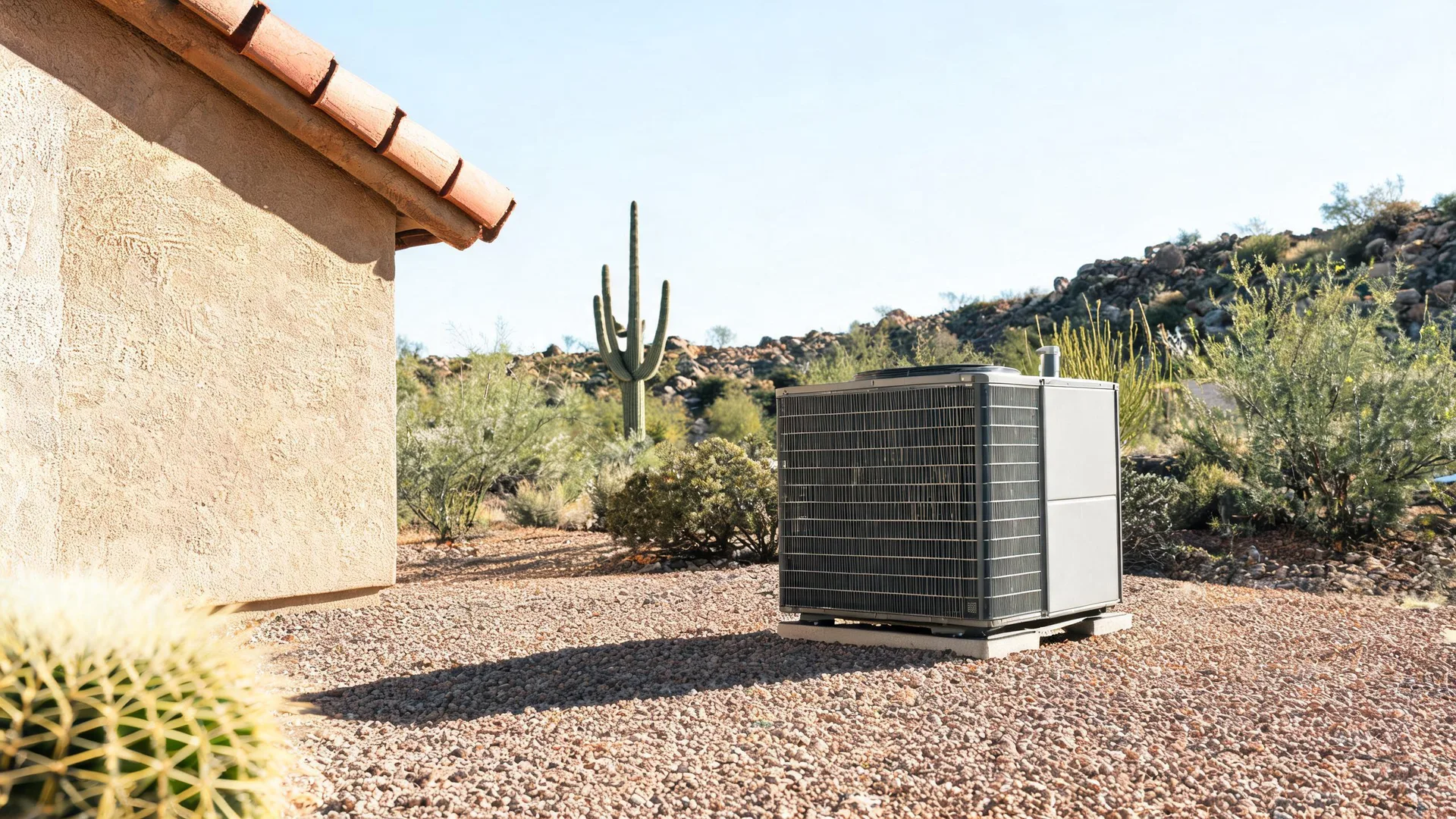
A gray heat pump condenser unit mounted on a concrete pad against the gray lap-siding exterior wall of a house.

It never really shuts off

A heat pump outside runs every day of the year, not just in the hard months. Summer or winter, it's cycling on and off to hold the temperature steady, and that adds up to more running hours than almost anything else in the house. All that cycling wears on the same parts in the same order. Contactors pit and stick from making and breaking current thousands of times. Capacitors lose their charge and stop giving the compressor and fan motors the kick they need to start. Bearings in the fan motor dry out and start to whine before they seize. The reversing valve, which only this type of system has, switches back and forth between heating and cooling and can stick in one position after years of use. None of this is damage from a hard season. It's just what happens to a machine that never really stops.

What you'll notice first

A heat pump in trouble usually tells you before it quits outright. It blows air that's cool when it should be warm, or it runs long stretches without the house ever feeling right. The outdoor unit might click and try to start without catching, or carry ice that doesn't melt off between cycles. Sometimes it just runs on and on, cycling again and again without ever satisfying the thermostat.
Don't wait on a system that's struggling

A unit that's icing up, short cycling, or running nonstop is already compensating for whatever's failing underneath. Left alone, the strain tends to move from the part that caused it to the parts around it, a weak capacitor forcing the compressor to work past what it's built for. Catching it while it's still a stuck reversing valve or a failing capacitor is a different repair than catching it after the compressor itself gives out.

Before calling anyone, look at the outdoor unit itself. Clear away snow or ice piled against it, and check that nothing is blocking airflow into the coil. Some frost on the coil during a defrost cycle is normal. A thick shell of ice that never melts off is not. Go inside and check the thermostat is actually calling for heat, set above room temperature, and that the batteries aren't dead if it uses them. Check the breaker for the outdoor unit hasn't tripped. Look at the air filter while you're at it. A filter packed with dust chokes airflow and can make a working system act like a failing one. If the vents are blowing air that feels cool rather than warm, let it run a few minutes before deciding something's wrong, since heat pump air is naturally cooler than a furnace's. None of this fixes a bad reversing valve or a weak compressor, but it rules out the simple stuff first.

Repair makes sense when the part that failed is a part on its own, a capacitor, a contactor, a defrost board, a fan motor. Swap it out and the rest of the system is no different than it was the day before. The compressor is the one part worth thinking about differently, because it's not really a part so much as the heart of the whole system, and replacing it alone costs a real share of what a new unit costs. A tech who finds a failed compressor should tell you that plainly instead of just quoting the repair, because at that point you're deciding between a expensive repair and a new system, not between a cheap fix and an expensive one. Age matters less than what's actually broken. A unit that's given you no trouble for years and suddenly has one bad part is usually worth fixing. A unit that keeps coming back with a different failure every season is telling you something too, even if each individual repair looks small on its own.