






A row of illuminated timber-frame and stone houses photographed at dusk, with evergreen trees and a mountain range in the background.

Heat Pump Repair in Glendive, MT

Tell us about the job

Takes about a minute. No obligation.

RepairHeat PumpDawson County, MT
Step 1 of 2

What ZIP code is the job in?

Half the homes in Dawson County were built in 1966 or earlier. That puts a lot of heat pumps in this area well past the point where a repair is just a repair. A compressor or reversing valve on a unit that old is doing a different kind of math than the same part on a five year old system. If your heat pump came with an older house, find out how old it actually is before you spend much on this repair. The part might hold, but the one behind it might not.

9 months
September through May, your system heats
2 months
July through August, it cools
8°F
the average winter night it heats against
82°F
the average summer afternoon it cools against
Isometric grayscale illustration of a cutaway house showing interior rooms, ducted air handler and duct runs, connected by pipes to an outdoor condenser unit beside the building.
Your system heats September through May and cools July through August.

NOAA nClimDiv, 1991–2020 normals

Dawson County took damaging wind 127 times and hail 56 times between 2015 and 2024.

A heat pump mounted outside takes that beating year after year, and the coil or fan blades show it first.

This county sees more storms than most, and the unit outside takes every one of them

208 severe weather events from 2015 to 2024
18% of homes statewide lost power a day or more in 2024
127 damaging wind events from 2015 to 2024
The Worst Time for This to FailHeat here starts up in September, and August is when a weak part gives out.

Electricity here runs 12.35 cents a kilowatt-hour, cheaper than most of the country. That's one thing working in your favor. But a heat pump that's struggling, low on charge, a failing compressor, a reversing valve that won't switch right, pulls more power to do the same job, and it runs long hours doing it. Cheap power helps less when the machine itself is the problem. A unit in that shape is costing you every month it stays broken, even here.

Find Out What The Weather Did Before You Fix It

Wind and hail hit this outdoor unit year after year. When a heat pump starts acting up here, that's usually part of why. A proper diagnosis will tell you whether it's a coil, a fan blade, or something else, and whether the fix will actually hold.

Find a contractor
A man in a cap, dark work shirt and brown trousers walks up stone steps toward a dark blue panelled door, carrying a canvas tool bag filled with hand tools, beside a potted shrub.
A gray heat pump condenser unit mounted on a concrete pad against the gray lap-siding exterior wall of a house.

Know Its Age Before You Spend On It

Before you pay for this repair, find out when your system was actually installed. A heat pump that came with the house and an older house here could mean a unit running on borrowed time, and a compressor or reversing valve near the end doesn't owe you a long run after this fix. If it was put in more recently, that changes the math entirely, and this repair is worth doing without a second thought. Either way, that's the first question, before the part number.

What You Can Check Yourself

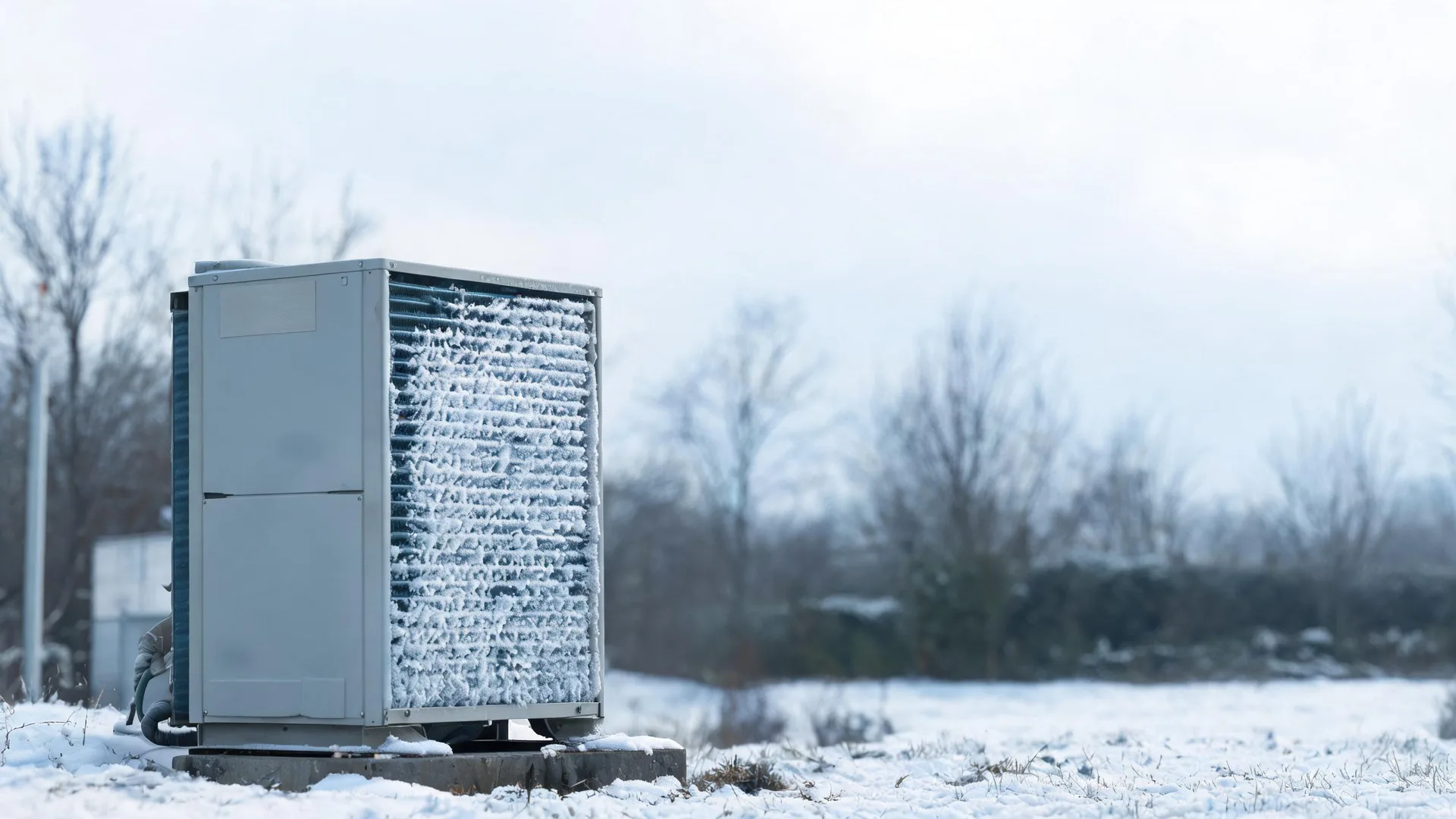
Look at the thermostat first. Make sure it's set to heat or cool as needed and the batteries aren't dead. Check your breaker panel for a tripped breaker on the air handler or the outdoor unit. Go outside and look at the unit itself. If ice is covering the coil or the fan blades, don't chip at it. Turn the system off and let it thaw on its own. While you're out there, check that nothing is blocking the airflow around the cabinet, no leaves, no snow drift, no stored patio furniture pressed against the sides. Inside, pull the air filter and hold it up to a light. If you can't see through it, replace it. A clogged filter starves the system of airflow and can make a heat pump freeze up or short cycle.
What Tells You to Call Now

Some signs mean stop checking and get someone out. If the outdoor unit is running but no air is coming from the vents, or the air coming out feels wrong for the mode it's in, that points to the reversing valve or the compressor, not something you can fix with a filter change. A hissing or bubbling sound near the lines usually means refrigerant escaping, and that's not a wait-and-see problem. Any burning smell or a breaker that trips again right after you reset it means stop touching it and call. These aren't jobs for troubleshooting at home. They're jobs for someone with gauges and the training to read what they say.

Most heat pump failures come down to a handful of parts doing the same jobs over and over until one of them quits. The capacitor that kicks the compressor and fan motors on wears down with age and heat cycles, and when it goes, the outdoor unit hums but won't start, or the fan won't spin. The reversing valve, the part that switches the system between heat and cool, can stick from debris or a failed solenoid coil, and then you get heat when you called for cool or no switch at all. Refrigerant doesn't get used up, so if the charge is low, something is leaking, usually at a fitting, a coil, or a line connection, and that leak only gets worse until it's found and sealed. The compressor itself is the part everyone worries about, and it usually fails last, after it's been run low on charge or with bad electrical supply for a long time. A failing run capacitor or a dirty outdoor coil makes the compressor work harder, and that shortens its life well before it would otherwise quit on its own.

If this repair doesn't hold, a heat pump running poorly costs more here every month than it would somewhere with pricier power working against you, simply because it has to run so long to get the job done. That's backwards, but it's true. A unit that short cycles or runs constantly trying to hit the set temperature is burning power the whole time it's doing that, not just when it finally breaks down for good. Get the diagnosis now instead of waiting to see if it gets worse. The repair itself is the same cost whether you call this week or next month, but the power it wastes limping along isn't.