





Illuminated timber-and-stone luxury homes along a residential street at dusk, with snow-capped mountains visible in the background.

Heat Pump Repair in Glasgow, MT

Tell us about the job

Takes about a minute. No obligation.

RepairHeat PumpValley County, MT
Step 1 of 2

What ZIP code is the job in?

A heat pump that needs a second repair call in the same year is telling you something. So is one that's old enough that the compressor or reversing valve is what failed, since those are the expensive parts to replace and the ones most likely to go once a system has aged. If the problem is a capacitor, a contactor, a sensor or a fan motor, fixing it makes sense almost every time, those parts fail on their own schedule and don't say much about the rest of the system. If the compressor is shot, a straight repair often costs close to what you'd put toward a new unit, and the rest of the system is that much older too. Ask what failed, not just how much it costs to fix it.

10 months
September through June, your system heats
2 months
July through August, it cools
6°F
the average winter night it heats against
80°F
the average summer afternoon it cools against
Isometric line illustration of a cutaway single-story house showing interior rooms with furniture and attic ductwork connected to an outdoor condenser unit beside the building.
Your system heats September through June and cools July through August.

NOAA nClimDiv, 1991–2020 normals

Montana electricity ran 12.66 cents a kilowatt-hour in 2024.

A heat pump that's struggling to keep up burns through that rate every day you put off the repair call.

Heat pump problems here tend to show up first in September and in July

Cooling runs July through August
Heat runs September through June
256 damaging wind events from 2015 to 2024

Half the homes in Valley County were built in 1966 or earlier. If your heat pump came with a house that old, it's had a long run already, maybe more than one system in that time. Check the nameplate for the install date before you decide anything. A unit that's old and needs a compressor or reversing valve isn't a good bet for a repair, no matter how old the house around it is. A younger unit almost always is worth fixing, same reasoning in reverse.

Stop paying for a struggling machine

Power costs more here, so a machine that's running badly costs you every month. Get it fixed soon.

Find a contractor
A man seen from behind in a dark shirt and tan work pants carries a canvas tool bag up stone steps toward a gray panelled front door of a shingled house, with a potted shrub beside the entry.
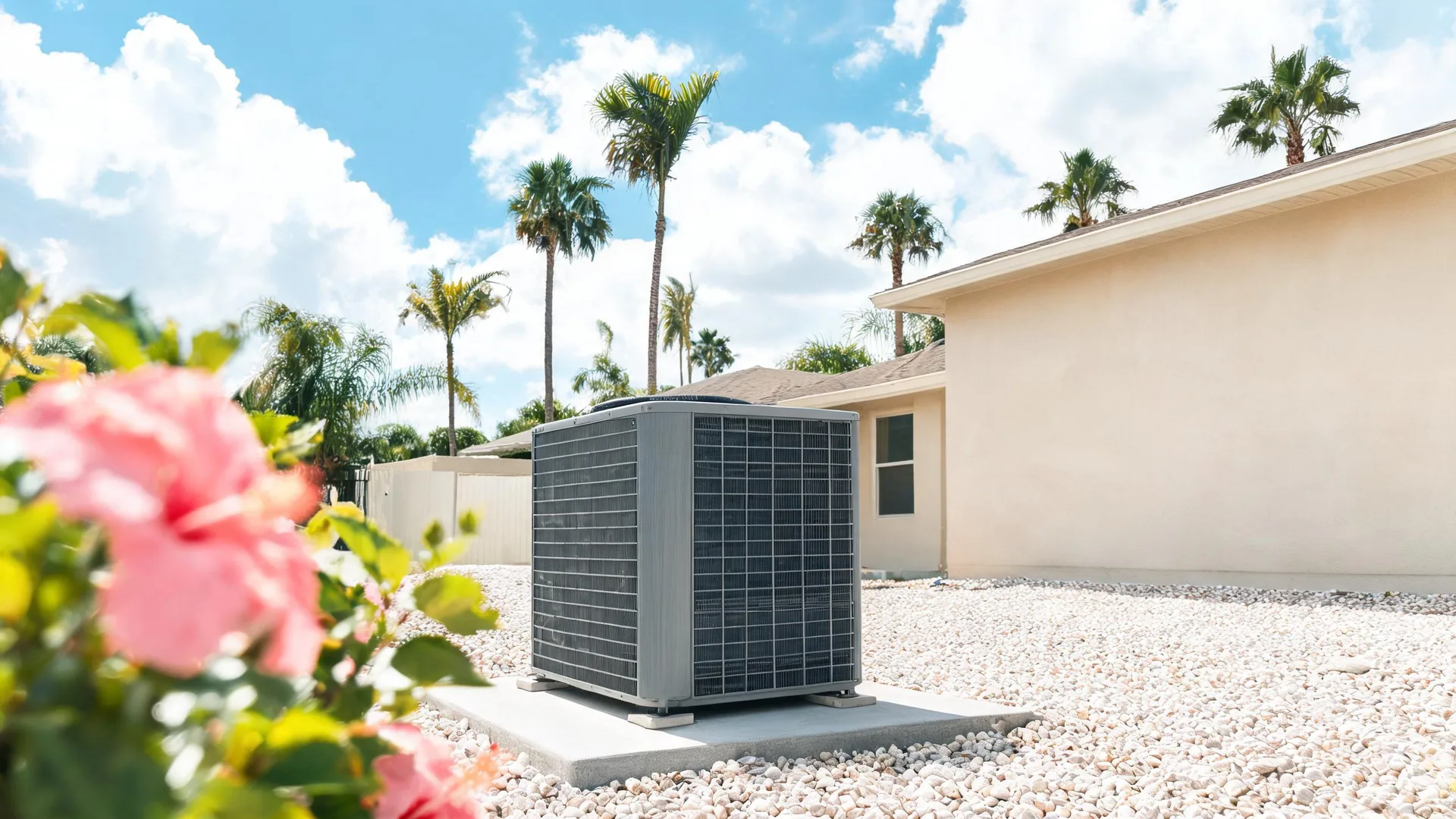
A gray heat pump outdoor unit mounted on a concrete pad next to a residential house with lap siding and stone accents.

What to check before the truck shows up

Before you call anyone, go outside and look at the outdoor unit. If it's caked in ice beyond what a normal defrost cycle clears, or if the fan isn't spinning at all, that's worth noting. Check that nothing is blocking airflow around it, no leaves, no snow drift, no stored stuff pushed up against the cabinet. Inside, pull the filter and hold it up to a light. If you can't see through it, that's likely choking the system no matter what else is wrong. Check your thermostat batteries if it uses them, and make sure it's actually set to heat or cool and not sitting in some scheduled mode you forgot about. Look at your breaker panel for anything tripped. None of this fixes a bad compressor or a failed reversing valve, but it rules out the simple stuff before someone drives out to look at it.

Warm air in winter, cool air in summer

A heat pump that blows air that doesn't feel hot enough in winter is probably stuck or weak in its switch between heating and cooling. It's not always the reversing valve. Sometimes it's low refrigerant, sometimes a sensor telling the system the wrong thing. But air that's barely warm, or air that goes cold when it should be warm, means the cycle isn't completing right.
Ice that won't clear, noise that wasn't there before

Some frost on the outdoor unit during a defrost cycle is normal. Ice that builds up and stays, especially a thick layer that doesn't melt off on its own, means the defrost cycle isn't working or the system is low on charge. A new noise, a hum that wasn't there, a clicking or a hard rattle, usually means a motor bearing or a fan blade is going bad before it fails outright.

A heat pump fails in a handful of predictable ways. Capacitors weaken over time and stop giving the compressor or fan motor the jolt it needs to start, so the unit hums or clicks but doesn't run. Contactors pit and burn from constant cycling until they stop making contact at all. The reversing valve, the part that switches the system between heating and cooling, can stick in one position after years of use, leaving you with heat when you want cooling or no heat at all. Refrigerant doesn't get used up, so if a system is low, it's leaking somewhere, and that leak won't fix itself. Defrost boards and sensors fail too, and when they do, the outdoor unit can ice over because it never gets the signal to clear itself. Fan motors wear out on their bearings, same as any motor that runs for years, and start sounding rough before they quit.

A diagnostic call starts outside, at the outdoor unit, before anyone touches a wrench. A tech checks the refrigerant pressures first, because that number tells them more than almost anything else. Low charge, a stuck valve, a failing compressor all show up differently on the gauges. They'll run the system in both heating and cooling to see if it actually switches over clean, since that's the one thing you can't fully judge from inside the house. Electrical testing comes next. The capacitor, the contactor, the fan motor windings each get checked against what they should read, not guessed at from how they sound. If the outdoor coil is iced over, they'll want to watch a defrost cycle complete, not just look at the ice sitting there. A straight answer about what failed should come out of that, along with whether it's worth fixing.