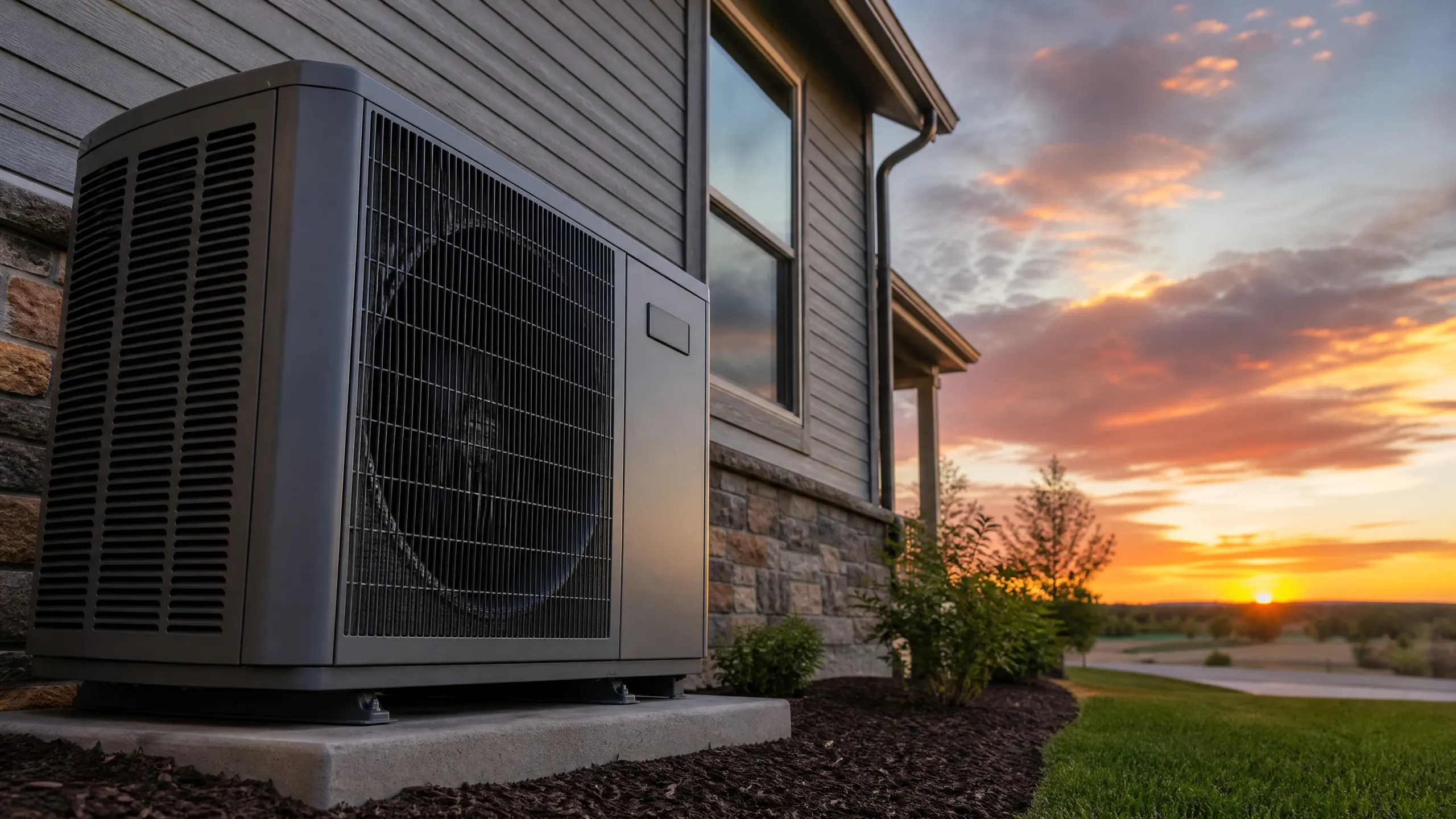






An outdoor air conditioning condenser unit mounted on a concrete pad next to a residential house at sunset.

Heat Pump Repair in Deer Lodge, MT

Tell us about the job

Takes about a minute. No obligation.

RepairHeat PumpPowell County, MT
Step 1 of 2

What ZIP code is the job in?

A heat pump here works the same as it would anywhere else in Montana. Nothing about a 14°F overnight low is outside what the equipment is built for. If yours is struggling to keep up, or running all the time without really warming the house, the cause is usually something specific. A low refrigerant charge. A failing defrost control. A reversing valve stuck in one position. These are the ordinary reasons a heat pump falls behind once the cold settles in. Getting the right diagnosis matters more than the weather does.

11 months
August through June, your system heats
14°F
the average winter night it heats against
73°F
the average summer afternoon it cools against
Isometric grayscale illustration of a cutaway single-story house showing interior rooms, ductwork and an air handler, an exterior condenser unit connected by lines, and dark solar panels on the roof.

Heat pumps in Deer Lodge start running in August, after months of sitting idle.

A weak part that made it through summer often fails in the first weeks of August heat.

Powell County sees its share of wind, hail and winter storms, same as most of Montana

119 severe weather events from 2015 to 2024
18% of homes statewide lost power a day or more in 2024
27 damaging wind events from 2015 to 2024

Half the homes in Powell County were built in 1966 or earlier. A heat pump doesn't last as long as the house around it, so if yours came with the place rather than being a later swap, it's worth asking how old it actually is. A unit running past its expected years can still heat the house most days and still be close to a breakdown. The parts that fail, like a reversing valve or a compressor, tend to go when the system is old and run hard at the same time. Repairing one of these is often the right call, but it depends on what's actually failing and how old the unit is.

A heat pump running wrong costs you every month it's not fixed

Montana electricity runs 12.66 cents per kilowatthour, and a heat pump that's low on charge or stuck in one mode has to run longer to do the same job. Every extra hour shows up on the bill. Fixing the actual cause stops the waste.

Find a contractor
A man in a dark cap, gray T-shirt and brown work pants walks up porch steps toward a dark front door, carrying a canvas tool bag filled with tools, with a potted shrub beside the entry.
A white mini-split heat pump outdoor unit mounted on a concrete pad beside a gray-sided house, surrounded by gravel and green shrubs.

What to check before the call

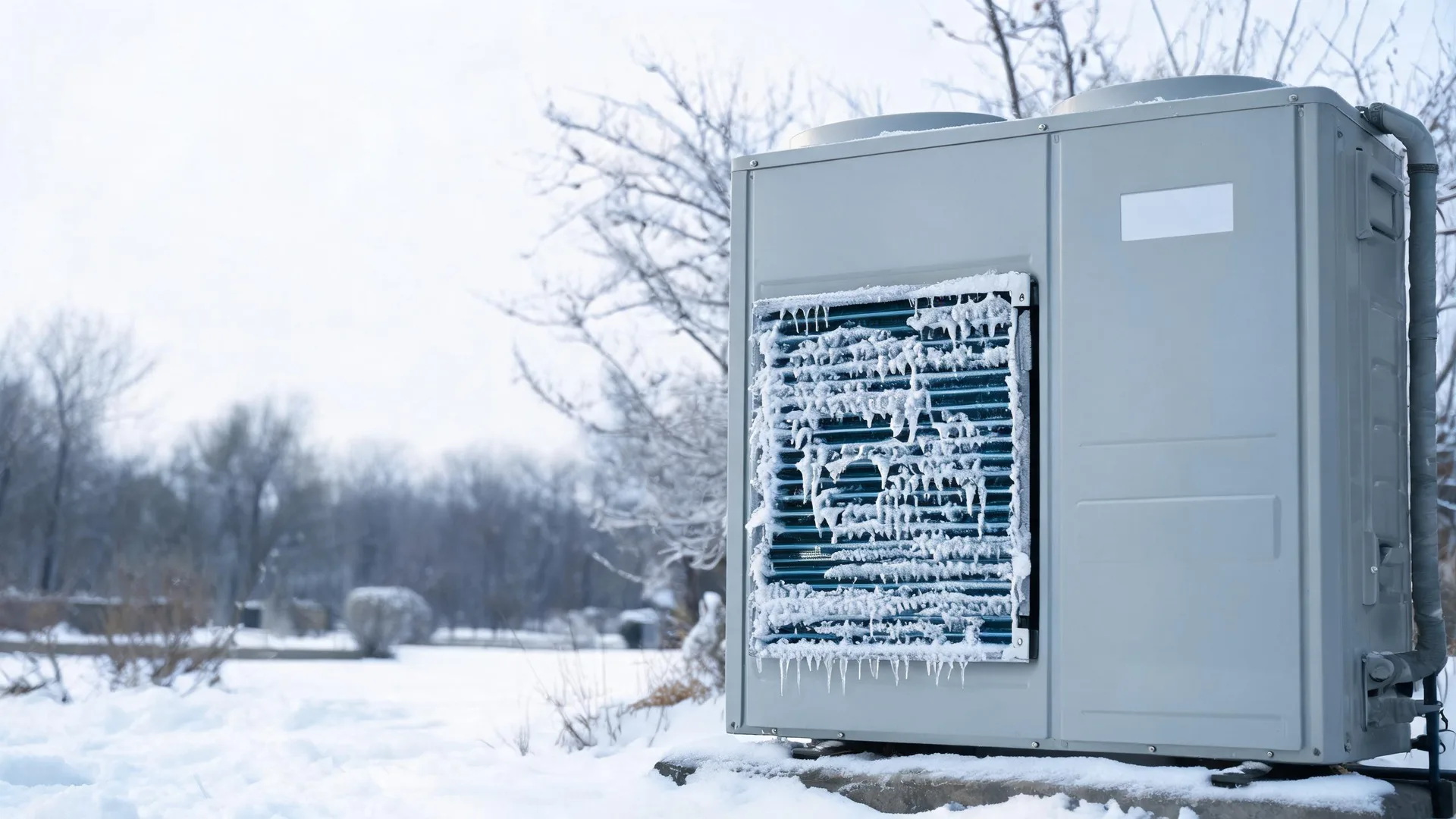
Before anyone comes out, there are a few things worth checking yourself. Look at the thermostat first. Make sure it's set to heat, not cool, and the setpoint is actually above room temperature. A setting bumped by accident is the simplest fix there is. Check the breaker box next. A heat pump that won't start at all sometimes just needs a tripped breaker reset, though if it trips again right after, stop and leave it off. Walk outside and look at the outdoor unit. Clear away leaves, snow or anything blocking airflow around it. Ice coating the whole unit, not just a thin frost that clears on its own, is worth noting for whoever comes to look at it. Inside, check the air filter. A filter clogged with dust chokes airflow and can make the system struggle in ways that look like bigger problems. None of this fixes a stuck reversing valve or a low charge, but it rules out the easy explanations before you pay someone to find out it was the thermostat.

The reversing valve sticks before it fails outright

A reversing valve switches the heat pump between heating and cooling by moving refrigerant through a different path. The solenoid that slides it can get stuck halfway, or stop responding to the signal at all. When that happens the system may blow cold air when it should heat, or get locked into one mode no matter what the thermostat calls for. It's one of the few parts in the system that has to physically move every time the cycle changes, and that repeated movement is what wears it out.
A failing part rarely takes the system down all at once

Most heat pump failures show up first as the unit running longer than it should, or not quite reaching the setpoint, long before anything quits outright. A weak capacitor makes the compressor or fan motor struggle to start. A clogged filter or coil makes the whole system work harder to move the same air. Catching it at that stage is a repair. Letting it run that way for weeks is often how a simple repair turns into a compressor replacement.

Most heat pump trouble shows up as a change you can feel before anything quits. Air coming out lukewarm instead of warm, even though the unit is running. A system that used to cycle off and on now runs straight through without catching up. A hissing or bubbling sound near the lines, which usually points to refrigerant escaping somewhere it shouldn't. Ice building up on the outdoor unit when it has no business forming, especially outside a normal defrost cycle. A burning smell or a breaker that trips when the system starts up often means a motor or electrical part is failing right then, not later. Any of these is worth a call before the unit tries to push through a cold stretch on a part that's already struggling.

Repair versus replacement comes down to what's failing and what it costs the system to keep going. A reversing valve or a capacitor is a contained fix. The part gets swapped and the rest of the unit, compressor included, goes back to work like nothing happened. A compressor is different. It's the most expensive part in the unit and the hardest to replace on its own, so a failing compressor usually tips the whole decision toward a new system rather than a repair. Age works against the older parts quietly. A unit that's needed a few service calls in recent years is telling you something about where it's headed, even on a day it's running fine. The honest question isn't whether it can be fixed. Almost anything can be fixed. It's whether putting a new part into an old system is a good use of money, or just a delay before the next part goes.