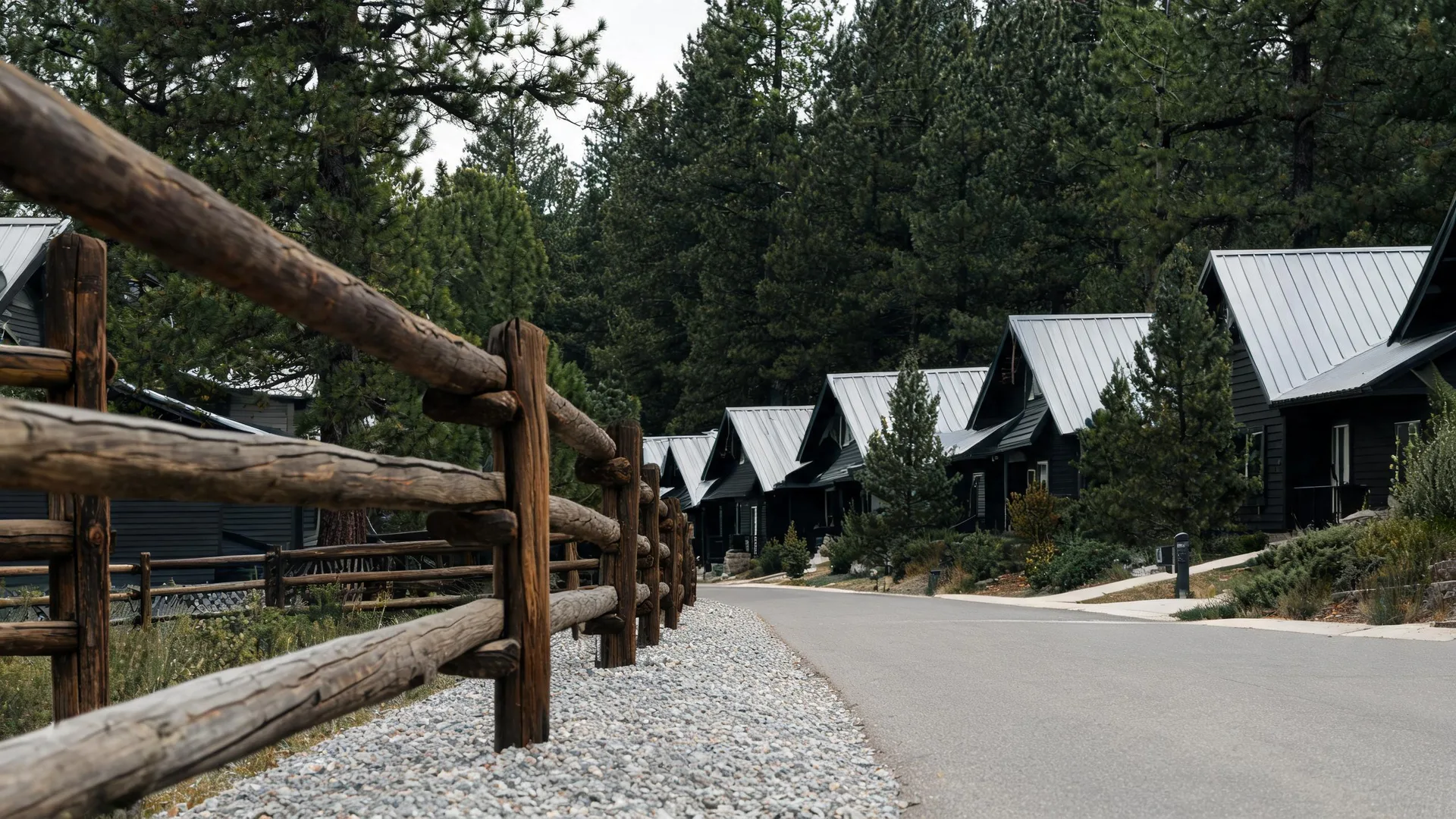






A paved road bordered by a rustic log rail fence and gravel shoulder passes a row of dark-sided cabins with metal gable roofs beneath tall pine trees.

Heat Pump Repair in Choteau, MT

Tell us about the job

Takes about a minute. No obligation.

RepairHeat PumpTeton County, MT
Step 1 of 2

What ZIP code is the job in?

Teton County saw 206 severe weather events between 2015 and 2024. Damaging wind made up most of that, 138 times, with 46 winter storms and 22 hail events mixed in. Your outdoor unit sits outside through all of it, and hail dents fins while wind-driven debris can bend them or crack the fan blade. A unit can take a hit like that and keep running, at least for a while, before it loses efficiency or trips out. If a storm has come through recently, it's worth having the coil and fan looked at even if the heat pump still seems to work fine.

10 months
September through June, your system heats
14°F
the average winter night it heats against
75°F
the average summer afternoon it cools against
Isometric cutaway illustration of a single-story house showing interior rooms, ceiling ductwork, an indoor air handler, and an outdoor condenser unit connected by lines on the ground.

Electricity here runs 14.32 cents a kilowatt-hour.

A heat pump that's struggling pulls more of it every month it goes unfixed.

Heat runs September to June here, and trouble usually shows up early

Heat runs September through June
Climate zone 6B
Power here costs 14.32 cents per kilowatt-hour

Half the homes in Teton County were built in 1962 or earlier. If your heat pump came with a house that old, it's worth asking how old the unit itself is, since it may have been swapped out once or twice already, or it may not. A heat pump that's original to a house from that era is well past the point where parts get harder to find and repairs start costing more than they're worth. That doesn't mean every older home needs a new system. It means a repair call on a unit that old should come with a straight answer about how much life is left in it before you spend money on the one in front of you.

After a storm, have the unit checked before you assume it's fine

If a storm has come through recently and the heat pump hasn't been looked at since, that's worth doing now, even if it still seems to run fine.

Find a contractor
A man in a dark gray t-shirt and tan work pants, seen from behind, carries a canvas tool bag up porch steps toward a dark front door, with a potted plant beside the porch.
A gray outdoor HVAC unit mounted on a concrete pad beside a house with gray lap siding and a stone foundation.

This one doesn't get a season off

A heat pump runs both sides of the year, so it logs more hours than a furnace or an air conditioner that only works one season. Every one of those hours puts wear on the same handful of parts: the compressor, the reversing valve, the fan motors front and back. The reversing valve is the one that's unique to a heat pump, and it's the one that tends to get sticky with age, since it switches back and forth every time the system changes between heating and cooling. A compressor that short-cycles or runs weak doesn't get a break in the off season to recover from it, because for this machine there isn't one. That's what runtime does to a heat pump regardless of how old it is: the more hours already on it, the more it matters whether the next repair actually fixes the problem or just buys a little more time before the same part fails again.

A small fault asks nearby parts to cover for it

A heat pump that's low on refrigerant or losing airflow doesn't just run weaker. The compressor works harder to move what charge is left, and it runs hotter doing it. Left alone, a problem that started as a bad capacitor or a dirty coil ends with a compressor that's damaged and expensive to replace, instead of a part swap that would have solved it.
Waiting rarely buys you anything

Some symptoms, like a strange noise or weak airflow, feel small enough to put off. But a heat pump showing a fault code or tripping its breaker is already telling you it can't manage the load. Running it anyway doesn't give the part a chance to settle down. It just adds hours on a system that's already struggling, and shortens whatever time it had left.

A lot of heat pump failures trace back to the same handful of parts. The reversing valve can stick in one position, so the system gets stuck heating when you want cooling or the other way around. A capacitor weakens and the fan motor or compressor struggles to start, or doesn't start at all. The defrost board can fail, and then the outdoor coil ices over and never clears. Refrigerant doesn't get used up, so if the charge is low, something is leaking and it needs to be found, not just topped off. Airflow problems usually start simpler than that: a filter clogged enough to choke the system, or a coil caked with dirt that can't shed heat the way it needs to. Most of these show themselves early, as a strange noise, weak airflow, or the system running longer than it used to. Caught then, they're usually a straightforward fix.

A heat pump that's low on charge or struggling to start pulls more power to do the same job, and that shows up on the bill before it shows up as a full breakdown. The fix is usually small this early: a weak capacitor, a dirty coil, a stuck valve. Wait, and the compressor starts covering for whatever's failing, which costs more to run and more to repair later. If the unit has been acting up for a while, the extra cost is already on recent bills. Getting it looked at now beats letting it run that way through the winter.