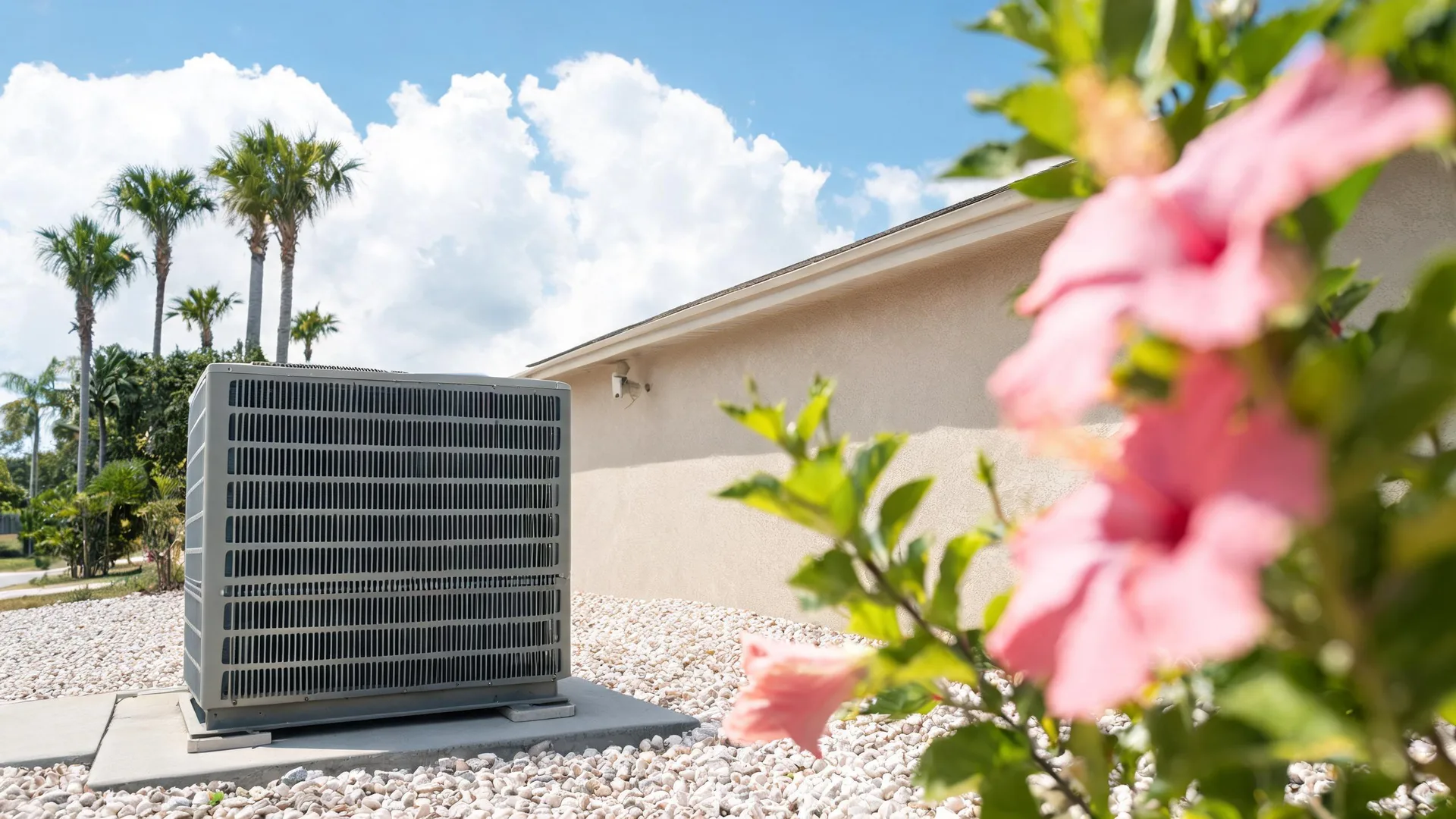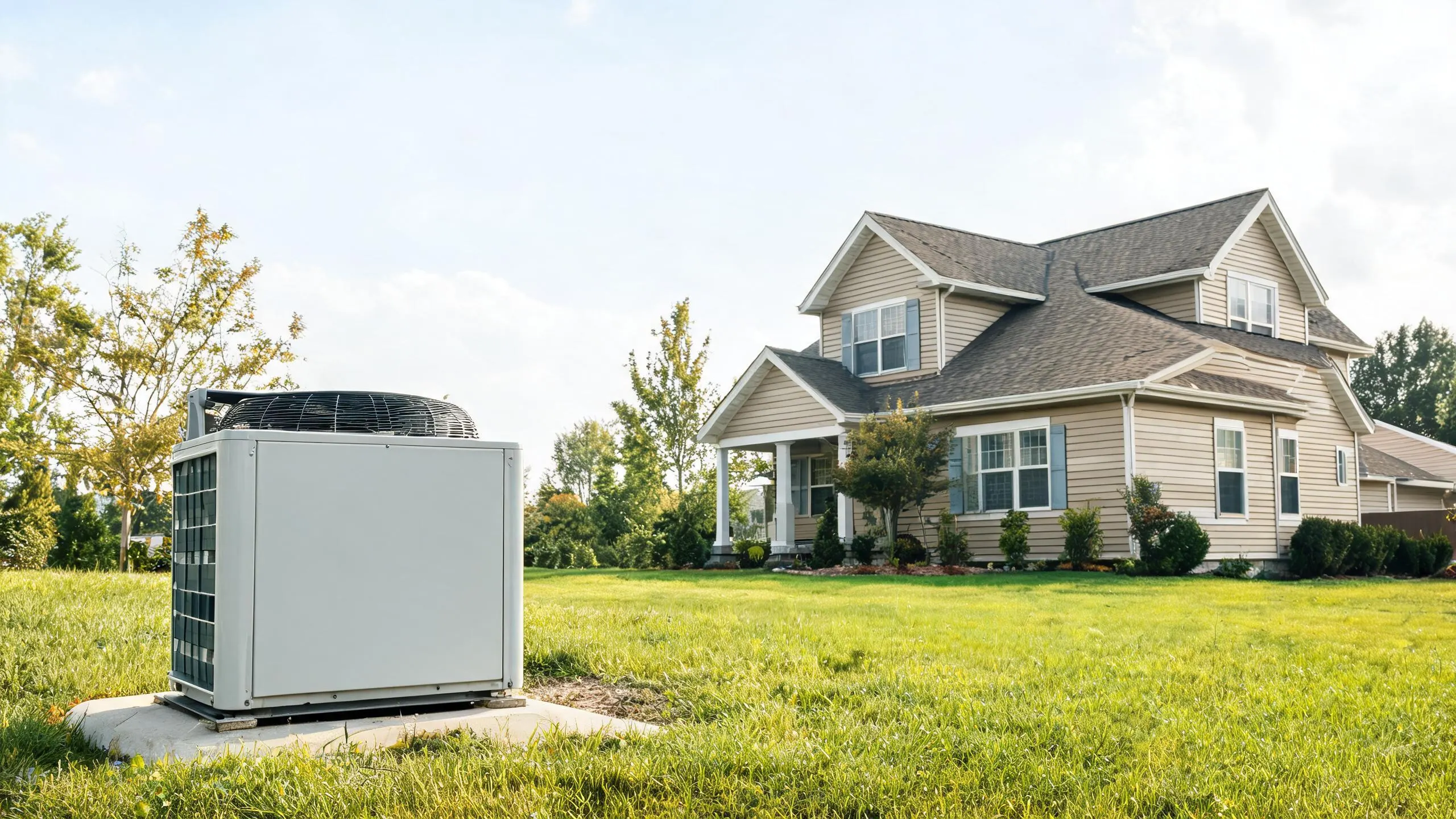
An outdoor HVAC condenser unit on a concrete pad in front of a two-story suburban house.

Heat Pump Repair in Chinook, MT

Tell us about the job

Takes about a minute. No obligation.

RepairHeat PumpBlaine County, MT
Step 1 of 2

What ZIP code is the job in?

August is when weak parts show up

Heat here switches over in September, and your heat pump starts carrying the full load again after months of barely running. A capacitor or contactor that was already marginal tends to fail right when that switch happens, not in the middle of winter.


Get it looked at before the switch, not after

A heat pump struggling to keep up in late August is easier to diagnose than one that quit on a cold morning in September. Catching it before the full heating load hits means a contractor is working on a system that's still running, not one that's already down.

10 months
September through June, your system heats
2 months
July through August, it cools
10°F
the average winter night it heats against
80°F
the average summer afternoon it cools against
Isometric cutaway illustration of a single-story house showing interior ductwork, an indoor air handler and furnace unit, and an outdoor condenser connected by a line, on a white background.
Your system heats September through June and cools July through August.

NOAA nClimDiv, 1991–2020 normals

A heat pump that won't turn on at all might just need a breaker reset or fresh thermostat batteries.

Check the breaker and the batteries before anything else, since both rule out causes that have nothing to do with the compressor.

Half the homes in Blaine County were built by 1972, and a heat pump that old is worth asking about

Half the homes here were built by 1972
32 hail events from 2015 to 2024
14 winter storms from 2015 to 2024

Electricity in Montana ran 12.66 cents a kilowatt-hour in 2024. That matters more for a heat pump than for a furnace, since a heat pump runs on electricity to move heat rather than burning gas. Nothing about Chinook makes the equipment itself fail differently than it would anywhere else. A heat pump here breaks down for the same reasons it does in any other town. A capacitor goes weak. A coil gets dirty. A contactor burns out or refrigerant leaks out slowly. The fix is the same wherever the unit sits. Find the part that's actually gone bad, replace or repair it, and the system runs the way it's supposed to.

Find out if it's worth fixing before you pay for the repair

If the heat pump in your house dates back to when it was built, ask the contractor for its age and condition before you approve a repair. A unit that old may be worth replacing instead of patching again.

Find a contractor
A gray air-source heat pump mounted on a concrete pad next to a house with gray vinyl siding, surrounded by gravel and flanked by green shrubs and white hydrangea flowers.

What actually gets checked

A tech starts outside, at the unit itself. The capacitor and contactor get checked first, since those fail more than anything else in the system. A weak contact, a swollen capacitor, corrosion on a terminal. From there it's refrigerant pressure, checked with gauges at the service ports, and a look at the coil to see if it's caked with dirt or choked with debris. Inside, the air handler gets checked too. The blower motor, the filter, whether airflow across the coil is where it should be. A reversing valve that's stuck will keep a heat pump blowing cold air when it should be heating, so that gets tested along with everything else. None of this takes guessing. Each part either tests good or it doesn't, and the one that doesn't is the one that gets fixed.

It's heating when it should be cooling, or the other way around

A heat pump that blows the wrong temperature air usually has a stuck reversing valve. That's the part that switches the unit between heating and cooling, and when it sticks, the system keeps doing whatever it was doing last. This isn't something to live with until the weather forces the issue. A valve that's partway stuck only gets harder to free the longer it sits.

Short cycling wears out the parts that are left

If the unit kicks on, runs briefly, then shuts off and starts again, something is telling it to stop early. Low refrigerant, a dirty coil, a failing sensor can all cause this. Every one of those short cycles puts a load on the compressor and the contactor, so a small problem tends to take other parts down with it the longer it keeps happening.

A failing part rarely stays a small problem if the heat pump keeps running. A weak capacitor makes the compressor pull harder to start each cycle, and that extra draw is what finishes it off. A dirty coil makes the whole system work longer to move the same amount of heat, and that extra runtime is hard on everything downstream of it, the compressor included. Low refrigerant is the clearest case. Run a heat pump low on charge and the compressor starts running hotter than it should, and a compressor is the one part in the system not worth repairing on its own. Catching a problem while it's still just a capacitor or a dirty coil means fixing that part. Wait, and the compressor may be what needs fixing instead.

A compressor failure doesn't automatically mean a new system, but it changes the math. The compressor is the most expensive part in a heat pump, and labor to replace one runs high too, since it means recovering refrigerant, swapping the part, and recharging the whole system. If the compressor is still good and the problem is a capacitor, a contactor, or a coil, repair almost always makes sense. Those parts are cheap to replace next to the cost of the unit itself. The harder call comes when the compressor itself is what failed. At that point a contractor can tell you what the repair costs against a new system, and that number is what the decision should turn on, not the age of the unit by itself.