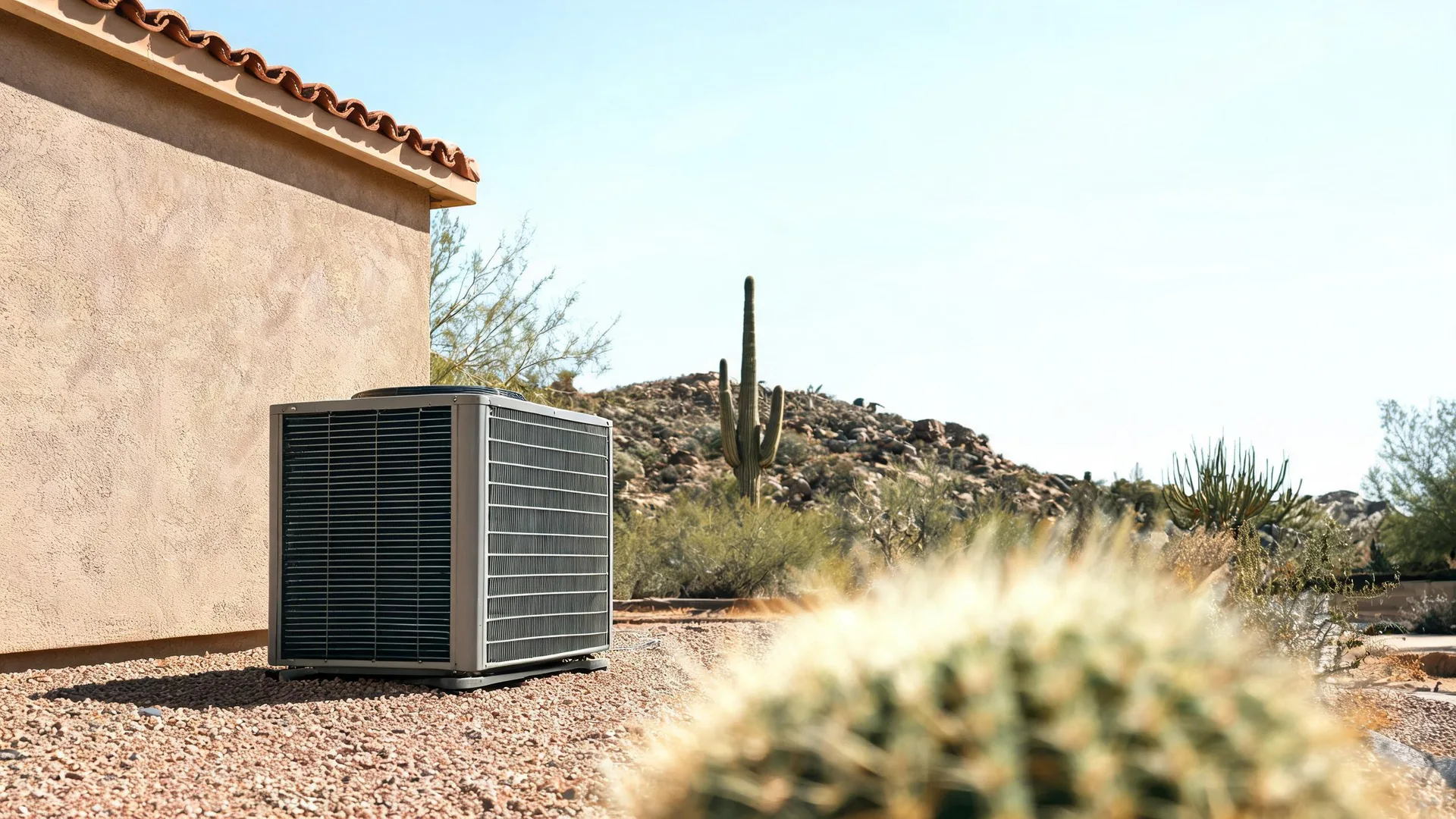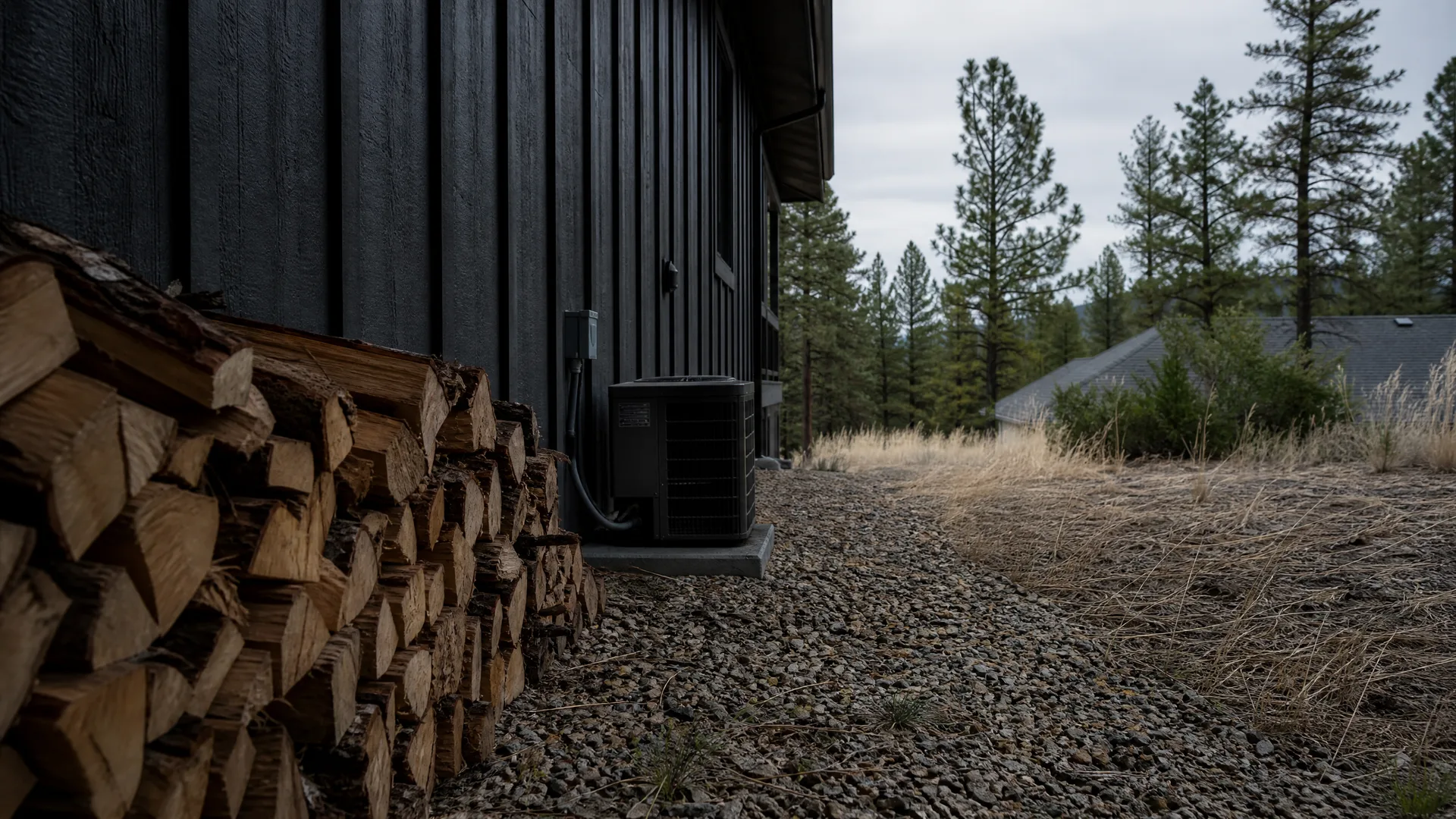
A stacked woodpile beside a dark vertical-board house exterior with an outdoor air conditioning condenser unit on a concrete pad, gravel ground, dry grass and conifer trees under an overcast sky.

Heat Pump Repair in Butte, MT

Tell us about the job

Takes about a minute. No obligation.

RepairHeat PumpSilver Bow County, MT
Step 1 of 2

What ZIP code is the job in?

Butte winters are cold, not strange

Overnight lows here average 14°F through December, January and February, and winter storms are common. A heat pump installed in Butte is sized with that cold in mind. None of it points to anything unusual going wrong. It just means parts wear out or need a repair like they would anywhere else.


So the usual causes come first

A refrigerant leak, a failing defrost control, a stuck reversing valve, a dirty outdoor coil. These are the same problems that show up in heat pumps everywhere, cold climate or not. A contractor should check these before deciding the weather itself is to blame.

11 months
August through June, your system heats
14°F
the average winter night it heats against
73°F
the average summer afternoon it cools against
Isometric line illustration of a cutaway single-story house showing interior rooms, ceiling ductwork, an indoor air handler unit, and an outdoor condenser connected by a line set.

Heat pumps in Butte start running in August, while July is still warm enough that nothing gets tested.

A weak part can sit fine all July and fail the first cold night in August when it finally has to work.

Power here runs 12.66 cents a kWh, so a heat pump that's struggling costs you every month it's not fixed

Power costs 12.66 cents a kWh statewide
49 winter storms from 2015 to 2024
Winter nights average 14°F

Most heat pump failures trace back to a handful of parts, and they fail for ordinary reasons. A capacitor weakens over time and stops giving the compressor or fan motor the jolt it needs to start, so the unit hums or clicks instead of running. Refrigerant doesn't get used up, so a low charge almost always means a leak somewhere in the line set or coil, and that leak doesn't fix itself. The reversing valve that switches between heating and cooling can stick from corrosion or a worn coil, especially if it doesn't get used often enough to stay free. The defrost control board and its sensor can fail, which lets frost build up on the outdoor coil instead of clearing it on schedule. Fan motors wear out like any motor does, bearings go, and a blower or outdoor fan that's working harder than it should is usually the first sign something downstream is already failing.

Find out if this is a repair or the system's last one

Have a contractor check the age and condition of your heat pump before paying for the fix in front of you. If it's old enough to have come with the house, that's a few minutes worth spending.

Find a contractor
A man in a cap, dark long-sleeved shirt and brown work pants walks up porch steps toward a gray front door, carrying a worn canvas tool bag filled with hand tools.
A dark gray heat pump unit mounted on a concrete pad next to a house with gray siding and a stone veneer wall.

What to check yourself before the truck shows up

Before anyone comes out, walk outside and look at the outdoor unit. Check that it's not buried in snow or blocked by ice built up around the base. Airflow matters on both ends, so make sure nothing is stacked in front of the indoor vents either. Look at the outdoor coil for a heavy coat of frost or ice that doesn't clear on its own. Some frost in defrost mode is normal. A thick layer that stays is not. Check your thermostat batteries and settings, since a dead battery or a setting bumped to the wrong mode looks exactly like a broken system. Listen for anything unusual when it cycles on, a hard bang or a grinding sound. Check your breaker panel for a tripped switch before assuming the unit itself has failed. None of this fixes a refrigerant leak or a bad reversing valve, but it rules out the simple stuff first.

It's not heating, or it's not switching over

A heat pump that blows cool air in winter isn't necessarily broken. It might be stuck in the wrong mode, or the reversing valve that switches it between heating and cooling isn't shifting when it should. If the air coming out doesn't match the thermostat setting, that valve is the first place a contractor looks.

Short cycling wears out the parts that start it

A heat pump that turns on and off every few minutes instead of running a full cycle is putting extra strain on the compressor and the start components every single time it kicks on. Left alone, that short cycling is what turns a small issue into a compressor replacement.

A heat pump that's struggling still looks like it's working, so it's easy to let it ride. That's usually the wrong call. A compressor straining against a refrigerant leak keeps straining every time it cycles, and the oil that lubricates it is carried by that refrigerant, so a low charge wears the compressor down a little more each run. A reversing valve that's only partly shifting keeps getting asked to shift, and the part that's failing is the part doing the work. Ice on the outdoor coil that isn't clearing blocks airflow across that coil, so the system runs longer to move the same heat, and a longer run against a blocked coil is harder on the compressor than a short one. None of these fix themselves by running more. They get worse under the same load that caused them, and the repair that would have been simple early on turns into a bigger one the longer it runs.

A diagnostic starts outside, not with a screwdriver. A contractor checks the thermostat settings and calls for heat, then watches what the outdoor unit actually does. Does it start. Does it run a full cycle or short cycle. Does the reversing valve shift when it should. From there it's gauges. Refrigerant pressure gets checked against what the system is supposed to run at, because a low charge shows up there before it shows up anywhere else. The capacitor and contactor get tested next, since a weak start component can look exactly like a dead compressor without being one. Airflow gets checked on both sides, filter and coils, because restricted airflow makes a healthy system act like a failing one. The point is to find the part that actually failed before replacing anything, not to guess and swap parts until something works.