A dark-painted board-and-batten house with a standing-seam metal roof, timber entry porch and stone column bases, set among pine trees behind dry grass and a gravel drive.

Heat Pump Repair in Bozeman, MT

Tell us about the job

Takes about a minute. No obligation.

RepairHeat PumpGallatin County, MT
Step 1 of 2

What ZIP code is the job in?

A small noise now is a warning, not a quirk

A heat pump that's grinding, clicking, or short cycling is telling you something specific is wrong before it takes out something else. A failing run capacitor makes the compressor strain every time it starts. Keep running it that way and the compressor itself can burn out, and the compressor is the part you really don't want to replace.

Ice that won't go away means it's working against itself

Heat pumps build frost in cold weather and clear it off on a normal cycle. If the coil stays iced over, airflow drops, the system pulls harder to do the same job, and whatever caused the ice in the first place keeps getting worse. Shutting it off and calling someone stops that cycle before the compressor takes the damage.

10 months
September through June, your system heats
13°F
the average winter night it heats against
74°F
the average summer afternoon it cools against
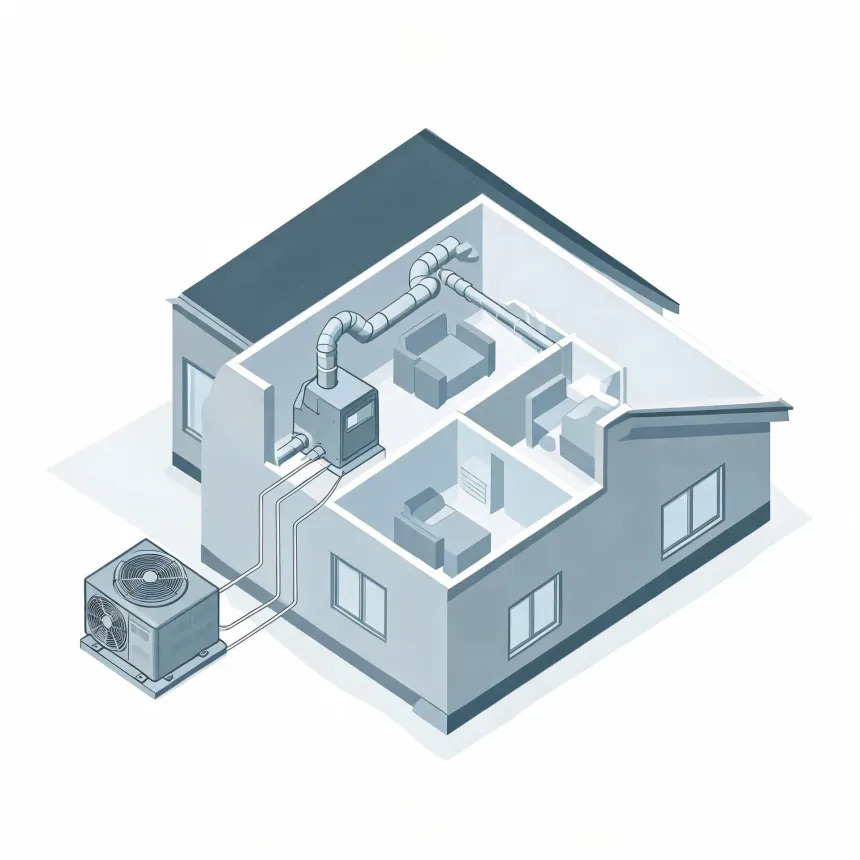
Isometric cutaway illustration of a two-room house showing an indoor air handler with ductwork connected by lines to an outdoor condenser unit on a pad.

Check the outdoor unit for ice before you call, and snap a picture of it.

A tech who sees the coil already knows more than the noise alone will tell them.

Heat runs September through June here, at 12.66 cents a kWh

Power costs 12.66 cents a kWh statewide
Climate zone 6B
Heat runs September through June

September is when this system earns its keep here, and it's also when a weak part finally gets tested. A heat pump that idled all summer on standby, barely cycling, hits real load the first cold week and anything marginal shows up fast. That's not bad luck. That's a part that was already failing quietly, now under enough strain to fail loudly. August is the month to get a system looked at before that happens, while it's still only running a few hours a day and nothing depends on it yet. Wait until the first cold snap and you're calling about a system that's already down, in a house that needs the heat.

Half the homes here were built in 1998 or later

Half the homes in Gallatin County were built in 1998 or later. If your house is one of them, the heat pump likely came with it, and it's probably still within its working life. That points toward repair, not replacement, when something goes wrong.

Find a contractor
A man in a dark long-sleeve shirt and worn brown work pants, seen from behind, carries a canvas tool bag up the steps toward a gray front door, with a potted shrub beside the entry.
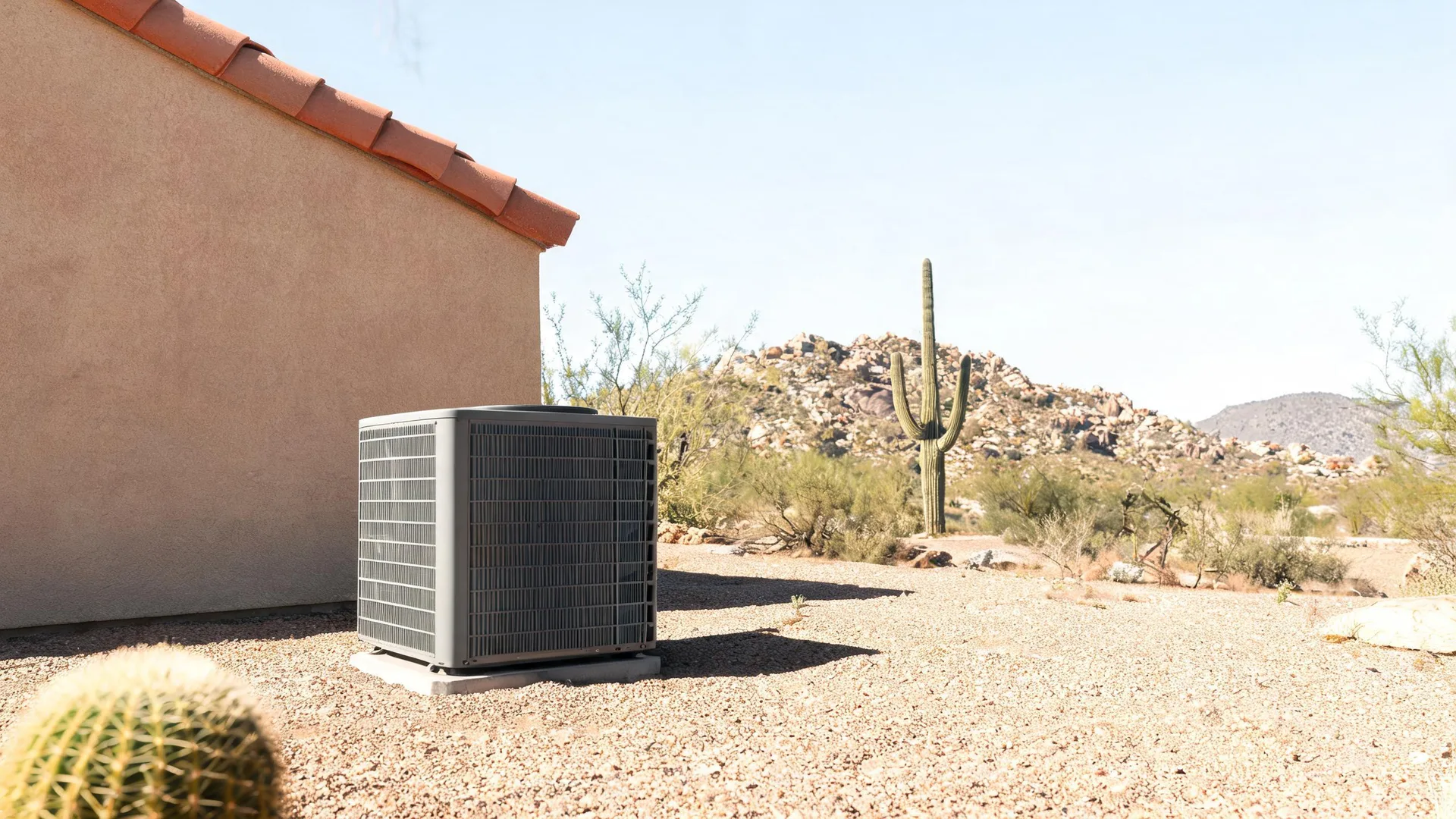
A dark gray heat pump unit mounted on a concrete pad next to a house with gray siding and a stone veneer wall.

Figure out what's wrong before you figure out what's next

If your heat pump is acting up and the house is newer, get the specific problem diagnosed instead of planning around a replacement. A capacitor, a sensor, a stuck reversing valve, none of that means the unit is at the end of its life. Have someone check what's actually failing before you decide what to do about it.

It won't switch between heat and cool right

A reversing valve that's sticking will leave the system blowing cold air when you asked for heat, or it'll run nonstop trying to hit the setpoint without getting there. That's not a thermostat problem. That's the valve itself failing to shift, and it won't fix itself by waiting.

The air coming out doesn't feel right

Air that feels barely warm, or warm then cool in waves, usually means the system is short cycling or struggling to keep up with the load. Left alone, a unit that cycles too often wears down the same parts that start it up each time, and that wear only goes one direction.

A reversing valve fails because it sticks, usually from corrosion or a small amount of debris in the valve body, and once it sticks it tends to stay stuck rather than work itself loose. Run capacitors just wear out. They lose their charge holding capacity over years of starting and stopping the compressor, and when one goes weak the compressor draws harder to start every single cycle until it finally fails too. Defrost boards and sensors cause a different kind of trouble. A bad sensor can tell the system it's iced over when it isn't, or miss real ice building on the coil, and either way the defrost cycle stops matching what the unit actually needs. Contactors burn and pit from years of making and breaking the same connection, until one day they don't make it at all. None of these parts fail because the unit is old. They fail because they're the parts doing the work every time the system starts, stops, or switches modes, and catching one early is what keeps it from taking the compressor down with it.

A part failing on its own is almost always worth fixing. The compressor is the exception. It's the most expensive part in the unit by a wide margin, and it's also the part that other failures drag down if they go unchecked too long, a weak capacitor or a stuck valve making it strain until it gives out too. So the real question isn't the age of the heat pump. It's whether the compressor is still fine and something around it failed, or whether the compressor itself is what's going. A tech can tell the difference by checking what the compressor is drawing and how it's running under load. If the compressor's good, fixing the failed part gets you back a system that works the way it did before. If the compressor's what's failing, that changes the math entirely, and it's worth hearing straight rather than guessing at.