Illuminated timber-and-stone mountain cabins along a curved road at twilight, with lit trees and mountain peaks in the background.

Heat Pump Repair in Anaconda-Deer Lodge County, MT

Tell us about the job

Takes about a minute. No obligation.

RepairHeat PumpDeer Lodge County, MT
Step 1 of 2

What ZIP code is the job in?

What the repair history tells you

A heat pump that's needed the compressor, the reversing valve, or the control board replaced in the last couple of years is wearing out part by part. Fixing the next failure just buys time until the one after it. A unit that's run clean until now and hit one bad capacitor or a failed fan motor is a different case. That's a single part doing what parts eventually do, not a system in decline.


What age does to the decision

An older heat pump running on its original compressor has already outlasted a lot of its parts. When that compressor goes, the coils and lines around it have likely aged the same amount, so a repair there tends to be followed by the next one somewhere else. A newer unit with the same failure is usually worth fixing, because the rest of the system still has years in it.

13°F
the average winter night it heats against
71°F
the average summer afternoon it cools against
Isometric cutaway illustration of a small house showing interior rooms with furniture, an indoor air handler with flexible ducting, and refrigerant lines running to an outdoor condenser unit beside the building.

Montana electricity ran 12.66 cents per kilowatt-hour in 2024.

A heat pump short on refrigerant or losing its charge runs longer to do the same job, and every hour of that shows up on the bill.

Half the heat pumps here are working out of a house built in 1954 or earlier

Half the homes here were built by 1954
49 winter storms from 2015 to 2024
Winter nights average 13°F
A struggling heat pump doesn't fix itselfLow on charge or not, every extra hour it runs shows up on your bill at 12.66 cents per kilowatt-hour.

A compressor failure on a heat pump that old is worth asking about before paying for the repair. Get the contractor's read on what's left in the system, the coils, the lines, the rest of it, not just the part that quit. If there's not much life beyond this fix, that's worth knowing before you commit to it, not after the next part goes.

Stop paying for a struggling machine

Power costs more here, so a machine that's running badly costs you every month. Get it fixed soon.

Find a contractor
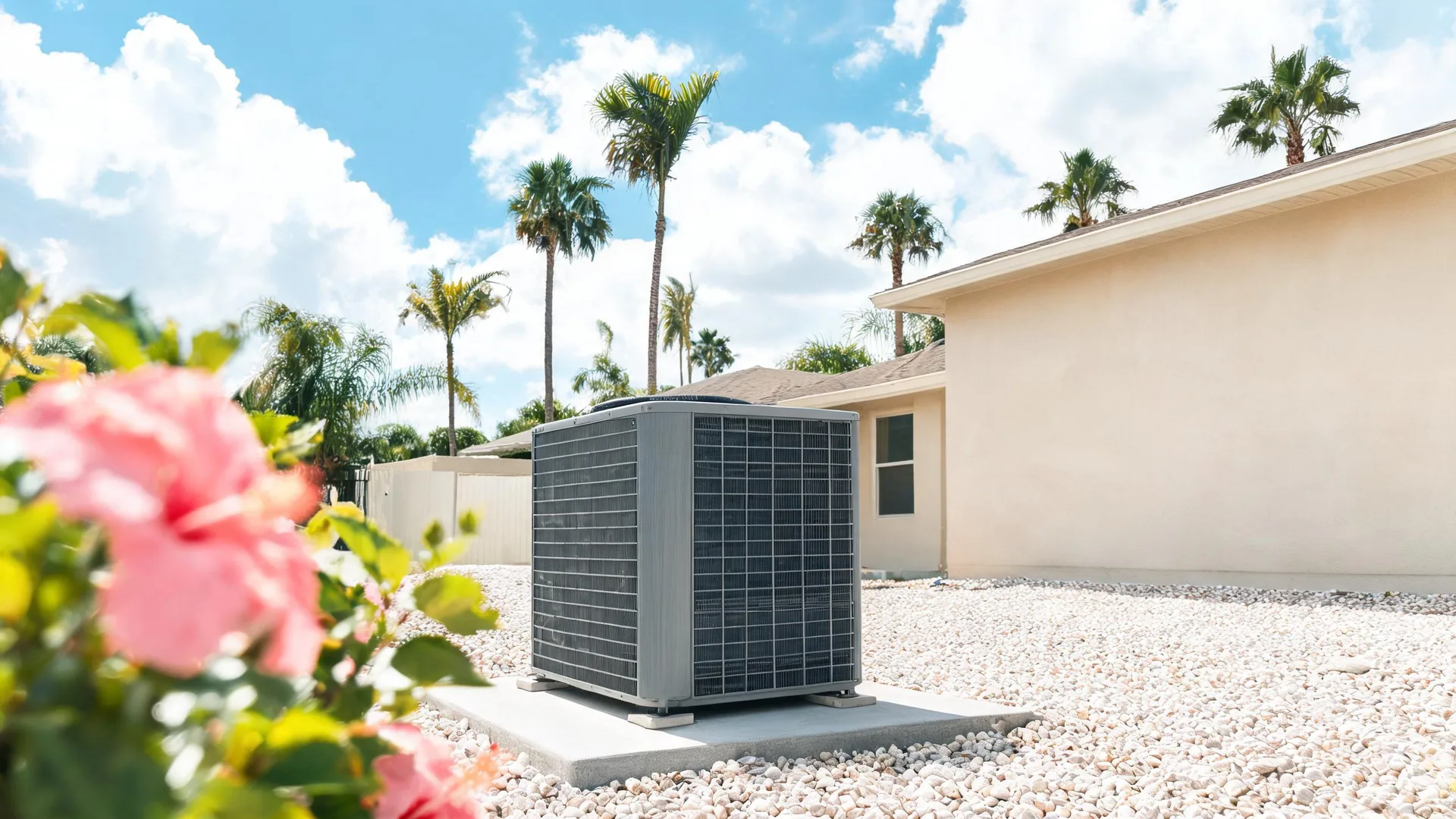
A gray heat pump outdoor unit mounted on a concrete pad next to a residential house with lap siding and stone accents.

It runs every month of the year, and that adds up

A heat pump works year round, not just in summer or winter, so its parts see more hours than an air conditioner ever does. The reversing valve is the part most unique to it, and the one that fails in ways an AC tech doesn't see every day. It can stick partway, or leak internally, so the system runs but can't switch between heating and cooling properly. Compressors fail from running low on charge over time, from a dying capacitor that makes them strain on every start, or just from age once they've logged enough hours in both seasons. The outdoor fan motor sits exposed to weather all year and eventually the bearings wear or the windings give out. Defrost boards fail too, and when they do the unit can ice over in winter and never clear itself. Because this machine runs so many more hours per year than a seasonal system, small problems get more chances to turn into big ones.

What you'll notice first

A heat pump that needs attention usually tells you through the air coming out of the vents. It runs but the air feels lukewarm instead of hot, or it blows cold air during a heating cycle. Sometimes it short cycles, shutting off a few minutes after it starts instead of running a full cycle. Ice building up on the outdoor unit during a stretch that isn't especially cold is another sign, especially if it doesn't clear on its own between cycles.

What those signs mean for the call

Lukewarm air often points to a refrigerant problem or a failing compressor, both worth a same-week call before the strain gets worse. A unit that won't switch between heating and cooling is likely a stuck reversing valve, and that's not something to wait on through a cold stretch. Ice that won't clear usually means the defrost board has failed, and leaving it alone can damage the coil underneath. Short cycling can be a bad capacitor, an easy fix, or a sign the compressor is struggling, which is worth having a tech rule out early rather than late.

Before you call, there are a few things worth checking yourself. Look at the thermostat first. Make sure it's set to heat or cool as intended and the temperature is actually set past room temperature, since a setting bumped by accident looks exactly like a broken system. Check the outdoor unit for ice or debris around it. Leaves, a fallen branch, or a cover left on can block airflow and cause a lot of the symptoms that look like a failing part. Check the air filter too. A clogged filter starves the system of airflow and can cause icing or weak output that has nothing to do with the compressor or the reversing valve. Last, check the breaker panel. A tripped breaker will shut the whole system down and reset is often all that's needed, but if it trips again after resetting, that's a sign to stop and call rather than keep resetting it.

A diagnostic visit starts with questions. When does it act up, and what does the air feel like when it does. Then the tech checks pressures on the refrigerant lines, since too much or too little charge explains a lot of the complaints that bring someone out. After that comes the electrical side, testing the capacitor, the contactor, and the windings on the compressor and fan motor to find the part that's weak before it fails outright. The reversing valve gets tested by running the system in both heating and cooling, because a valve that's stuck or leaking only shows itself when you ask it to switch. If there's been icing, the tech checks the defrost board and sensors instead of just clearing the coil and hoping it doesn't come back. Most of this happens with gauges and a multimeter, and a tech can usually say what's wrong before anything gets opened up or replaced.