




A twilight street scene featuring illuminated timber-frame and stone houses with a mountain range visible in the background.

Heat Pump Installation in White Sulphur Springs, MT

Tell us about the job

Takes about a minute. No obligation.

New system or replacementHeat PumpMeagher County, MT
Step 1 of 2

What ZIP code is the job in?

Electricity here runs 14.11 cents per kilowatt-hour. A heat pump moving heat with a bad charge or a weak compressor still runs on that same rate, just longer to do the same job. Summer air is dry here, with dew points averaging only 43 degrees through June, July and August, so the system isn't fighting humidity the way it would elsewhere. Most of what you pay for is moving heat in and out of the house all winter and on hot afternoons. A unit sized and installed right earns back the difference on every bill that follows.

14°F
the average winter night it heats against
73°F
the average summer afternoon it cools against
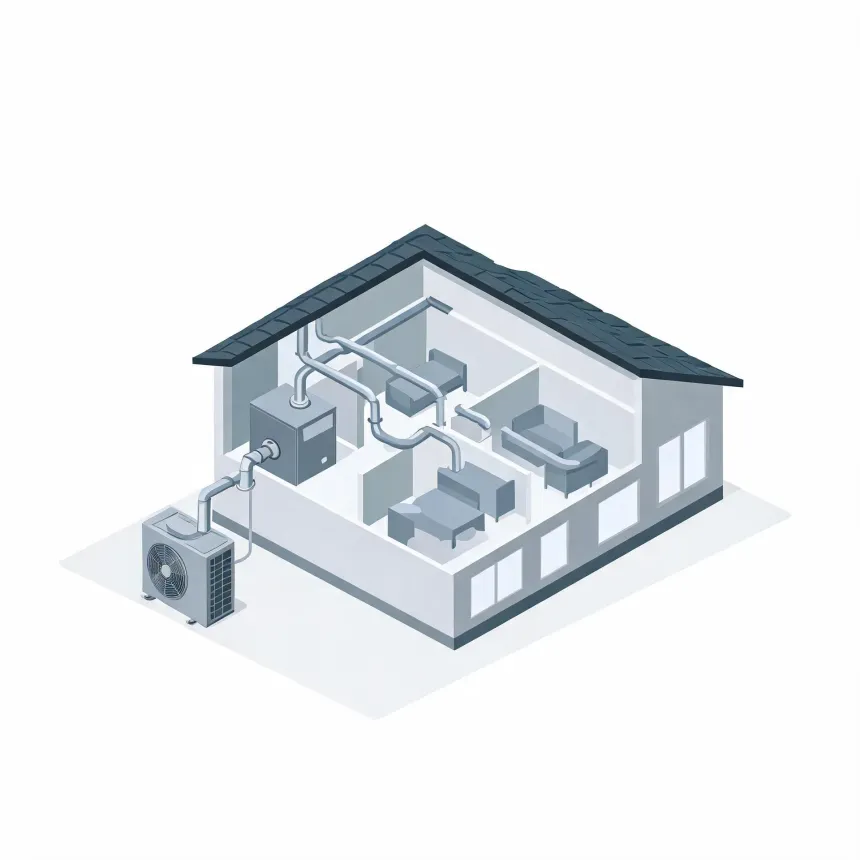
Isometric cutaway illustration of a single-story house showing an indoor air handler, branching ductwork through rooms with furniture, and an outdoor condenser unit connected by a line outside the wall.

A heat pump keeps running at the same rate whether it's sized right or not.

Ask for the load calculation on this house, not just a quote on equipment.

Most homes here run on propane, and that changes what a heat pump needs to do

45.3% of homes heat with propane
26 winter storms from 2015 to 2024
Winter nights average 14°F

Meagher County falls under zone 6B, the cold end of the federal energy code, with a long heating season. Any split-system heat pump installed here, if built from 2023 on, has to clear federal minimums of 7.5 for heating and 14.3 for cooling, measured in Btu of heat per watt-hour of electricity used. Those are floors, not targets, so equipment sold here starts from that baseline whether it's a basic unit or a higher-tier one. A system rated right at the minimum will still run, but in a winter this long, every bit of efficiency above that floor shows up on the meter. Ask what rating the unit you're quoted actually carries, not just whether it qualifies.

Get the sizing right before the install, not after the first bill

Get the load calculation and the efficiency rating in writing before the install, not after the first bill. Power here costs more to run a heat pump on than it does in most places, and that rate doesn't change based on how well the unit fits the house. A system sized and installed right is the only way to keep that cost as low as it can be.

Find a contractor
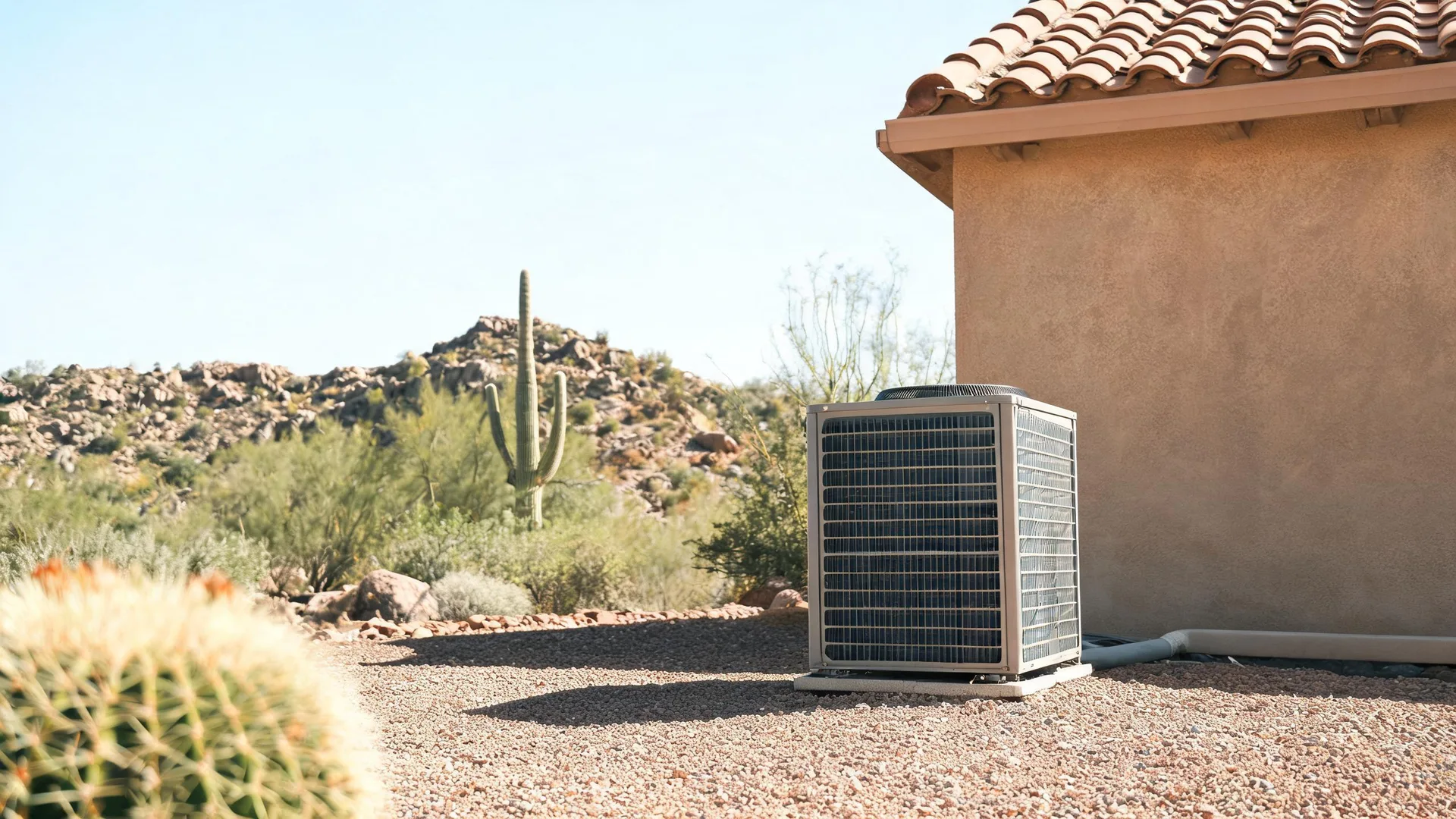
A gray heat pump outdoor unit mounted on a concrete pad next to a residential house with lap siding and stone accents.

Sized to the house, not the square footage

Sizing a heat pump means working out how much heat the house loses on the coldest days and how much it gains on the hottest, then matching equipment to that number. A contractor does this room by room, adding up the walls, windows and ceiling area and how well each holds heat, not by measuring the square footage and picking a unit off a chart. Too big and the system short cycles, running a few minutes at a time, shutting off before it pulls moisture out of the air or spreads heat evenly, then starting again. That wears on the compressor and the contacts that switch it on and off. Too small and it runs constantly on the hardest days, never quite catching up, leaning hard on backup heat strips that cost more to run than the compressor does. Either mistake shows up gradually, in comfort that never feels quite right and a system that seems to run all the time no matter the season.

The old system comes out whole

A contractor disconnects the refrigerant lines, the electrical whip and the condensate drain, then removes the outdoor unit, the indoor coil or air handler, and any line set that isn't being reused. Refrigerant gets recovered into a tank, never vented, because releasing it is against the law and wastes a charge that has to be accounted for either way. If the old system ran on a furnace with a heat pump bolted on, the furnace may stay or go depending on what the new setup needs.
What stays behind matters as much as what's new

Ductwork, the electrical disconnect box, the pad or mounting bracket outside, and the thermostat wiring often carry over to the new unit, but only if they match what it needs. A heat pump draws differently than straight electric resistance heat or an old AC-only setup, so the breaker size and wire gauge get checked, not assumed. Reusing a line set means pulling a vacuum on it to clear out moisture and old oil before the new refrigerant goes in, since skipping that step leaves contamination that shortens compressor life from the start.

The rating on the label, the HSPF2 for heating and SEER2 for cooling, tells you how much heat a unit moves for the electricity it uses, measured under one set of test conditions. It's a way to compare one model against another, not a promise of what it'll do in your house on the coldest night of the year. Cold outdoor air holds less heat to pull from, so any heat pump loses some efficiency as the temperature drops, no matter what the label says. That's why backup heat strips exist, to carry the load when the outdoor coil can't pull enough heat from the air on its own. Two units with the same rating can still perform differently depending on whether the refrigerant charge is right and whether the ductwork moves enough air across the coil. The number on the label is a starting point for comparing equipment, not a guarantee of what you'll see once it's running.

Install day starts with the old equipment coming apart and the new pad or bracket going in, but most of the day goes to what you can't see once it's buttoned up. The line set gets pulled into vacuum and held there, because any moisture left in the lines turns to acid once refrigerant hits it. The indoor coil or air handler gets set and connected to the ductwork, then the electrical whip and disconnect get wired to the new unit's actual draw, not the old one's. Once the refrigerant charge goes in, a contractor checks it against the manufacturer's target for the line length and outdoor temperature that day, not just a gauge reading that looks close enough. The thermostat gets set up last, and on a heat pump that often means configuring how and when the backup heat kicks in, since wiring it wrong can leave the strips running far more than they should. A system that's cycled on, blowing warm or cool air, can still be wired or charged wrong in ways that only show up over the following weeks.