Heat pump vs propane heat in Ennis, MT

A local pro who knows furnaces gets your details and gets in touch.

Get a furnace pro

In Ennis and the rest of Madison County, propane still heats most houses, and for good reason. Winters here get cold enough, and stay cold long enough, that a heat pump has to work hard to pull warmth out of outdoor air. Older heat pumps lose efficiency as the temperature drops and need backup heat on the coldest nights. Newer cold-climate models handle it better and can cut propane use a lot, but they rarely replace a furnace outright here. A common setup pairs a heat pump with the existing propane furnace, so the heat pump carries the mild months and the furnace takes over when it gets genuinely cold. Whether that pairing makes sense for your house depends on your current furnace, your ductwork and how your propane bills run now. That's a question worth working through with someone who installs both.
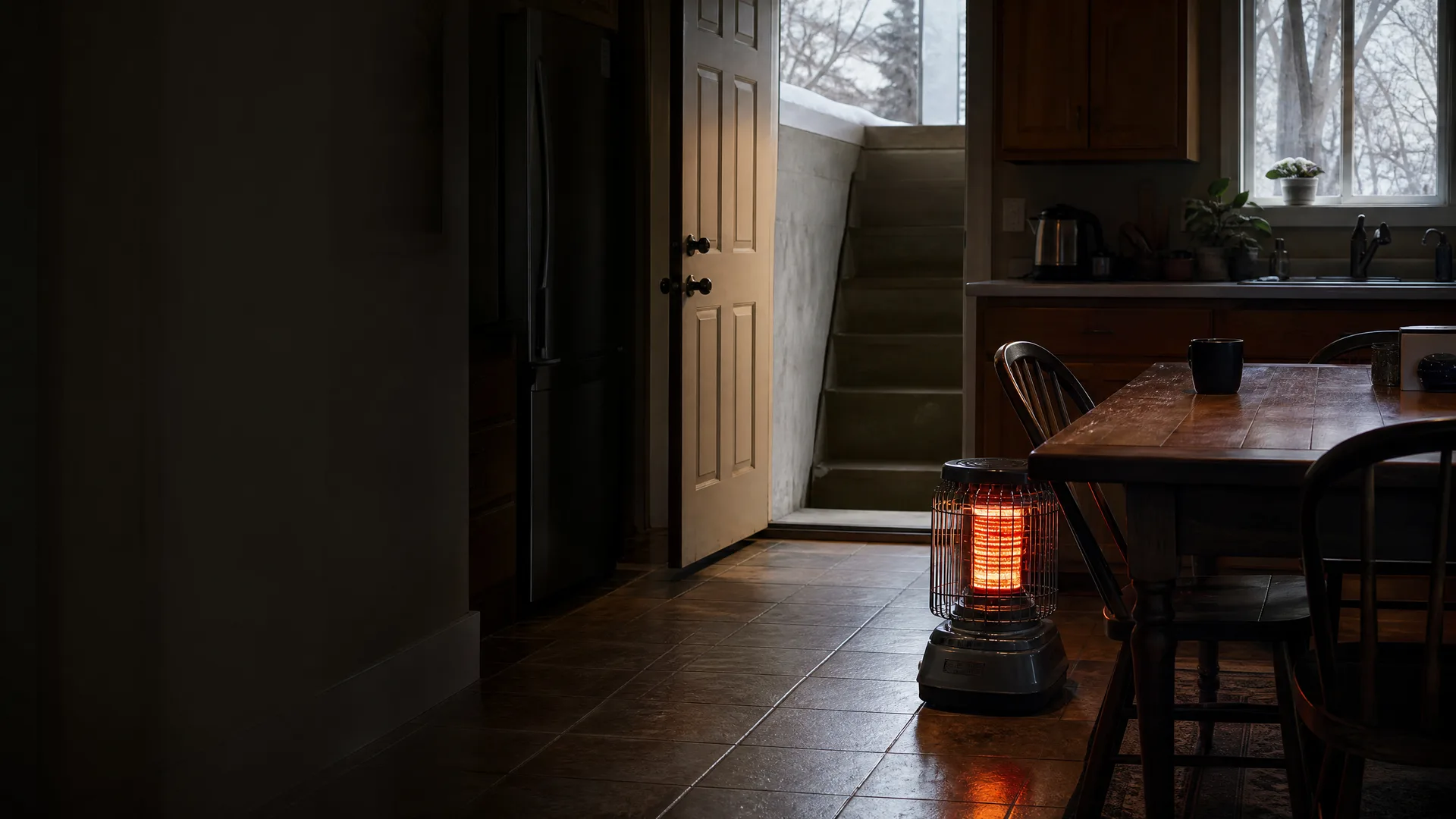
A dim interior with a glowing portable kerosene heater on a tiled floor beside a wooden table and chairs, an open white door leading to a staircase, and a kitchen sink by a window showing snow outside.

Six-thirty, and the kitchen window is still black. You've got the space heater pulled close to the table, its coil orange, because the propane furnace is running but losing the argument with a morning this cold. The basement door stands open behind you, the way it does when you're hoping some of that heat finds its way up the stairs instead of pooling down there with the tank and the ductwork. Your coffee's gone lukewarm faster than it should. Outside, the thermometer on the porch post reads well below zero, and Ennis won't see full sun for another hour yet. You sit close to the glow and wait it out.


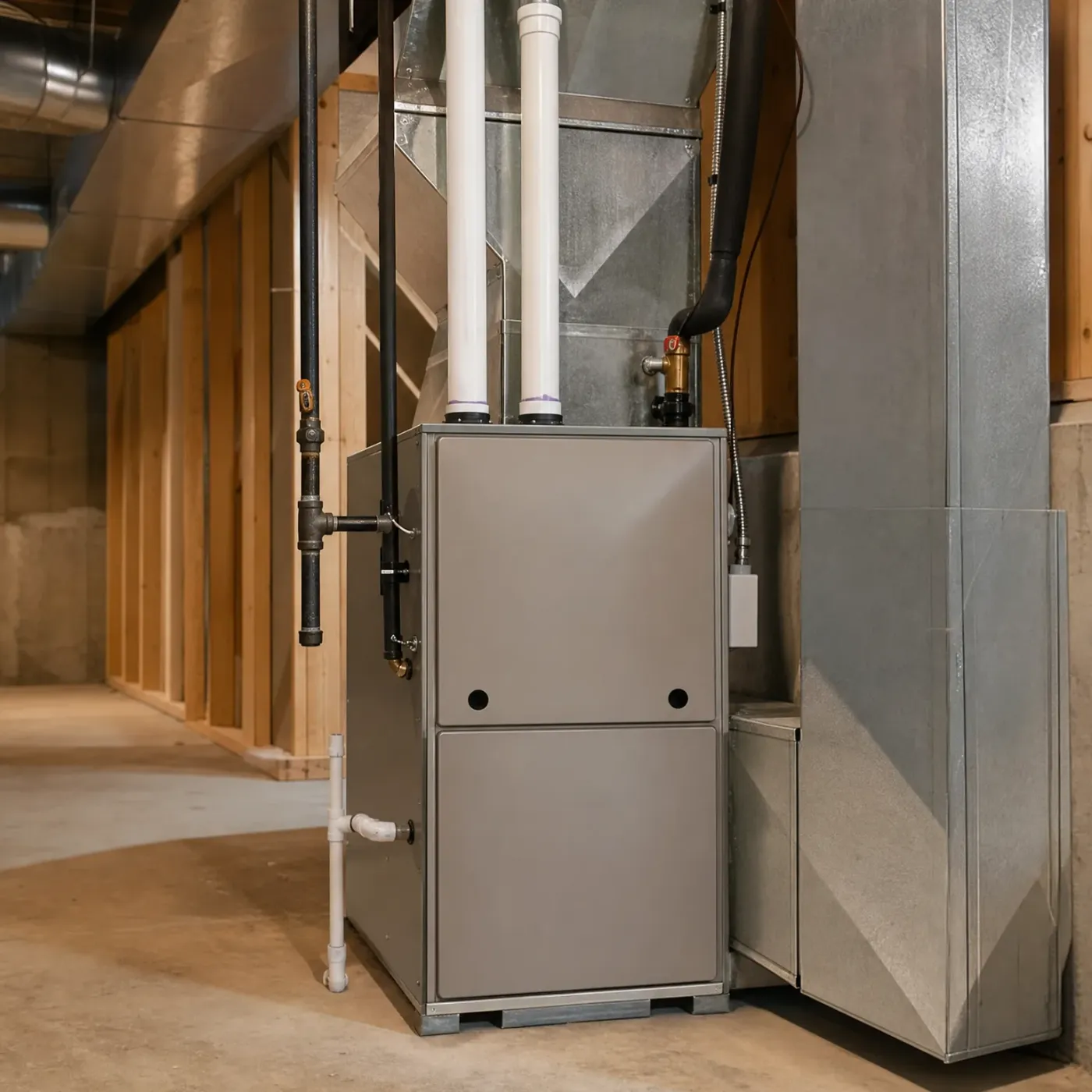
A gray high-efficiency furnace stands on a concrete basement floor beside sheet-metal ductwork, with white PVC vent pipes and a black flexible line running up to exposed wood floor joists, next to a wood-framed post against a concrete wall.
A propane furnace like this one burns fuel that keeps its heat no matter how far the temperature drops outside, which matters on the mornings Madison County gets below zero.
A beige metal furnace with a louvered front panel stands on a concrete floor against a concrete wall, connected to galvanized sheet-metal ductwork and a metal pipe.
An aging propane furnace can still carry the house through winter, but a cracked heat exchanger or a failing igniter won't wait for a warm spell to show up.

A heat pump moves heat rather than making it. It takes warmth out of the outside air, even air that feels plenty cold to you, and moves it inside. That works fine down to a point. Once the outdoor temperature drops far enough, somewhere in the teens or below depending on the unit, there just isn't enough heat left in the air to pull, and the system needs help to keep up. That's where a propane furnace is built differently. It makes heat by burning fuel, so a furnace puts out the same heat at 20 below that it does at 30 above. Some houses in Madison County run both: a heat pump handles the milder stretches, and a propane furnace takes over once the air gets too cold for the heat pump to pull much from it. Come summer, that same heat pump runs backward, pulling heat out of the house instead of in. One other difference worth knowing: propane sits in a tank on your property and has to be delivered, while a heat pump draws off the electric line already running to the house.


How Each System Actually Heats

  • A cold-climate heat pump still pulls heat from outside air even at 5 degrees, but the colder it gets, the less heat it can move per hour.
  • Below a certain outdoor temperature, usually somewhere in the teens or lower, the unit needs backup heat to keep the house at the thermostat setting.
  • A propane furnace burns fuel to make heat directly, so its output stays the same whether it's 30 degrees outside or 20 below.
  • Dual fuel systems pair a heat pump with a propane furnace and switch over automatically once outdoor temperatures drop past the heat pump's efficient range.
  • A heat pump also runs in reverse come summer, pulling heat out of the house the same way it pulls heat in during winter.
  • Propane has to be delivered and stored in a tank on the property, while a heat pump runs on the electric lines already at the house.
An older man with gray hair, a dark coat and scarf dusted with snow stands in a warmly lit entryway with an open wooden door, a table lamp, framed pictures, and a plant in a vase.
An older man with gray hair and a beard wearing a dark snow-dusted coat stands in a home entryway, with a lamp-lit living room and a wooden staircase behind him.
An older man with gray hair and a beard, wearing a dark snow-dusted coat, stands in a warmly lit home entryway with a hallway, console table with lamp, patterned rug, and living room visible behind him.
A gray-haired bearded man in a dark snow-dusted coat and scarf stands inside a dimly lit home entryway, with a hallway, framed picture, lit table lamp and staircase behind him.

Below 0

Madison County winters drop well below zero some mornings. Propane heat holds its output at those temperatures, where a heat pump needs backup help to keep up.

Connect with a pro

Two fuel bills, one house

Pairing a heat pump with propane backup means running both systems depending on the day, instead of comparing quotes for one furnace replacement.


Connect with a pro
An older beige furnace with louvered front panels stands on a concrete basement floor beside galvanized ductwork, metal and plastic pipes, exposed wood framing, and a cylindrical water heater at right.
Before you get your furnace installation
A gray high-efficiency furnace in a basement with PVC vent pipes, sheet-metal ductwork, copper and insulated pipes, a water heater at left, and an unfinished wood-stud wall at right.
After you get your furnace installation
A gray high-efficiency furnace in an unfinished basement, connected to sheet metal ductwork, white PVC vent pipes, a black gas line and flexible conduit, with concrete floor and wood-framed walls nearby.

A furnace pro near you

Fill out one short form instead of calling around.

Get in touch with a local installer about a new furnace.

Find a pro near me

Asking costs nothing, and the choice to hire stays yours.

Heat Pump or Propane Furnace

Heat Pump

  • A cold-climate heat pump still moves heat at 5 degrees, but Madison County mornings often go lower than that.
  • Below a certain outdoor temperature the unit needs backup heat, usually electric resistance or a propane furnace paired with it.
  • Running the compressor hard on the coldest mornings pulls more electricity, and power bills rise even though the rate stays typical.
  • Summers here are hot and dry, and the same equipment runs as an air conditioner, which a propane furnace never does.
  • A heat pump has no flame, no gas line and no flue, so there's nothing to vent and nothing burning in the house.
  • Installing one next to an existing propane furnace means the contractor has to size both for how they'll share the load.

Propane Furnace

  • Propane holds its heat output no matter how far the temperature drops, which covers the mornings here that go below zero.
  • Most houses in Madison County already heat with propane, so the gas line, tank and venting are already in place.
  • A propane furnace does nothing for you in summer, so cooling still means a separate air conditioner or none at all.
  • Propane has to be delivered and stored in a tank on the property, and the price moves with the market, unlike electricity here.
  • The furnace burns fuel to make heat, which means combustion gases have to be vented outside through a flue.
  • A new propane furnace installed in place of an old one can usually use the existing gas line and venting, which simplifies the job.
  1. Outdoor air passes over the heat pump's cold refrigerant coil.

  2. Refrigerant absorbs what heat the outdoor air still holds.

  3. A compressor squeezes that refrigerant, raising it to a usable temperature.

  4. The indoor coil releases that heat into air moving through your ducts.

How cold does it get, and how long does the furnace run?

  • Winter nights average 14°F

    Winter nights here average 14°F, cold enough that a heat pump alone struggles to keep a house warm without backup heat.

  • Heat runs August through June

    Heat runs from August through June in Madison County, eleven months of the year the system has to perform.

  • 45.3% of homes heat with propane

    Propane heats 45.3% of homes here, more than any other fuel, because it holds its output when the temperature drops.

NOAA nClimDiv 1991-2020 · ACS 2020-2024

Propane or Heat Pump: Where You Stand

  • Propane holds its heat output no matter how cold the morning gets, which is why it heats most Madison County homes.
  • A cold-climate heat pump still works at 5 degrees, but it needs backup heat once temperatures drop into the teens or lower.
  • Running a heat pump through an Ennis winter usually means a backup system too, either electric resistance or a propane furnace.
  • Heat runs eleven months of the year here, so whichever system you choose will see heavy, year-round use.
  • An aging propane furnace can still carry the house, but a cracked heat exchanger or a failing igniter won't wait for spring.
  • Power here is typical in price, so the choice comes down to how each system handles the coldest mornings, not the electric rate.

Propane heats most houses in Ennis and the rest of Madison County because it does one thing a heat pump can't: it holds its output no matter how far the temperature falls. On a morning well below zero, a propane furnace puts out the same heat it would at 20 degrees. A heat pump can't make that promise. A cold-climate model still pulls warmth from outside air at 5 degrees, but once temperatures drop into the teens or lower, it needs help from a backup system, usually electric resistance or a propane furnace running alongside it. That backup isn't a flaw. It's how heat pumps are built to work in a climate like this one. Either way, whatever you install will run hard. Heat is needed here eleven months of the year, so the system carries real, steady use rather than a short burst each winter. That's what makes the condition of what you have now worth paying attention to. A furnace that's getting old can still get you through this winter, but a cracked heat exchanger or a failing igniter doesn't give much warning before it quits. Power here is priced about like it is anywhere else, so the electric rate isn't what should decide this. What decides it is how each system handles a Madison County morning when the thermometer reads well below zero, and what you already have sitting in the basement or the utility closet.


A woman wrapped in a cream textured blanket sits in an armchair beside a lit lamp and a dark window, with an open book in the foreground.
A bearded man in a plaid flannel shirt stands indoors looking out a frost-covered window, with a steaming dark blue mug on the wooden sill and snow-covered trees outside.

Furnace Installation

Get matched with a furnace pro in Madison County

Explain the job once and skip repeating it on every call.

A black smartphone standing upright against a plain light gray background, its screen filled with solid green.
New system or replacementFurnace or heatingMadison County, MT
Step 1 of 2

What ZIP code is the job in?