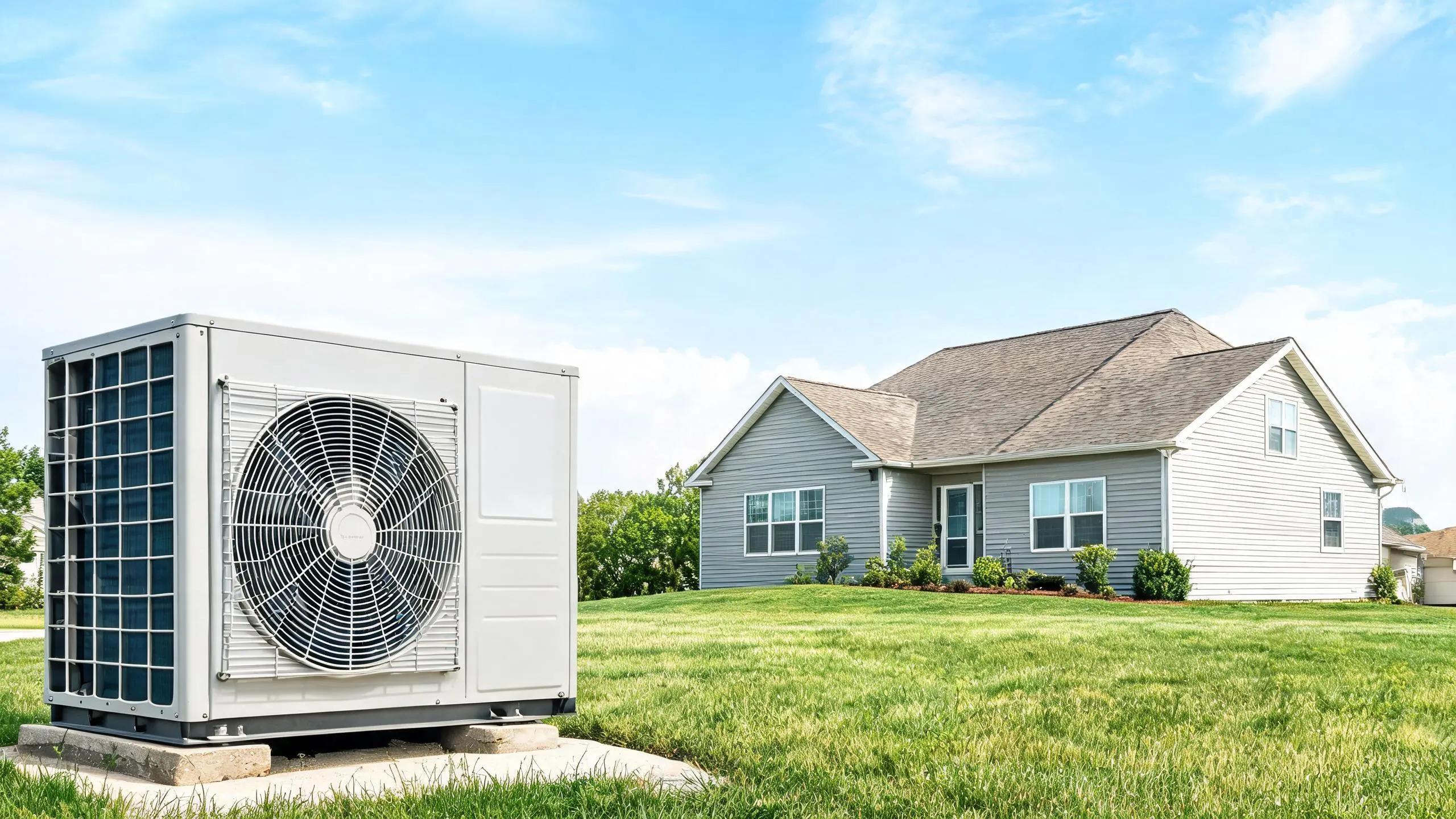
An outdoor HVAC condenser unit on a concrete pad in front of a single-story house with gray siding and a shingle roof.

Heat Pump Installation in Plentywood, MT

Tell us about the job

Takes about a minute. No obligation.

New system or replacementHeat PumpSheridan County, MT
Step 1 of 2

What ZIP code is the job in?

Power here is cheap, but that's not the whole bill

Sheridan County pays about 11.68 cents per kilowatt-hour, lower than most of the country. That helps, but a heat pump here still runs hard through a hot dry summer and a hard winter. How much electricity it uses matters more than what each kilowatt-hour costs.

Efficiency is what you're really buying

Two heat pumps can carry the same price tag and use different amounts of power to do the same job. In a place that leans on this machine for both heating and cooling, that difference shows up on every bill it sends you, month after month.

10 months
September through June, your system heats
2 months
July through August, it cools
4°F
the average winter night it heats against
79°F
the average summer afternoon it cools against
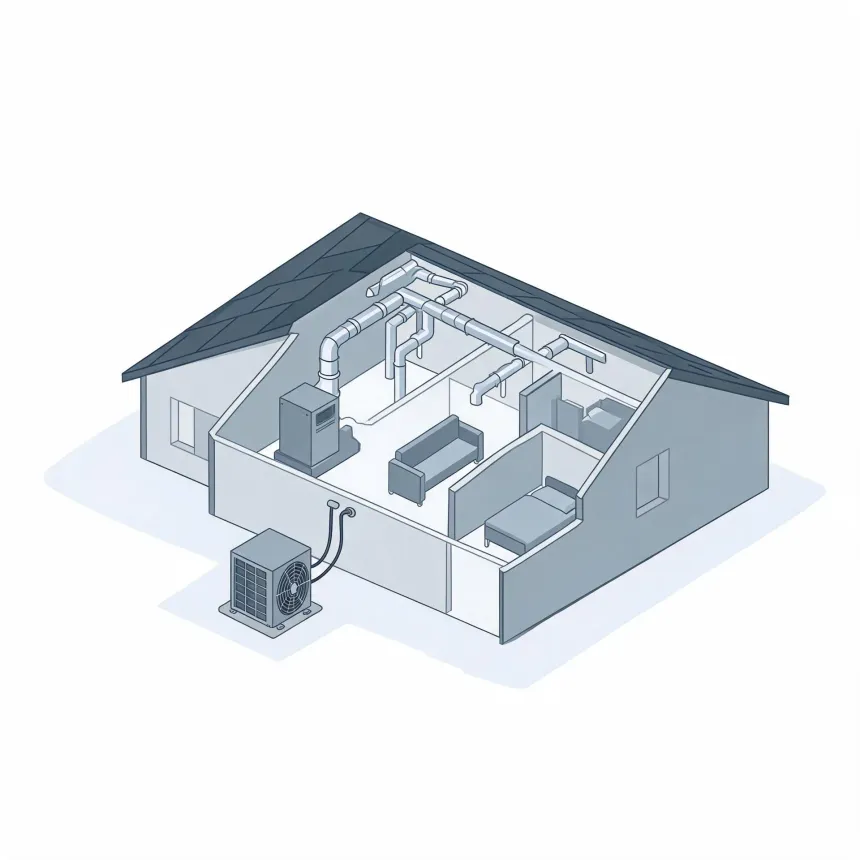
Isometric cutaway illustration of a single-story house showing interior rooms with furniture, an attic duct network connected to a furnace or air handler, and an outdoor condenser unit linked by lines outside the wall.
Your system heats September through June and cools July through August.

NOAA nClimDiv, 1991–2020 normals

Half the homes in Sheridan County were built in 1963 or earlier.

Installing a heat pump in one of these means sizing it to the house, not the other way around.

This machine earns its keep against wind, hail and snow

69 damaging wind events from 2015 to 2024
39 hail events from 2015 to 2024
30 winter storms from 2015 to 2024

Heat pumps here run heat from September through June and switch to cooling in July. That's most of the year on one machine. If yours is on its way out, plan the swap for June or August, the two months it's barely working. A contractor can take the time to size the system and set it up right, instead of rushing a replacement in January with the overnight low sitting at 4 degrees. Waiting for a breakdown means you lose that choice.

Pick the system that uses less, and it pays you back every month

At this rate, the cost of running a heat pump here comes down to how much electricity it uses, not what each kilowatt-hour costs. When you compare systems, ask for that number before you ask about the price tag. The difference shows up on every bill it sends you.

Find a contractor
A residential heat pump outdoor unit mounted on a concrete pad next to a house with gray vinyl siding.

Working hard, all year long

This system works through the wind, hail and snow that come through most years here. It also runs nearly nonstop, heating or cooling, with barely a break between seasons. That schedule wears on a unit faster than it would somewhere milder. A system sized right for the house holds up better against that kind of load than one sized by guesswork. When you're comparing bids, ask what tonnage each contractor is proposing and why, not just the price installed.

Bigger isn't better here

A heat pump too large for the house cycles on, satisfies the thermostat fast, and shuts off again before it's dehumidified the air or settled into a steady rhythm. One too small runs flat out and still can't keep up on the coldest or hottest days. Either way the house is less comfortable than it should be, and the compressor takes more wear from all that stopping and starting or straining to keep pace.

The math behind the size

A contractor works out the right size with a load calculation, room by room, using the square footage, the windows, the insulation, and the ceiling height. Two houses of the same size can need different tonnage if one holds heat better than the other. Walking in and matching the number on the old unit skips that work and just repeats whatever mistake was made the first time.

A few questions tell you more than the price tag ever will. Ask for the HSPF2 and SEER2 ratings on each system, since those say how much electricity it takes to deliver the same heat or cooling, not just whether the unit is new. Ask for the capacity at low outdoor temperatures too, usually listed on the spec sheet, because two systems can carry the same tonnage and still perform differently once it gets cold outside. That difference comes down to the compressor. A variable speed compressor adjusts its output to match the load instead of switching on and off at one setting, and that tends to use less power over a season than a single stage unit doing the same job. Ask what backup heat the system uses once outdoor temperatures drop low enough that the heat pump alone can't keep up, and how that backup is controlled. That switchover is what decides how much you end up running on electric resistance heat versus the heat pump itself.

Propane heats 61.4 percent of the homes in Sheridan County. Utility gas barely reaches here, just 6.5 percent, and electric heat sits at 24.6 percent. That makes propane the thing most heat pumps in this county get paired with, not replaced by. A heat pump still does the work through most of the year, but on the coldest stretches it hands off to a propane furnace or propane-fired backup rather than electric resistance coils. If your home already has a propane line and tank, keeping that backup in place is usually simpler than switching fuels. It also means the furnace sizing and the heat pump sizing need to work together, not get decided separately.