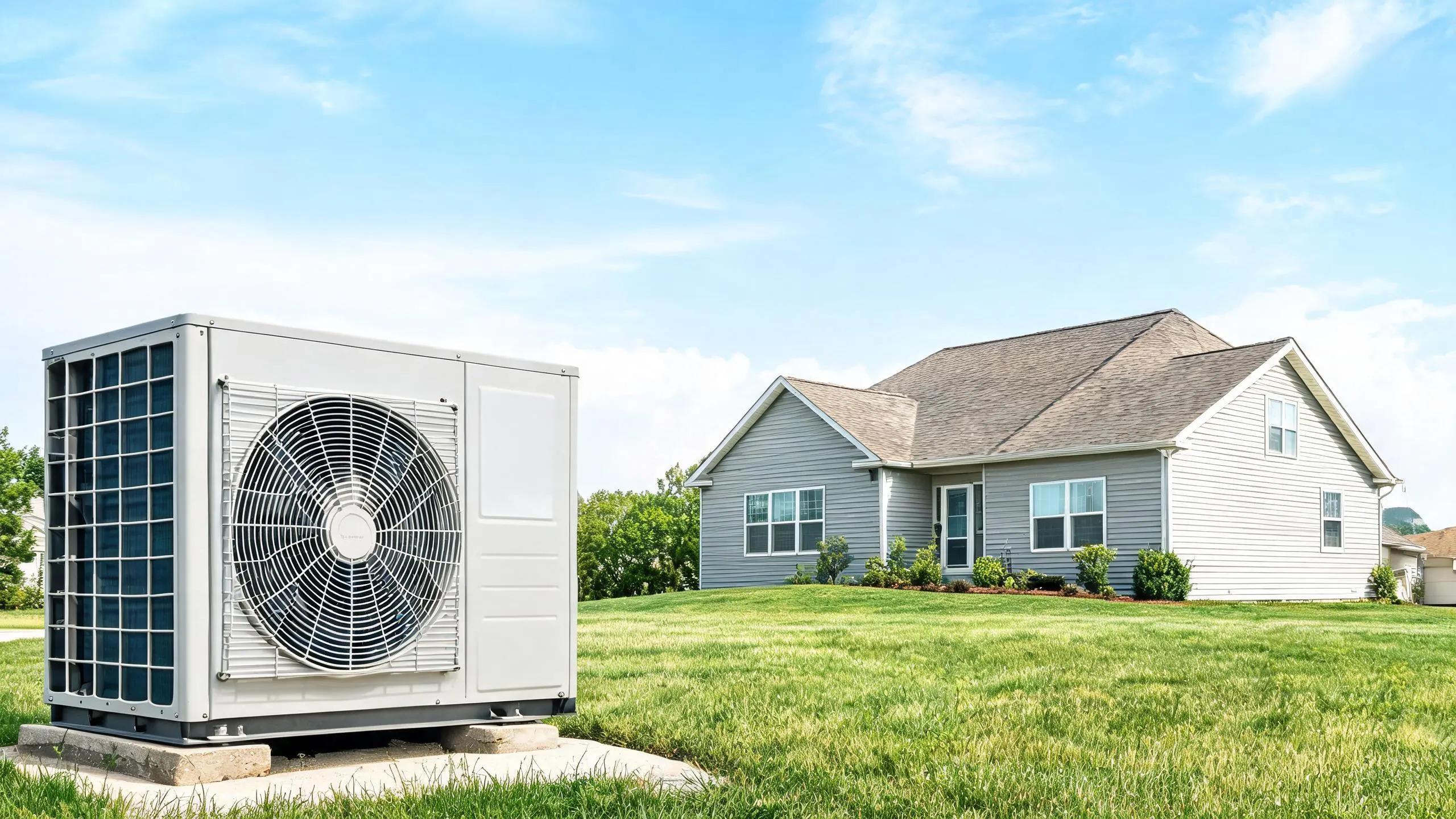
An outdoor HVAC condenser unit on a concrete pad in front of a single-story house with gray siding and a shingle roof.

Heat Pump Installation in Missoula, MT

Tell us about the job

Takes about a minute. No obligation.

New system or replacementHeat PumpMissoula County, MT
Step 1 of 2

What ZIP code is the job in?

This county sees serious weather

Missoula County logged 254 severe weather events between 2015 and 2024. Winter storms accounted for 164 of those, and damaging wind hit the county 69 times in the same stretch. Hail struck 21 times. A heat pump installed here sits outside through all of it.
Power doesn't always hold

Almost one in five Montana households went at least 24 hours without power in 2024. A heat pump depends on electricity to heat and cool, and the water heater may too. Installing one here means deciding ahead of time how you'll get through a day with no power, not after the lights go out.

10 months
September through June, your system heats
17°F
the average winter night it heats against
74°F
the average summer afternoon it cools against
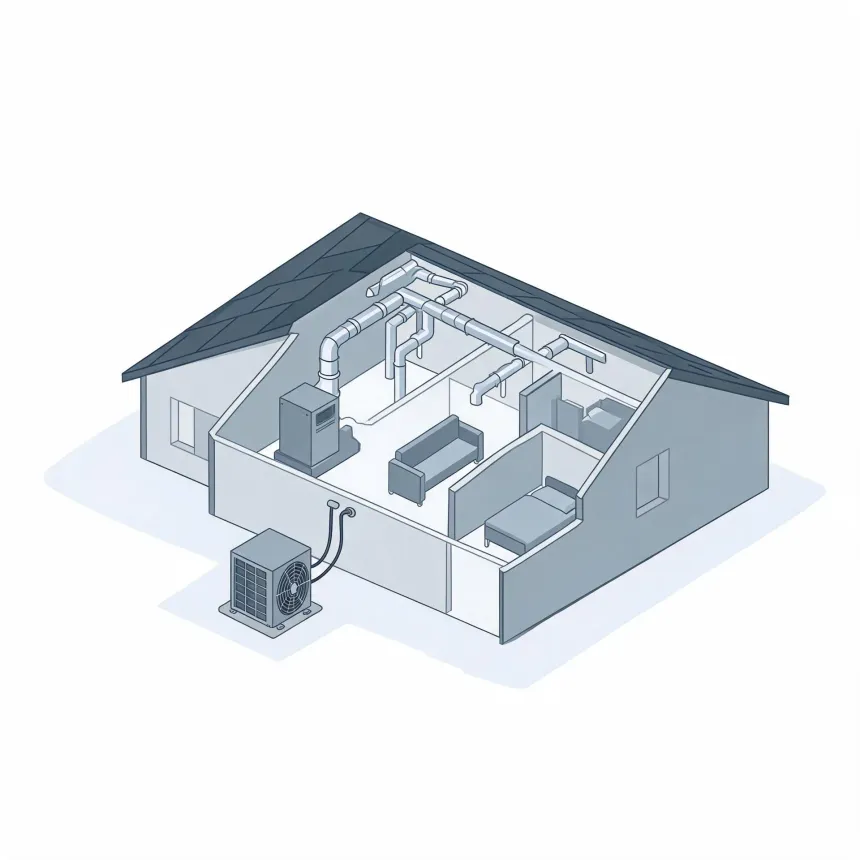
Isometric cutaway illustration of a single-story house showing interior rooms with furniture, an attic duct network connected to a furnace or air handler, and an outdoor condenser unit linked by lines outside the wall.

Heat here starts in September.

Get the new system in by August and it's running before the first cold morning, not during one.

This county pays less for power, but the weather still runs up the bill

Power here costs 13.05 cents per kilowatt-hour
69 damaging wind events from 2015 to 2024
21 hail events from 2015 to 2024

Missoula County falls in climate zone 6B, a cold zone with a long heating season. Any heat pump installed here has to meet the federal minimum for that kind of equipment: at least 14.3 Btu of cooling for every watt-hour of power it uses, and at least 7.5 Btu of heat for every watt-hour in winter. Those numbers set a floor. A contractor sizing a system for this county is working within it, not around it. The same federal rule applies to a heat pump installed anywhere in the country, but it's worth knowing before you compare quotes or models.

Plan for the outage before the install, not during one

Install day is when you decide where the outdoor unit sits and how it's shielded, and how you'll keep heat and hot water running if the power drops. That's easier to settle now than to work out in the dark.

Find a contractor
A man in a cap, dark shirt and tan pants, seen from behind carrying a canvas bag, climbs wooden porch steps toward a blue front door beside a potted evergreen.
A residential heat pump outdoor unit mounted on a concrete pad next to a house with gray vinyl siding.

The sticker tells you the ratio, not the bill

That efficiency rating is a ratio, not a guarantee. It compares the heat or cooling a unit puts out against the power it draws, measured in a lab under set conditions. Your house isn't a lab. A unit with a higher rating will cost less to run than a lower rated one of the same size, season after season, but the number on the sticker assumes clean coils, correct airflow and a system sized right for the house. Let the filter clog or let a contractor oversize the unit and the real number drops below what's printed. The rating also splits into two halves, one for cooling and one for heat, because a heat pump is doing opposite jobs depending on the month. A unit can be strong in one and average in the other. Ask what both numbers are, not just the one on the brochure.

The old equipment doesn't get left behind

A furnace, AC or boiler coming out gets disconnected and hauled away as part of the install. If it runs on gas, the line gets capped off properly, not just shut at the valve. A contractor handles the disposal, so there's no separate hauling job left for the homeowner once the new system is in.

The flue and gas line don't just disappear

If the old furnace vented through a chimney or a flue, that opening has to be dealt with, not just abandoned. An unused flue can let air and moisture into the house if it's left open. A contractor sorts out whether it gets capped or sealed as part of the swap, before the job is called finished.

Gas heats a little over half the homes in Missoula County, and electricity heats about a third. That makes gas furnaces the common setup here, which is worth knowing if you're deciding what to put in. A heat pump doesn't have to replace that outright. Plenty of installs here pair a heat pump with the existing gas furnace, so the furnace kicks in when the outdoor temperature drops low enough that the heat pump stops being the efficient choice. That setup lets you keep the gas line and ductwork already in place instead of ripping out a system that still works. A contractor can walk through whether your current furnace is a candidate for that pairing or whether a straight replacement makes more sense.

Power is cheap in Missoula County, but a heat pump with a poor rating still costs more to run than it should, year after year. The fix for that is picked at install, not after. Ask for the unit's rating in both directions, heating and cooling, and compare those numbers across quotes rather than the price alone. A contractor sizing the system correctly and setting up the airflow right is what lets that rating hold up in your house. Spend a little more on a better rated unit now and the lower power cost shows up on every bill that follows, for as long as the system runs.