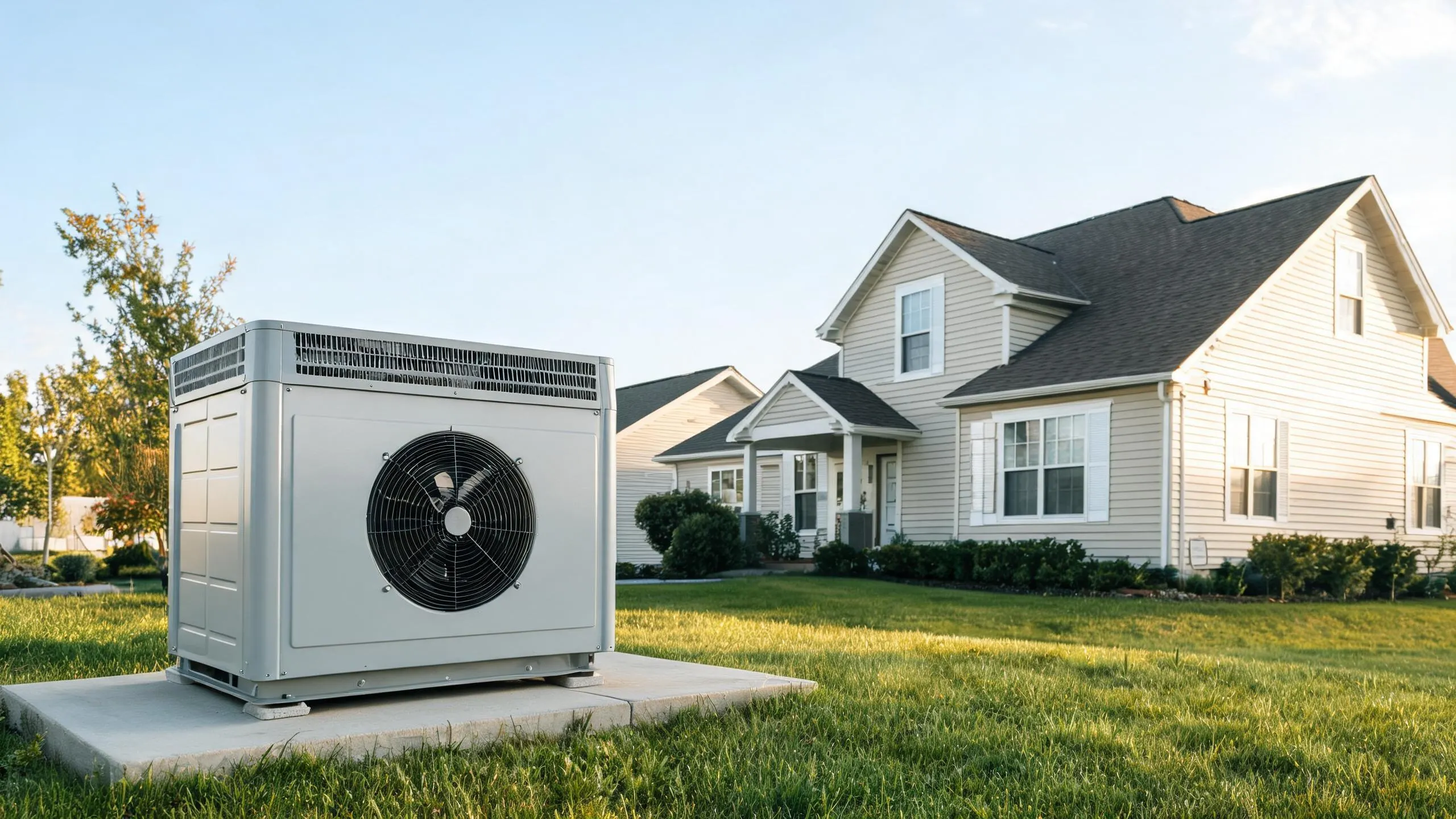







An outdoor heat pump unit mounted on a concrete pad in the front yard of a gray suburban house.

Heat Pump Installation in Miles City, MT

Tell us about the job

Takes about a minute. No obligation.

New system or replacementHeat PumpCuster County, MT
Step 1 of 2

What ZIP code is the job in?

Half the homes in Custer County were built in 1965 or earlier. A house that old was never designed with a heat pump in mind. The ductwork, the electrical panel, even where the old furnace sits can all shape what the install turns into. None of that means an older home can't take a heat pump well. It means the install has to start with what's actually in that house, not with a standard setup.

9 months
September through May, your system heats
3 months
June through August, it cools
11°F
the average winter night it heats against
84°F
the average summer afternoon it cools against
Isometric line illustration of a cutaway house showing interior rooms with furniture, ceiling ductwork connected to an indoor air handler, and an outdoor condenser unit linked by refrigerant lines.
Your system heats September through May and cools June through August.

NOAA nClimDiv, 1991–2020 normals

A heat pump in Custer County runs through hot dry summers and hard winters both, with no season off.

Size it for this county's swings, not for a mild-climate average.

This county sees storms often, and the outage that follows can cut both heat and hot water

176 severe weather events from 2015 to 2024
18% of homes statewide lost power a day or more in 2024
94 damaging wind events from 2015 to 2024
Most homes here run on gas61.9% of homes in Custer County heat with gas, more than electric and propane combined

Custer County falls under zone 6B, the cold end of the 2021 energy code. Any split-system heat pump installed here has to clear the federal minimum: at least 14.3 Btu of cooling delivered for every watt-hour it draws over the summer, and at least 7.5 Btu of heat for every watt-hour over the winter. Those numbers set the floor, not a target, so the unit that gets installed has to clear them regardless of brand or size. A federal tax credit is available on qualifying equipment, which helps offset choosing a system built for this kind of climate rather than the cheapest one that happens to fit the space.

An older house needs a heat pump sized to it, not the house it replaced

If your home is one of the older ones in the county, the install starts with a look at what's actually there: the ductwork, the panel, where the old furnace sits. That's what decides what the new system can be, not a standard setup picked off a shelf. Get that part started.

Find a contractor
A man in a gray t-shirt, tan work pants and brown boots, seen from behind, climbs steps toward a dark front door while carrying a canvas tool bag holding a tape measure and screwdrivers, with a potted flowering shrub beside the entry.
A white mini-split heat pump outdoor unit mounted on a concrete pad beside a gray-sided house, surrounded by gravel and green shrubs.

This runs nine months of the year, choose when the other three happen

Nine months of heat, three months of cooling, and almost no gap between them. August is already cooling into the start of heat season, May is already warming into summer. A heat pump here barely gets a season off, and a failure in January, with overnight lows averaging 11°F, is not when you want to be picking a system. Install it in a slow month and the contractor has time to size it right for your house. Wait for a breakdown and you take whatever can go in fastest.

Ask what happens when it gets cold out

Every heat pump loses capacity as the outdoor temperature drops, and below a certain point it can't pull enough heat from the air to keep up on its own. Ask what that point is for the system being quoted, and what covers the gap below it: strip heat built into the air handler, or the existing furnace staged in behind it. A contractor who can't answer this hasn't finished sizing the job.
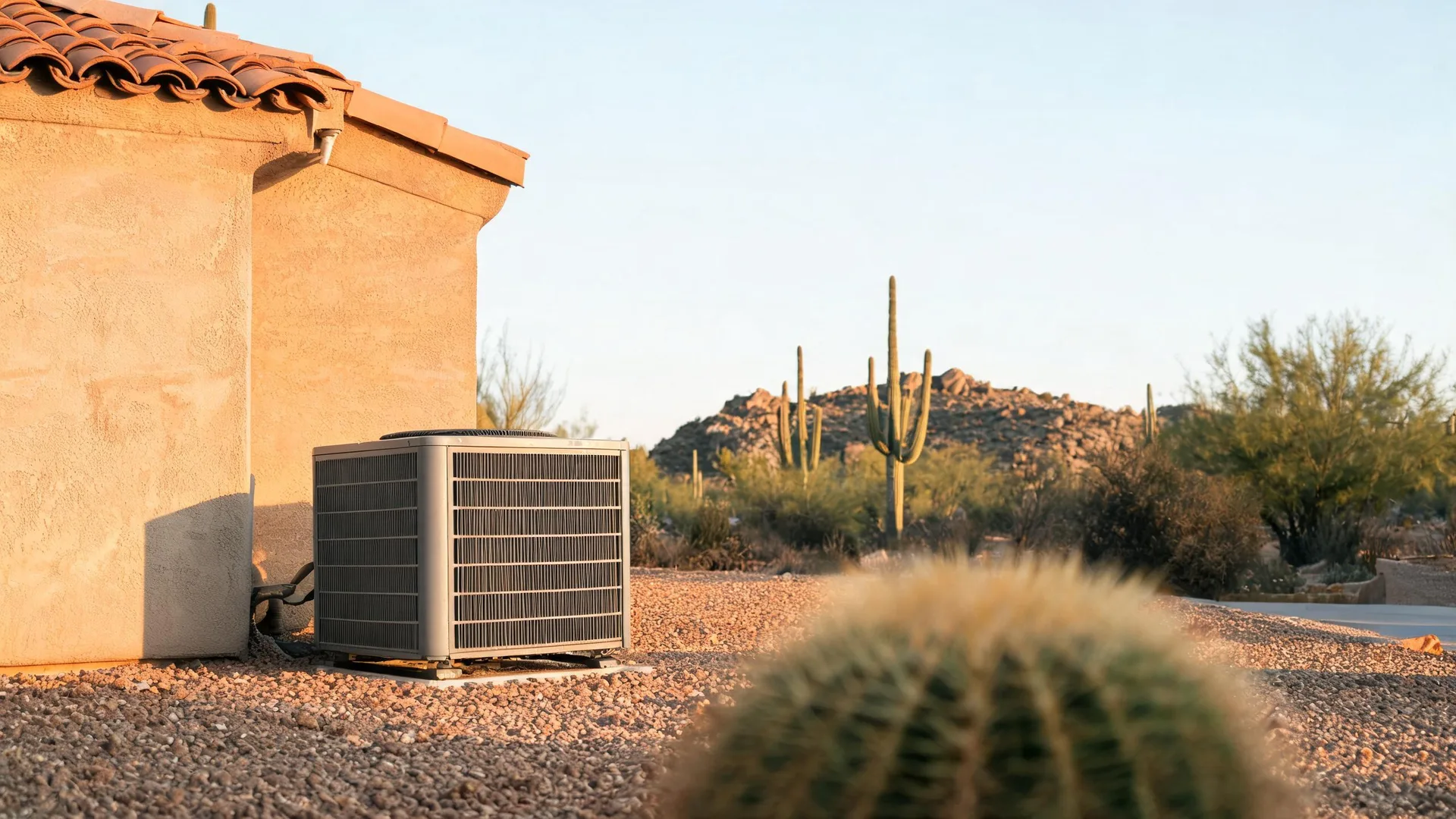
Ask how they sized it, not just what they're selling

Sizing a heat pump means working through the house: the square footage, the windows, the insulation, the ductwork it has to run through. A contractor who quotes a tonnage before looking at any of that is guessing. Ask to see the load calculation, not just the equipment brochure. The unit that matches the house is the one worth paying for.

The efficiency rating on the label is a ratio, not a guarantee. It tells you how much heat or cooling the unit can deliver for the power it draws under test conditions. Your actual results depend on the ductwork it's tied into, how well the house holds the air once it's conditioned, and whether the system was sized to the house or just matched to the old equipment it replaced. Two homes with the same rated unit can see different results if one has leaky ducts or a return that's too small. The rating tells you what the machine is capable of. What it actually delivers is decided at installation, not on the label.

Custer County gets hit with weather that a heat pump's outdoor unit has to sit through. Damaging wind came through 94 times between 2015 and 2024. Hail struck 65 times in that same stretch. Add 17 winter storms with heavy snow, ice, and blizzard conditions, and that's an outdoor coil and fan taking a beating most years, not just the bad ones. None of that means skip a heat pump here. It means ask the contractor what's rated to handle it, and what's covered if a hailstorm dents a coil or a windstorm knocks debris into the unit. A system picked on price alone usually skips that conversation.