Electricity here runs 14.01 cents a kilowatt-hour
A heat pump runs on electricity for both heating and cooling, so that rate applies to the system every month of the year, not just in summer.
Takes about a minute. No obligation.
A heat pump runs on electricity for both heating and cooling, so that rate applies to the system every month of the year, not just in summer.
Two heat pumps can heat and cool the same house and use different amounts of power doing it. In Helena, where the rate per kilowatt-hour is fixed, the difference between a well-matched system and an oversized or poorly installed one shows up directly on the bill.
Heat in Lewis and Clark County runs from September through June.
Get a new heat pump in before August ends, and the install happens on your schedule instead of during the first cold snap.




Most houses in Lewis and Clark County heat with gas, 56.6% of them. Electricity is a distant second at 26.9%, and another 10.3% run on bottled or LP gas. If your house is one of the gas majority, you're likely looking at a heat pump paired with your existing gas furnace rather than a system that replaces it outright. The heat pump handles the milder days and the furnace takes over when it gets too cold for the heat pump to keep up efficiently. That setup lets you use the furnace you already have instead of adding backup electric heat, which matters in a county where real cold settles in for months.
A heat pump matched to your house is the one that keeps the power rate from adding up on you. Getting the sizing and setup right from the start is part of the installation, not something to fix later.
Find a contractorThis system runs most months of the year, heating through the cold stretch and switching to cooling once summer turns hot and dry. There's barely an off season for it to rest in. A heat pump sized and installed to match your house holds up to that kind of run time. One that's oversized or set up wrong shows strain sooner, a coil that can't keep pace, a part that wears out before it should. Get the sizing and the install right at the start, because this system doesn't get much time off to make up for it.
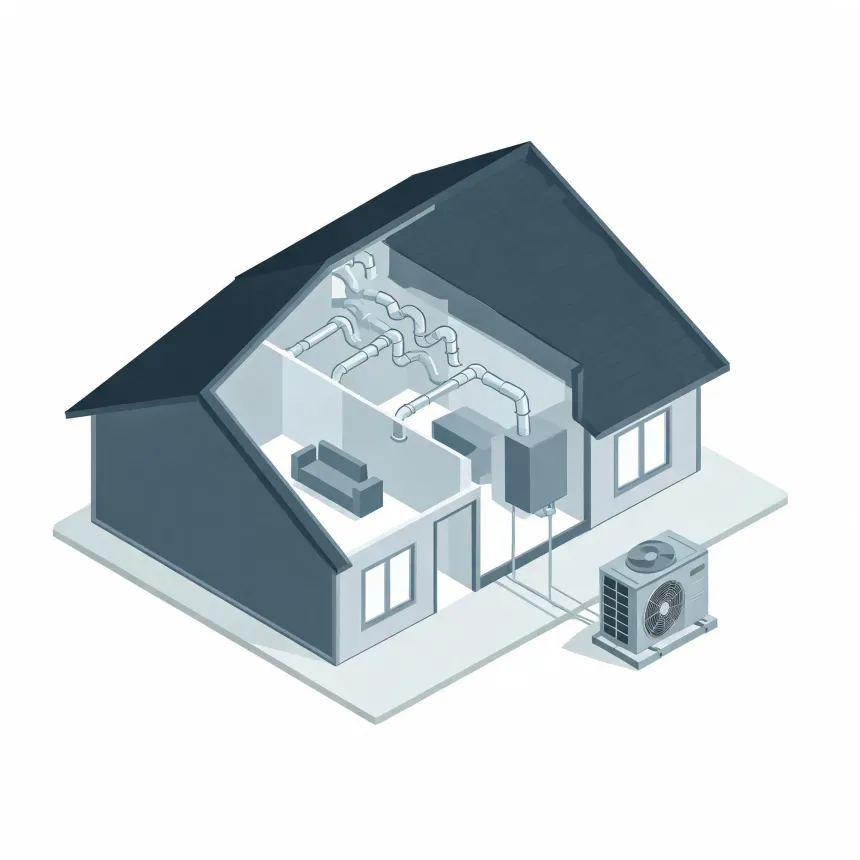
A gas furnace staying on as backup needs to be disconnected from any controls it shared with the old cooling system and reconnected to work with the heat pump instead. The thermostat gets swapped for one that can run both and decide when each one takes over. If the old equipment included a condenser or an air handler, that gets removed and the electrical and refrigerant lines serving it get capped or reused.
A heat pump moves a different volume of air than what was running through those ducts before, often for longer stretches at a time. Ducts that were sized for the old system get checked to see if they can handle that, because undersized or leaky ductwork will hold a new heat pump back no matter how well the unit itself is matched to the house.
What drives the price of an install is less about the box on the pad and more about what has to happen to make it work right. The size of the unit matters, but so does the ductwork it ties into, the electrical circuit it needs, and whether the refrigerant lines can be reused or have to be run new. A straight swap where the old equipment matches up with the new goes faster than one where the ductwork needs modification or the electrical panel needs work to handle the load. Labor accounts for a real share of it too, since a heat pump has to be set up to communicate with the thermostat and, if there's a backup furnace involved, coordinated so the two don't fight each other. The harder the site is to work with, tight attic access, a long refrigerant line run, an electrical panel that's already full, the more it takes to get it installed correctly.
Lewis and Clark County falls in climate zone 6B, which the energy code treats as cold with a long heating season. Any split-system heat pump installed here has to meet the federal minimum for that: at least 14.3 Btu of cooling delivered for every watt-hour it uses over the summer, and at least 7.5 Btu of heat for every watt-hour over the winter. That standard applies to what's manufactured from January 1, 2023 on, so it sets the floor for what a contractor can put in. A unit that clears the minimum by a wide margin costs more going in, but a federal tax credit is available to offset that. Either way, the rating on the unit isn't a marketing number here. It's what decides whether the system can legally go into your house.