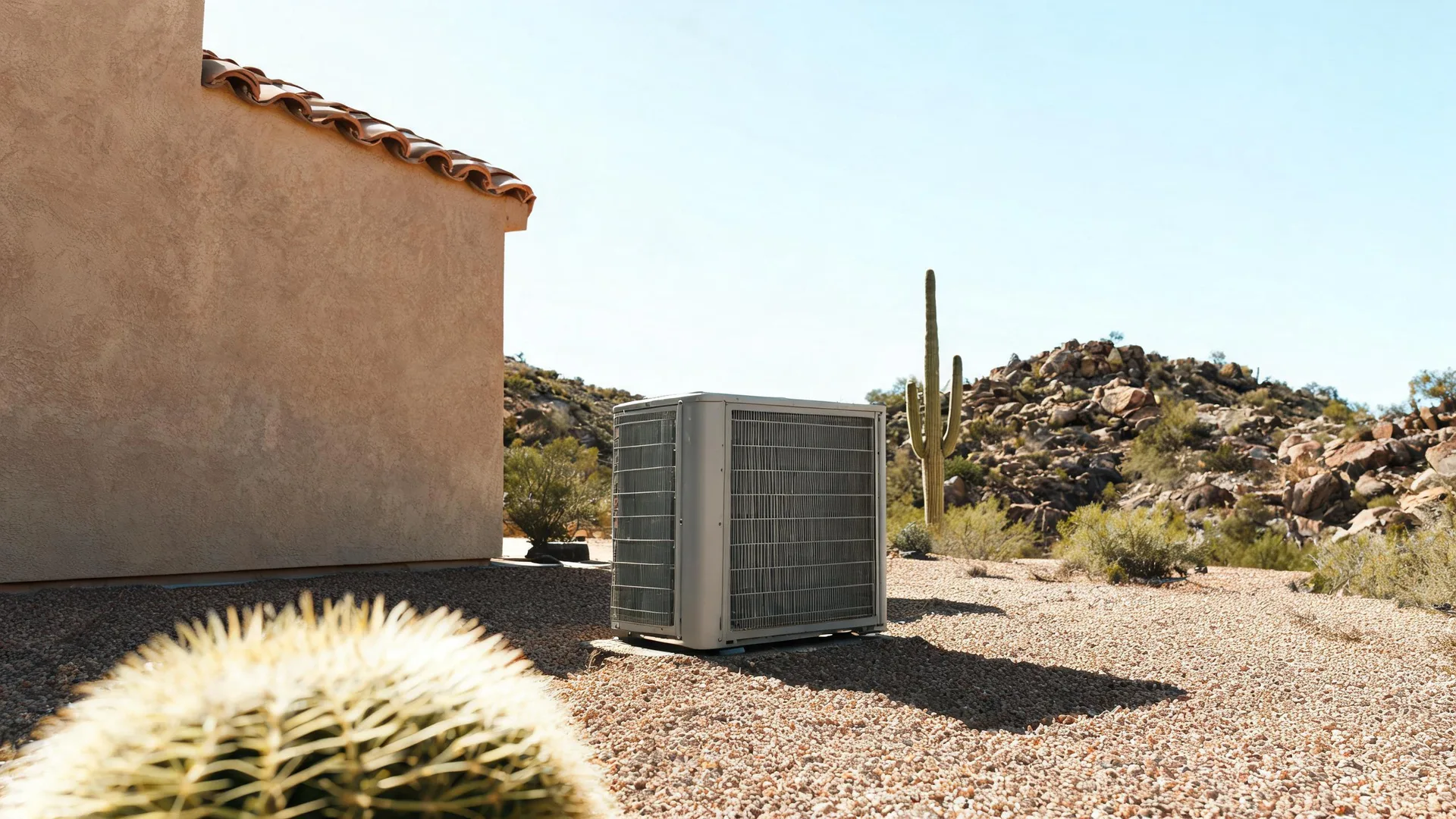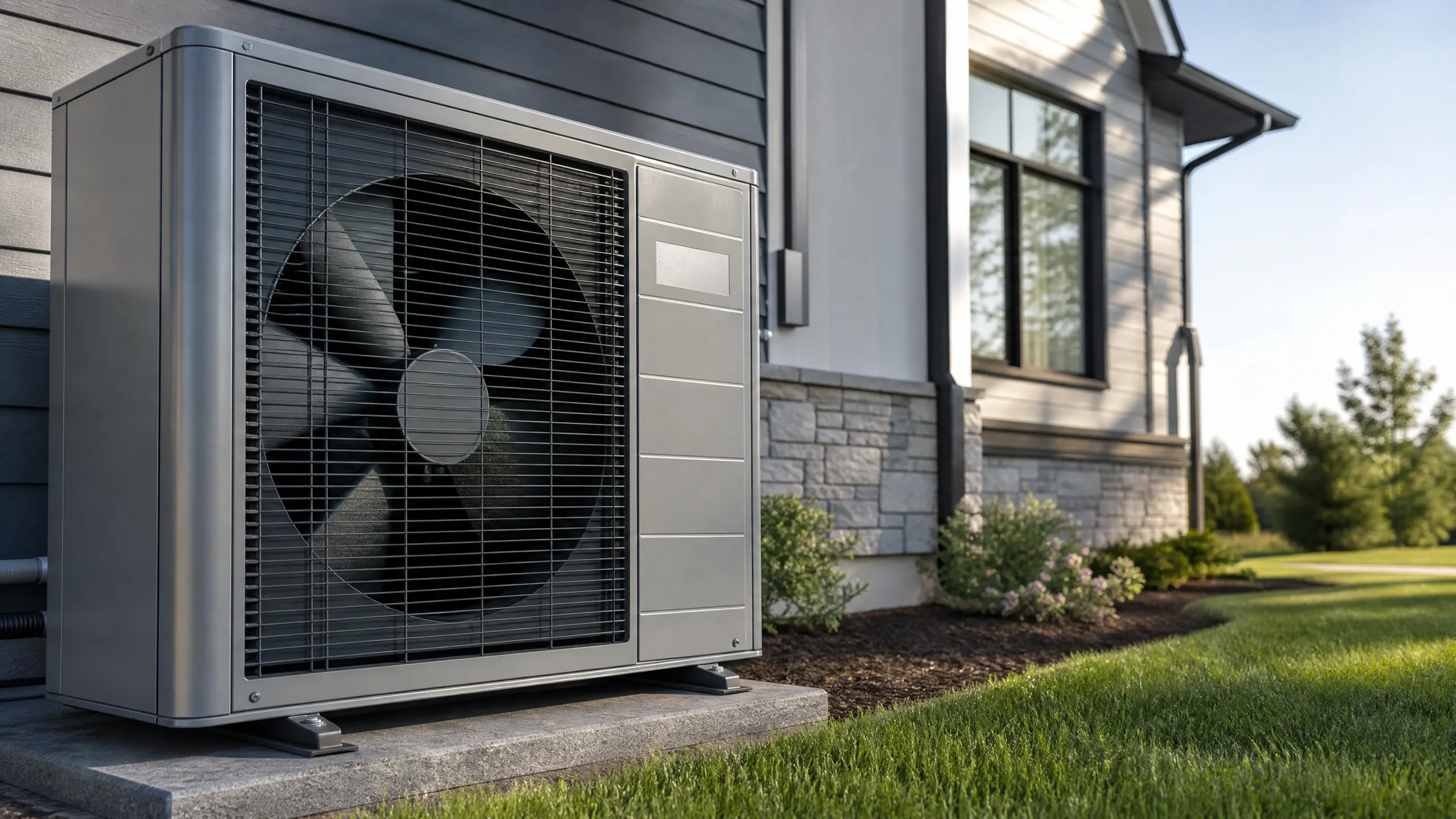
A grey heat pump outdoor unit mounted on a concrete pad against the exterior wall of a house with grey siding and stone veneer.

Heat Pump Installation in Great Falls, MT

Tell us about the job

Takes about a minute. No obligation.

New system or replacementHeat PumpCascade County, MT
Step 1 of 2

What ZIP code is the job in?

This county sees real storms

Cascade County logged 222 severe weather events between 2015 and 2024. That includes 134 damaging wind events and 55 hail storms, plus 32 winter storms with heavy snow and ice. A heat pump here sits outside year round, taking whatever comes.

Power doesn't always hold

18% of Montana households went at least 24 hours without power in 2024. A heat pump runs on electricity, and so does the gas furnace most homes here pair it with for backup. An outage long enough to matter affects both your heat and your hot water.

10 months
September through June, your system heats
1 months
July through July, it cools
16°F
the average winter night it heats against
78°F
the average summer afternoon it cools against
Isometric grayscale illustration of a cutaway single-story house showing interior rooms, ductwork and an air handler, an exterior condenser unit connected by lines, and dark solar panels on the roof.
Your system heats September through June and cools July through July.

NOAA nClimDiv, 1991–2020 normals

Heat here runs nearly ten months, September through June, on just a July break.

Get a heat pump installed in August and it's already earning its keep before the first cold night.

Most of this county already heats with gas, which is why a heat pump install here almost always means adding one, not replacing it

72.4% of homes heat with gas
Climate zone 6B
Power here costs 14.37 cents per kilowatt-hour

Cascade County falls under zone 6B in the 2021 energy code, the cold end of the scale. Any split-system heat pump installed here has to clear a federal floor: at least 14.3 Btu of cooling delivered for every watt-hour it draws over the summer, and at least 7.5 Btu of heat for every watt-hour over the winter. That's not a target, it's the minimum a unit has to meet to be sold new. Models built before January 2023 don't carry this rating, so if you're comparing a quote against an older system, you're not comparing like for like. A federal tax credit is available on top of this for qualifying installs, worth checking against whatever system a contractor proposes.

Plan the install around the weather it has to survive

Ask the installer where the outdoor unit will sit and what will shield it from wind and hail. Ask what happens to your heat and hot water if the power drops for a day. A gas furnace still needs electricity to run its blower and controls, so backup power is worth planning alongside the install, not after it.

Find a contractor
A gray heat pump outdoor unit mounted on a concrete pad next to the stone-accented exterior wall of a house.

Half these homes were built in 1970 or earlier

Half the homes in Cascade County were built in 1970 or earlier. A heat pump installed in a house that age has to tie into whatever electrical panel, wiring and ductwork are already there, not what a new build would offer. If your system came with the house, it's worth finding out what else came with it before the install, not after. Matching the new unit to what the house already has is part of the job.

The outdoor unit is half the system

A heat pump install prices out the indoor air handler or coil and the outdoor compressor unit together, plus the line set that connects them. Longer line runs, a compressor with more stages, and a variable-speed air handler all push the number up over a single-stage setup. The compressor itself is usually the most expensive part on the truck.

What's already there changes the job

Running new refrigerant lines, upsizing the electrical circuit to the outdoor unit, or adding a dedicated disconnect all take labor beyond setting the two units in place. Ductwork that's undersized or leaky for a heat pump's airflow needs sealing or modification before the system can heat and cool the way it's rated to. None of that shows up until someone opens the walls or gets on the roof to look.

Most installs here are adding a heat pump next to a gas furnace, not tearing one out, but if a straight swap is happening, the old equipment still has to come out properly. Refrigerant in the old system has to be recovered, not vented, before anything gets disconnected. The old outdoor unit, the indoor coil, and sometimes the line set all come out together, since reusing old line sets with a new system can mean mismatched sizing or old oil contaminating the new refrigerant. If the old system was a straight AC paired with a furnace, the furnace itself may stay in place as backup heat, with only the outdoor condenser and indoor coil swapped out. Whatever gets hauled away, the electrical circuit and disconnect feeding the old unit need to be checked too, since a heat pump often draws differently than what was there before.

If your house was built in 1970 or earlier, the electrical panel is worth a look before a heat pump gets ordered, since the outdoor unit draws power the gas furnace never did. An older panel may not have room for a new circuit without upgrading something else first. The breaker box location and the run from it to wherever the outdoor unit will sit matter too. None of this shows up on a quote until someone looks at the actual panel. Finding that out before the install date is set saves a second visit to fix it after.