





An outdoor heat pump unit mounted on a concrete pad in front of a single-story suburban house with beige siding.

Heat Pump Installation in Glasgow, MT

Tell us about the job

Takes about a minute. No obligation.

New system or replacementHeat PumpValley County, MT
Step 1 of 2

What ZIP code is the job in?

Winter nights in Valley County average 6 degrees. A heat pump has to pull heat out of air that cold and keep doing it for hours, night after night, all December through February. That is harder duty than most of the country asks of one. The outdoor unit also sits outside through whatever the weather does. This county has recorded damaging wind 256 times in the past decade, and the unit has to take that standing in the open. A system sized to get by on a mild day will fall behind on the coldest ones. Getting the size right for what this place actually throws at it matters more here than most places.

10 months
September through June, your system heats
2 months
July through August, it cools
6°F
the average winter night it heats against
80°F
the average summer afternoon it cools against
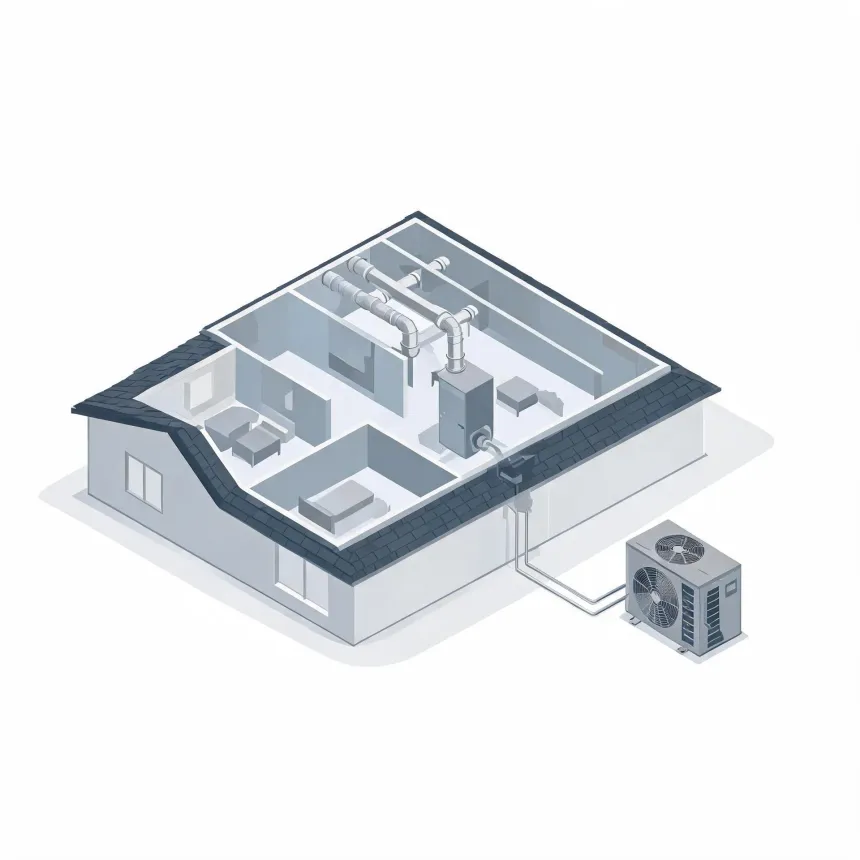
Isometric cutaway illustration of a single-story house showing interior rooms with ductwork, a furnace or air handler, and refrigerant lines running outside to a condenser unit on a pad.
Your system heats September through June and cools July through August.

NOAA nClimDiv, 1991–2020 normals

Half the homes in Valley County were built in 1966 or earlier.

A heat pump going into a house that old has to match the ductwork and wiring already there, not the other way around.

Storms are common here, and outages follow them

387 severe weather events from 2015 to 2024
18% of homes statewide lost power a day or more in 2024
256 damaging wind events from 2015 to 2024

Montana homes paid 12.66 cents per kilowatthour in 2024. A heat pump that runs on the edge of its capacity all winter draws more power than one sized and installed right for this cold. That difference shows up on every bill, not just the first one. An efficient system costs more to put in. It costs less to run for as long as it sits in that backyard. In a place where power costs what it does here, getting the size and installation right pays back on every bill that follows.

Zone 6B sets the minimum. Find out what qualifies.

Valley County falls in zone 6B, and any split-system heat pump installed here has to clear federal minimums of 14.3 SEER2 for cooling and 7.5 HSPF2 for heating. That floor shapes what a contractor can offer you. It also puts you in range of the federal tax credit available on qualifying heat pump installations. Worth sorting out now what meets the standard and what you'd owe after the credit.

Find a contractor
A man in a dark shirt and brown work pants, seen from behind, carries a worn canvas tool bag up porch steps toward a dark front door, with a potted shrub to the right.
A gray air-source heat pump mounted on a concrete pad next to a house with gray vinyl siding, surrounded by gravel and flanked by green shrubs and white hydrangea flowers.

Ten months of heat a year leaves no good time to be without one

Heat here runs ten months, September through June. Cooling takes the other two, July and August. A heat pump installed in this county is almost always working, warming the house far more than it cools it. That kind of schedule does not leave much slack for putting off a replacement until the old system quits on a cold morning. Getting a new one in during August, before the heat starts, means the install happens on a day you picked, not one the weather picked for you.

The old furnace or AC comes out

A heat pump replaces both at once, so whatever heated the house and whatever cooled it both get disconnected and hauled off. If the old system ran on gas, the line gets capped off properly, not just shut at the valve. The electrical whip and disconnect by the old outdoor unit usually get reused or swapped for one that matches the new unit's draw.
The ductwork gets a hard look first

A heat pump moves a different volume of air than a furnace did, often at lower temperatures for longer stretches, so the duct run that worked fine before does not automatically work now. A contractor should check the supply and return sizing against the new unit before setup, not after. Leaks or a return that is too small will show up as rooms that never quite catch up, and that gets fixed while the old equipment is already open, not later.

A heat pump carries ratings on its label for cooling and for heating. The heating number is the one that matters most here, since this machine spends most of its time pulling heat out of cold air, not pushing it out on a hot day. Both numbers measure efficiency, how much heat a unit delivers for the power it draws over a season. Neither one tells you how much heat the unit can put out. A model can carry a high rating and still be the wrong size for the house it goes into. The rating tells a contractor which equipment clears the bar. Whether that equipment can keep every room warm on the coldest night still comes down to a load calculation done on the house itself.

Installation day starts with a load calculation walkthrough, if the contractor hasn't already done one on a prior visit. Then the old equipment comes out. Expect the crew there most of the day, longer if the ductwork needs real changes rather than just a check. The outdoor unit gets set on a pad or bracket, refrigerant lines get run to the indoor coil, and the whole system gets charged with refrigerant to the manufacturer's spec, not just topped off by feel. Electrical gets tied in and tested under load. Before anyone leaves, the system should run through a full cycle, heating and cooling both, while the contractor checks temperatures at the vents and confirms the thermostat is actually talking to the unit. Walk through with them before they go. Ask what the refrigerant charge reading was and have them show you the breaker and disconnect for the new unit, not just hand you a manual.