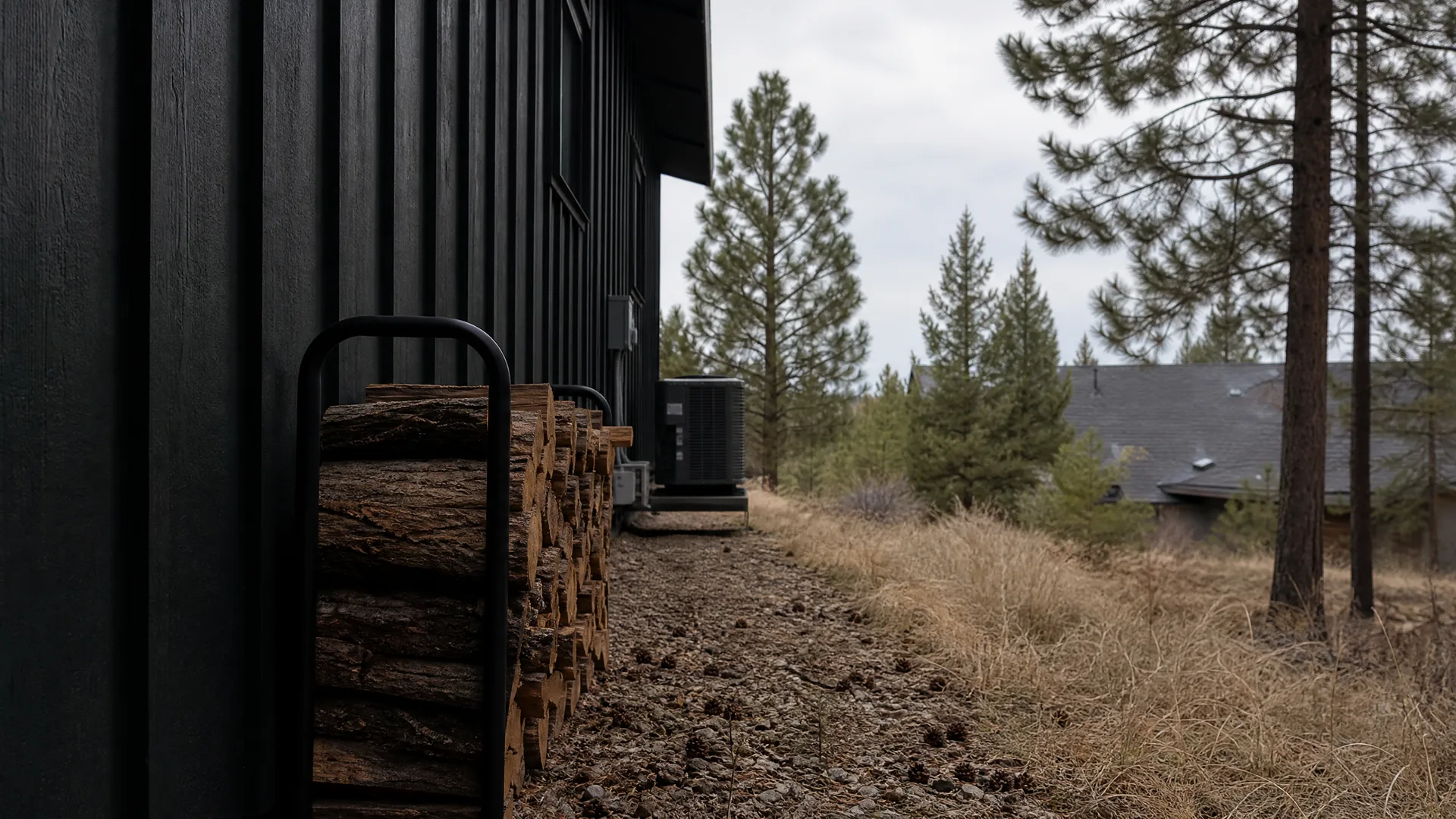



A black vertical-board exterior wall with a metal rack of stacked firewood, an air-conditioning condenser unit beyond, and dry grass, gravel and pine trees with a neighboring roof in the background.

Heat Pump Installation in Conrad, MT

Tell us about the job

Takes about a minute. No obligation.

New system or replacementHeat PumpPondera County, MT
Step 1 of 2

What ZIP code is the job in?

Pondera County logged 260 severe weather events between 2015 and 2024. Most of that was wind, 212 events, the kind that drives hail and debris into an outdoor unit sitting out in the open. Hail hit 8 times in that same stretch, and winter storms, heavy snow, ice, blizzards, came through 40 times. Across Montana, 18% of households lost power for a full day or more in 2024. A heat pump needs power to run, so where the outdoor unit sits and what backs it up in an outage both matter here.

10 months
September through June, your system heats
12°F
the average winter night it heats against
76°F
the average summer afternoon it cools against
Isometric cutaway illustration of a single-story house showing interior rooms with ductwork, an indoor air handler unit, and an outdoor condenser unit connected by lines along the exterior wall.

Heat pumps in Conrad run September through June.

Have the new system in before August ends, and you skip doing this job in the cold.

Cheap power here still adds up if the system wastes it

Power here costs 12.05 cents per kilowatt-hour
Climate zone 6B
Heat runs September through June
Most homes here already burn gas52.1% of homes in Pondera County heat with gas, the most of any fuel here

Pondera County falls under zone 6B in the 2021 energy code, a cold, dry climate with a long heating season. Any split-system heat pump installed here now has to meet the federal minimums that took effect in 2023: at least 14.3 Btu of heat moved per watt-hour of electricity in summer, and at least 7.5 Btu per watt-hour in winter. Those numbers set the floor, not a recommendation, so they narrow down which models a contractor can legally put in. A system meeting the federal credit's efficiency requirements may also qualify the homeowner for a tax credit, worth checking against the specific equipment chosen.

Plan for the outdoor unit and the outage before either happens

Ask the installer where the outdoor unit will sit and what will shield it from wind-driven debris. If gas backs up the heat pump, a power cut still leaves the furnace running on fuel already there. Worth asking what keeps hot water on hand too, since that runs on electricity same as the heat pump.

Find a contractor
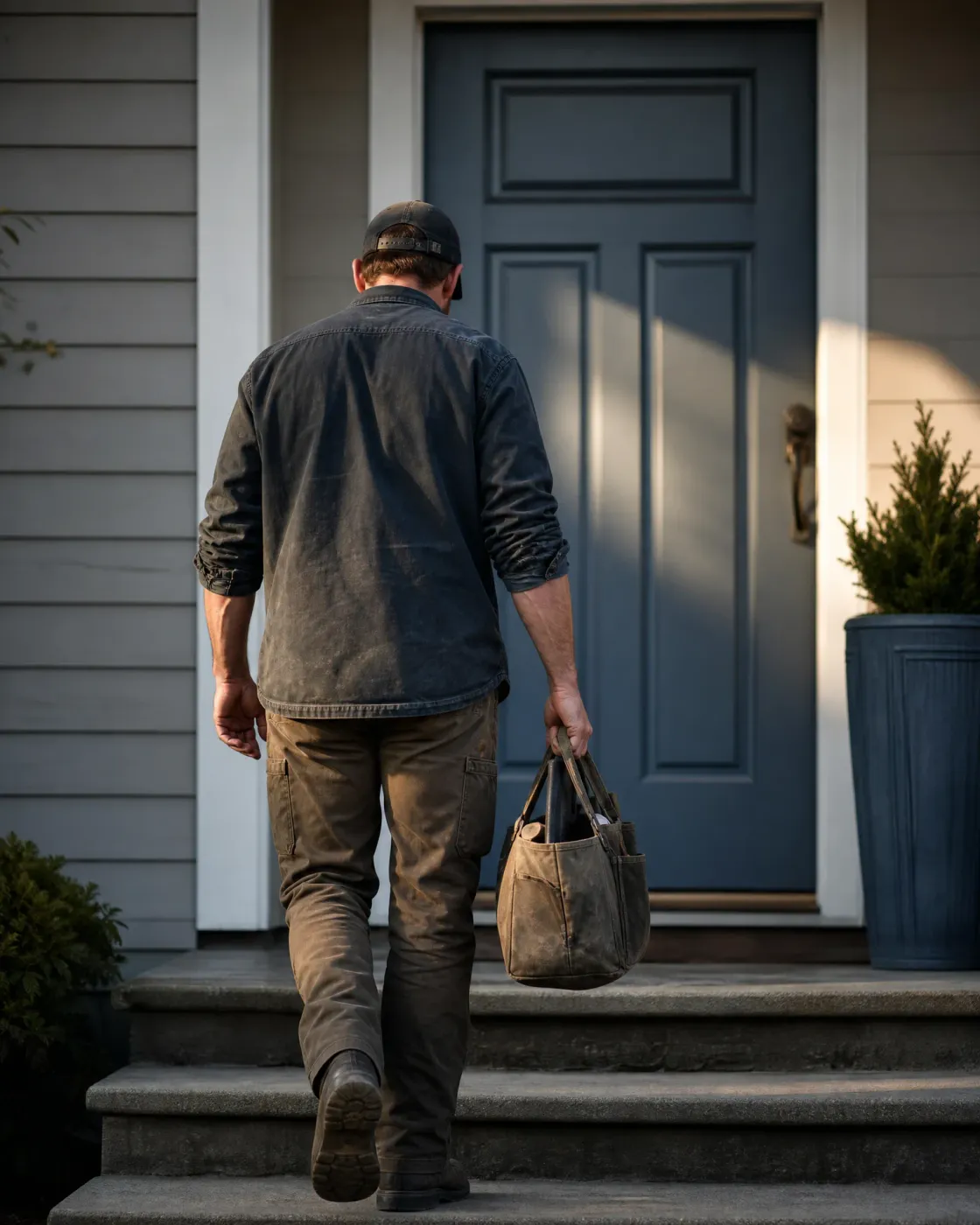
A man in a cap, dark work shirt and brown cargo pants walks up concrete steps toward a blue-gray front door, carrying a worn canvas tool bag in his right hand, with a potted shrub beside the entry.
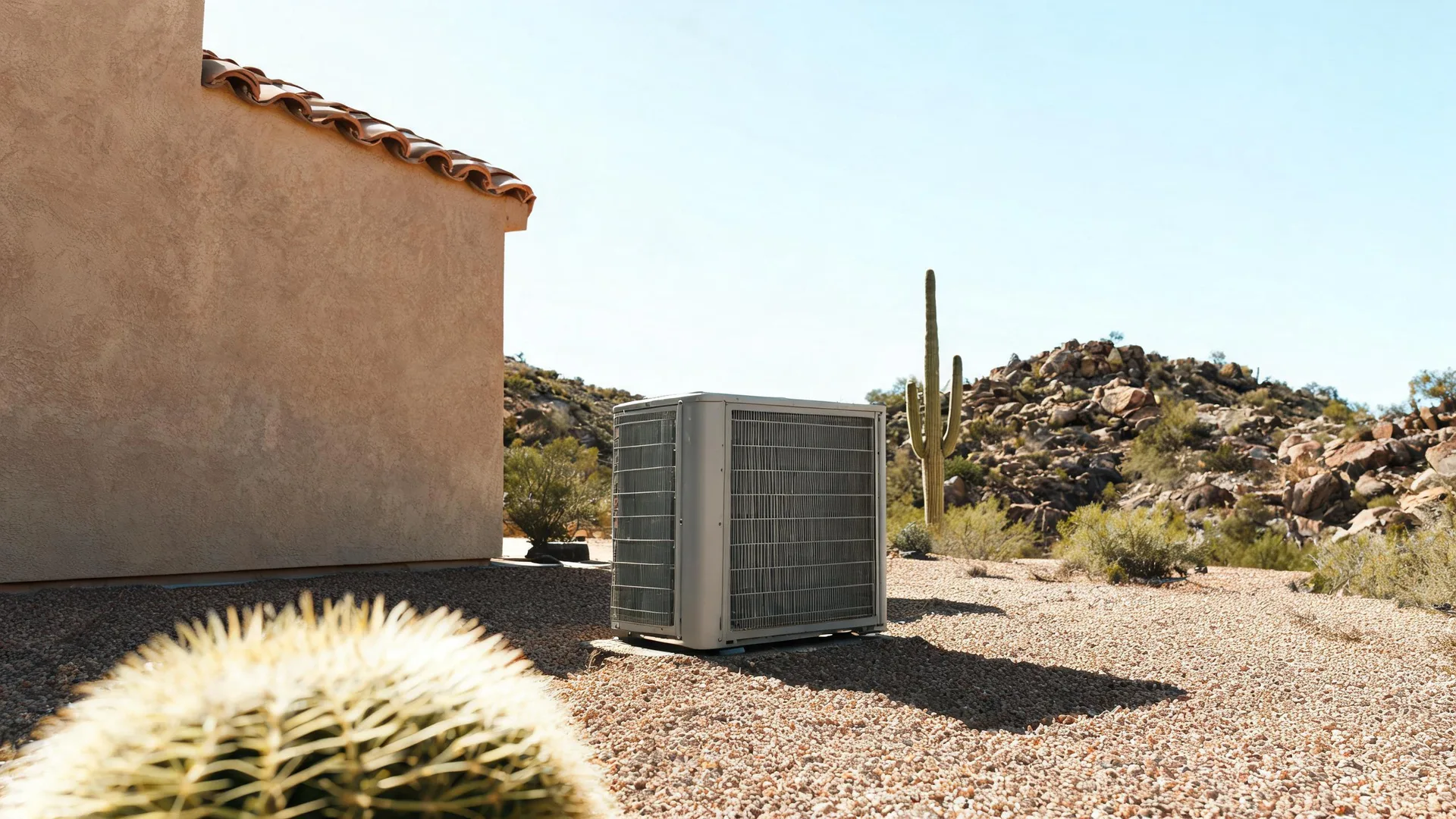
A gray heat pump outdoor unit mounted on a concrete pad next to the stone-accented exterior wall of a house.

This house has been standing a while

Half the homes in Pondera County were built in 1968 or earlier. A heat pump installed now has to work with a house built for a different kind of heat, not the one the system was designed around. Ductwork sized for an old gas furnace may not move the same air a heat pump needs to keep up on a cold morning. None of that means the job can't be done right. It means the sizing and the ductwork need a look before the new unit goes in, not after.

The old equipment doesn't just get unplugged

Pulling out a furnace or an old heat pump means disconnecting the refrigerant lines, the electrical whip, and in a furnace's case the gas line and flue. The gas line has to be capped off correctly if the furnace goes away, or left intact and working if it's staying on as backup. Any refrigerant left in the old lines has to be recovered, not vented, before anything gets cut apart.
Whether the old furnace stays changes the job

A straight swap, heat pump for heat pump, is the simpler version. Keeping the gas furnace as backup alongside the new heat pump means the installer has to tie both systems into one thermostat and set up the controls so they hand off to each other instead of fighting over the same ductwork. That's more wiring and more setup than hauling the old unit to the curb.

Comparing heat pumps means comparing two ratings, not one. SEER2 tells you how it cools, HSPF2 tells you how it heats, and a system that looks good on one can be mediocre on the other. Ask what the compressor is, since a variable-speed compressor holds steady output and runs longer at low power, while a single-stage unit just switches full on or full off. Ask about the low-temperature rating too, the point where the heat pump stops pulling enough heat from outside air to keep up on its own. Every model has a different cutoff, and below it something else has to carry the load. Ask what sound rating the outdoor unit carries, since some run noticeably quieter than others at the same output. And ask what the warranty actually covers, parts or labor or both, and for how long, because that difference shows up the first time something fails after install.

Already worth asking, since half the homes in Pondera County went up in 1968 or earlier: has anyone looked at the ductwork lately. A gas furnace and a heat pump don't move air the same way, and ducts that worked fine for one can leave the other short. If the system gets sized off the house's square footage alone, without anyone checking what the ducts can actually carry, it can end up blowing more air than old supply runs and returns were built for. That shows up as rooms that don't keep up or a system that short-cycles. Get the ductwork checked before the new unit is sized, not after it's sitting in the yard.