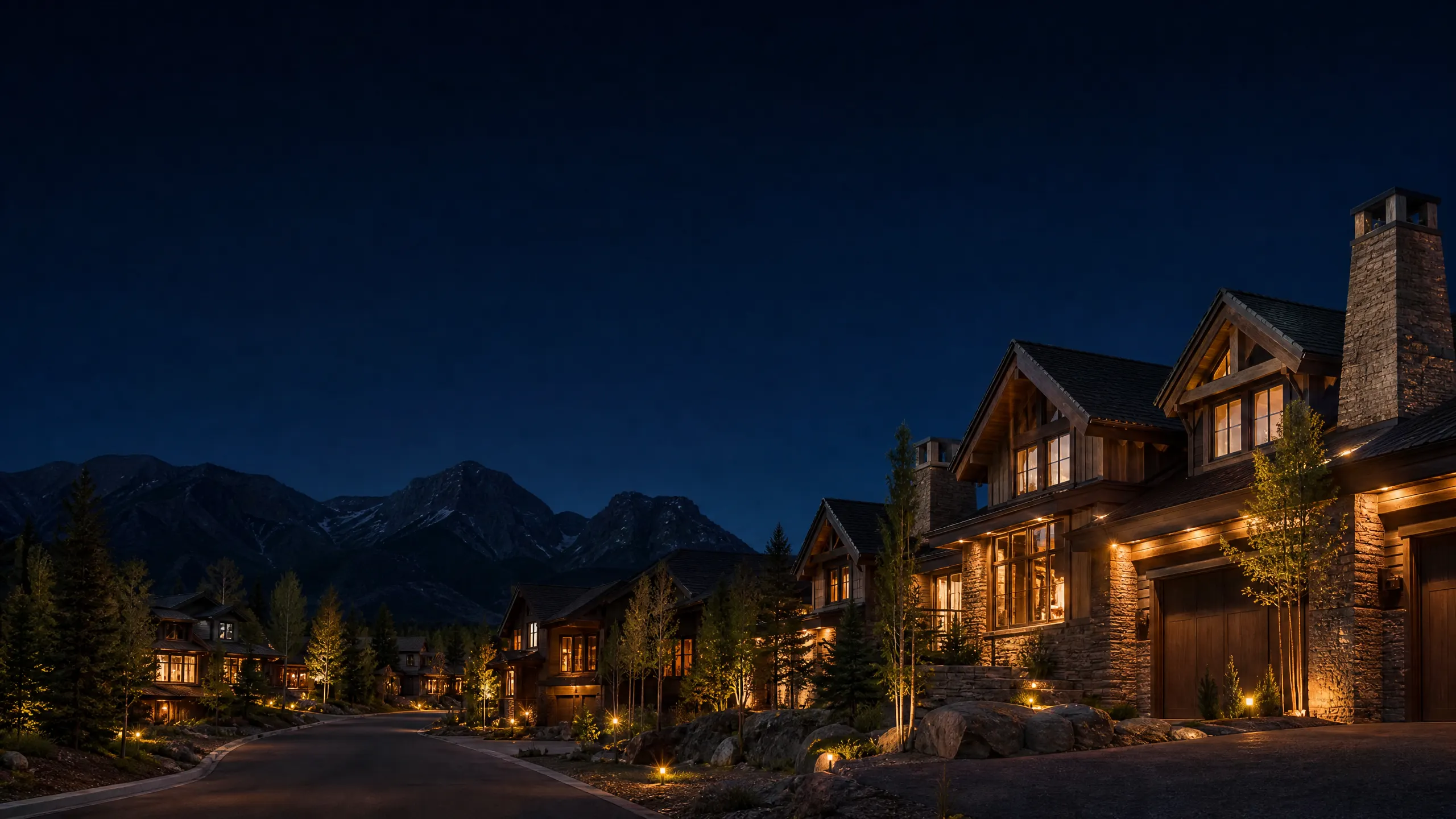
Illuminated timber-frame and stone houses along a residential street at night, with snow-capped mountains visible in the background.

Heat Pump Installation in Columbus, MT

Tell us about the job

Takes about a minute. No obligation.

New system or replacementHeat PumpStillwater County, MT
Step 1 of 2

What ZIP code is the job in?

This county gets hit often

Stillwater County recorded 324 severe weather events between 2015 and 2024. That includes 160 winter storms, 112 damaging wind events, and 52 hail events. A heat pump installed here will sit through a fair number of these over its life.


Power doesn't always hold

Statewide, 18% of Montana households went at least a day without power in 2024. A heat pump needs power to run, for heat and for cooling both. An outage that lasts into a cold night is a real possibility to plan around, not a rare exception.

10 months
September through June, your system heats
1 months
July through July, it cools
15°F
the average winter night it heats against
78°F
the average summer afternoon it cools against
Isometric line illustration of a cutaway single-story house showing interior rooms with furniture and attic ductwork connected to an outdoor condenser unit beside the building.
Your system heats September through June and cools July through July.

NOAA nClimDiv, 1991–2020 normals

Gas heats close to half the homes in Stillwater County.

A heat pump installed alongside that gas furnace can share the ductwork already there.

Nearly all year on this machine, one month off

Cooling runs July through July
Heat runs September through June
112 damaging wind events from 2015 to 2024

A heat pump in Stillwater County earns its keep. Summers stay dry here, with the dew point averaging 44°F in June, July and August, so the unit isn't fighting heavy, humid air the way one would further east. Winter is a different story. Between 2015 and 2024 the county logged 160 winter storms and 112 damaging wind events, and a heat pump has to keep pulling heat from outside air through all of that. Hail matters too, with 52 events in that same stretch landing on whatever sits outdoors. None of this means the equipment fails. It means the outdoor unit and the install both need to be sized and placed for real weather, not fair weather.

Plan the install around the weather it has to survive

Where the outdoor unit goes and how it's protected are decisions made at install, not after. The same goes for a backup plan for heat and hot water when the power drops. Get those right from the start and the system is ready for what this county sends its way.

Find a contractor
A man seen from behind in a dark long-sleeve shirt, olive work pants and brown boots climbs porch steps toward a gray front door, carrying a waxed canvas tool bag with tools in its outer pockets, beside a potted shrub.
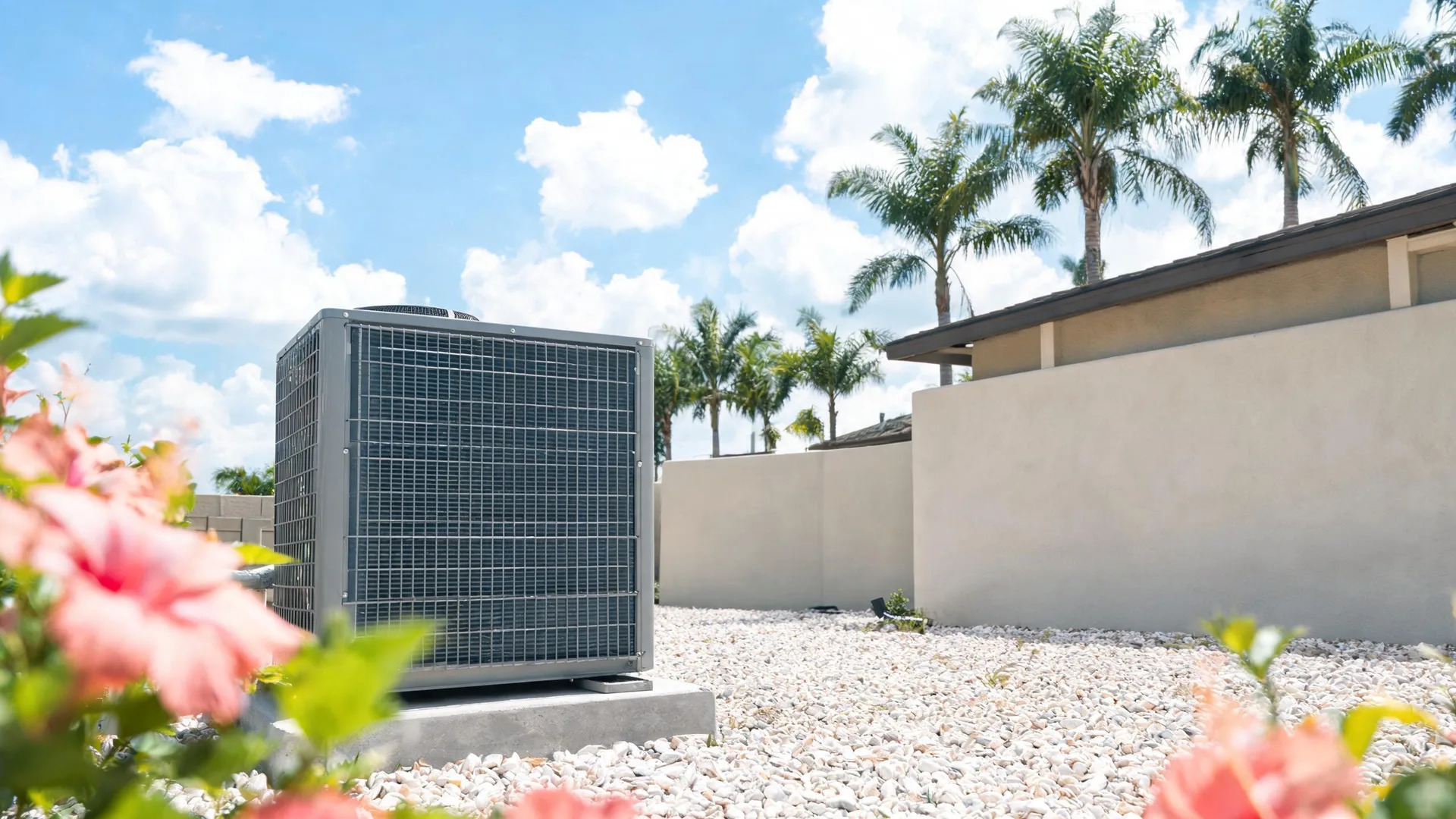
A gray air-source heat pump mounted on a concrete pad next to a house with gray vinyl siding, surrounded by gravel and flanked by green shrubs and white hydrangea flowers.

Running through whatever the sky does

Mount the outdoor unit where wind-driven snow won't pile against it and hail has some kind of break, a roof overhang, a fence line, before it hits the coil. Get the size right too. A heat pump sized for a mild day short-cycles on a calm one and falls behind when a storm rolls through and keeps pulling cold air at it for days. That sizing decision gets made once, at install, from the manual and the ductwork, not from the lowest bid.

The number on the label is a ratio, not a guarantee

That rating compares the heat moved to the power used, tested under set conditions in a lab. A higher number means the unit can move more heat per unit of power it draws. It says nothing about how the ductwork is sealed, how the unit is sized for the house, or how it's installed. Two homes with the same rated unit can see very different results depending on both.

The rating matters most on the days you barely think about

A heat pump spends most of its life running in mild weather, not at its extremes, so the efficiency it holds on an average day across the year is what shows up on the power bill. The rating on the label reflects that stretch, not the hardest day it will ever face. Picking a unit means thinking about the long run of ordinary days, not just the worst one.

Sizing a heat pump starts with a load calculation, not a guess based on square footage. A contractor works out how much heat the house loses on the coldest expected day and how much it gains on the hottest, using the walls, the windows, the insulation, and the duct layout, then matches a unit to that number. Go too small and the unit runs flat out without keeping up, so it leans on backup heat more than it should. Go too big and it short-cycles, reaching the thermostat setting fast and shutting off before it's pulled enough moisture out of the air or settled into a steady, efficient run. Oversizing also means harder starts and stops, over and over, which wears on the compressor faster than steady operation does. The right size runs longer, steadier cycles, and that's what keeps both comfort and the equipment's lifespan on track.

Stillwater County falls in zone 6B under the 2021 energy code, a cold climate with a long heating season. Any split-system heat pump installed here now has to meet the federal minimums for units built from January 2023 on, moving at least 14.3 Btu of heat per watt-hour of electricity in summer and at least 7.5 Btu per watt-hour in winter. That floor narrows what a contractor can offer. It's worth asking which units on the quote clear that bar and which exceed it, since the rating on the label is the same one discussed above, tested under lab conditions rather than a Stillwater County winter. A federal tax credit is available for qualifying installations, separate from whatever the equipment costs out of pocket.