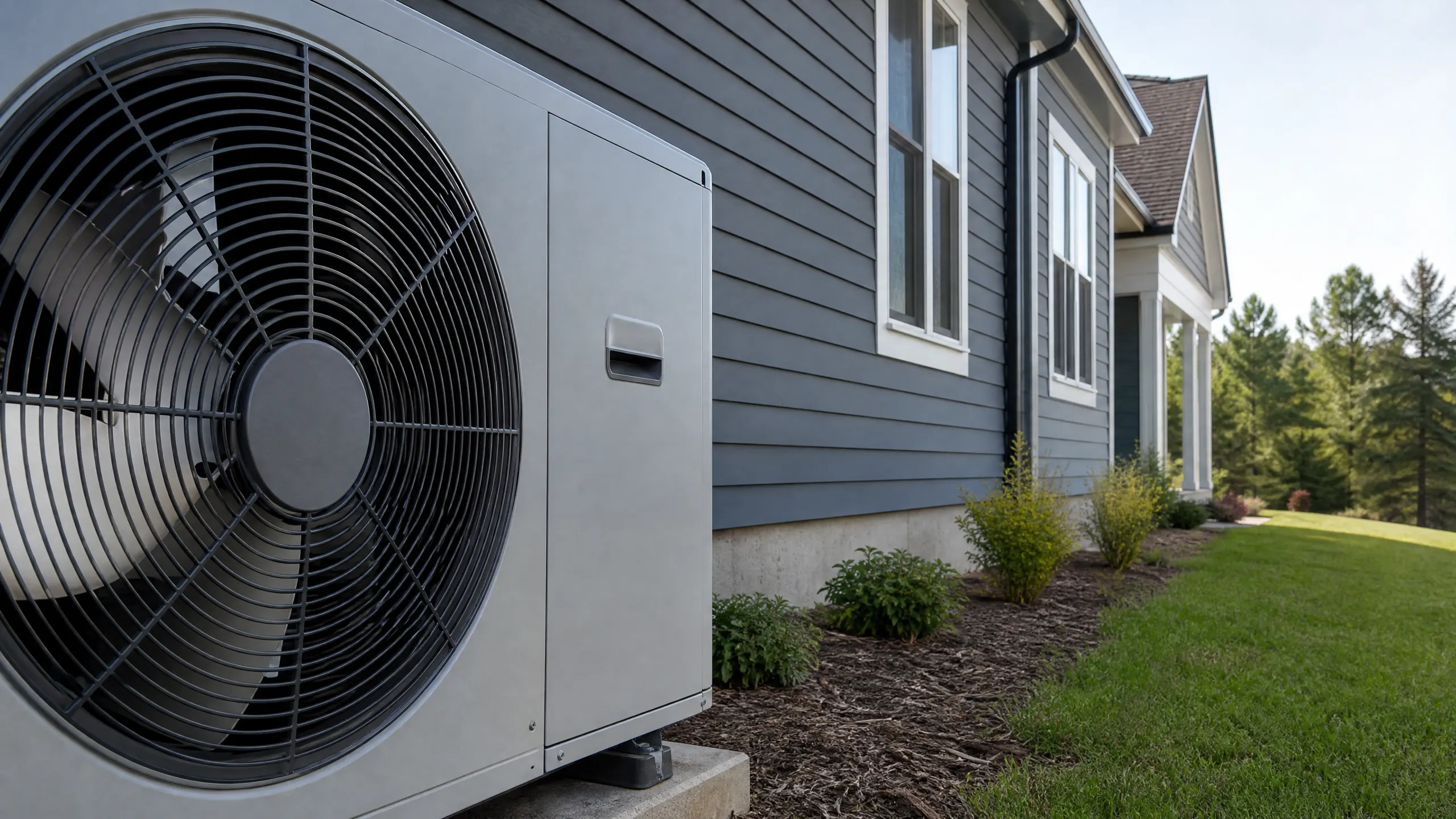






A heat pump outdoor unit mounted on a concrete pad next to the gray-sided exterior wall of a residential house.

Heat Pump Installation in Chinook, MT

Tell us about the job

Takes about a minute. No obligation.

New system or replacementHeat PumpBlaine County, MT
Step 1 of 2

What ZIP code is the job in?

Gas heats 40 percent of homes in Blaine County, more than any other fuel, and another 27.4 percent run on bottled or LP gas. Electricity heats 17.6 percent. That means most houses in Chinook already have a furnace and ductwork in place, not electric baseboard. A heat pump installed here usually goes in alongside that existing ductwork, and some homeowners keep the gas furnace as backup for the coldest stretches of winter. Whoever installs it can tell you whether your ducts and gas line setup support that pairing.

10 months
September through June, your system heats
2 months
July through August, it cools
10°F
the average winter night it heats against
80°F
the average summer afternoon it cools against
Isometric line illustration of a cutaway house showing interior rooms with furniture, ceiling ductwork under a dark shingled roof, and an outdoor condenser unit connected by lines on the right.
Your system heats September through June and cools July through August.

NOAA nClimDiv, 1991–2020 normals

Heat here runs from September through June, about ten months a year.

August is the month to get a heat pump installed, before that first cold night in September catches you without it.

A heat pump sized right for Chinook handles this winter without costing extra to run

Power costs 12.66 cents a kWh statewide
32 hail events from 2015 to 2024
14 winter storms from 2015 to 2024

A heat pump sized for your square footage and your ductwork handles a Chinook winter without trouble. The overnight low here averages 10°F across December, January and February, well within what a properly sized heat pump is built to cover. Going bigger than the house calls for just means a unit that cycles on and off more than it should. The contractor sizing your system will run a load calculation on your house, not just match the old furnace's rating, since ductwork and insulation vary house to house. Standard efficiency works fine here too. There's nothing about Chinook's winters that calls for a higher-tier unit than what the job needs.

Older homes need a heat pump sized to fit them

Half the homes in Blaine County were built in 1972 or earlier. A heat pump going into a house that age has to match the ductwork and electrical setup already there, not a generic spec sheet. That's a sizing and compatibility question worth settling before you buy.

Find a contractor
A man in a cap, gray long-sleeve shirt and tan work pants carries a worn canvas tool bag up porch steps toward a dark gray front door beside a potted shrub.
A dark gray heat pump unit mounted on a concrete pad next to a house with gray siding and a stone veneer wall.

What's already in the house decides what fits

Have whoever installs it walk the house first. A panel that was sized for a furnace and a blower motor may not have the spare capacity a heat pump's outdoor unit needs, and ductwork run for a gas furnace doesn't always move the airflow a heat pump calls for. None of that shows up on a spec sheet. It shows up when someone looks at your panel and your ducts and checks them against the unit you're about to buy.

The outdoor unit and the install labor cost more than the thermostat

A heat pump's price is mostly the compressor and the outdoor coil, built to run in both directions, plus the work of setting the refrigerant lines and wiring the electrical circuit it needs. None of that shows up when you're just comparing box prices online.
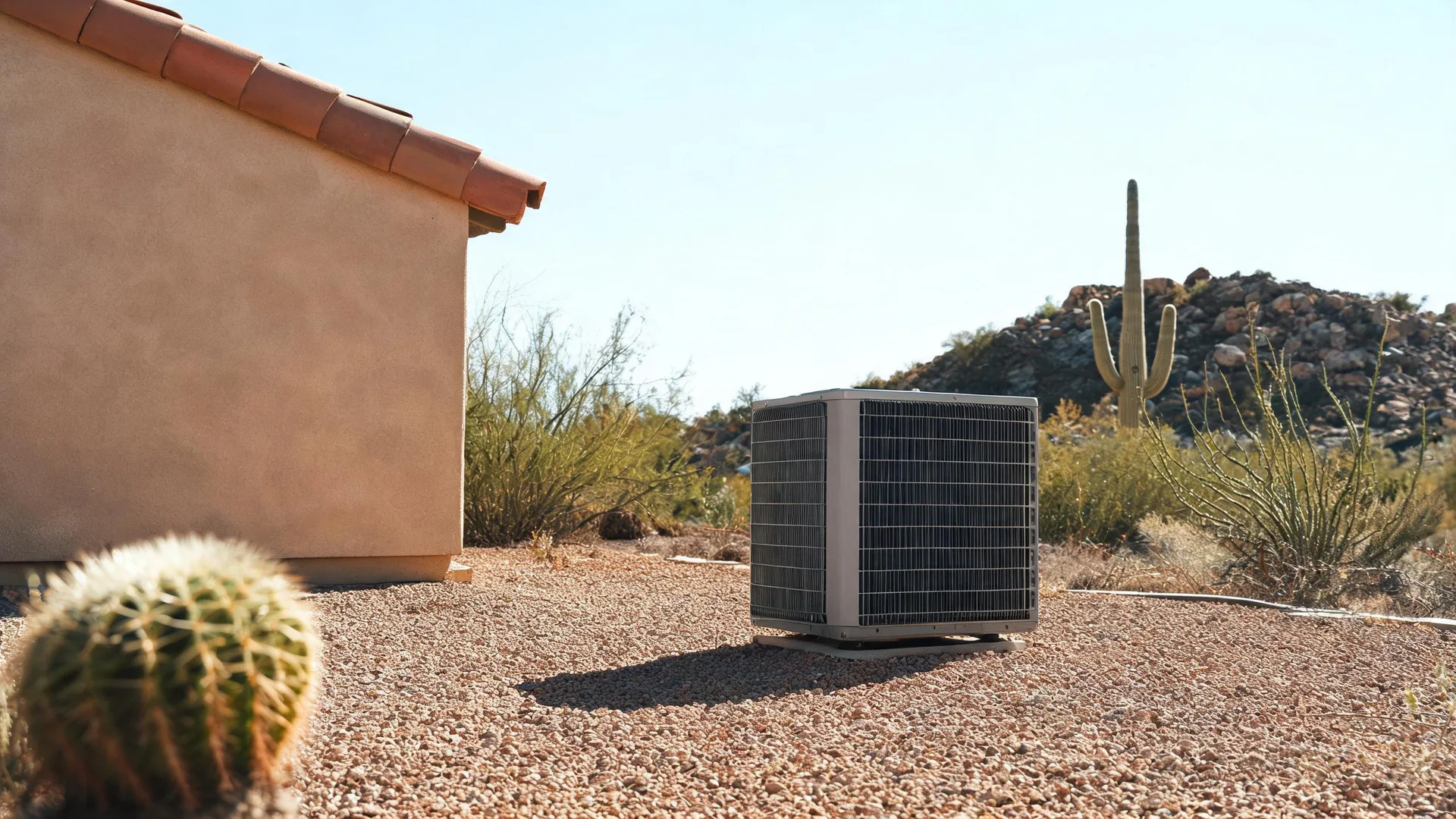
Matching it to the house adds work before the unit ever gets set

If the ductwork needs modifying to carry the airflow a heat pump moves, or the electrical panel needs a new circuit or more capacity, that's labor added before installation even starts. A straightforward swap onto ductwork and wiring that already fit costs less than one where the contractor has to rebuild the path to get there.

Sizing a heat pump starts with a load calculation, not a guess based on square footage. A contractor measures how much heat your house loses through its walls, windows and roof, then checks that against how much air the ductwork can actually move. Houses the same size can need different sized units if one has more windows or thinner insulation than the other. Go too small and the unit runs flat out on the coldest days and still falls behind. Go too big and it short cycles, kicking on, satisfying the thermostat fast, then shutting off before it's settled into a steady rhythm or pulled the damp out of the air. That cycling wears on the compressor over time. The right size runs long, steady stretches instead, which is exactly what a heat pump is built to do.

Ask what happens below freezing, not just what the spec sheet claims above it. Every heat pump loses capacity as the outdoor air gets colder, and what matters is how much heat it can still deliver at the coldest temperatures it will actually face, not the rated output at a mild setpoint. Ask whether the system includes backup heat and how it switches over, whether that is strip heat built into the air handler or a furnace already in place. Ask what the sound rating is for the outdoor unit, since it runs all year and usually sits closer to the house than other equipment does. Ask who is responsible for the refrigerant lines, the electrical circuit and any ductwork changes, since those are often quoted apart from the unit itself. And ask what the warranty covers if the compressor fails, versus what it covers if a line was installed wrong, because a contractor should be able to tell you plainly which is which.