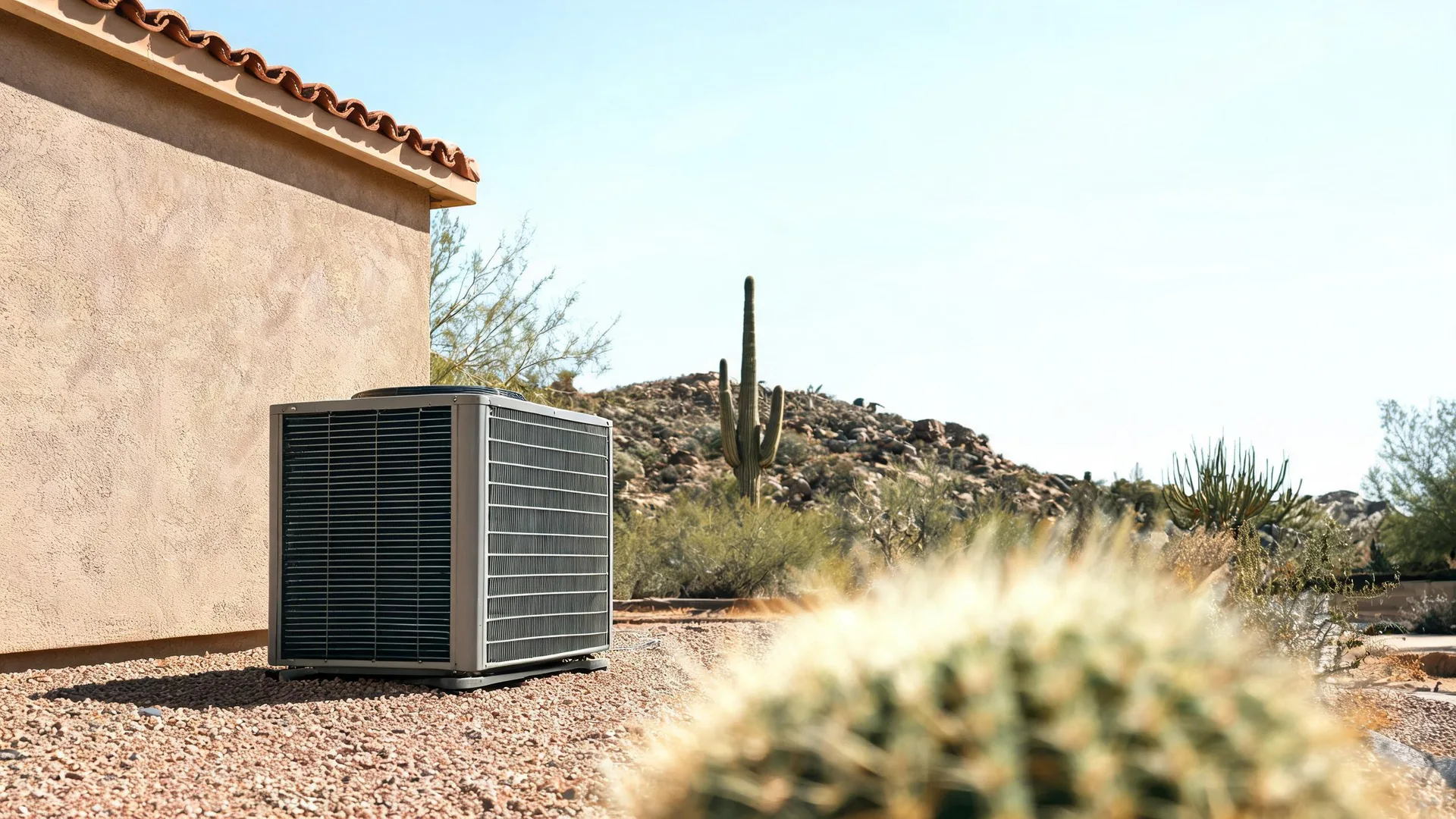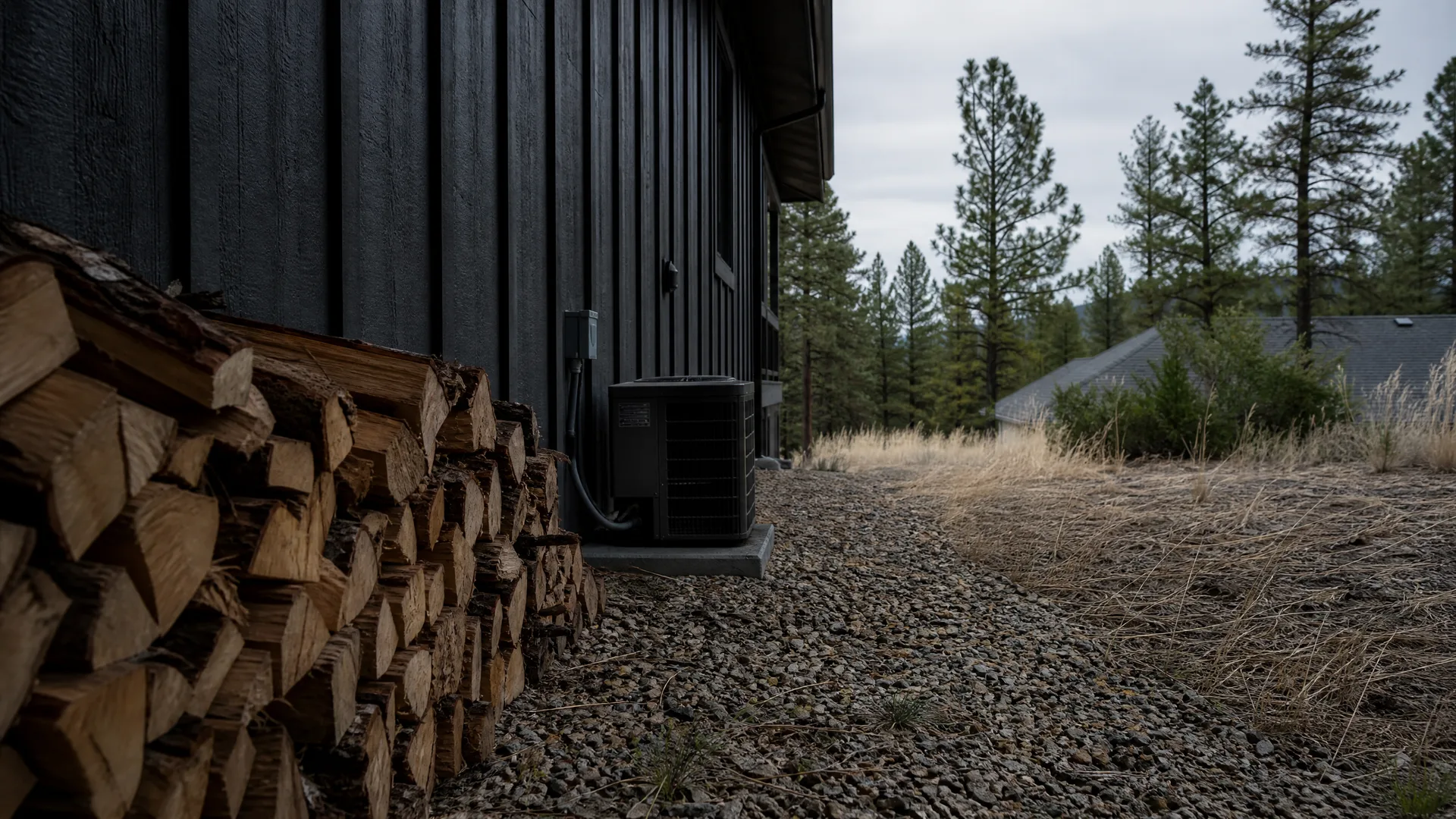
A stacked woodpile beside a dark vertical-board house exterior with an outdoor air conditioning condenser unit on a concrete pad, gravel ground, dry grass and conifer trees under an overcast sky.

Heat Pump Installation in Butte, MT

Tell us about the job

Takes about a minute. No obligation.

New system or replacementHeat PumpSilver Bow County, MT
Step 1 of 2

What ZIP code is the job in?

Electricity here runs 14.05 cents a kilowatt-hour

That's what Silver Bow County homes paid on average in 2025. A heat pump runs on electricity for both heating and cooling, so that rate applies every time it cycles on, whether it's pulling heat in or pushing it out.

A heat pump's efficiency decides what it draws

Two systems can heat and cool the same house and pull different amounts of power doing it. At this rate per kilowatt-hour, that difference shows up on every bill the system generates, not just the ones in the hardest months.

11 months
August through June, your system heats
14°F
the average winter night it heats against
73°F
the average summer afternoon it cools against
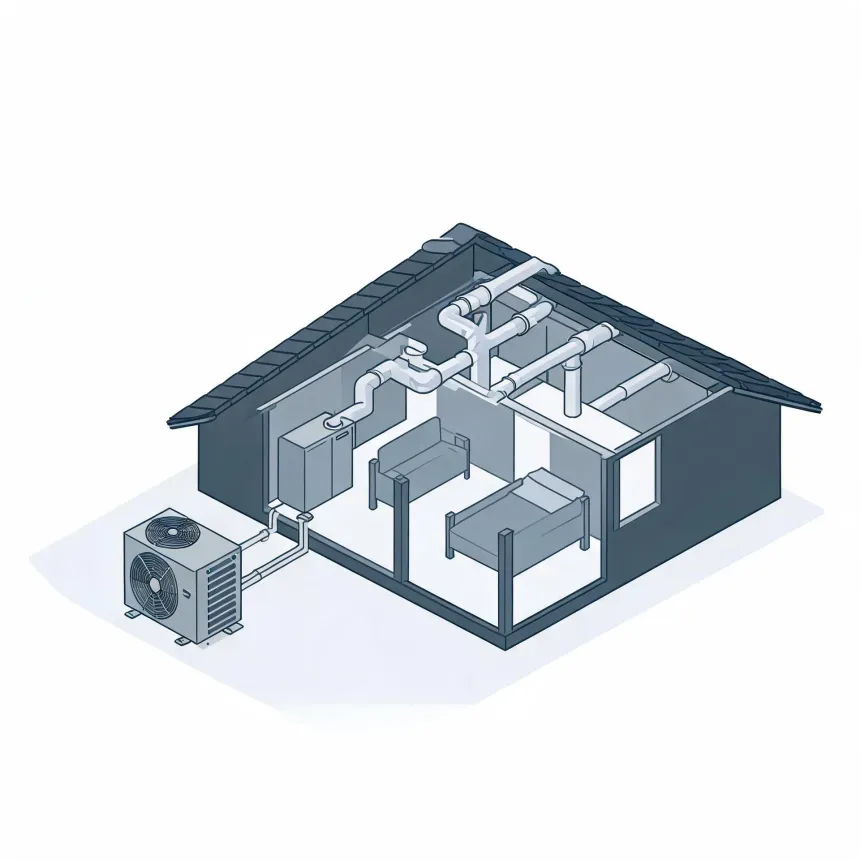
Isometric cutaway illustration of a house showing interior ductwork, an indoor air handler, and beds, with an outdoor condenser unit connected by lines outside the wall.

Heat in Silver Bow County starts up in August.

Get a new heat pump installed in July and it's ready before the first cold night, not after one.

Low humidity and few hail days mean this heat pump won't be straining against the air itself

9 hail events from 2015 to 2024
49 winter storms from 2015 to 2024
Winter nights average 14°F
Half these homes were built in 1956 or earlierHalf the homes in Silver Bow County were built in 1956 or earlier, and a heat pump going into one has to match the house it's heating.

Gas heats most homes here, 64.3 percent of them. Electricity is a distant second at 23 percent, and the rest run on bottled or tank LP gas. A heat pump installed now usually goes in alongside the gas furnace rather than replacing it outright, handling the heating and cooling load until the outdoor temperature drops far enough that the furnace takes over. That pairing is common enough here that most contractors are set up to wire and size a heat pump to work with the gas system already in the house, rather than pulling it out. If your home is one of the 23 percent already on electric heat, the heat pump can usually take over the full job instead of sharing it.

Get this installed right and it shows up on every bill

A heat pump sized and installed right for your house draws less power doing the same job. At this rate per kilowatt-hour, that shows up on every bill it sends, not only the hardest ones. Getting the install right from the start is what makes that difference work for you instead of against you.

Find a contractor
A dark gray heat pump unit mounted on a concrete pad next to a house with gray siding and a stone veneer wall.

An older house sets the terms for what goes in it

If your house dates back to the older half of the county's homes, the ductwork or electrical panel may not match what a heat pump expects. Before anything gets installed, a contractor should check what the house can carry, not just what the new unit requires. That means looking at whether the existing ducts can move the air a heat pump pushes, and whether the panel has room for the load. Skipping that step is how a unit ends up fighting the house it's in for as long as it runs.

The rating is measured over a season, not a day

The efficiency number on a heat pump's label comes from testing it across a range of outdoor temperatures, then averaging the result. It tells you how the unit performs over a full season of use, not on any single afternoon. On a mild day it will beat that number. On a stretch of extreme cold or heat, it will fall short of it. Neither one means the rating is wrong, it just means no single day is the season.

A higher rating only pays off if the unit is sized right

The rating describes how efficiently the unit moves heat, not how much heat it can move. A heat pump that's too big for the house will cycle on and off too fast to run efficiently no matter what the label says, and one that's too small will run constantly trying to keep up. The number on the label only tells the truth about your bills if the contractor matched the unit's capacity to the house before it went in.

Two systems can carry the same efficiency rating and still perform differently once they're installed, so ask what the rating doesn't tell you. Ask about the sound level at low and high speed, since a unit that ramps up outside your bedroom window matters more once it's bolted to the wall. Ask what happens at the coldest point in the cycle, and whether the system leans on backup heat strips or hands the load to a furnace. Ask about the compressor type, since a variable speed compressor holds steadier output than one that only switches between on and off. Ask how the ductwork was evaluated, because a heat pump pushes a different volume of air than what the ducts may have been sized for originally. And ask what the warranty actually covers, the compressor, the coil, or just the sheet metal around them.

Silver Bow County falls under zone 6B in the 2021 energy code, one of the harder climate zones to heat for. Any split-system heat pump installed here now has to meet the federal minimum too: at least 14.3 Btu of cooling delivered for every watt-hour of electricity it uses, and at least 7.5 Btu of heating for every watt-hour, averaged over the season. Those two numbers together narrow what a contractor can actually put in your house. A unit that only meets the federal floor is working in a harder climate than it was rated against, which is part of why sizing and installation carry so much weight here.