
Dark vertical wood siding along the side of a house with a stack of split firewood and an outdoor condenser unit on a gravel strip, with pine trees, dry grass and a metal-roofed outbuilding in the background.

Furnace Repair in Missoula, MT

Tell us about the job

Takes about a minute. No obligation.

RepairFurnace or heatingMissoula County, MT
Step 1 of 2

What ZIP code is the job in?

Furnaces in Missoula County run nearly ten months of the year, September through June. That's most of the calendar, not just a cold snap in January. Overnight lows average 17°F through December, January and February, so the furnace is holding a big gap between outside and in, night after night. Add in 164 winter storms across the county over the past decade, and the system rarely gets a real break to recover from one stretch before the next one hits. That kind of steady load wears an igniter, a blower motor or a heat exchanger sooner than it would somewhere milder. When something starts acting up here, it's usually that wear catching up, not a fluke.

10 months
September through June, your furnace is on duty
17°F
the average winter night it heats against
53%
of homes here heat with gas, so most furnaces here burn gas
164 winter storms
in ten years, the nights a failure hurts most
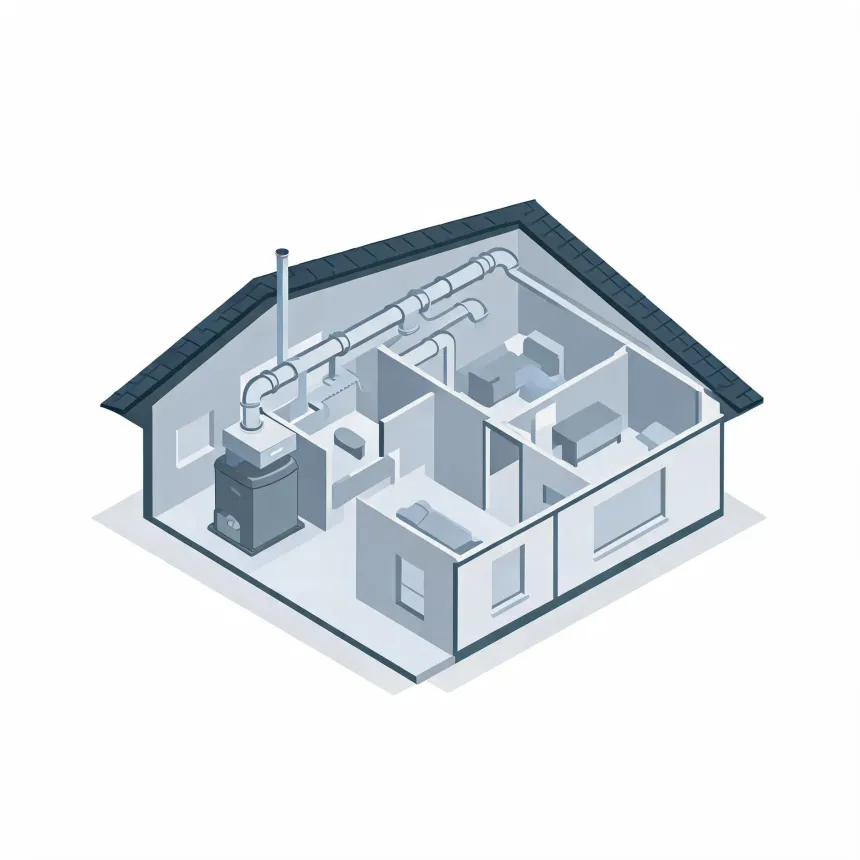
Isometric cutaway illustration of a single-story house showing interior rooms, ductwork running along the ceiling, a flue pipe through the roof, and a dark furnace unit in one corner.
Your furnace works hardest from October through April.

NOAA nClimDiv, 1991–2020 normals

Check the thermostat batteries and the switch on the furnace itself before anything else.

A furnace that won't respond to the thermostat at all sometimes just needs new batteries, not a tech.

September is when it shows upFurnace starts running again in Missoula County, and whatever was already weak gives out first.

Winter storms have hit the county 164 times in the past decade, and damaging wind another 69 times. That matters for a furnace mainly through what it does to the house around it. Power drops out, and a furnace that uses an igniter or a draft inducer needs electricity to start. No power means no heat regardless of what shape the unit is in. If yours short-cycles or won't fire after an outage, that's often the furnace resetting itself wrong, not a sign it's failing. Worth a call either way, since a system that struggled once after a cold stretch tends to struggle again.

That kind of wear doesn't fix itself

A furnace running since September has had months to show its weak spots. Get it looked at before the next storm knocks out power and takes a struggling system down with it.

Find a contractor
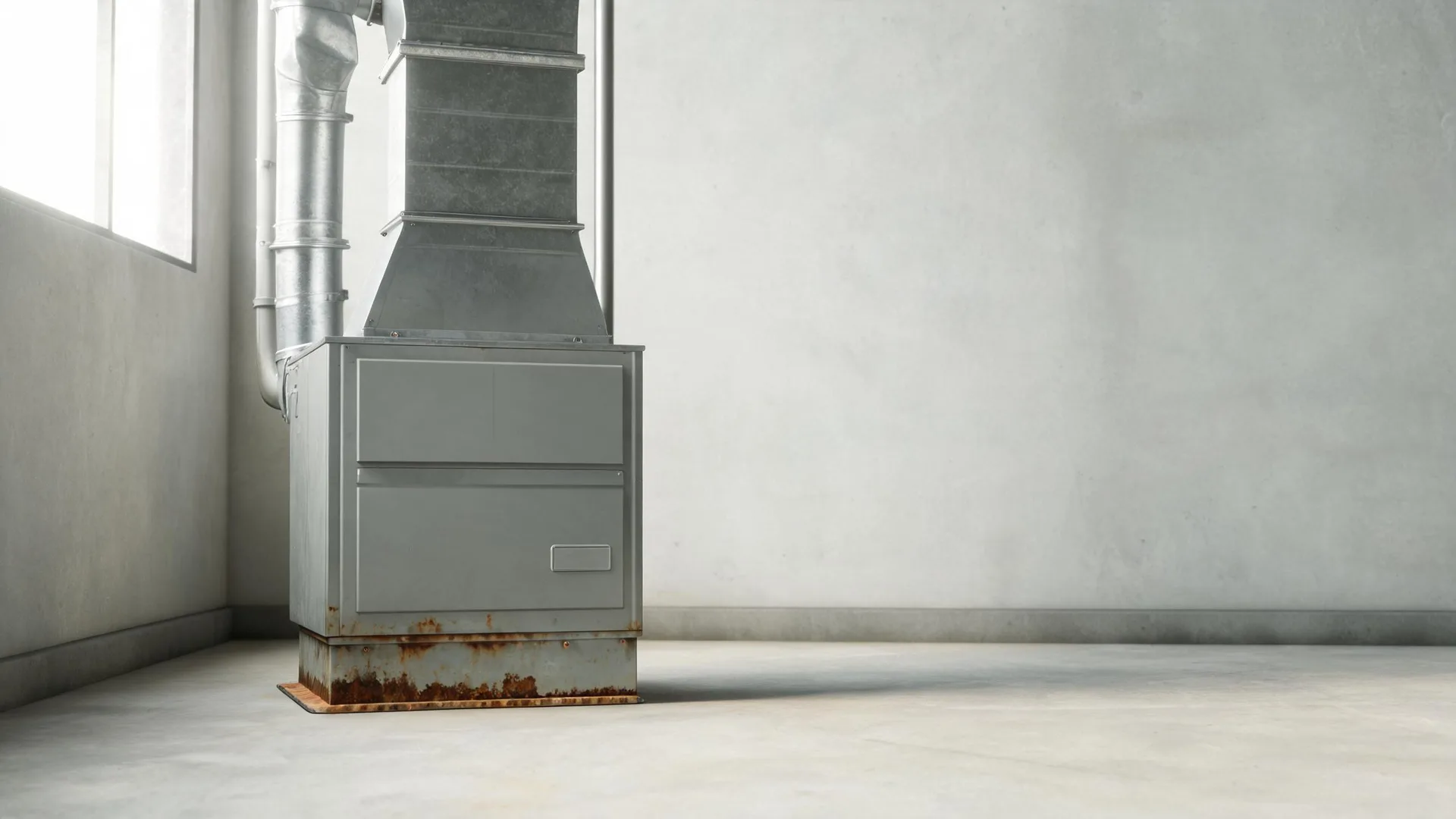
A gray gas furnace with attached ductwork and piping installed in an unfinished concrete basement.

A newer system is worth repairing

If the furnace is original to the house, check when the house was built. Newer systems are worth calling a repair tech for rather than replacing outright, since there's no reason to expect the unit is near the end of its working life. A furnace with years left just needs the broken part fixed, whether that's an igniter, a blower motor or something electrical.

The igniter goes first

The igniter heats up and cools down every time the furnace cycles, and that repeated flexing is what eventually cracks it. A cracked igniter is one of the most common reasons a furnace won't light at all, and it's a straightforward part to replace.

A dirty flame sensor reads as no flame

The flame sensor confirms the burner lit, and a thin layer of residue on it is enough to fool it into thinking there's no flame there. The furnace shuts the gas back off to be safe, so it fires for a few seconds, then stops, over and over.

A gray forced-air furnace with sheet-metal ductwork stands in an unfinished basement with exposed wooden joists, concrete walls, and a hanging incandescent bulb.

A new furnace would cut about $100 a year off heating for a typical Missoula County home.

  • A new high-efficiency furnace$380 a year
  • An older furnace$480 a year

Estimates for a typical Missoula County home, compared with an older unit built to the previous federal minimum, from EIA household energy data, Montana fuel prices and NOAA climate normals. Your home will differ.

Repair makes sense when one part has failed and the heat exchanger is sound.

Replacement makes sense when the heat exchanger is cracked or the furnace keeps needing parts.

A repair makes sense when the furnace is doing its job and one part gave out along the way. An igniter, a blower motor, a flame sensor, a pressure switch. These wear out on their own schedule, and fixing one doesn't say anything bad about the rest of the system. Replacement starts to make sense when the heat exchanger is cracked, since that part isn't something a tech can swap out on its own. It also makes sense when the furnace keeps calling for a new repair every winter instead of going years between them. A tech who's actually inspected the unit can tell you which situation you're in. Short of that, the furnace's age and a pattern of unrelated breakdowns are what's worth weighing, not how it happens to be acting this week.