A gas furnace with sheet-metal ductwork and PVC pipes installed in an unfinished basement.

Furnace Repair in Helena, MT

Tell us about the job

Takes about a minute. No obligation.

RepairFurnace or heatingLewis and Clark County, MT
Step 1 of 2

What ZIP code is the job in?

Check the thermostat and the filter first

Make sure the thermostat is set to heat and the set temperature is actually above room temperature. Then look at the filter. A filter clogged with dust can choke airflow so badly the furnace overheats and shuts itself off as a safety measure. If it's gray and packed solid, swap it before you assume the furnace itself is broken.
Look at the furnace itself before you call

Check that the switch on or near the furnace, the one that looks like a light switch, is flipped on, since it's sometimes mistaken for a power switch and bumped off. Check the breaker too. If you have a gas furnace, see whether the pilot light is lit or whether the igniter glows when it tries to start. None of this is a repair, but it tells the contractor what they're walking into.

10 months
September through June, your furnace is on duty
15°F
the average winter night it heats against
57%
of homes here heat with gas, so most furnaces here burn gas
77 winter storms
in ten years, the nights a failure hurts most
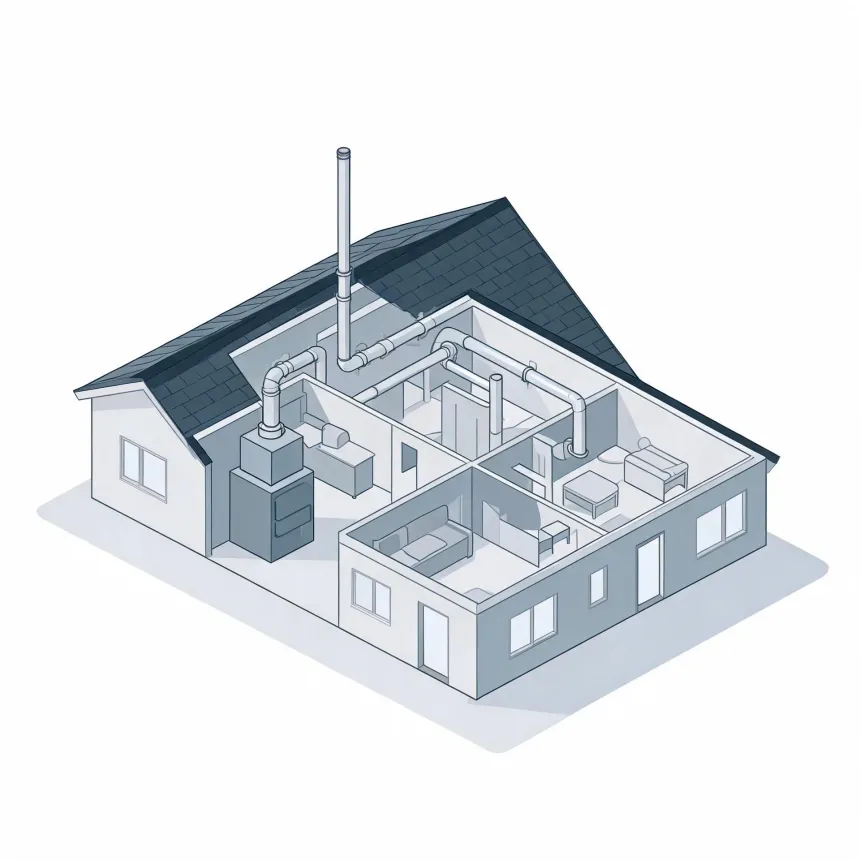
Isometric cutaway illustration of a single-story house showing interior rooms with furniture, a furnace unit connected to ductwork and a tall flue pipe extending through the roof.
Your furnace works hardest from October through April.

NOAA nClimDiv, 1991–2020 normals

A furnace that turns on and off every few minutes is short cycling, not warming up properly.

Short cycling usually comes from a flame sensor, a clogged filter, or a failing limit switch, and it wears the furnace down faster the longer it goes on.

Winters here are hard on a furnace, and hard on the power that runs it

245 severe weather events from 2015 to 2024
18% of homes statewide lost power a day or more in 2024
151 damaging wind events from 2015 to 2024
Helena furnaces start up in SeptemberThey run about ten months straight, through June.

Half the homes in Lewis and Clark County were built in 1982 or later, so a lot of furnaces here are running in houses that aren't old themselves. If your house falls on that newer side, the furnace was likely installed or replaced well within the last few decades, not patched together for generations. A furnace acting up in a house like that is usually a specific part failing, not the whole unit giving out. Worth finding out which before you plan on replacing anything.

Ten months of heat a year wears parts down early

Nights averaging 15°F, on a furnace that already runs September through June, don't leave much slack for a part that's starting to fail. Add in the winter storms this county sees most years, and a furnace acting up now is worth having looked at properly, so whatever's wearing out gets fixed before it quits.

Find a contractor
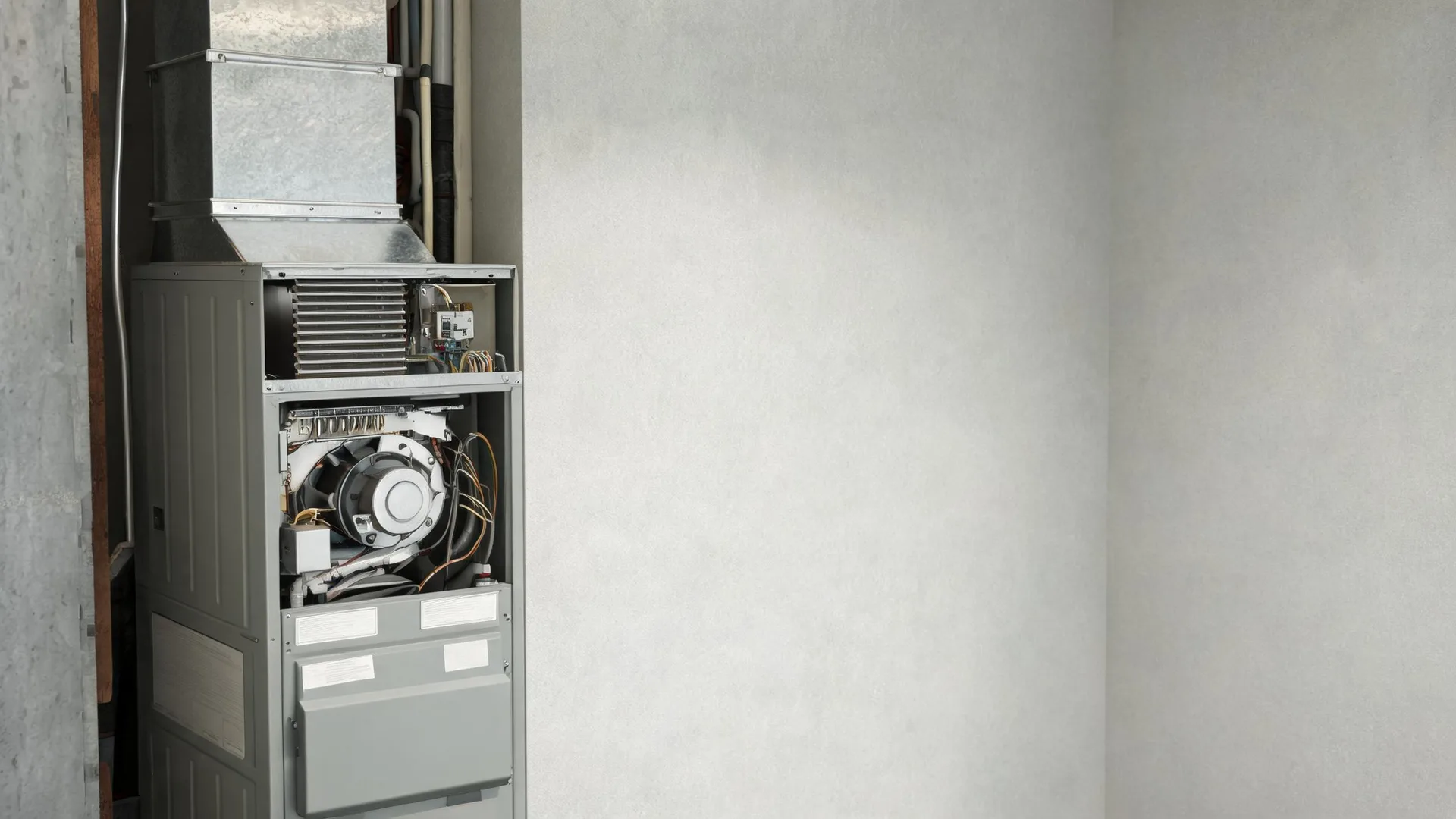
A gray gas furnace with attached ductwork and piping installed in an unfinished concrete basement.

Ask what's failing before you ask what's next

A newer furnace having trouble is usually a case of one part wearing out, not the unit reaching the end of its life. That's worth saying plainly before a repair call, because it changes what to ask for. Have the technician name the part that's failing and what it takes to fix that part. If your furnace came with the house and the house is on the newer side here, there's no reason to plan past that until someone's actually looked.

Flame sensors wear out from doing their job

Every time the burners fire, the flame sensor sits in that flame to confirm it's lit. Over time that builds up a coating that keeps the sensor from reading the flame at all, so the furnace shuts the gas back off a few seconds after startup. It looks like the furnace won't stay on. Usually it just means the sensor needs to be cleaned or replaced.

Igniters fail without warning

The igniter gets the burners lit, and it's a thin element that takes a lot of heat cycles over its life. It doesn't wear gradually the way a filter does. It works fine, then one day it doesn't glow at all and the furnace won't start. There's no fixing a cracked igniter, only swapping it.

A bare concrete basement containing a gray gas furnace with metal ductwork and a vertical flue pipe, lit by a single hanging bulb.

A new furnace would cut about $100 a year off heating for a typical Lewis and Clark County home.

  • A new high-efficiency furnace$390 a year
  • An older furnace$490 a year

Estimates for a typical Lewis and Clark County home, compared with an older unit built to the previous federal minimum, from EIA household energy data, Montana fuel prices and NOAA climate normals. Your home will differ.

Repair makes sense when one part has failed and the heat exchanger is sound.

Replacement makes sense when the heat exchanger is cracked or the furnace keeps needing parts.

A diagnostic visit starts before any panel comes off. The technician asks when the trouble started and what it looks like, whether the furnace won't start at all, starts and quits, or runs but doesn't heat. Then the furnace gets opened up. They'll check for a flame and watch how it behaves, pull and look at the flame sensor, check the igniter for continuity if it isn't glowing, and look over the wiring and connections for anything loose or burnt. A pressure switch or limit switch gets tested if the furnace is shutting itself off partway through a cycle. None of this is guesswork. Each test rules something in or out, and by the end the technician can point to the one part that's failing instead of guessing at the whole unit.