











Why your gas furnace won't light in Helena, MT

RepairFurnace or heatingLewis and Clark County, MT
Step 1 of 2

What ZIP code is the job in?

Why won't my gas furnace light in Helena?

A furnace that won't light on a cold morning is the kind of problem Helena homeowners don't wait on. Cold snaps here push furnaces to run long hours, and the parts that start the burner take the brunt of that. Before anyone comes out to look at it, it helps to know what's usually behind a furnace that won't light.

Usually a bad igniter, a dirty flame sensor, or a closed gas valve

Most furnaces that won't light have a problem in one of three places. The igniter may be cracked or worn out, so it never gets hot enough to start the flame. The flame sensor may be coated with soot, so it can't tell the burner that it's lit, and the furnace shuts itself off as a safety measure. Or the gas valve got bumped closed, often during other work near the furnace, and no fuel is reaching the burner at all. Winters in Lewis and Clark County run furnaces for months at a stretch, and that long runtime is what wears an igniter down or builds up the film on a flame sensor. A thermostat set wrong or a tripped breaker can look the same from the couch, so those are worth a quick check first.

A dim unfinished basement with concrete walls, exposed floor joists, a small window, and a furnace connected to metal ductwork and PVC venting.

You go down to the basement a little after six, the sky already dark outside the small window above the washer. The furnace sits quiet. No hum, no click, none of the warm air you'd expect pushing through the vent overhead. You flip the switch at the side off and on, wait, and nothing changes. The air near the unit smells faintly of dust, the kind that sits undisturbed until the blower kicks on for the first real cold snap of the year. Upstairs the house is holding maybe sixty degrees, cooling by the hour. Outside, a November evening in Lewis and Clark County, the kind that gets colder fast once the sun is gone.

What is the furnace actually doing right now?

Listen and look before you call anyone. Does the blower run but no heat follows, or does nothing happen at all when the thermostat calls for heat? Check the small window on the front of the furnace for a flame, or the absence of one. Smell near the unit, a faint gas odor is worth noting and acting on right away. Watch what the igniter does, if you can see it glow and then nothing follows, that's different from no glow at all. A furnace that tries and fails over and over is working its blower motor and draft inducer harder each time. Left alone through a cold snap, that's wear on parts that were already struggling, and a house with no backup heat losing warmth for days at a stretch.

A smiling man in a gray long-sleeved shirt stands in a kitchen looking to the side, with open shelves of dishes, a white mug on the counter, a potted plant, and a view through a doorway into a living room.
A smiling bearded man in a green sweater sits at a white marble kitchen island with a mug, potted plant and bowl of fruit, in a bright white interior with open shelving and an arched doorway.
A smiling man with dark curly hair and a beard, wearing a dark green knit sweater, stands at a white marble kitchen counter with a dark blue mug, with open shelving, pendant lights and a houseplant behind him.
A smiling man in a green ribbed sweater stands behind a wooden table holding a ceramic mug of coffee in a kitchen with white subway tile, shelves of potted plants, and a bowl of fruit.
A basement utility area with a gray furnace, sheet-metal ductwork, pipes, plastic-covered walls, a concrete floor, and a black shelving unit holding storage bins.
A furnace like this lights on the first call for heat, holds a steady flame, and sends warm air through the ducts without a fight.
A gray metal furnace with louvered vent panels stands on a concrete basement floor beside galvanized ductwork, gas and plastic pipes, and foil-faced insulation along the ceiling and wall.
Rust on the cabinet and an aging burner often mean more frequent trips to relight it, and each one is harder to catch early.

Your furnace follows the same order every single time it tries to light. The draft inducer motor spins up first, and a pressure switch has to confirm it's moving air before anything else happens. Only then does the igniter get power, glowing hot enough for the control board to sense it. The gas valve opens after that, and finally the flame sensor has to confirm a real flame is burning before the board lets the burner keep running. Each step depends on the one before it. A weak igniter that never reaches full heat stops the sequence cold. A flame sensor coated with oxidation can shut the gas valve seconds after ignition, even with a flame right in front of it, because the board reads nothing there. A blocked vent or a dirty inducer wheel can hold the pressure switch open and stop the furnace before it ever reaches the igniter. None of this is random. Furnaces built on hot surface igniters don't run a standing pilot, so a draft or a brief power flicker isn't what knocks them out the way it might on an older system.

How ignition actually fails

  • The igniter has to glow hot enough for the control board to read it, and a cracked or weakened one never gets there.
  • If the flame sensor has a film of oxidation on it, the board shuts the gas valve within seconds of ignition because it reads no flame even when there is one.
  • A draft inducer motor has to prove airflow through the pressure switch before the board will even open the gas valve.
  • Furnaces built with hot surface igniters don't have a standing pilot, so a draft or a power flicker doesn't blow anything out the way it would on an older pilot model.
  • The sequence runs in order every time: inducer first, then igniter, then gas valve, then flame sensor confirms the burn, and a failure anywhere in that chain stops the next step from happening.
  • A pressure switch stuck by a blocked vent or a clogged inducer wheel will keep the furnace from ever reaching the igniter, so the burner never gets a chance to fail or succeed.
A smiling man with dark curly hair in a navy t-shirt sits on a gray couch indoors, with a large-leafed plant and a window in the background.
A bearded man in a plaid flannel shirt stands in a kitchen looking out a window toward snow-covered shrubs, with a steaming mug on the windowsill and potted plants on a shelf behind him.
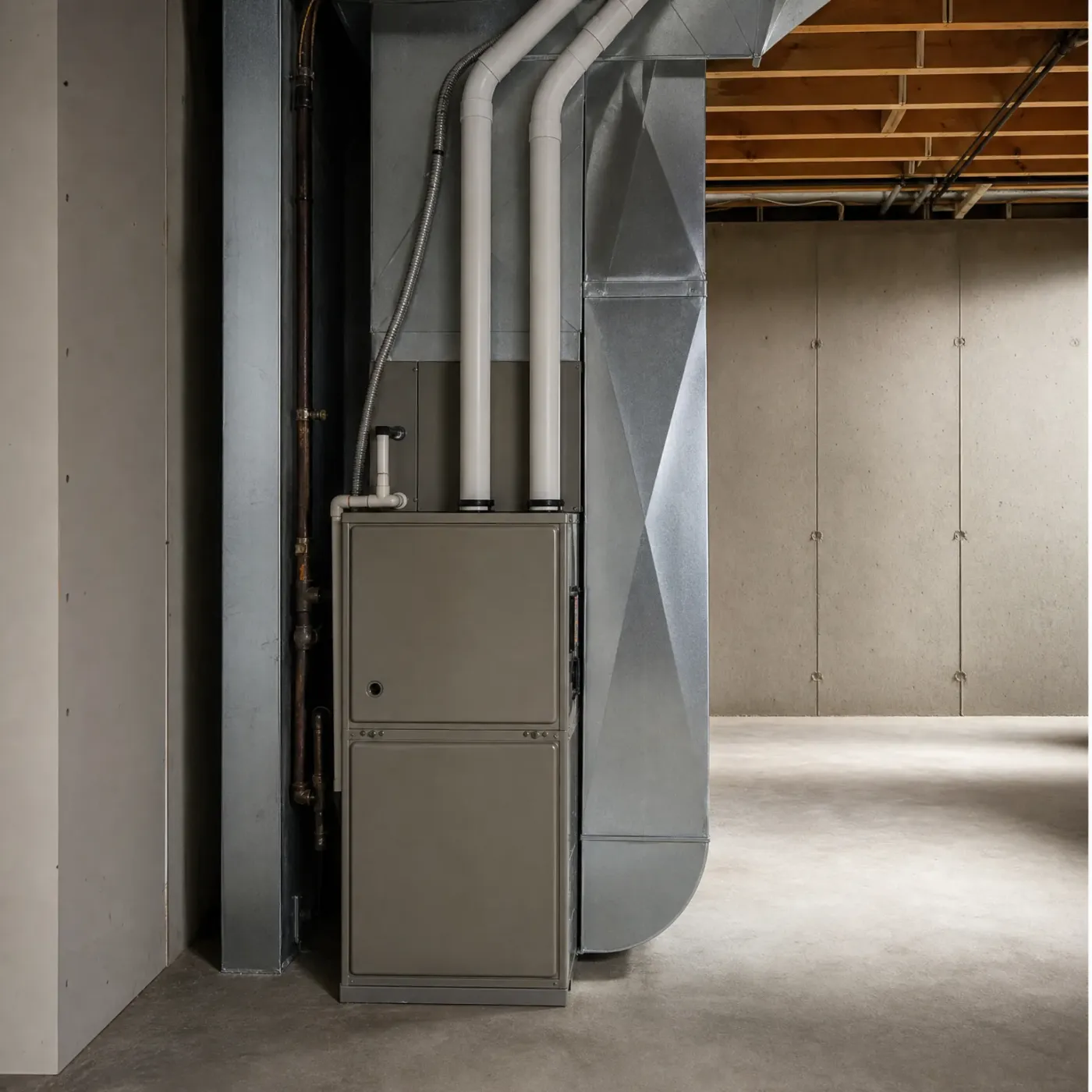
A gray high-efficiency furnace with two white PVC vent pipes stands against sheet-metal ductwork in an unfinished basement with concrete floor and walls and exposed wood joists.

Hand off the furnace problem

Describe what your furnace is doing once, in one form.

Send the request today and let a furnace pro reach out to you.

Start one form

You only hire the pro if you want to.

Try It Yourself or Call for Help

Keep Troubleshooting Yourself

  • If the flame sensor just needs a light cleaning, a rag or fine sandpaper can clear the film and get the furnace relighting the same hour.
  • Checking the switch at the side of the furnace and the breaker at the panel costs nothing and rules out the simplest causes first.
  • A thermostat with dead batteries or a wrong setting is something you can fix standing right there, no tools needed.
  • You can look at the flame through the small window yourself and know within a minute whether gas is reaching the burner at all.
  • Each attempt costs you time on a cold morning, and if the fix doesn't hold, you're back to a cold house and starting over.

Call In a Contractor

  • A cracked igniter or a failing control board isn't something you can see or test from outside the cabinet, and a contractor has the meter to check it.
  • You stop having to search for who's available, call around, and explain the same problem more than once.
  • A licensed contractor carries the furnace parts on hand, so a bad igniter or sensor gets replaced without a separate trip to order one.
  • Once you send the form, finding someone to come out stops being your job for the rest of the day.
  • If the furnace has shut off on a safety switch, a contractor can tell you why it tripped instead of you just resetting it and hoping.
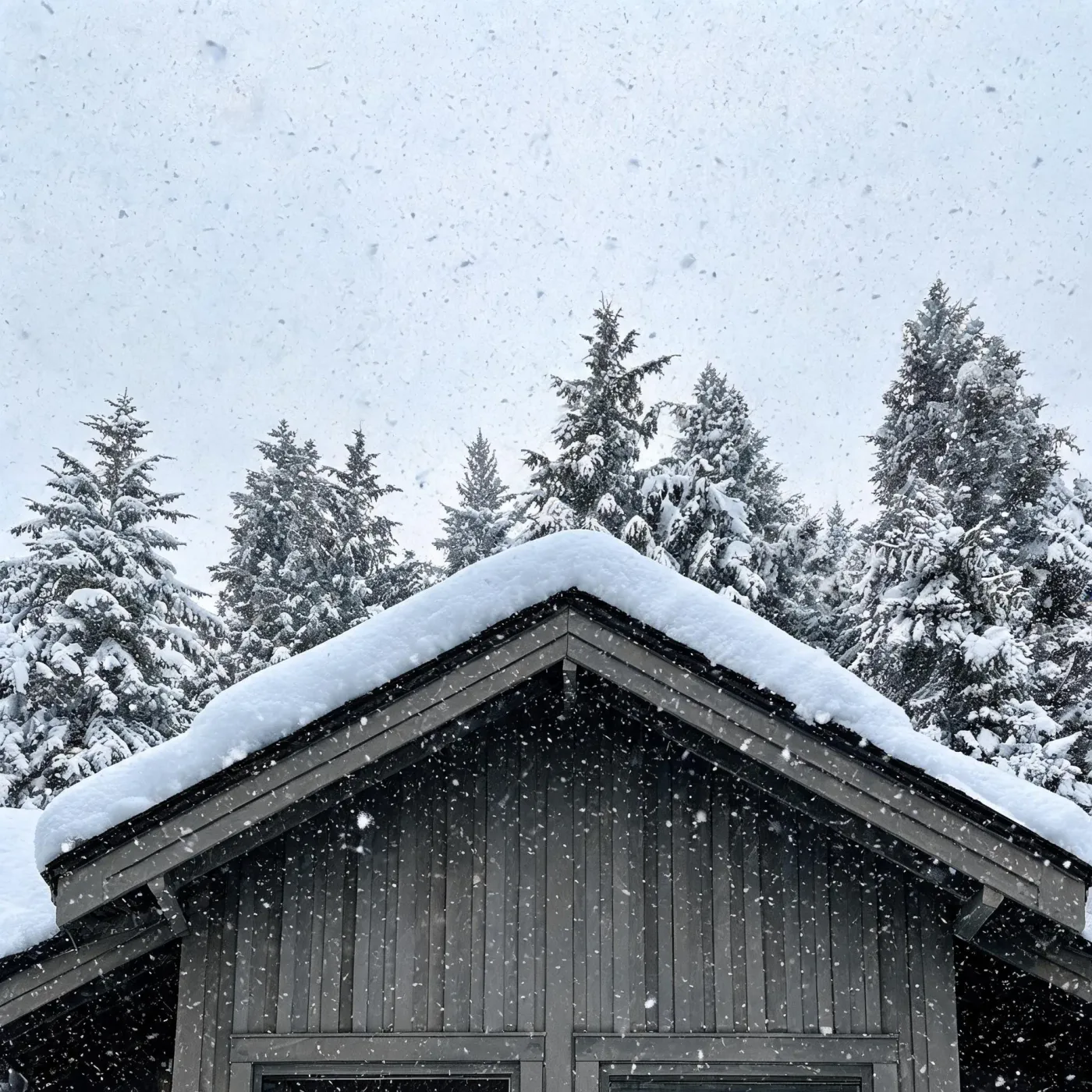
The gable end of a dark wood-clad building with a thick layer of snow on its roof, with snow-covered conifers and falling snowflakes behind it under a pale sky.

Winter nights in Lewis and Clark County average 15°F, according to NOAA climate data. At that temperature your furnace isn't cycling on and off a few times a night, it's running long stretches to keep up, and the burner has to relight itself over and over to hold the house steady. Each relight depends on the igniter and flame sensor working right, and that's exactly where a cold snap exposes a weak one. You'll notice it as a furnace that used to catch on the first try now taking two or three attempts, or a house that feels cooler by morning even with the thermostat set the same as always.

NOAA nClimDiv 1991-2020

A beige furnace with two access panels stands against a concrete basement wall, with galvanized sheet-metal ductwork, a white PVC pipe, flexible conduit and insulated ducting around it.
Before you get your furnace repair
A gray furnace with white PVC vent pipes stands beside sheet-metal ductwork in a basement with a smooth concrete floor, exposed wood framing, and plastic sheeting on the walls.
After you get your furnace repair

What a hard start costs the parts

Every ignition cycle puts the same strain on the furnace: the igniter heats up, the gas valve opens, the flame sensor confirms the burn. On a cold night in Lewis and Clark County that cycle might repeat a dozen times before morning. An igniter already thinning from age doesn't fail all at once. It gets a little weaker each time it's asked to glow hot enough to light the burner, until one cycle it doesn't make it. That's usually the night you notice.
Why waiting makes it worse

A furnace that fails to light once will likely do it again, and each attempt the control board makes to force a start is another strain on a part that's already failing. Left alone, a weak igniter or a dirty flame sensor doesn't stay a minor fix. The board can lock out after repeated failed attempts, leaving you with no heat at all rather than an intermittent problem. Catching it on the first missed light is almost always simpler than catching it after the furnace has quit answering the thermostat completely.

Winter nights average 15°F

At 15°F, a furnace that struggles to light can't wait until tomorrow. Pipes and rooms lose heat fast once the burner stops catching, and a house this cold overnight has no cushion built in.

NOAA nClimDiv 1991-2020

Where This Leaves You

  • A furnace that won't light usually comes down to the igniter, the flame sensor, the gas valve, or a tripped switch or breaker.
  • Cold nights near 15°F mean more ignition cycles, and more chances for a weak part to fail at the worst time.
  • A rag or fine sandpaper on the flame sensor can solve it in an hour; a cracked igniter or bad gas valve needs a licensed contractor.
  • Checking the switch and the breaker costs nothing and rules out the simplest causes before anything else.
  • Finding a contractor who can get to a no-heat call quickly, rather than calling around and repeating the same explanation to each one, is what turns a cold house around fastest.
  • Left alone, a furnace that struggles to light tends to fail more often, not less, as the parts keep taking the same strain.

The short version is simple. A furnace that won't light is almost always the igniter, the flame sensor, the gas valve, or a switch and breaker worth checking first. You can rule out the switch and breaker yourself, for free, in a few minutes. You can clean the flame sensor yourself if that's the culprit. Past that, a cracked igniter or a failing gas valve isn't something to keep testing on your own, especially on a night when Lewis and Clark County is sitting near 15°F and the house has no cushion if the burner keeps failing to catch.

What usually slows people down isn't the furnace itself, it's everything around getting it fixed. Searching for a contractor who answers on a cold night, calling two or three more when the first one can't come soon, explaining the same no-heat story each time, then sitting with quotes trying to compare them against each other. None of that gets the house warmer. It just eats the hours you don't have when the temperature outside is dropping and the furnace keeps short-cycling or not lighting at all.

That's the piece that goes away once you send the form. You're not left to find someone on your own or repeat yourself to every contractor in town. The furnace still needs the same repair either way, but the work of finding who does it stops being yours to carry.

A gray high-efficiency furnace in an unfinished basement, connected to sheet-metal ductwork and two white PVC vent pipes, with copper piping and exposed wood floor joists nearby.

It's off your list after this

Skip calling around

Skip calling shops to ask who repairs furnaces in Lewis and Clark County.

Asking costs nothing, and the choice to hire stays yours.