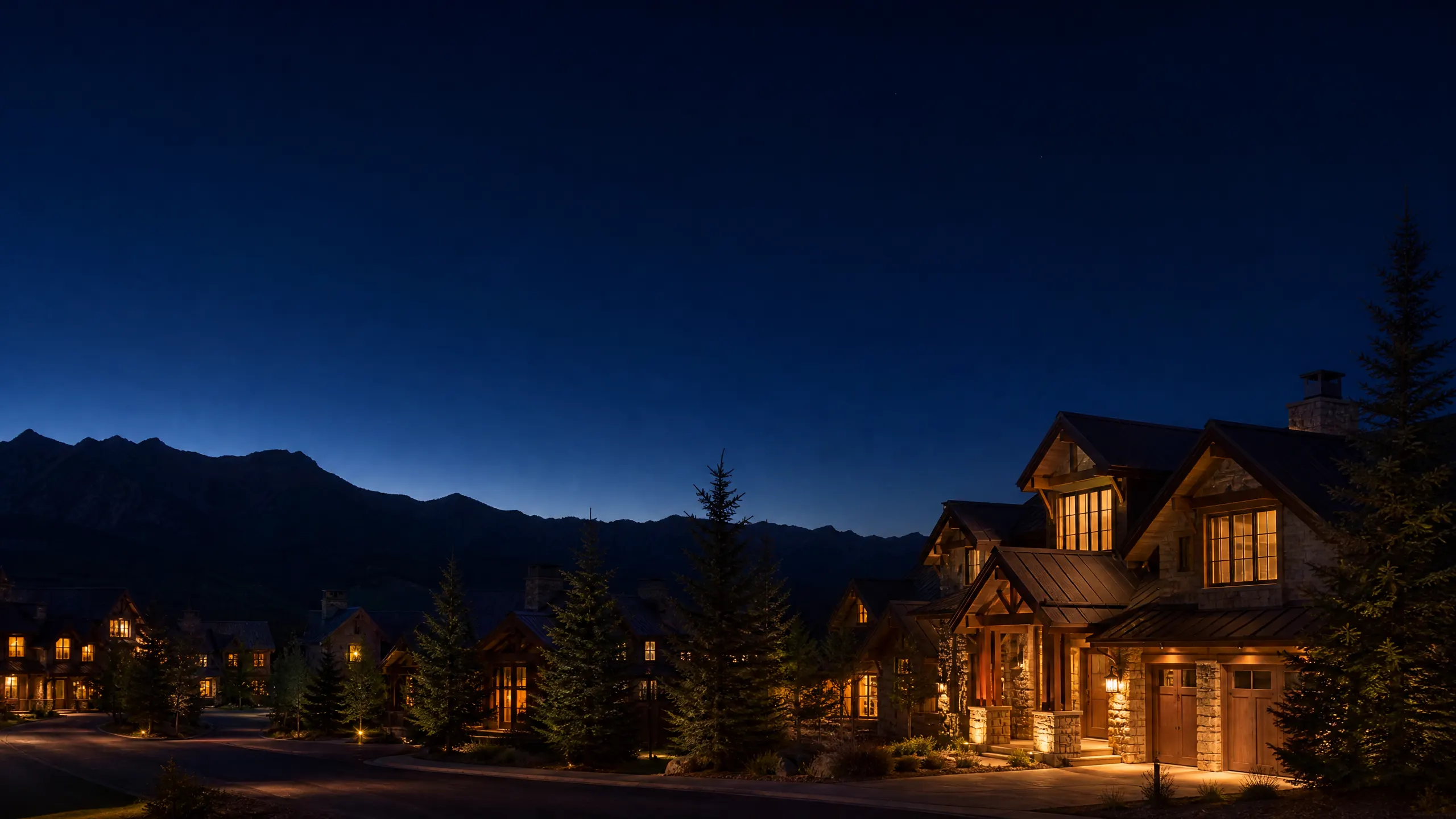

Illuminated timber-and-stone houses line a residential street at dusk, with evergreen trees in the foreground and a silhouetted mountain range behind them.

Furnace Maintenance in White Sulphur Springs, MT

Tell us about the job

Takes about a minute. No obligation.

Tune-up, service, or cleaningFurnace or heatingMeagher County, MT
Step 1 of 2

What ZIP code is the job in?

Propane ran $22.28 per million Btu in Montana last year, and a furnace burning more of it than it needs to will not hide that cost. A dirty burner or a clogged filter makes the furnace work harder to push out the same heat, and that extra work is propane you paid for and didn't get warmth from. Here, where the furnace runs most of the year, that waste adds up faster than it would somewhere mild. A tune-up gets the furnace back to burning only what the house actually needs.

Almost half the homes in Meagher County run on propane heat.

A propane furnace needs its burner and venting checked every year, not just a new filter.

Heat runs every month here, so this furnace never gets a break

Winter nights average 14°F
Climate zone 6B
45.3% of homes heat with propane

A furnace that runs every month of the year never gets a stretch to coast. Other machines get a slow season where a weak part can sit unnoticed a while longer. This one doesn't get that. A worn igniter or a cracked heat exchanger gets found on a yearly check or it gets found when the furnace quits and the house is cold. Have it looked at before the hard months set in, since once they do, this furnace doesn't get a break to make up for skipping it.

A furnace tuned up burns only what the house needs

A yearly check gets the burner and venting cleaned and adjusted so the furnace isn't working harder than it has to. With propane priced the way it is here, that's worth doing before the furnace settles in for the months ahead.

Find a contractor
A gray residential gas furnace installed in an unfinished basement, connected to sheet-metal ductwork and PVC pipes.

What the furnace is already telling you

A furnace gives off signs before it fails outright. The burner flame should burn blue and steady. If it's turning yellow or flickering, the burner isn't getting clean combustion and needs attention. Listen for banging or rattling at startup, that's often a delayed ignition where gas builds up before it lights. Short cycling, where the furnace fires up and shuts off again before the house warms, points to a dirty flame sensor or a clogged filter choking airflow. A furnace that runs long stretches without ever quite reaching the thermostat setting is losing heat somewhere it shouldn't. Soot around the burner compartment or a smell of exhaust inside the house means venting needs to be checked right away, not at the next convenient time. None of these signs mean the furnace is done. They mean it's telling you what it needs before it decides for you.

Dirt and dust don't go away on their own

A furnace pulls air across its burner and through its heat exchanger every time it runs, and dust settles on all of it. A dirty flame sensor stops reading the flame and shuts the furnace down as a safety response. A clogged filter starves the burner of airflow it needs to burn clean. None of this clears itself between cycles. It builds until something trips.
Skipping a year doesn't cost you a year

A furnace left unchecked doesn't fail on schedule. It runs worse quietly, burning more propane for less heat, then fails at whatever point the weak part finally gives out. That point is usually the coldest stretch, because that's when the furnace is working hardest and has the least room for a part that's already struggling.

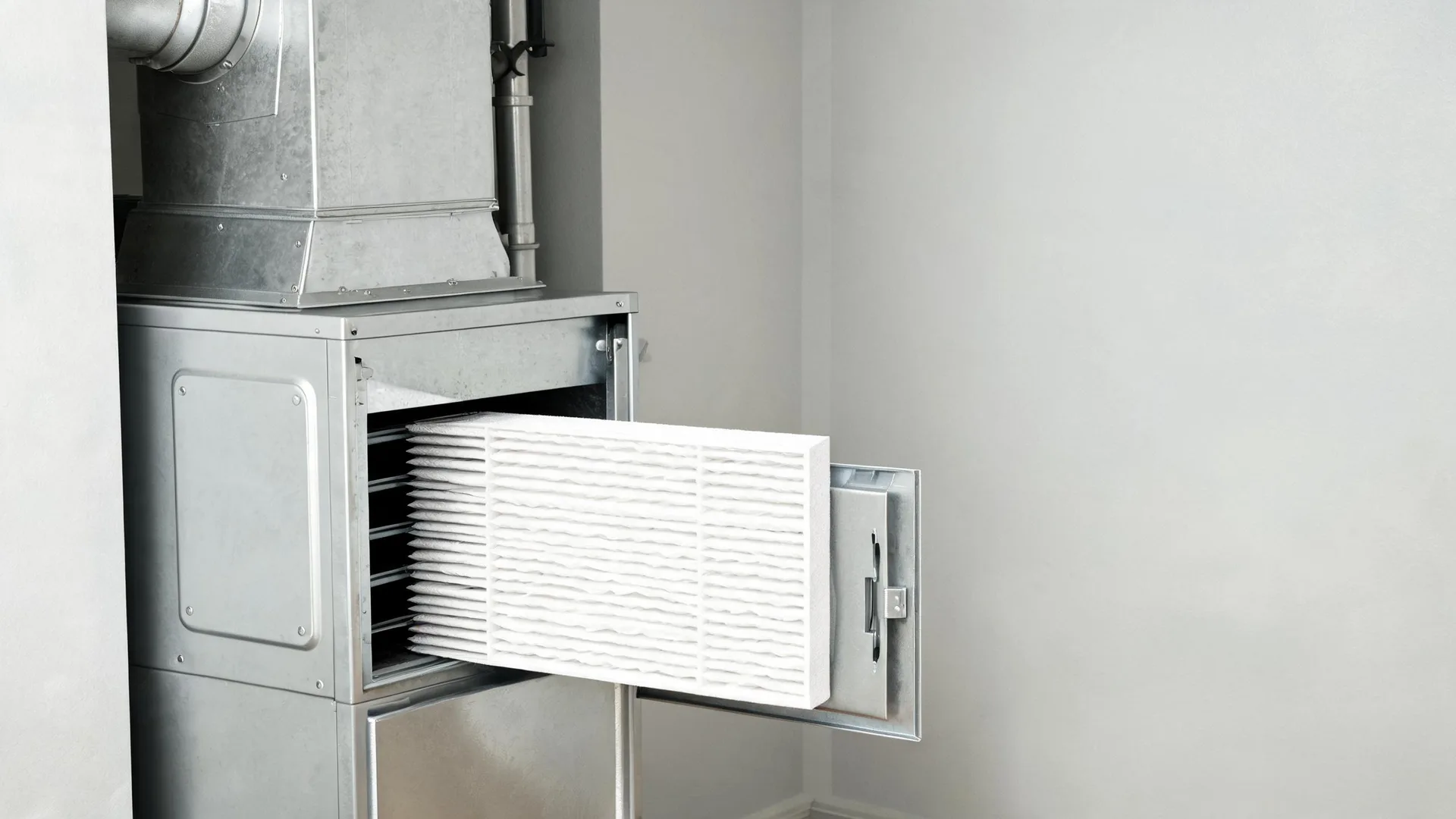
The filter is the one part of this job that isn't optional. Air has to pass through it before it ever reaches the burner and heat exchanger, and a filter clogged with dust chokes that airflow down. The furnace responds by running longer to move the same heat, and a burner starved for air doesn't burn clean. A furnace doesn't have a coil or a drain the way an air conditioner does, so there's no condensate line to worry about here. What it does have is a heat exchanger that depends on steady airflow to stay at the right temperature, and that airflow starts and ends with a filter that's actually clean. Checking it is quick. Ignoring it shows up later as a furnace working harder for less heat.

A proper tune-up starts with the burner. It gets pulled and cleaned so the flame burns even across every port, not just the middle ones. The flame sensor gets cleaned too, since a thin coat of residue is enough to make it misread the flame and shut the furnace down. The igniter gets checked for cracks or a weak glow, since that's a part that fails without warning once it's worn. The heat exchanger gets inspected for cracks or corrosion, because a cracked one can let exhaust mix into the air the furnace is pushing through the house. Venting gets checked for a solid connection and a clear path outside, not just a quick look. Gas pressure gets tested and adjusted so the burner gets exactly what it needs, no more and no less. A technician checks the blower too, making sure it spins freely and moves the air the furnace needs to carry heat through the ducts.