


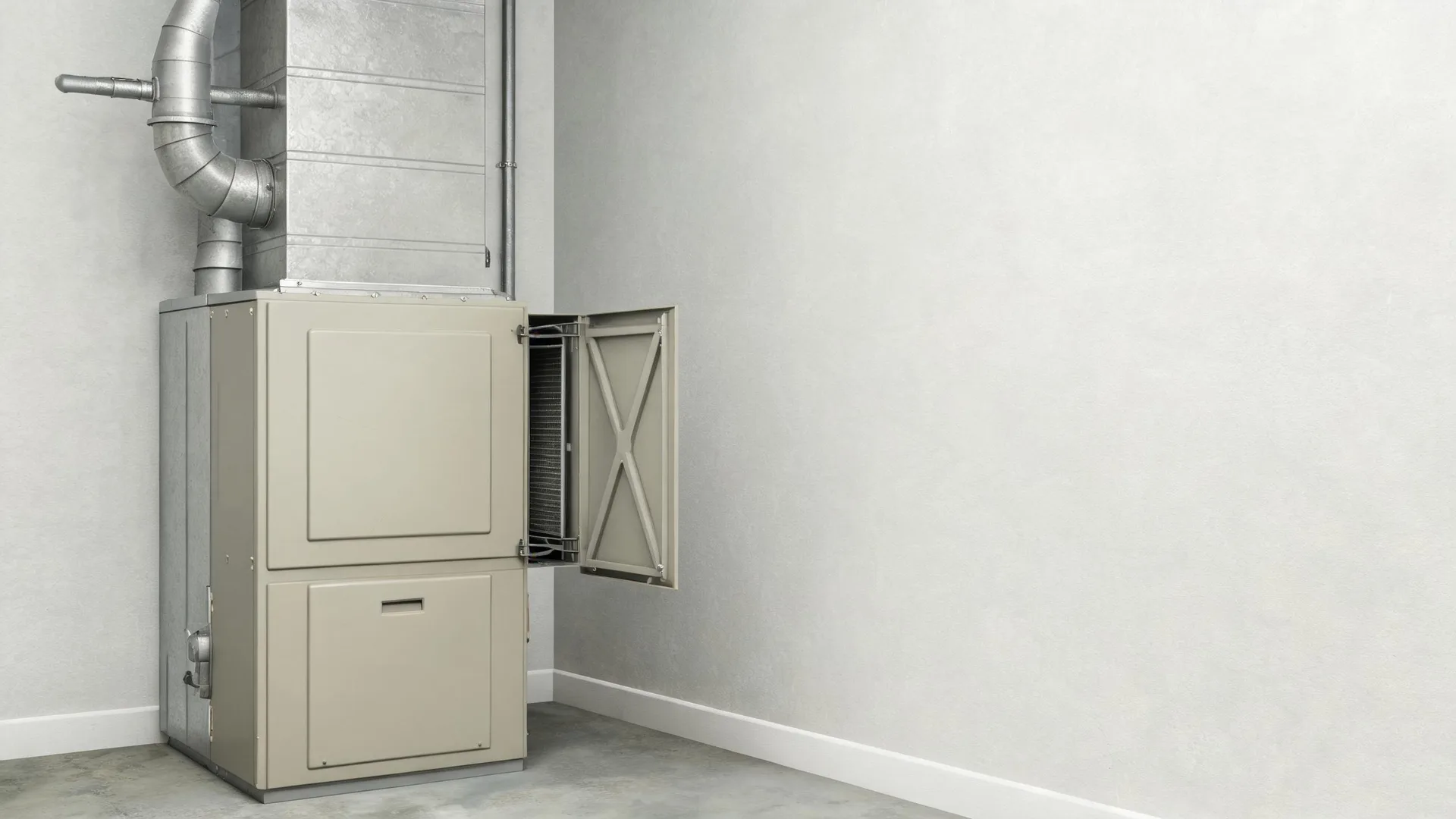
A gas furnace with sheet-metal ductwork and PVC pipes installed in an unfinished basement.

Furnace Maintenance in Sidney, MT

Tell us about the job

Takes about a minute. No obligation.

Tune-up, service, or cleaningFurnace or heatingRichland County, MT
Step 1 of 2

What ZIP code is the job in?

Natural gas in Montana ran $7.77 per million Btu in 2024. A furnace that's skipped its tune-up burns more gas than it should to put out the same heat, whether the cause is a dirty flame sensor, a clogged filter restricting airflow, or burners that need cleaning. That waste shows up on the gas bill every month the furnace runs, and here that's most of the year. A furnace running clean and tuned uses only what it needs to get the job done.

Gas heats more than half the homes in Richland County.

A furnace this common needs its burner and venting checked, not just a fresh filter.

Nine months of heat starts in September. Have it looked at in August.

Heat runs September through May
Winter nights average 6°F
Climate zone 6B

Nine months of the year, this furnace is the thing standing between the house and a Richland County winter. September through May, it runs almost every day. That kind of run time wears parts down faster than a furnace in a place where heat cycles on and off a few weeks a year. A cracked heat exchanger or a failing igniter does not announce itself early. It shows up as a furnace that runs longer to do the same job, or shuts off when it shouldn't. By the time that's obvious, the season is already asking a lot of it.

A tune-up is what stops the waste

A furnace burning more gas than it needs will keep doing that all winter unless something changes. A tune-up is what changes it: the burners get cleaned, the flame sensor gets checked, the filter gets replaced. That's the whole fix for the waste already described.

Find a contractor
A gray high-efficiency gas furnace installed in an unfinished basement, surrounded by gas lines, a condensate drain, and sheet-metal ductwork.

Nine months is a long time to find out something's wrong

A tune-up before the season starts catches what nine months of running will otherwise wear down on its own time. A technician can replace a cracked igniter or a weak flame sensor on a bench schedule, not during a cold snap when the part finally gives out. Once the furnace is running daily, there's no good week to lose it for a day.

Skipped maintenance doesn't show up right away

A furnace that misses its yearly service doesn't fail the next day. Dust builds on the burners, the flame sensor picks up a film it can't read through, and none of it stops the furnace from starting. It just makes the furnace work harder to do what it used to do easily. The trouble it's building toward stays hidden until something finally gives.
What finally gives is usually the part under the most strain

A flame sensor coated in residue starts misreading the flame and shuts the burner off, sometimes right after it lights. An igniter that's been overworking to catch a weak flame wears out ahead of schedule. A dirty blower wheel moves less air, so the heat exchanger runs hotter than it should. None of these start as a breakdown. They start as the furnace quietly doing more work than it was built to do.

A furnace usually gives some warning before it quits outright. It might take longer than it used to for the house to feel warm. The blower might run louder, or keep running after the house has reached temperature. Some furnaces short cycle, firing up and shutting off again within a few minutes instead of completing a normal heating cycle. A burner flame that should look steady and blue starts flickering yellow or orange, which usually means it isn't burning the gas cleanly. A pilot or igniter that needs several tries before it catches is already on its way out. None of these mean the furnace is about to leave the house cold tonight. They mean the parts doing the work are falling behind, and a tune-up is what catches that before one of them stops working altogether.

A proper tune-up starts with the burners, pulled and cleaned if they're carrying any rust or residue so the flame burns even across each one. The flame sensor gets cleaned or swapped, since that part reads the flame and shuts off gas if it can't see one. The igniter gets checked for cracks or a weak glow, because a failing igniter still works most mornings until the morning it doesn't. The heat exchanger gets inspected for cracks, which matter more than almost anything else in the furnace since that's what keeps combustion gases out of the air the house breathes. The blower wheel and motor get checked for dust buildup and worn bearings, since a dirty wheel moves less air no matter how strong the motor is. Gas pressure gets tested and set to what the furnace was built to run on. Vent piping gets checked for a solid connection and a clear path outside. None of this is guesswork, and none of it is a quick glance. It's the difference between a furnace that's been looked at and one that's actually been gone through.