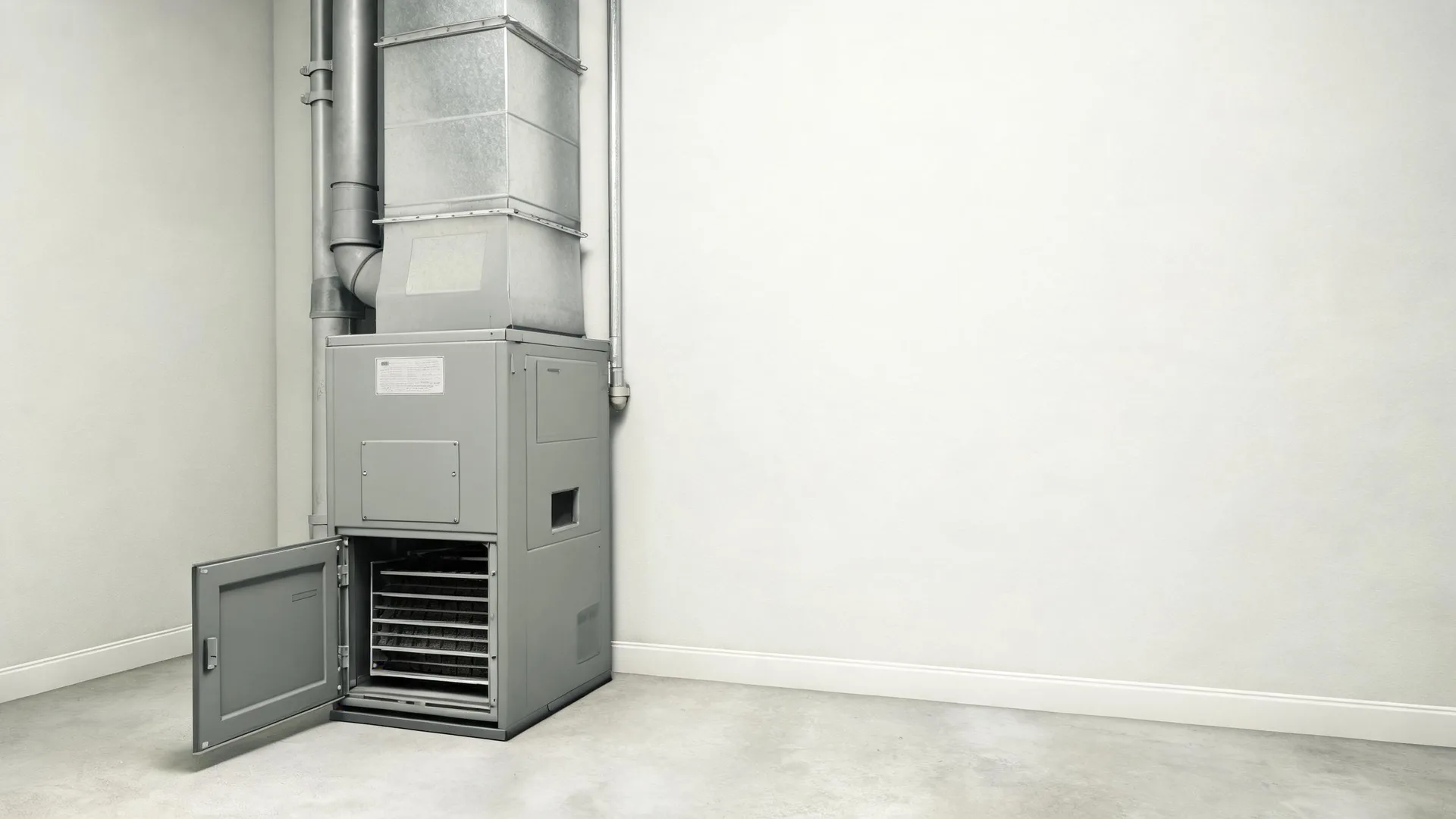
Ten months of heat a year
Furnaces in Lewis and Clark County run September through June. That overnight low near 15°F in December and January keeps a furnace cycling on for most of the day, not just a few hours at night.
Takes about a minute. No obligation.
Furnaces in Lewis and Clark County run September through June. That overnight low near 15°F in December and January keeps a furnace cycling on for most of the day, not just a few hours at night.
A short off-season gives a worn igniter or a failing blower motor little time to show itself before the next cold stretch starts. With 77 winter storms hitting the county over the past ten years, a furnace that quits during one of them is a bigger problem than a furnace that quits on a mild September day.
A quick tune-up checks that the furnace turns on and the flame looks right.
A thorough one pulls the burners, checks flame sensor microamps, and tests the heat exchanger for cracks before the cold sets in.

A furnace can run fine and still be wearing out in ways you wouldn't catch by listening to it. A flame sensor coated in a thin layer of oxidation still lets the furnace fire, but it'll shut off sooner and sooner until one day it won't stay lit at all. A cracked heat exchanger doesn't change how the furnace sounds or how warm the house feels, but it changes what's coming out of the vent. A weak igniter still glows enough to light the burners most mornings, then fails on the one morning that needs it most. None of this shows up as a smell or a sound or a cold room, not until it fails outright. A tune-up puts a meter and a trained eye on the parts that hide their wear, so the failure happens on a bench instead of in the middle of the night.
Gas heats 56.6% of homes in Lewis and Clark County, more than any other fuel. That means a burner, a flame sensor and a venting system doing the work, not just a filter catching dust. A tune-up checks the parts that burn the fuel and carry the exhaust out of the house, before the furnace needs to run every day.
Find a contractor
September to June is ten months of runtime, not a season. Get the furnace looked at in the off months, while there are any. Once the cold sets in there's no gap left to catch a worn igniter or a cracked heat exchanger before it fails on you.
A dirty filter chokes airflow across the heat exchanger, and the furnace has to run longer to push air through the house. Check it by pulling it out and holding it up to a light. If you can't see light through it, it's done. This is the one part of the furnace built for you to handle, no tools involved.
Furniture or boxes stacked against a supply vent block the airflow the whole system is built around, and storage crowding the furnace itself cuts off the air it needs to burn fuel cleanly. Walk the house and make sure nothing is blocking a vent or crowding the unit. Past that, the burners, the flame sensor and the heat exchanger are jobs for a trained eye with a meter, not something to check yourself.
Skip enough tune-ups and a furnace doesn't fail all at once. Dust builds up on the burners and the flame turns yellow and lazy instead of a sharp blue, and burning that way leaves soot on the heat exchanger that traps heat where it shouldn't sit. The blower wheel collects a layer of grime on its blades and moves less air for the same amount of work, so the motor runs hotter and wears faster than it should. A flame sensor that never gets cleaned builds up oxidation slowly, and the furnace starts shutting off a little sooner each week until a morning comes when it won't stay lit. Nothing about this announces itself. The house still gets warm, the furnace still sounds the same, right up until the week it doesn't.
A real tune-up starts with the furnace apart, not running. The burners come out so a tech can look at the flame pattern up close and clean off any rust or dust that's turned the flame yellow instead of blue. The flame sensor gets cleaned and tested with a meter, since a reading that's drifting down is the clearest warning a furnace gives before it quits lighting altogether. The heat exchanger gets inspected for cracks, usually with a camera or a light, because a crack there is a safety issue, not a performance one. The igniter gets checked for a weak glow, the blower wheel gets looked at for grime buildup, and the venting gets checked to make sure exhaust is actually making it outside. A tech also checks gas pressure at the valve, since pressure that's drifted off spec changes how clean the furnace burns. None of this is guesswork. Each part gets tested against a number the manufacturer set, and a part that's close to failing shows up on a meter well before it shows up as a cold house.