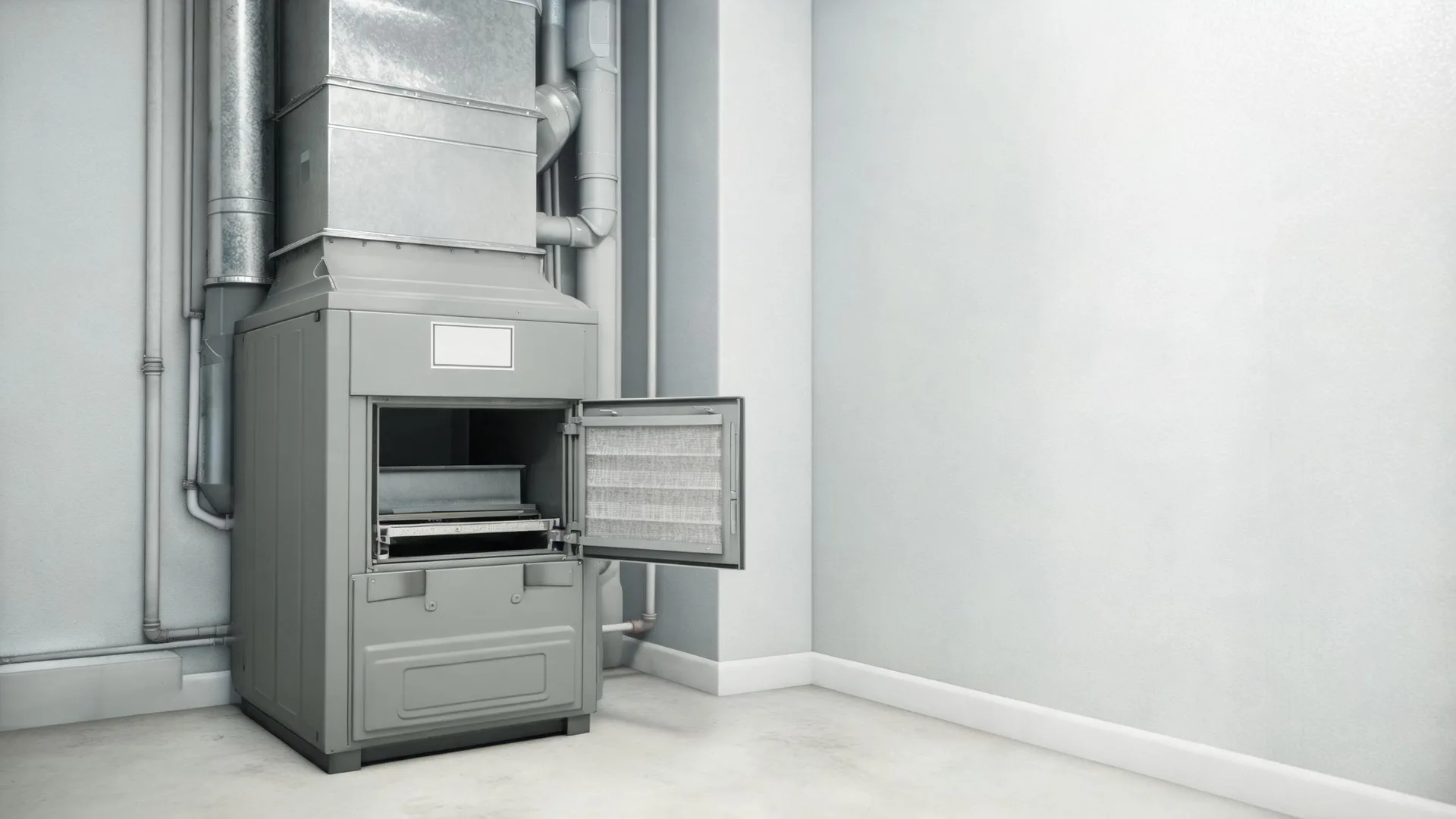
Ten months of heat a year
Furnaces in Hardin run from September through June, with overnight lows averaging 14°F through December, January and February. That's most of the year asking the igniter, the blower motor and the heat exchanger to perform.
Takes about a minute. No obligation.
Furnaces in Hardin run from September through June, with overnight lows averaging 14°F through December, January and February. That's most of the year asking the igniter, the blower motor and the heat exchanger to perform.
A furnace with that short an off season gets little chance to show a weak igniter or a failing blower before the cold sets in. With storms hitting the county 84 times over the last decade, a problem that shows up mid-run shows up at the worst moment.
A furnace that never gets cleaned or checked just keeps running until something fails.
A cracked heat exchanger or a clogged burner doesn't announce itself ahead of time, it just quits.




Gas is the most common way to heat a home here, at 36.9 percent, with bottled or LP gas heating another 28.7 percent. That means most furnaces in Big Horn County are burning fuel, not just moving heat with electric resistance coils. A gas furnace needs its burner and flame sensor checked, and the venting looked at to make sure exhaust is actually leaving the house. The heat exchanger matters too, since a crack in it can let combustion gases into the air a furnace is supposed to be heating. None of that shows up by swapping a filter.
A furnace here runs from September through June before it gets a break. That kind of run time catches up with an igniter or a blower motor sooner than it would somewhere milder. Getting it checked before September means finding the weak part while the weather still gives you room to fix it.
Find a contractor
A furnace doesn't have coils or a drain the way the cooling side does. What it has is a filter, and that filter sits in the path of every bit of air the blower pushes. A dirty filter chokes that airflow, and the blower works harder to move the same amount of air through the house. Run it hard enough for long enough and the blower motor wears out ahead of schedule. Restricted airflow also lets the heat exchanger run hotter than it should, which is the kind of stress that turns a small crack into a bigger one. Changing the filter on a regular basis is the one thing that protects both the blower and the heat exchanger at the same time. It's a small part doing a job that matters more than its size suggests.
A furnace filter needs checking every month it's running and changing when it's visibly gray or clogged. Hold it up to a light. If light doesn't pass through it the way it does on a new one, it's done. That's the only maintenance safe to do without taking a panel off.
The burner, the flame sensor, the igniter and the heat exchanger all sit behind the front panel, and none of them are a homeowner job. A flame sensor needs a light abrasive cleaning with the gas shut off first. A heat exchanger crack takes a trained eye and sometimes a camera to find. Opening that panel without knowing what you're looking at risks missing a crack that's already there.
A quick tune-up checks that the furnace fires up and moves air. A thorough one checks whether it should keep running the way it has been. That means pulling the burner assembly to look at the flame itself, not just listening for ignition. A clean, steady blue flame means good combustion. A flame that's yellow, lazy or uneven points to a burner that needs cleaning or a gas mixture that's off. It means testing the flame sensor's reading, not just wiping it down. It means checking the heat exchanger with a camera or a trained eye, since a crack there won't show up by looking at the furnace running normally. It also means checking amp draw on the blower motor, which catches a motor on its way to failing before it actually fails. A tune-up that skips straight to replacing the filter and closing the panel back up has checked that the furnace runs today. It hasn't checked whether it's safe to run all season.
A proper tune-up also means checking gas pressure at the manifold, not just assuming it's set right. Too much pressure and the burner runs hot, stressing the heat exchanger from the inside. Too little and combustion turns incomplete, leaving soot where a clean burn should be. It means inspecting the vent pipe for gaps or rust, since that pipe is the only thing carrying exhaust out of the house. A loose joint there sends combustion gases somewhere they don't belong. It means testing the limit switch, which shuts the burner off if the furnace overheats. A switch that's stuck or slow to respond won't catch a problem until it's bigger than it needed to be. Each of these takes a few minutes done right. Skipped, they leave a furnace that starts fine and still fails partway through a cold stretch.