Gas here runs $7.77 per million Btu
That is what Montana homes paid on average in 2024. A furnace that has lost its edge burns more gas to put out the same heat, and at that price the difference shows up on the bill.
Takes about a minute. No obligation.
That is what Montana homes paid on average in 2024. A furnace that has lost its edge burns more gas to put out the same heat, and at that price the difference shows up on the bill.
A clogged filter, a worn igniter, or dirty burners make a furnace run longer to hold the same temperature. A furnace here already runs hard through a long, hard winter. Extra runtime on top of that adds up fast.
Furnaces in Dawson County run from September through May.
Nine months of work a year wears parts down fast, and a tune-up catches that early.

Winter storms hit this county hard, 23 of them between 2015 and 2024, along with 127 damaging wind events and 56 hail events in that same stretch. Wind and hail reach the intake vent and venting on an outdoor furnace setup, and debris can block airflow without any obvious sign from inside the house. A furnace that loses power in a blizzard needs to come back cleanly when the power does, with the igniter lighting on the first try. Statewide, 18% of Montana households went at least a day without power in 2024, and a furnace sitting unused in cold weather is harder on a system already working at its limit. A tune-up before winter catches a blocked vent or a weak igniter while it is still an easy fix.
A tune-up gets the burner and igniter back to burning gas the way they should, so the furnace is not working harder than it needs to through a long winter. That is what shows up on the gas bill at $7.77 per million Btu.
Find a contractorHeat here comes on in September and stays on through May. That is nine months of runtime, and the furnace works hardest from the first cold night, not partway into winter. Book the tune-up in August, before the season starts, so a stuck igniter or a dirty burner gets caught while the furnace is still sitting idle rather than on a night when you need it.
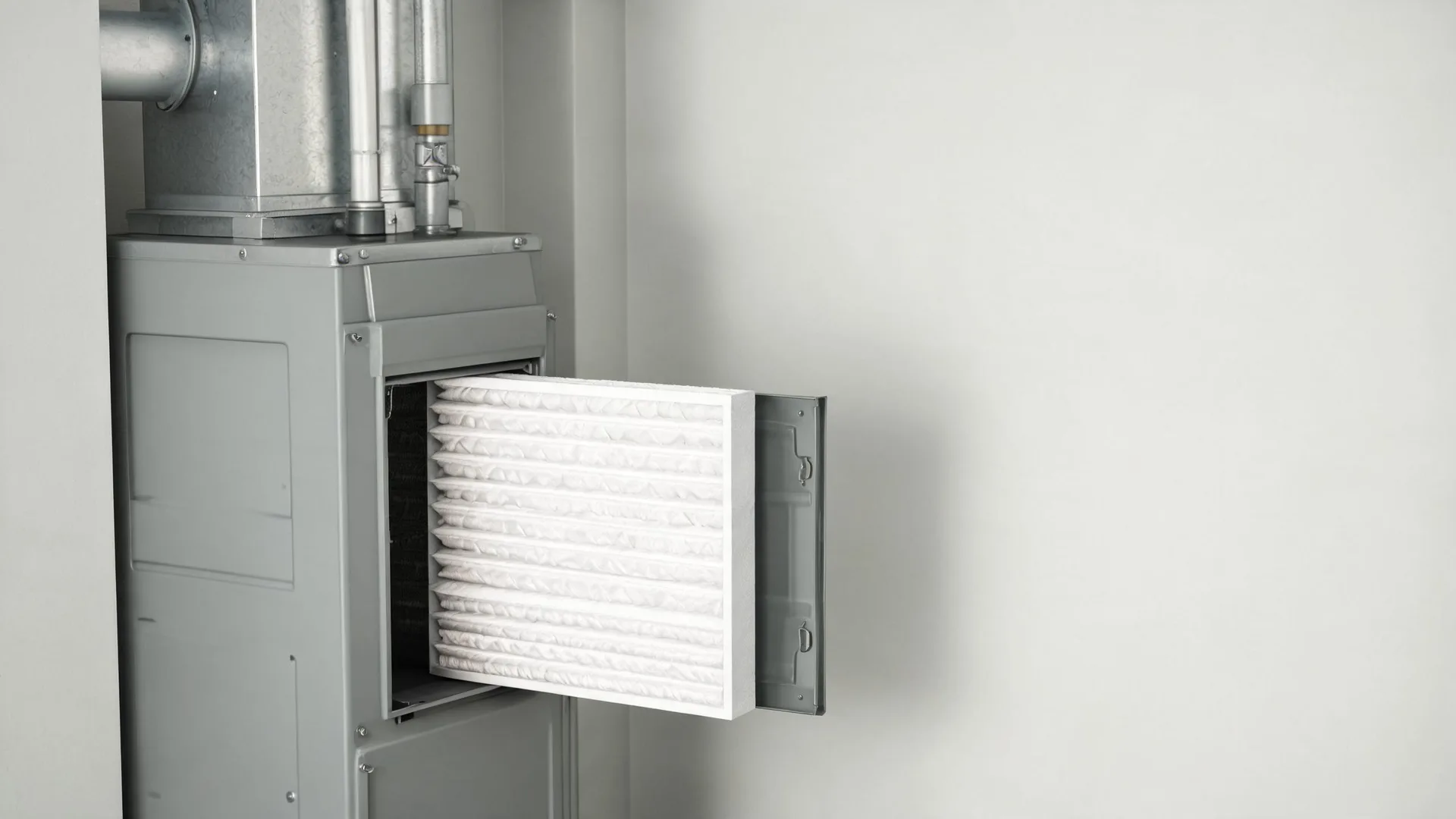
A dirty filter is the one thing worth checking without calling anyone. Pull it out, hold it to the light, and if you can't see through it, swap it. A clogged filter starves the burner of airflow and makes the whole system work harder to push heat through the house.
The burner, the igniter, and the flame sensor need a trained eye. Opening the cabinet to clean or adjust them without knowing what you're looking at can knock something out of position that was set correctly. Listen for a new rattle or a burning smell and mention it at the next visit instead of chasing it yourself.
A furnace doesn't have a drain or coils to worry about, that's the air conditioner's job, but the filter still runs the whole show. Every bit of air the burner heats has to pass through it first, and a clogged filter chokes that airflow down to nothing. The blower motor has to spin harder to push air through a dirty filter, and a motor working against that kind of resistance wears out faster than one that isn't. Airflow problems also show up at the heat exchanger. If air can't move through fast enough, that exchanger runs hotter than it should, and overheating there is what eventually cracks it. None of this announces itself. A furnace with a half-blocked filter still lights, still blows warm air, and still seems fine, right up until the motor or the exchanger gives out.
Nine months of runtime means a furnace here doesn't get much of a break to show what shape it's in. Once the weather turns, it's running every day, and whatever was already worn keeps wearing under a full load. That's the case for getting it looked at before September rather than after. A technician can catch a cracked exchanger or a sticking igniter while the furnace is sitting idle, with time to order a part if one's needed. Wait until the first cold snap and the same problem shows up as no heat on a night when you need it.