

An unfinished concrete basement containing a metal HVAC air handler, exposed wooden ceiling joists with sheet-metal ducts, a hanging bare bulb, copper pipes, and stacked cardboard boxes.

Furnace Maintenance in Cut Bank, MT

Tell us about the job

Takes about a minute. No obligation.

Tune-up, service, or cleaningFurnace or heatingGlacier County, MT
Step 1 of 2

What ZIP code is the job in?

Montana homes paid $7.77 per million Btu for natural gas in 2024. That is the fuel cost behind every therm your furnace burns. A furnace that lights late, runs a long cycle, or short cycles to get the house warm is burning more of that gas to do the same job. A dirty burner or a bad flame sensor doesn't just risk a breakdown, it makes the furnace work harder every single time it fires. In a county this cold, that adds up over the winter in a way it wouldn't somewhere milder.

Glacier County logged 250 severe weather events between 2015 and 2024, including 200 damaging wind events and 20 hail events.

That kind of weather reaches the outdoor unit your furnace system depends on, so it needs a check for damage and debris before winter sets in.

A furnace that runs every month of the year gets no real break to show its wear

Winter nights average 14°F
Climate zone 6B
Half the homes here were built by 1974

Gas heats more homes in Glacier County than anything else, 42.9%, with electricity behind it at 35.8% and propane at 9.2%. If your furnace runs on gas or propane, the tune-up is not about swapping a filter. The burner has to be checked for a clean, even flame, since a dirty one burns fuel without putting out the heat it should. The flue and venting need to be clear so exhaust actually leaves the house instead of backing up. The flame sensor and igniter need testing too, because a weak one can shut the furnace down mid-cycle or keep it from lighting at all. None of that shows up when you just look at the filter.

A tune-up before winter is cheaper than a furnace running hard all season

A clean burner and a tested flame sensor keep your furnace from working overtime to heat the house. That matters here, where every therm it burns costs more than it would almost anywhere else. Getting it checked now means it runs the way it's supposed to once the cold sets in.

Find a contractor
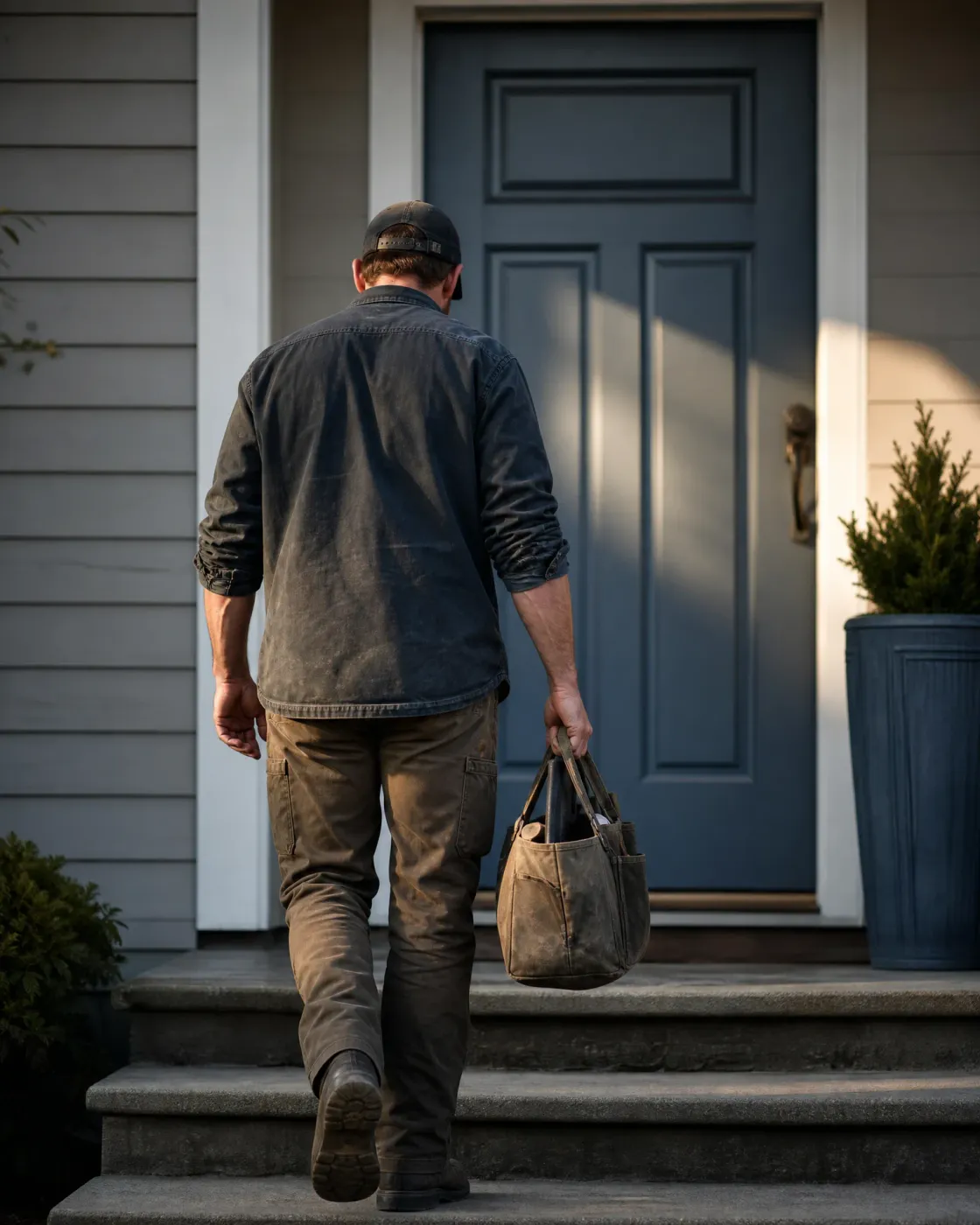
A man in a cap, dark work shirt and brown cargo pants walks up concrete steps toward a blue-gray front door, carrying a worn canvas tool bag in his right hand, with a potted shrub beside the entry.
A gray high-efficiency gas furnace installed in an unfinished basement, surrounded by gas lines, a condensate drain, and sheet-metal ductwork.

It runs all year. Check it before winter asks more of it.

Furnace running here every month of the year means it never gets a stretch to sit idle and reset. A furnace in most of the country gets a real break for half the year or more. Yours doesn't get that. Whatever wear is building in the burner or the sensor keeps building, month after month, with no gap to catch it before the hardest stretch of winter hits. Getting a tune-up now, ahead of that stretch, is how you find the weak igniter or the dirty burner while it's still an easy fix.

Change the filter yourself

A dirty filter chokes airflow across the heat exchanger, and that alone can cause short cycling or a furnace that runs long to reach temperature. Check it by holding it up to a light. If you can't see light through it, swap it. This is the one job on a furnace that's meant for the homeowner, not the tech.

Leave the rest to the tech visit

Don't open the burner compartment or touch the flame sensor and igniter yourself. Those need a meter and a trained eye to test correctly, and a flame sensor cleaned the wrong way can leave the furnace shutting off mid-cycle instead of fixing the problem. Keep the area around the furnace clear of boxes and clutter, and keep the vents in each room open. That's the extent of what's safe to do between visits.

Skip a tune-up and nothing fails right away. That's what makes it easy to put off. The burner keeps lighting, the blower keeps pushing air, and the house still gets warm, so there's no sign telling you to call anyone. Underneath that, a burner collecting dust burns dirtier and less evenly, and a flame sensor coated in residue has to work harder to prove there's a flame before it lets the gas valve stay open. Neither one quits outright. They just get worse at their job a little at a time, cycle after cycle, until the day the sensor finally reads it wrong and shuts the whole furnace down, usually on the coldest night it's run all year. A tune-up catches that drift while it's still small enough to clean or adjust instead of replace.

The outdoor unit sits through all of that weather with nothing covering it. Wind-driven debris can get into the cabinet, and a hailstone can dent the housing or bend a fin without you ever seeing it happen. A tech checking it before winter will clear out leaves and grass caught in the coil, straighten any bent fins, and make sure nothing cracked the housing enough to let moisture in. None of that fixes itself once the snow is on the ground and the unit is buried until spring.