An unfinished basement containing a metal furnace with ductwork, exposed wooden joists on the ceiling, cardboard boxes, a coiled cable, and a single hanging incandescent bulb.

Furnace Maintenance in Columbus, MT

Tell us about the job

Takes about a minute. No obligation.

Tune-up, service, or cleaningFurnace or heatingStillwater County, MT
Step 1 of 2

What ZIP code is the job in?

Ten months of runtime

A furnace in Stillwater County runs from September through June. That's most of the year spent cycling on and off to keep the house warm. Between 2015 and 2024, the county saw 160 winter storms. Each one means hours of the furnace running without a break.

Parts wear ahead of schedule

A furnace built to run ten months a year works harder than one that only has to handle a mild winter. The igniter, the blower motor, the heat exchanger all log more hours here than they would somewhere milder. A problem that might take years to show up elsewhere can show up sooner here.

Close to half the homes in Stillwater County heat with gas, and most of the rest burn propane.

A tune-up on either one has to include the burner and the vent, not just a new filter.

Half these furnaces still have most of their working life ahead

Half the homes here were built by 1986
Climate zone 6B
Heat runs September through June
Ten Months Start in SeptemberFurnaces here start running in September, and run for ten months straight. Have yours checked in August, before it does.

Stillwater County logged 324 severe weather events between 2015 and 2024. That includes 160 winter storms, heavy snow, ice, blizzards, the same stretch a furnace is already running hard to keep the house warm. Hail hit the county 52 times in that span, and damaging wind another 112. Either one can bang up an intake or pack debris where it blocks airflow. A blocked or damaged vent during a storm is a different problem than a blocked vent in calm weather, and none of it shows up by looking through a window. A tune-up includes checking the vent and intake for damage or blockage before the next storm comes through.

Get Ahead of a Furnace That Never Gets Much Rest

A furnace that runs from September through June doesn't get much downtime between heating seasons. A tune-up before September catches a worn igniter or a cracked heat exchanger while it's still a repair, not a no-heat call once the cold sets in.

Find a contractor
A man in a cap, dark T-shirt and tan work pants carries a canvas tool bag up wooden porch steps toward a gray front door, with a potted shrub beside the entry.
A gray residential gas furnace installed in an unfinished basement, connected to sheet-metal ductwork and PVC pipes.

A Younger Furnace Stays That Way With Yearly Care

Half the houses in this county were built in 1986 or later, which means plenty of furnaces still have most of their working life ahead of them. A yearly check is what keeps a furnace in that position. It catches a drifting flame sensor or a blower starting to strain while that's still a small repair. Skip that check a few years running and a furnace with a lot of life left starts wearing like one that doesn't.

What the Flame Looks Like

A gas burner should run with a steady blue flame. Yellow tipping or flickering means it's not burning clean, and that can mean soot building up inside the heat exchanger where nobody sees it. Left alone, that soot layer insulates the metal, makes the furnace work harder to push heat through, and shortens the life of the exchanger itself.

A Crack You Can't See Coming

A heat exchanger can crack from the inside out, long before it looks like anything is wrong. The furnace still fires, the house still gets warm, and the crack keeps growing. A combustion analysis and a close look at the exchanger during a tune-up catch that early, before it turns into a safety problem instead of a repair.

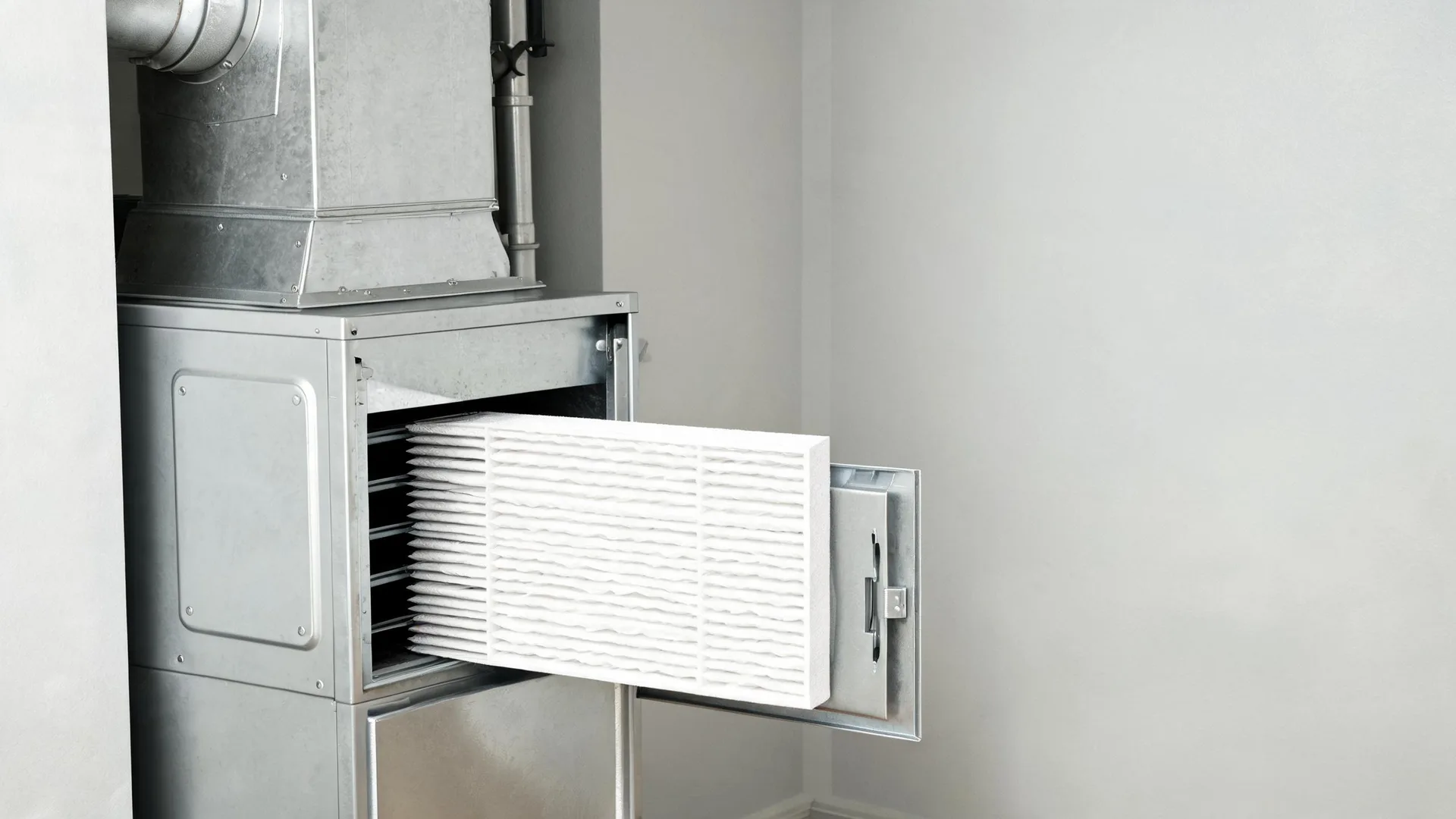
A furnace moves air, not just flame, and the filter is what stands between the blower and everything that can clog it. A dirty filter chokes that airflow, and the blower just works harder to push air through it. That strain shows up elsewhere. Less air moving across the heat exchanger means it runs hotter than it should, which ages the metal faster. Some furnaces pair with a cooling coil in the same cabinet, and that coil can ice over when airflow drops too low. A condensate drain handles the moisture that collects when things are working right, and if it clogs, that water backs up instead of draining away. None of these parts fail on their own. A dirty filter leads to a strained blower, a hot exchanger, and sometimes a wet mess at the drain, all from one thing nobody changed on time.

Outdoor equipment takes the brunt of a storm, but a furnace has its own intake and vent running outside, and both can take a hit from hail or wind without anyone noticing from inside the house. Stillwater County saw 52 hail events and 112 damaging wind events over that same stretch of years. Hail dents a vent hood or knocks it loose. Wind drives debris into an intake and packs it there. A tune-up before the season starts means someone is looking at that vent and intake while it can still be fixed on a schedule, not during a cold snap when the furnace won't fire and nobody can tell why.