


An unfinished basement featuring a forced-air furnace, exposed wooden ceiling joists, bare concrete walls, and miscellaneous items including cardboard boxes and coiled cables on the floor.

Furnace Maintenance in Chinook, MT

Tell us about the job

Takes about a minute. No obligation.

Tune-up, service, or cleaningFurnace or heatingBlaine County, MT
Step 1 of 2

What ZIP code is the job in?

A quick tune-up gets you a filter swap and a glance at the flame. A thorough one gets the cabinet open. The tech should pull the burners and clean them, check the flame sensor for corrosion, and look at the igniter for cracks or weak spots. They should test the heat exchanger for cracks, since that's the part that can let combustion gases mix with the air moving through your house. They should check the gas pressure at the manifold, not just assume it's right, and check the blower wheel for dust buildup that throws off airflow. If the visit ends with someone wiping down the outside of the unit and handing you a bill, ask what they checked inside it.

Half the furnaces in Blaine County sit in houses built in 1972 or earlier.

A furnace that old has earned a yearly look before winter asks something of it.

Gas here runs $7.77 per million Btu, and this furnace draws on it from September clear through June

Climate zone 6B
Heat runs September through June
Winter nights average 10°F
Gas heats most homes hereUtility gas heats 40.0% of homes in Blaine County, more than any other fuel

September is the first full month this furnace runs, and it starts cold. By December, January and February the overnight low here averages 10 degrees, and that's the stretch where a weak igniter or a dirty flame sensor turns into no heat at all. Book the tune-up in August, before the furnace has to carry that load. A technician working on it in August isn't competing with a house that already needs heat, and if something needs a part ordered, there's time for that before the first September morning gets cold enough to matter.

Ten months of heat a year wears a furnace down faster

Ten months of heat a year is close to constant work. Most furnaces get a few months off between seasons to sit idle. This one barely does. That kind of run time catches up with an igniter or a flame sensor sooner than it would somewhere milder. A tune-up now finds the worn part while it's still just worn, not after it's failed on a cold morning.

Find a contractor
A gray high-efficiency gas furnace installed in an unfinished basement, surrounded by gas lines, a condensate drain, and sheet-metal ductwork.

An old furnace won't tell you it's worn until it quits

If your furnace came with the house, put it on the yearly list, not just the call-when-something-seems-off list. An old furnace doesn't announce a cracked heat exchanger or a cracking igniter. A tech has to look for it. Catching that during a scheduled visit is a small fix. Catching it because the furnace quit is not.

Dirt is what shortens a furnace's life

A furnace that never gets cleaned keeps running, just worse. Dust builds on the blower wheel and airflow drops. The burners foul and the flame goes from blue and even to ragged and yellow. None of that stops the furnace from firing. It just makes every part of the cycle work harder than it needs to, and that wear adds up all winter long.
The failures that show up are avoidable ones

Almost every no-heat call traces back to something a tune-up would have caught. A flame sensor coated in corrosion stops sensing the flame and shuts the furnace down. An igniter with a hairline crack works fine for months, then fails the next time it's asked to glow. A tech checks both during a routine visit. Nobody checks them in between.

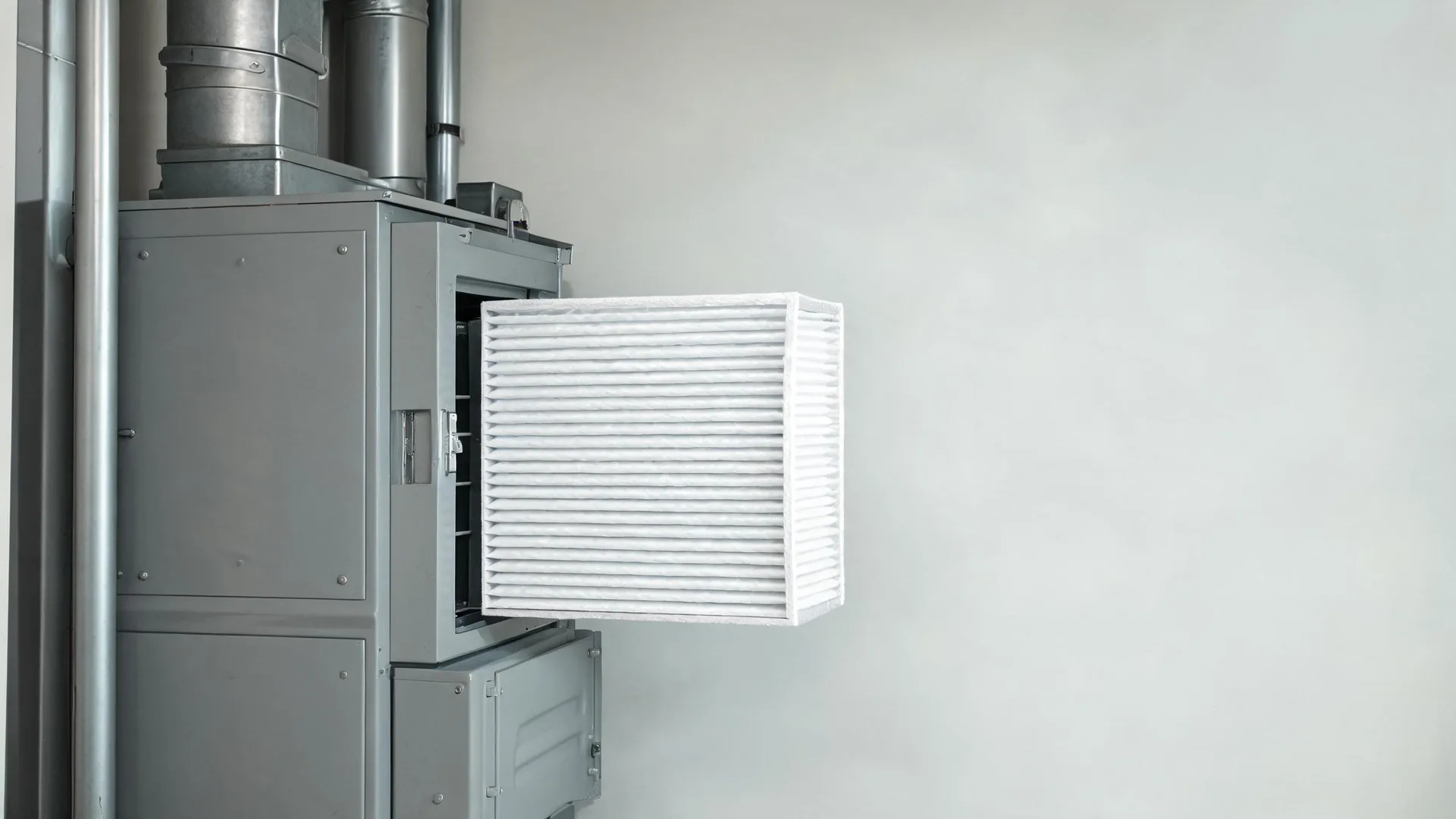
A furnace doesn't have coils or a drain. That's the air conditioner's job, sharing the same ducts and sometimes the same cabinet. The furnace's side of the system is the filter, and it matters more than people think. A clogged filter starves the blower, and a starved blower can't pull enough air across the heat exchanger. That makes the exchanger run hotter than it should, cycle after cycle, and heat stress is what eventually cracks one. A dirty filter also lets dust reach the blower wheel itself, and a wheel caked in dust moves less air even with the motor working just as hard. Swapping the filter is the cheapest thing anyone can do for this system, and it's also the thing most often ignored until the tech points at it.

Ten months of heat a year means this furnace does not get much of a break before the next season leans on it again. That is the case for booking the tune-up rather than waiting to see what happens. A tech looking at it now can catch the igniter that is starting to crack or the flame sensor that is starting to corrode, while swapping either one is still a simple fix. Wait until the furnace is running every day and the same problem means no heat on whatever morning it picks. Getting ahead of it costs you a service call. Falling behind it costs you a cold house.