


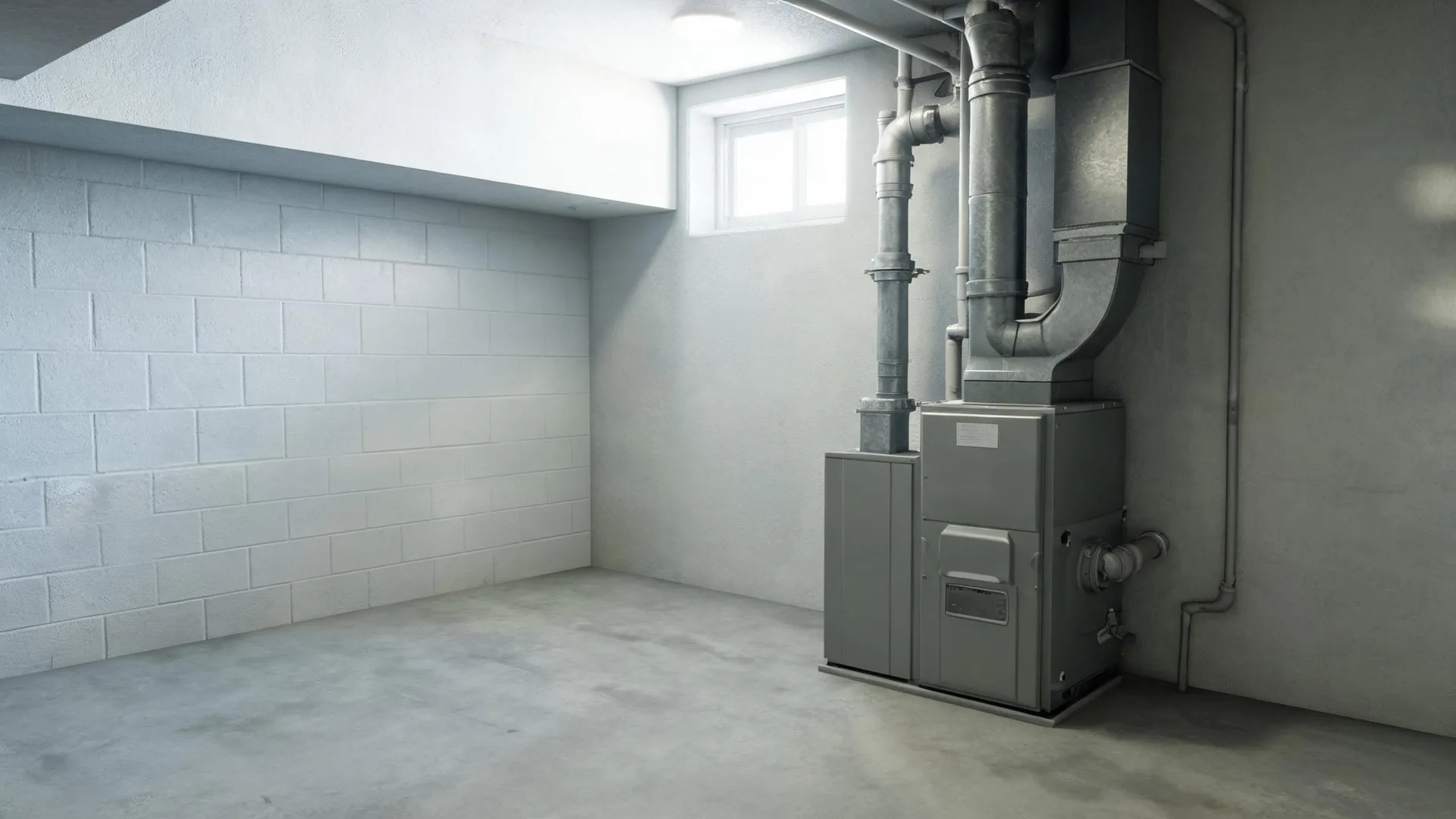
A bare concrete basement containing a gray gas furnace with metal ductwork and a vertical flue pipe, lit by a single hanging bulb.

Furnace Installation in White Sulphur Springs, MT

Tell us about the job

Takes about a minute. No obligation.

New system or replacementFurnace or heatingMeagher County, MT
Step 1 of 2

What ZIP code is the job in?

Propane ran $22.28 per million Btu in Montana in 2024. That is the fuel most furnaces here burn, and a furnace that wastes heat is wasting an expensive fuel, not a cheap one. Two furnaces rated for the same house can use different amounts of propane to hold the same temperature, and at that price the gap shows up on the bill fast. The rating to check is AFUE, which tells you how much of the fuel actually becomes heat in the house. A furnace sized and installed right for your house makes that number mean something; one that is oversized or undersized burns fuel without delivering what the rating promises.

14°F
the average winter night it heats against
80% AFUE
the federal minimum any new unit must meet
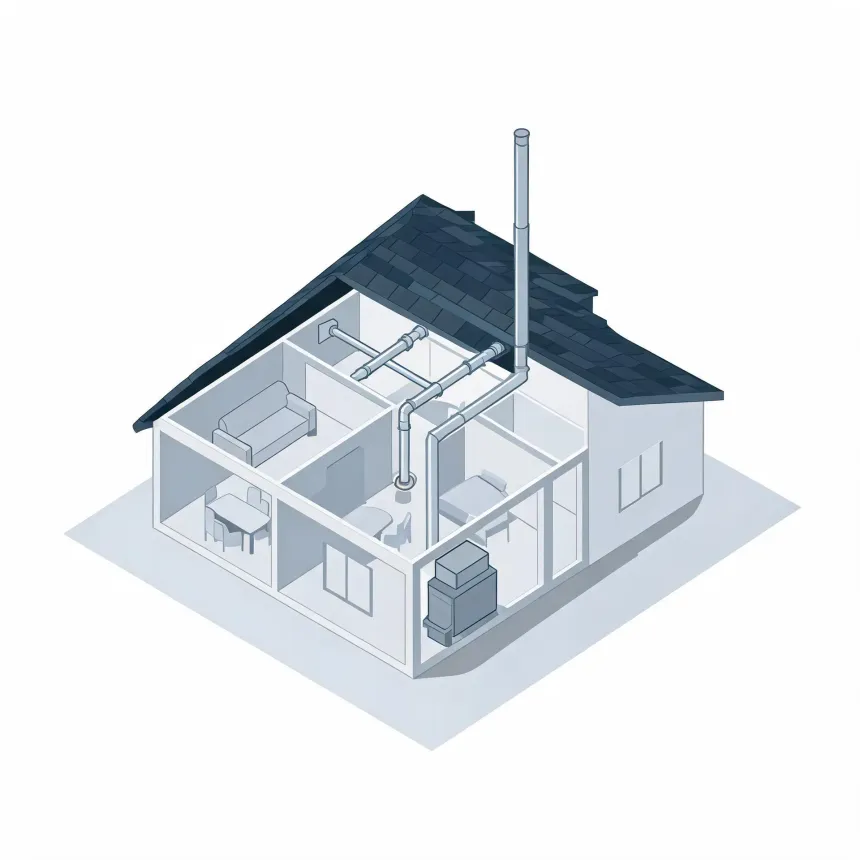
Isometric cutaway illustration of a single-story house showing interior rooms with furniture, ductwork and piping running to a tall vertical flue through the dark shingled roof, and a furnace-like appliance unit on the floor.
Your furnace works hardest from October through April.

NOAA nClimDiv, 1991–2020 normals

A furnace in Meagher County runs heat every month of the year, not just in winter.

A system built for occasional use won't hold up here, so size and build quality matter more than the sticker price.

Most of this county already burns propane, so matching your new furnace to it is the straightforward choice

45.3% of homes heat with propane
Winter nights average 14°F
Climate zone 6B

Meagher County falls under zone 6B in the 2021 energy code, the cold end of the scale, and that is what sets the floor for what a contractor can install here. Any gas furnace built from November 2015 on has to turn at least 80 percent of its fuel into heat over the winter, and that floor holds whether the house is in Miami or White Sulphur Springs. Climate zone doesn't raise that minimum. What it does is make the gap between a furnace that barely clears 80 percent and one built well past it matter more here, because this furnace runs for most of the year. Furnaces built from December 2028 on will have to hit 95 percent, so a unit bought now still only has to meet the older number. A federal tax credit is available for qualifying high-efficiency furnaces, worth checking against whatever model you're comparing.

The furnace you install now sets your propane bill for years

At $22.28 per million Btu, every point of AFUE you give up gets charged back to you for as long as the furnace runs, and here that's most of the year. When you compare quotes, put the AFUE number next to the price and ask the contractor to size the unit for your house, not just the slab it's replacing.

Find a contractor
A gray residential gas furnace installed in an unfinished basement, surrounded by ductwork, a metal flue pipe, and a gas supply line.

This furnace doesn't get an off season

Heat runs here in every month of the year, not just the cold ones. A furnace that cycles on and off nearly nonstop doesn't have an off season to coast through or hide a bad fit in. If it's sized wrong for the house, that mistake runs every month too. Ask the contractor what load calculation they ran on your house, not what size the old unit was.

The AFUE number is a yearly average, not a guarantee

AFUE is measured by testing the furnace under set conditions, not inside your house. It tells you how the unit performs over a full season of normal cycling, not what it will do on the coldest night or in a duct run with a leak in it. Two houses with the same furnace can still see different results depending on the ductwork and how the thermostat is set.

The rating only holds if the installation matches it

A furnace earns its AFUE rating on a bench, connected the way the manufacturer specifies. Undersized ducts, a return that's too small, or a vent pipe run that fights the manufacturer's spec all pull real-world performance below the number on the label. Ask the contractor to size the ductwork along with the furnace, not just swap the unit and reuse what's already there.

A gray forced-air furnace with metal ductwork stands in an unfinished basement with exposed wooden joists, concrete walls, and a single hanging light bulb.

A high-efficiency propane furnace would save about $180 a year to run in Meagher County compared with a propane furnace.

  • A high-efficiency propane furnace$840 a year
  • A propane furnace$1,020 a year

Estimates for a typical Meagher County home, from EIA household energy data, Montana fuel prices and NOAA climate normals. Your home will differ.

Installation starts with the load calculation, not the furnace. A contractor measures the house, room by room, and figures out how much heat it actually loses before ordering anything. Once the unit is on site, the old furnace comes out first: gas shut off, ducts disconnected, vent pipe pulled. The new furnace gets set and leveled, then connected to the duct trunk, the gas line, and the vent. Every joint in the vent pipe matters, because a bad seal there can let combustion gas back into the house instead of outside. After it's hooked up, the contractor fires it and checks the gas pressure, the temperature rise across the heat exchanger, and the airflow at the registers against the manufacturer's spec sheet. A furnace that tests fine on the bench still has to pass these checks in your house, with your ducts, before anyone calls the job done.