Propane runs $22.28 per million Btu here
Montana propane averaged that price in 2024. A furnace with a higher efficiency rating turns more of that into heat in the house instead of out the flue.
Takes about a minute. No obligation.
Montana propane averaged that price in 2024. A furnace with a higher efficiency rating turns more of that into heat in the house instead of out the flue.
Since propane already costs more per Btu than other fuels in a lot of places, the difference between a mid-efficiency furnace and a high-efficiency one shows up clearly on the bill, month after month.
NOAA nClimDiv, 1991–2020 normals
Propane heats 61.4% of homes in Sheridan County.
A new furnace built for propane matches what most homes here are already set up to run.



Heat starts here in September. August is the last month before that, and it's the month to get a new furnace in. Wait until the first cold night to call someone and you're choosing from whoever can come out fastest, not who you'd pick with time to think it over. A furnace put in during August gets tested on your schedule, with the installer back out if something needs adjusting before it matters. Once it's running, it stays on the job through June.
Power costs more here, so an efficient system pays you back on every bill.
Find a contractorHalf the homes in Sheridan County were built in 1963 or earlier. A furnace going into one of those houses isn't a simple swap. Ductwork sized decades ago may not move air the way a new high-efficiency unit expects, and venting built for an old furnace often isn't right for a new one. None of that means more work for certain, only that it's worth having someone check the house you have before the new system gets picked.
A furnace too big for the house cycles on and off instead of running steady, and that short cycling wears out parts faster while leaving rooms uneven. Getting the size right means someone calculating the actual heat loss of the house, not just matching the old unit's number. That calculation, and the ductwork changes it sometimes calls for, is where cost moves most.
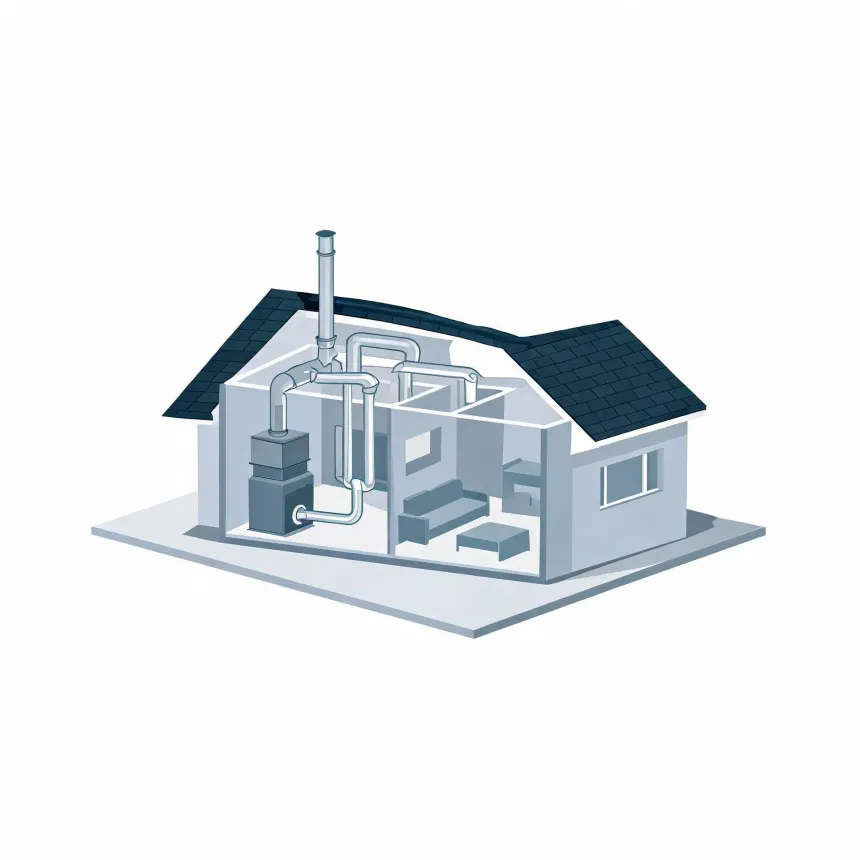
A high-efficiency furnace vents through plastic pipe out a sidewall instead of up a chimney. If the old furnace vented through a flue, that flue may need to be capped or shared differently with the water heater, and new venting has to be run. A furnace swap that keeps the old venting is a simpler job than one that doesn't.
Estimates for a typical Sheridan County home, from EIA household energy data, Montana fuel prices and NOAA climate normals. Your home will differ.
Install day starts before the crew unhooks anything. The old furnace gets shut down, gas and power disconnected, and then it comes out. Sizing and venting decisions should already be settled by this point, so the work is mostly carrying out a plan, not making one on the fly. Setting the new furnace means leveling it, connecting the supply and return ducts, running the vent pipe, and tying in gas and electric. Once it's hooked up, the installer fires it and checks the gas pressure, checks the temperature rise across the heat exchanger, and watches how it cycles. A furnace that's wired and vented right will settle into a steady pattern, not short bursts. Before anyone leaves, you should see it run a full cycle and hear what normal sounds like, so you know what to listen for later.