

Repair or replace a propane furnace in Plentywood, MT

Send the form and stop researching installers for the new furnace.

I'm done searching

Most of the time, if your propane furnace is under 15 years old, repair makes more sense than replacing it. A cracked heat exchanger, a furnace that won't run at all in a January cold snap, or a unit that's needed three or more repairs this winter are the cases where replacement wins out. Propane furnaces take a beating out here. Winters in Sheridan County run long and hard, and a furnace that's already struggling in November usually won't make it through February without more trouble. Age matters too: a furnace built before the mid 2000s is working harder than it should to do the same job. If yours is younger than that and the problem is a single failed part, fixing it is usually the right call. If it's older and failing more than once a season, you're better off putting that money toward a new one instead of patching the same furnace again before next winter.

A dark high-efficiency furnace on a concrete pad in a basement, connected to galvanized ductwork, white PVC vent pipes, and copper and black gas piping, with concrete walls and wood framing nearby.

Worth repairing

If your furnace is heating fine most days and just had one part quit, a repair gets you through the rest of winter. A pressure switch, a flame sensor, or an igniter is a straightforward fix, and the rest of the furnace, the cabinet, the heat exchanger, the ductwork, is still sound.


A gas furnace with a louvered upper panel stands on a concrete pad in a basement, flanked by sheet-metal ductwork, white PVC and metal pipes, and insulated columns.

Time to replace

An older furnace that struggles to keep up when it's well below zero outside, or one the propane bill keeps climbing for, is telling you something. Rust around the burner, a furnace that short-cycles, or a cracked heat exchanger means the next failure could leave you without heat on the coldest night of the year.

Repair the Furnace or Replace It

Repair

  • A new igniter or pressure switch runs the furnace through the rest of a hard Sheridan County winter without a big outlay.
  • If the heat exchanger and blower motor are sound, the parts that actually fail most often cost far less than a new unit.
  • A furnace that's under 15 years old and has had one or two issues is still a good bet for a repair.
  • Parts for most propane furnaces are on hand locally, so a repair doesn't leave you waiting through a cold snap.
  • Repair keeps the rest of the system, the cabinet, the heat exchanger, the gas valve, doing the job it was built for.

Replace

  • A cracked heat exchanger means the furnace has to come out, since that part can't be patched or welded.
  • Three or more repairs in one winter is a sign the furnace is wearing out piece by piece, not breaking by chance.
  • A furnace that won't fire at all in a January cold snap, with no pilot and no ignition, is telling you it's done.
  • Past 15 years, propane furnaces start failing in parts that are harder to source and cost more to put in.
  • A new furnace means one unit working as it should, instead of a string of fixes keeping an old one limping along.
A beige high-efficiency furnace with white PVC vent pipes stands beside galvanized sheet-metal ductwork in a basement with a concrete floor, exposed wood studs, and metal piping along the wall.

Running the way it should

This is a furnace holding steady, the kind of setup that keeps pushing heat through the ducts all winter without drama. PVC intake and exhaust mean it's venting correctly. A unit like this, kept clean and serviced, has no reason to let you down in a cold snap.

An older beige furnace with a louvered vent panel stands on a concrete basement floor beside galvanized sheet-metal ductwork, a metal flue pipe and vertical pipes along a concrete wall.

Signs it's falling behind

An older cabinet, a flex flue pipe instead of PVC, these point to a furnace nearing the end of what it can do. If yours looks like this and you've had more than one repair call this winter, replacing it is worth a serious look before the next hard freeze.

Why is my furnace struggling to keep up this winter

You might notice the burners taking longer to light, or a clicking sound before the furnace finally catches. Maybe it's running almost nonstop on the coldest nights and the house still isn't holding at the temperature you set it to. Some homeowners catch a faint propane smell near the unit, or notice the pilot light has gone out again. A few rooms might feel colder than others, or the furnace cycles on and off more than it used to. None of this is just an inconvenience. In a Sheridan County cold snap, a furnace that can't keep up puts the whole household at risk of a house that gets too cold too fast, and pipes that freeze if the heat doesn't come back on.

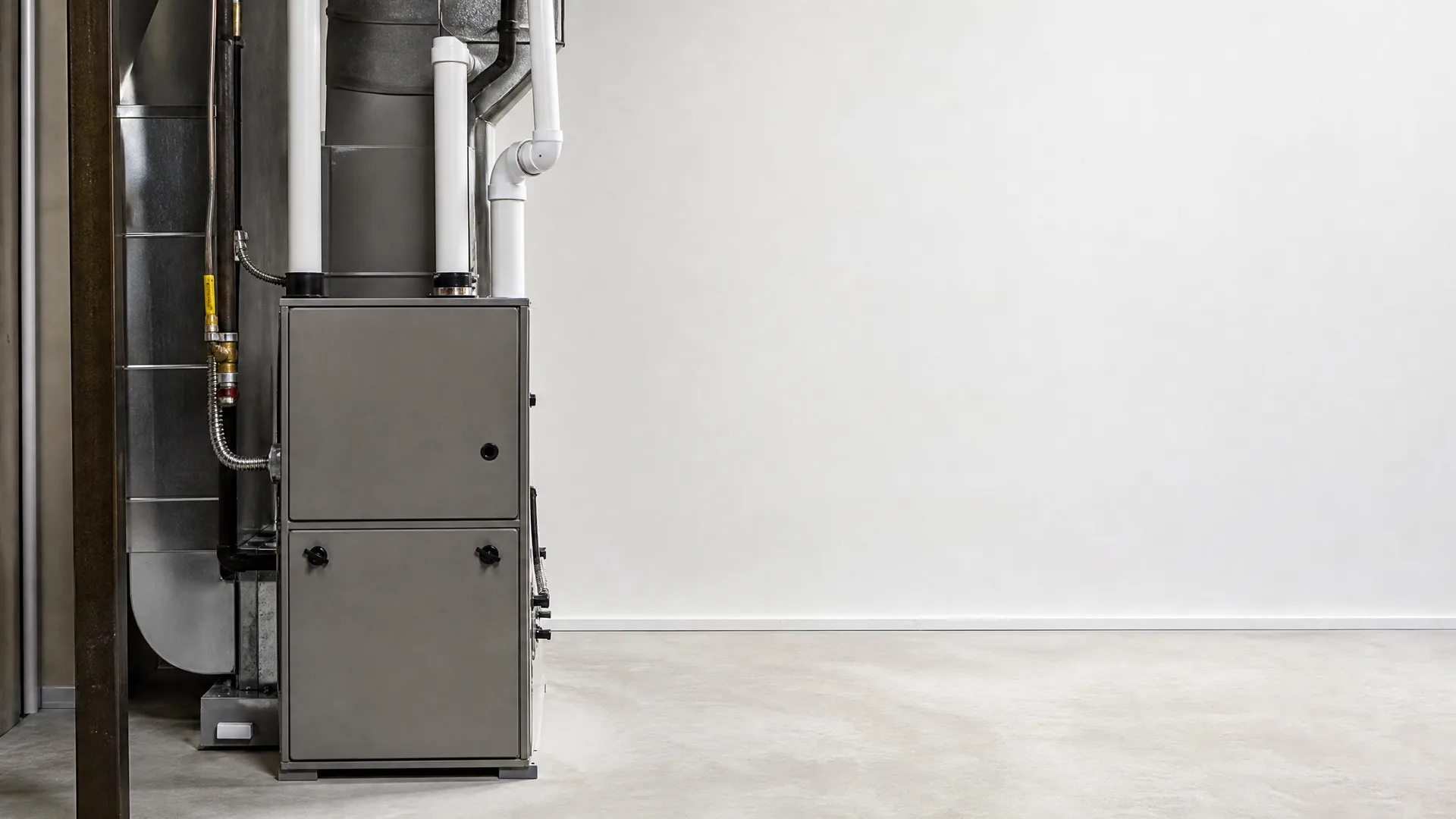
A gray residential furnace with attached PVC vent pipes, ductwork and a gas line stands against a plain white basement wall on a concrete floor.

How a cracked heat exchanger fails

The heat exchanger is the metal chamber that separates the burner flame from the air your ducts carry through the house. A crack in it lets combustion gas mix with that air instead of venting outside. Furnaces built to run on propane produce the same risk as any other fuel if that chamber splits. There's no patching it. Once it's cracked, the only fix is a new furnace, because the part sits welded into the cabinet and can't be swapped on its own.

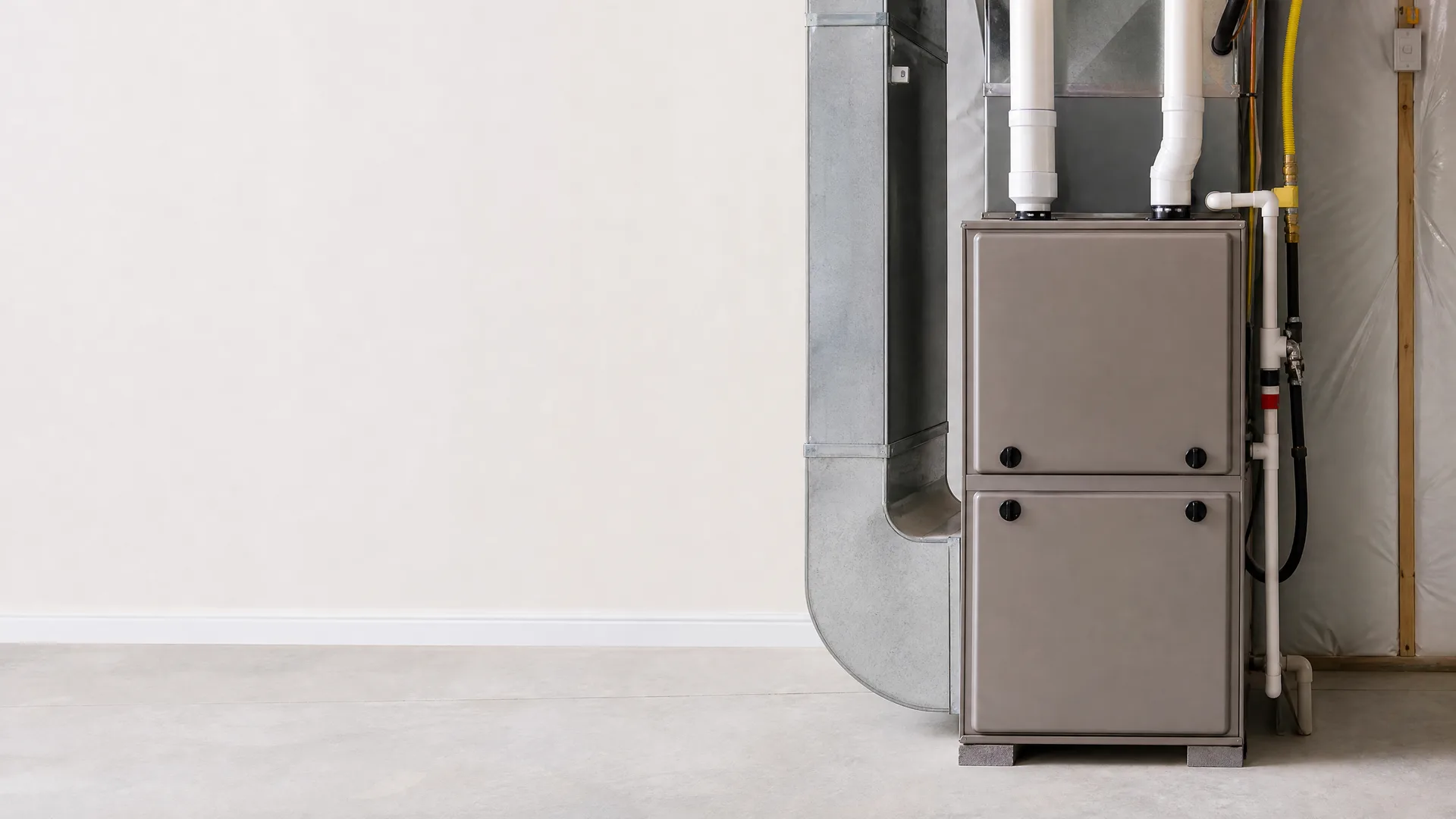
A gray high-efficiency furnace with white PVC vent pipes stands against a wall beside sheet-metal ductwork, flexible gas and electrical lines, in a room with a plain light wall and concrete floor.

What a well sized furnace does

Sheridan County winters push a furnace to run for hours at a stretch, sometimes most of the night when temperatures drop hard. A furnace sized right for the house cycles on, brings the room up to temperature, and shuts off instead of running flat out nonstop. One that's undersized, or one losing efficiency with age, keeps the burners lit far longer to do the same job, and that shows up on the propane tank gauge before it shows up anywhere else.

How cold, how long, and on what fuel does Plentywood heat?

  • Winter nights average 4°F

    Winter nights here average 4°F in December, January and February, so the furnace has to work for real, not just take the edge off a cool room.

  • Heat runs September through June

    Heat runs from September through June in Sheridan County. That's most of the year your furnace carries the house, not a few months in deep winter.

  • 61.4% of homes heat with propane

    61.4% of homes in Sheridan County heat with propane, more than any other fuel. A contractor who works here services this kind of furnace every week.

NOAA nClimDiv 1991-2020 · ACS 2020-2024

  1. Thermostat calls for heat and opens the gas valve circuit

  2. Inducer motor starts and purges the heat exchanger of air

  3. Pressure switch closes once draft proves the vent is clear

  4. Igniter heats up and lights the burners inside the chamber

A woman in a gray sweatshirt with her hair pinned up sits in a living room looking off to the side, with a pale sectional sofa, cushions, a potted plant, framed wall art and a large window behind her.
A woman with long wavy brown hair in a gray top and dark cardigan stands near a window, looking to the side, with a living room, fireplace and round mirror blurred behind her.
A woman with curly dark hair in a grey long-sleeved top sits on a grey couch with patterned cushions, looking off to the side in a softly lit living room.
A woman in a gray knit sweater with her hair in a bun sits on a couch indoors, smiling and looking off to the side, with a dining area and framed picture blurred in the background.

Send one request and you're done looking

A furnace that keeps needing attention in the middle of a Sheridan County winter is not a small problem. You don't have the luxury of waiting around when nights are running near 4°F and the house depends on that furnace staying lit. Whether the right move is one more repair or a full swap depends on things you can't always judge from the basement: how bad the heat exchanger crack really is, whether the blower motor is on its way out too, what a new install would actually cost against another repair bill. A local contractor who works on propane furnaces all season in this county has seen what usually fails in this cold and can tell you straight which way makes sense for your unit. Sending the request means one contractor looks at your specific furnace, not a pile of competing bids landing in your inbox while you're still trying to keep the house warm. That's one less thing on your plate on a night when the furnace is already struggling.

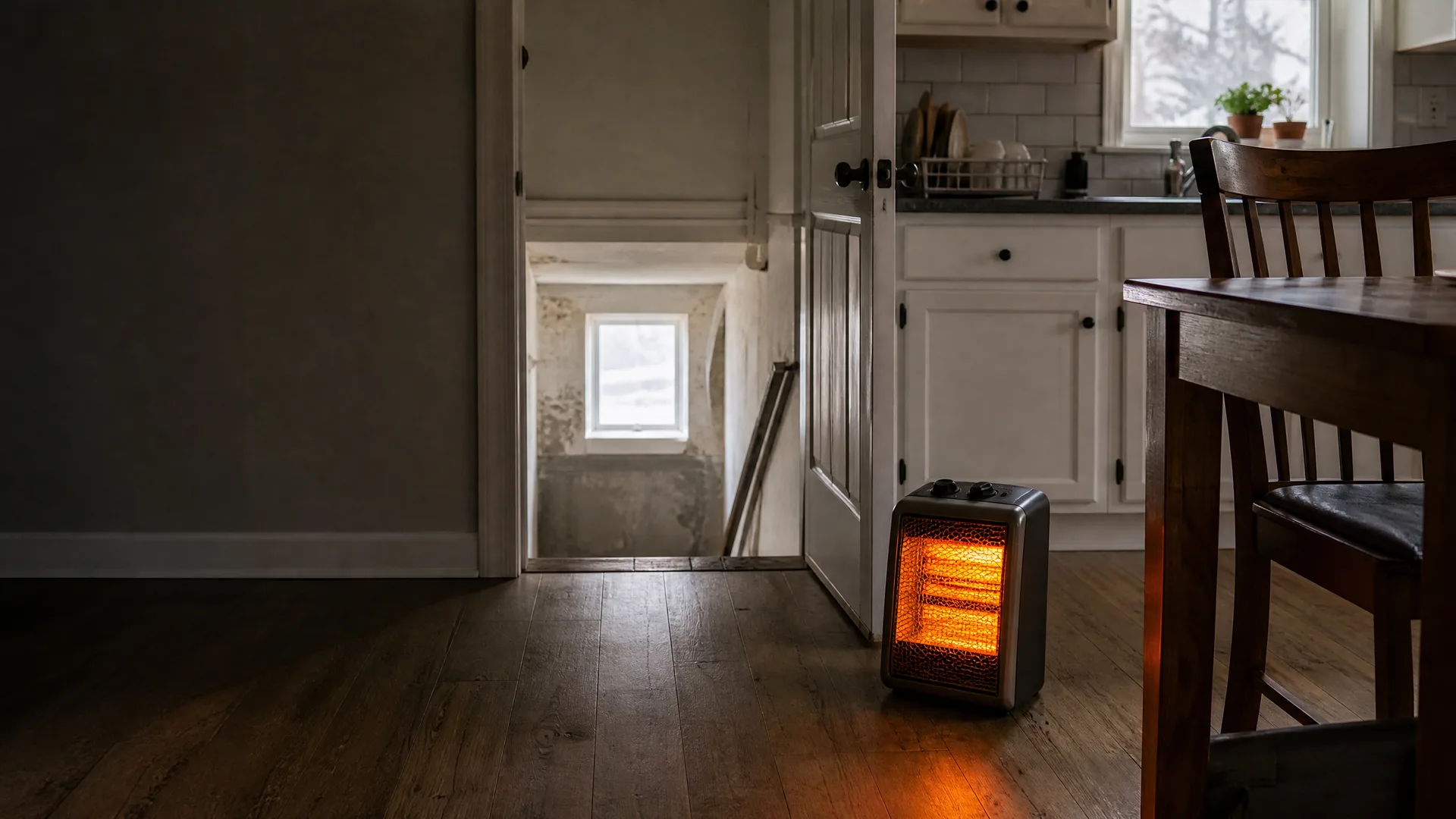
A small portable electric space heater with glowing orange elements sits on a dark hardwood floor near a doorway opening onto a basement stairway, with a kitchen counter, cabinets and a wooden table and chair to the right.

It's just past six and still dark outside the kitchen window. The space heater by the table throws its orange light across the floor, and you keep your coat on while the coffee brews. The basement door stands open behind it, the way it's been since the furnace quit trying partway through the night. You went down twice already, once to listen for the igniter clicking and once just to check the thermostat again, like the numbers might have changed. They hadn't. Outside the window the thermometer reads somewhere near 4 below, and the house is holding onto whatever heat it has left from yesterday. The space heater hums. You're waiting on the sound of the burners catching, and it hasn't come yet.

Why does my furnace short cycle instead of running steady?

You've noticed the furnace kicks on, runs for a few minutes, shuts off, then starts right back up again a little while later, over and over through the night. It never settles into a long, steady run the way it used to. You're not sure if that's just how it's supposed to sound on a cold night or if something's actually wrong, and you'd rather catch it now than find out in the middle of a cold snap near 4°F.

Short cycling means the furnace is shutting off before the thermostat is satisfied

A furnace that runs steady builds heat, warms the house to the set temperature, then shuts off on its own schedule. Short cycling is the furnace shutting itself down early, usually because a safety switch is tripping. A flame sensor caked with residue will cut the burners seconds after they light. A dirty filter chokes airflow across the heat exchanger, and the furnace trips a limit switch to keep that chamber from overheating. A failing pressure switch can do the same thing, cutting gas before the burners ever get a real run. None of these let the furnace do its job, and the house loses ground on a night when it's near 4°F outside and the furnace is cycling instead of holding steady.

A gray furnace cabinet in a basement, connected to galvanized sheet-metal ductwork and white PVC pipes, against a concrete wall with exposed metal piping and insulation overhead.
Before you get your furnace installation
A gray high-efficiency furnace with two PVC vent pipes stands in an unfinished basement beside sheet-metal ductwork, a framed and plastic-covered wall, and a bare concrete wall with vertical pipes.
After you get your furnace installation
The upper gable of a gray wood-sided house with two dark windows and a snow-covered roof, with snow-laden conifers behind it and snow falling against a pale sky.

Nights here sit at an average of 4°F through December, January and February, according to NOAA climate data for Sheridan County. At that temperature a furnace isn't cycling on and off to smooth out a chilly room, it's running long stretches just to hold the house where you set the thermostat. That's hard use on the igniter and the blower motor, night after night, for three straight months. If either one is already weak, cold like this is what finds it, usually on the coldest night rather than a mild one. A furnace in good shape handles it without much notice. One that's been limping along won't.

NOAA nClimDiv 1991-2020

A woman and a child wrapped together in a thick knitted beige blanket on a sofa, both with eyes closed, beside a lit table lamp in a dim room.
A smiling older woman with gray shoulder-length hair in a cream cable-knit turtleneck sweater stands behind a wooden board holding a round loaf of bread, in a warmly lit kitchen with a dark window and shelves behind her.

Repair or replace, decided

  • A furnace under 15 years old with one failed part usually gets fixed, not replaced, and gets you through the rest of winter.
  • A cracked heat exchanger or a furnace that won't light during a cold snap points toward replacement instead of another repair.
  • Three or more repairs in one winter is a sign the furnace is past the point where fixing it keeps making sense.
  • A licensed contractor working in Sheridan County every winter can tell you which of these two your furnace actually needs.
  • Sending the form connects you with one local contractor, not a handful of companies competing for the job.
  • Once you know whether it's a repair or a new furnace, the next step is getting someone out to confirm it in person.

Most furnaces in Sheridan County are still worth fixing. A furnace under 15 years old that loses one part, a pressure switch, an igniter, a flame sensor, gets repaired and finishes out the winter. The furnaces that make sense to replace are the ones telling you plainly: a cracked heat exchanger, a unit that won't light at all when it's 4°F outside, or a winter that's already cost you three or more repair calls. Past that point, you're paying to keep an old furnace limping along instead of putting that money toward one that won't quit on you in February.

You don't have to be the one who decides which category your furnace falls into. That's what a contractor who works on these furnaces all winter, every winter, is for. Someone local knows what a Sheridan County furnace is up against, the cold snaps, the propane, the hours it runs each day from September to June, and that's the kind of experience that tells a failing heat exchanger from a bad igniter without guesswork.

Send the form and you're connected with one licensed contractor local to the area, not a list of companies calling you back one after another. That contractor comes out, looks at your furnace, and tells you straight whether it's a repair or a replacement. Either way, the furnace that's been struggling gets looked at by someone who knows exactly what it's dealing with, and you stop carrying that decision alone.

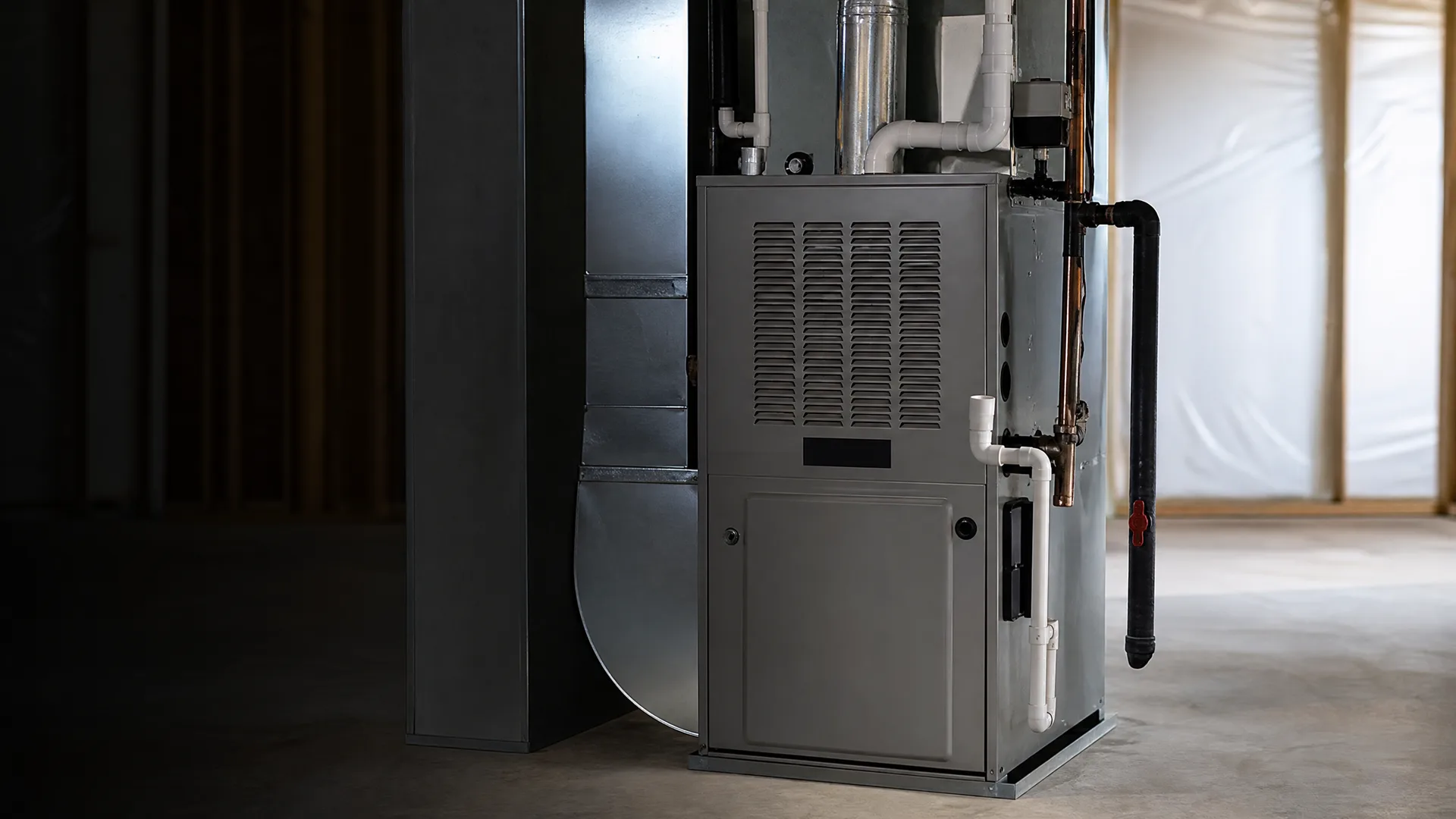
A gray gas furnace installed in an unfinished basement, connected to sheet-metal ductwork and PVC, copper, and black iron piping, with plastic sheeting over a stud wall behind it.

Finding a pro stops being your job

New system or replacementFurnace or heatingSheridan County, MT
Step 1 of 2

What ZIP code is the job in?