A gravel road lined by a split-rail log fence on the left and dark-sided cabins with metal roofs on the right, surrounded by tall conifers under an overcast sky.

Furnace Installation in Miles City, MT

Tell us about the job

Takes about a minute. No obligation.

New system or replacementFurnace or heatingCuster County, MT
Step 1 of 2

What ZIP code is the job in?

Nine months of heat a year

A furnace in Custer County runs from September through May. That is most of the calendar, not just a cold snap here and there. The burner, the blower and the igniter all see more hours here than they would almost anywhere else.

Size it for the long run it gets

A furnace asked to run nine months a year needs to be sized to the house, not picked off a price list. The wrong size means short cycling or a unit that never quite catches up, and both wear a system down faster than normal use would.

9 months
September through May, your furnace is on duty
11°F
the average winter night it heats against
62%
of homes here heat with gas, so most furnaces here burn gas
80% AFUE
the federal minimum any new unit must meet
Isometric line illustration of a cutaway building interior showing a furnace unit with a flue pipe and ductwork running along the ceiling, plus adjacent rooms with simplified furniture.
Your furnace works hardest from November through March.

NOAA nClimDiv, 1991–2020 normals

Half the homes in Custer County were built in 1965 or earlier.

A furnace going into a house that old has to be sized and vented for the house it's actually in, not a generic one.

Nine months of heat a year means replacing it in August beats replacing it in January

Heat runs September through May
Climate zone 6B
Winter nights average 11°F
Most Furnaces Here Run On GasGas heats 61.9% of homes in Custer County, more than electric and propane combined.

Custer County sees a lot of rough weather. Between 2015 and 2024 the county logged 176 severe weather events, including 94 damaging wind events and 65 hail storms. Hail and wind both take a toll on an outdoor unit sitting exposed in a yard. Winter brought 17 ice and blizzard events in that same stretch, the kind that knock out power along with the cold. Statewide, 18% of Montana households lost power for a day or more in 2024. A furnace with no electricity won't run no matter how well it's sized, so it's worth asking an installer about surge protection and where the unit goes before the ground freezes.

Size it once, let it run nine months a year without a fight

Nine months of furnace use a year is hard use. Get the size right the first time and it will carry that load for the long run instead of fighting it every winter.

Find a contractor
A man in a dark shirt and khaki pants, seen from behind, carries a worn leather bag as he climbs wooden porch steps toward a dark front door, with a potted shrub beside the entry.
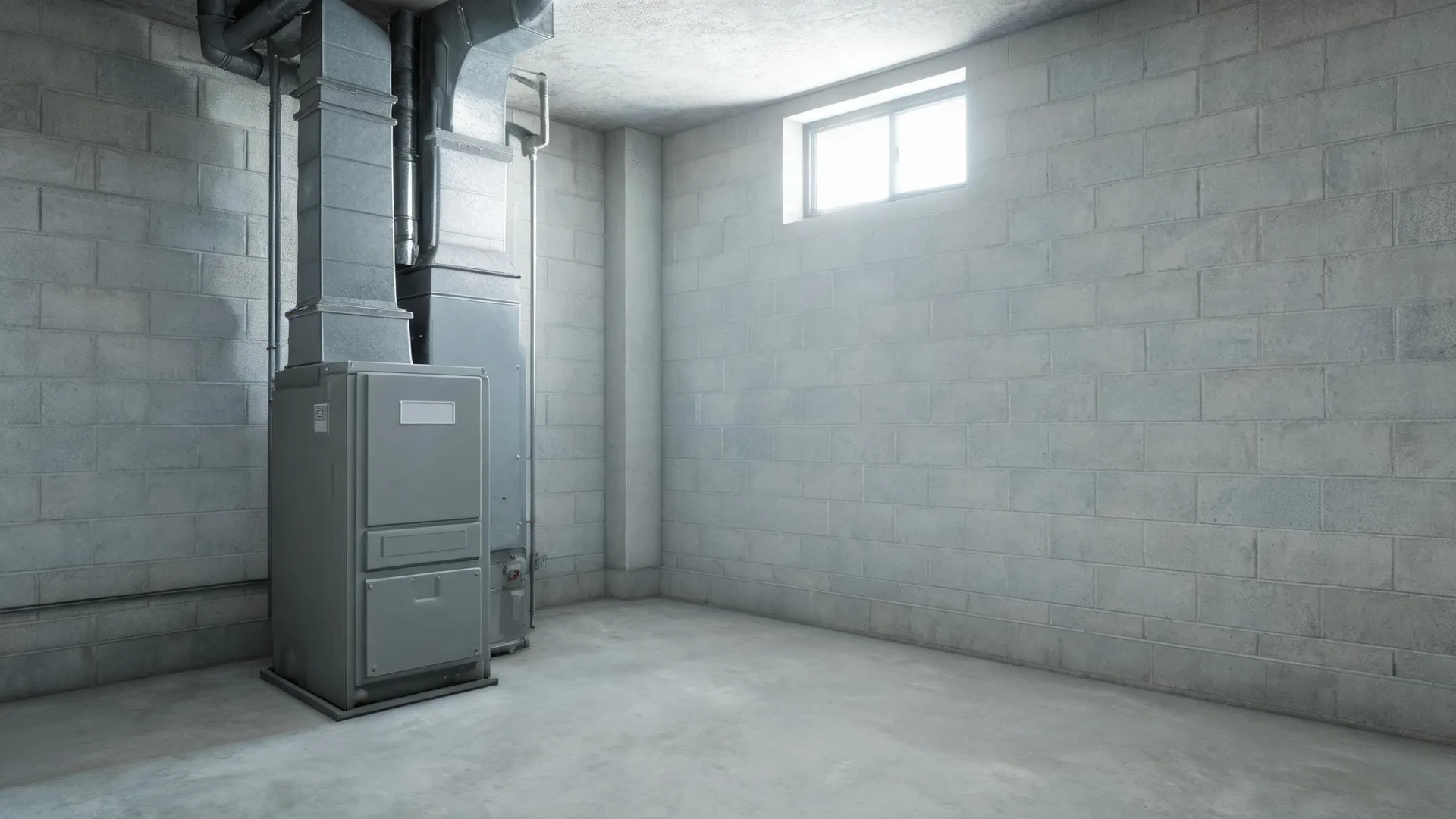
A gas furnace with attached ductwork, gas piping, and condensate lines installed in a concrete-block basement.

The house sets the size, not the catalog

A house built in 1965 or earlier was built to the standards of that time, not this one. Installing a furnace means matching it to the ductwork, the venting and the layout already in place, not swapping in whatever size was easiest to order. An installer sizing the job should look at the house itself, room by room, before settling on a unit.

The rating tells you the cost of running it, not the size you need

The efficiency rating on a furnace measures how much of the fuel it burns turns into heat in the house versus what goes out the flue. A higher rated furnace keeps more of that fuel as usable heat. It says nothing about whether the unit is the right size for the house. A high efficiency furnace that is too big or too small for the ductwork it's tied into will still short cycle or run too long, no matter what the label says.

A higher rated furnace changes the venting, not just the bill

Furnaces with a higher efficiency rating cool the exhaust more before it leaves the house, so that exhaust gets vented through PVC pipe instead of a metal flue, often straight out a side wall rather than up through the roof. That changes where the unit can go and what the installer has to run to get it there. Picking a furnace by its rating alone, without checking what venting the house can support, is how installs run into trouble partway through.

An unfinished basement featuring a grey forced-air furnace with metal ductwork, concrete block walls, exposed wooden joists, and a single hanging bare bulb.

A high-efficiency gas furnace would save about $70 a year to run in Custer County compared with a gas furnace.

  • A high-efficiency gas furnace$350 a year
  • A gas furnace$420 a year

Estimates for a typical Custer County home, from EIA household energy data, Montana fuel prices and NOAA climate normals. Your home will differ.

Installation starts with pulling the old furnace out, and that part goes fast. The slower work is what comes next. The installer runs new venting if the efficiency rating is changing, sets the new unit on its base, and connects the gas line, the ductwork and the electrical. Every joint in the duct connection gets sealed, because a leaky connection right at the furnace wastes heat before it ever reaches a room. Once it's hooked up, the installer fires it and checks the gas pressure, the temperature rise across the heat exchanger, and the flow of air at the vents. That last check matters as much as the install itself. A furnace that's wired right but moving too little air, or too much, will short cycle or run long no matter how clean the install looked going in.