


An unfinished basement interior showing a gray furnace unit beneath a bare incandescent bulb, surrounded by exposed joists, concrete walls, cardboard boxes, and utility pipes.

Furnace Installation in Hardin, MT

Tell us about the job

Takes about a minute. No obligation.

New system or replacementFurnace or heatingBig Horn County, MT
Step 1 of 2

What ZIP code is the job in?

Big Horn County recorded 231 severe weather events between 2015 and 2024. Most of that was wind and winter storms, 91 damaging wind events and 84 winter storms, with 55 hail events on top. A furnace doesn't care about wind or hail directly, but what follows a storm like that does matter: downed lines and the power cuts behind them. Across Montana, 18% of households went at least a day without power in 2024. A furnace needs electricity to run even on gas, for the igniter, the blower, the control board. When you're installing a new system here, it's worth asking what happens to it when the grid goes down, not just how it runs on a normal night.

10 months
September through June, your furnace is on duty
14°F
the average winter night it heats against
80% AFUE
the federal minimum any new unit must meet
Isometric line illustration of a cutaway house showing interior rooms with furniture and a furnace with ducting and a flue pipe extending through the roof.
Your furnace works hardest from November through April.

NOAA nClimDiv, 1991–2020 normals

Furnaces in Hardin run from September through June.

A new system here spends most of the year working, so it has to be sized and installed right from the start.

Natural gas here runs $7.77 per million Btu, cheap enough that a high-efficiency upgrade isn't the priority a backup plan is

Heat runs September through June
Winter nights average 14°F
84 winter storms from 2015 to 2024
Install Before SeptemberHeat runs here from September through June, so install before August ends.

Gas heats more homes in Big Horn County than anything else, 36.9%, with propane close behind at 28.7% and electric heat at 25.3%. If gas is already piped to your house, a gas furnace is the straightforward replacement. The contractor doesn't need to run new fuel lines or rework how the house gets its heat, just size the new unit to the house and install it. A gas furnace still needs power to run, for the igniter, the blower, the control board. The fuel being common here doesn't change what happens when the lines go down.

Plan the Install Around the Outage, Not Just the Cold

Ask the contractor installing your furnace what it does when the power cuts out. The igniter, the blower and the control board all need electricity, gas furnace or not, and this county sees enough downed lines that it's worth asking before the unit goes in rather than after.

Find a contractor
A gas furnace with attached ductwork, gas piping, and condensate lines installed in a concrete-block basement.

Ten Months a Year, Not a Season

Ten months of heat a year is most of the calendar. The furnace going in this year will run from September to June, then do it again, winter after winter. That kind of runtime adds up on the igniter and the blower motor faster than it would somewhere that only needs heat half the year. Sizing it right matters more here too. A unit too big for the house will cycle on and off more than it should, and that extra cycling is its own kind of wear. Get the load calculated for your house instead of guessing off the old unit's size.

Bigger Isn't Safer

An oversized furnace doesn't heat the house better. It blasts hot air, shuts off before the rooms even out, then kicks back on again a few minutes later. That short cycling wears on the igniter and the blower motor, and it leaves cold spots in the rooms farthest from the ducts. A furnace sized right runs longer, steadier stretches and actually heats the house evenly.

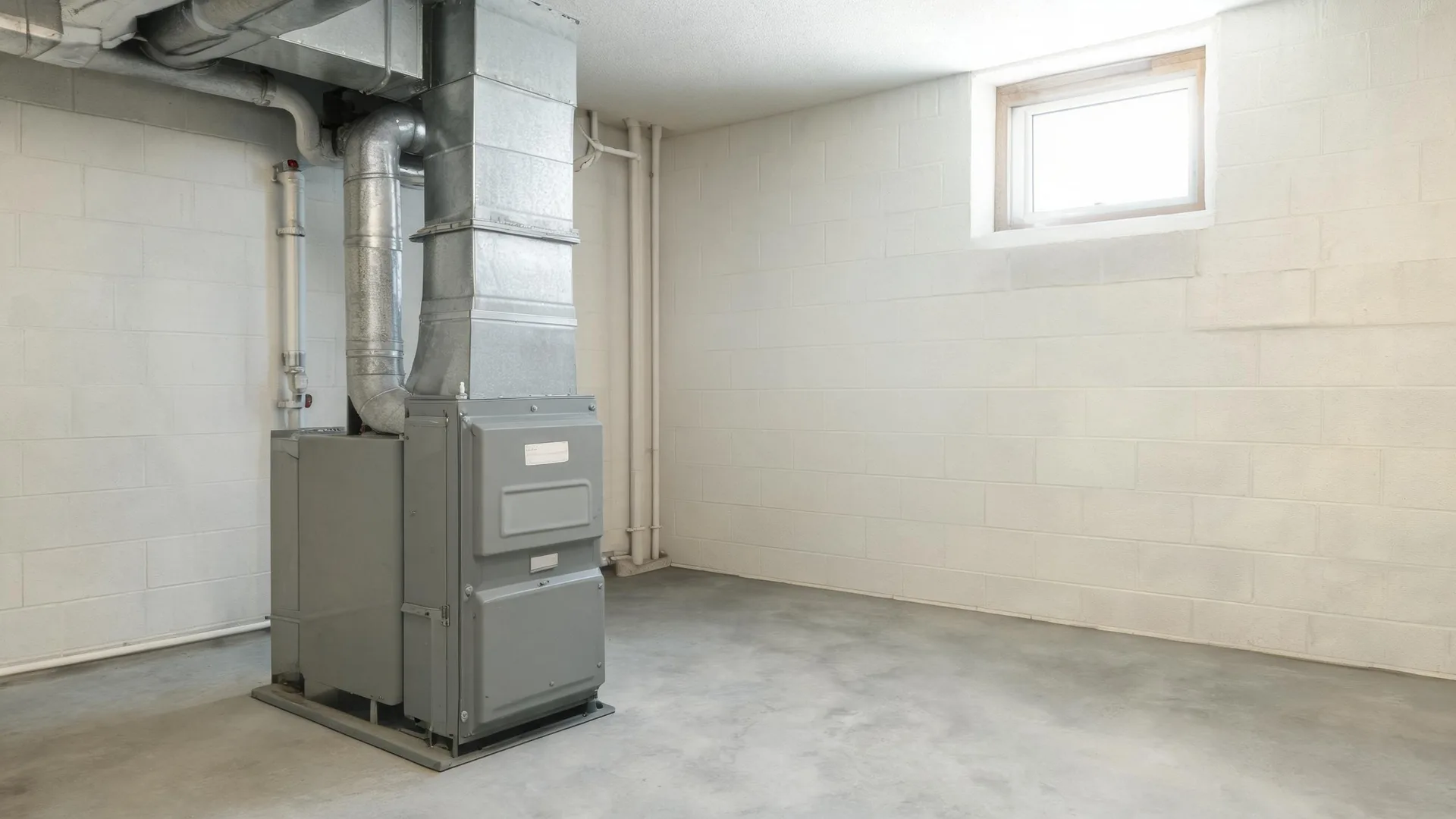
The Load Calculation

A contractor works out the right size with a load calculation, not by matching the old unit or guessing off square footage alone. That means walking the house and accounting for the windows, the insulation, the ceiling height, how the rooms connect, even which walls face into the wind. Two houses the same size can need different furnaces. Skipping this step is how a house ends up with a furnace that's wrong in either direction.

An unfinished basement interior featuring a large metal furnace unit, exposed ceiling joists, concrete walls, and scattered boxes and cables on the floor.

A high-efficiency gas furnace would save about $70 a year to run in Big Horn County compared with a gas furnace.

  • A high-efficiency gas furnace$340 a year
  • A gas furnace$410 a year

Estimates for a typical Big Horn County home, from EIA household energy data, Montana fuel prices and NOAA climate normals. Your home will differ.

Installation starts with the old furnace coming out, and that's its own job before the new one goes in. The contractor disconnects the gas line, the ductwork, the vent pipe and the wiring, then clears the unit out of the space. If the new furnace is a different size or a different efficiency rating, the ductwork or venting might need changes too, not just a swap in place. A high-efficiency furnace vents through PVC pipe instead of a metal flue, so that's a different path to run. Once the new unit is set, the contractor connects gas, power and ductwork, then checks the gas line for leaks before anything gets fired up. Starting it up means testing the igniter, checking the flame sensor reads correctly, and watching the blower cycle through a full run before calling it done.