

Firewood stacked against the dark vertical wood siding of a building, with a gravel border strip, dry grass, and pine trees under an overcast sky.

Furnace Installation in Cut Bank, MT

Tell us about the job

Takes about a minute. No obligation.

New system or replacementFurnace or heatingGlacier County, MT
Step 1 of 2

What ZIP code is the job in?

Gas ran $7.77 per million Btu across Montana homes in 2024. A furnace here runs for months straight to keep up with winter, so that price per unit adds up fast over a season. The efficiency rating on the furnace you install decides how much of that gas turns into heat in your house and how much goes out the flue. Two furnaces burning the same gas at the same price can leave you with different bills, just because one gets more heat out of every therm.

14°F
the average winter night it heats against
80% AFUE
the federal minimum any new unit must meet
Isometric grayscale illustration of a cutaway single-story house showing interior rooms with furniture, a furnace unit connected to ductwork and a tall vertical flue pipe extending above the roof.
Your furnace works hardest from October through April.

NOAA nClimDiv, 1991–2020 normals

Gas heats more homes in Glacier County than anything else, at 42.9 percent.

Installing gas here means parts, service and a repair history other contractors already know.

Furnace installation in Cut Bank runs into a harder winter than most of the country sees

Winter nights average 14°F
Climate zone 6B
42.9% of homes heat with gas

Glacier County falls under zone 6B, a cold and dry climate zone under the 2021 energy code. Any furnace installed here has to meet that standard. Right now the federal floor is 80 percent fuel efficiency, meaning a furnace has to turn at least 80 percent of the gas it burns into heat for the house. That floor rises to 95 percent for furnaces manufactured on or after December 18, 2028. A furnace meeting today's minimum is a different machine than one meeting the 2028 standard, and in a place where the furnace runs for months straight, that difference shows up every winter it's installed.

The rating on the furnace matters more here than most places

The efficiency rating is the one number in this purchase that keeps working after the install is done. Ask what each furnace you're comparing is rated at, not just what it costs to put in.

Find a contractor
A man in a dark long-sleeved shirt, cap, and worn tan work pants climbs porch steps toward a dark blue front door, carrying a canvas tool bag.
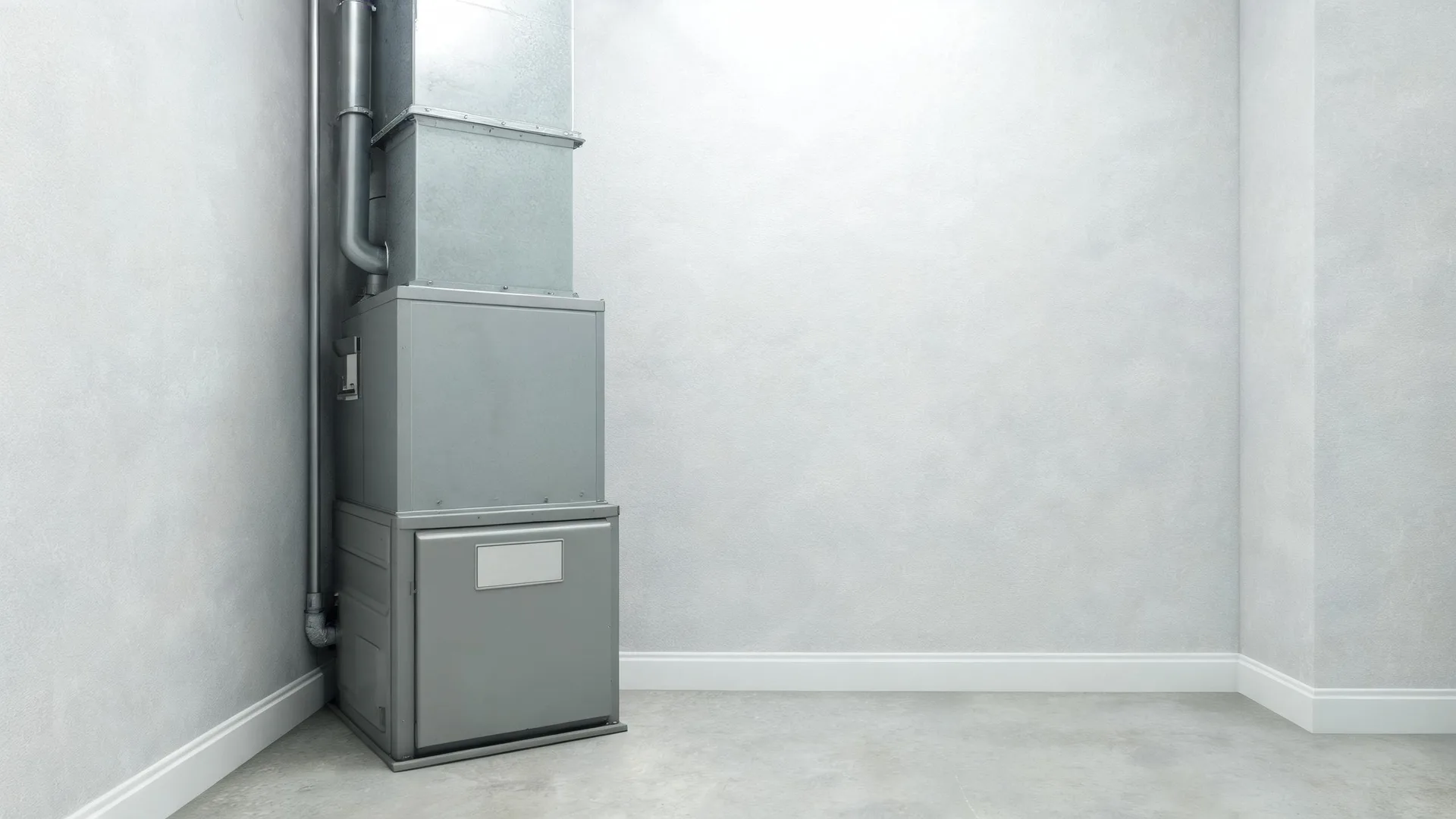
A gray high-efficiency gas furnace installed in an unfinished basement, surrounded by gas lines, a condensate drain, and sheet-metal ductwork.

This furnace doesn't get a season off

Homes in Glacier County run the furnace every month of the year. There's no season where it sits off. That's time most of the country doesn't put on a furnace, and it's time that adds up on whatever gets installed here. A furnace sized right for this kind of run time holds up to it. One sized wrong, or bought because it was cheaper up front, shows the strain sooner. Ask what size the load calculation says you need before you pick a unit by price.

A load calculation, not a guess off the old unit

The right size comes from a room by room look at the house: how much wall and window area it has, how it's insulated, how the ductwork is laid out. A contractor works through this before quoting a furnace, not after. Going by the size of the furnace that's already there just repeats whatever mistake was made the first time it was installed.

Oversized wears out a furnace as fast as undersized

A furnace that's too big heats the house fast, shuts off, then fires again a few minutes later. That short cycling puts more wear on the igniter and the heat exchanger than a long steady run would. A furnace that's too small never gets that rest. It runs constantly and still can't hold the temperature on the coldest days. Either way the furnace is working against its own size, not with it.

A gray forced-air furnace with metal ductwork stands in an unfinished basement with exposed wooden joists, concrete walls, and a single hanging light bulb.

A high-efficiency gas furnace would save about $90 a year to run in Glacier County compared with a gas furnace.

  • A high-efficiency gas furnace$410 a year
  • A gas furnace$500 a year

Estimates for a typical Glacier County home, from EIA household energy data, Montana fuel prices and NOAA climate normals. Your home will differ.

Installation starts with pulling the old furnace out, and that's often the slowest part of the day. The vent pipe, gas line and ductwork all have to come loose without damaging what stays behind. Once the space is clear, the new furnace gets set and leveled, then the ductwork is tied back in, sometimes with new transitions if the new unit's a different size than the old one. The gas line gets connected and checked for leaks before anything is fired up. Electrical and the thermostat wire come next, along with the vent pipe, sized and run to meet code for that furnace's exhaust. The last part is startup: the tech fires the furnace, checks the flame, checks gas pressure, and runs it through a cycle to make sure it shuts off and restarts the way it should. A furnace isn't left running until it's been watched do that at least once.